
BuddhistCatholicContemplativeEvangelicalGeneral ChristianHinduJewishLatter-day SaintMuslimNew VisionsProgressive Christian
Beliefs
- Buddhist
- Catholic
- Contemplative
- Evangelical
- General Christian
- Hindu
- Jewish
- Latter-day Saint
- More Voices
- Muslim
- New Visions
- Pagan
- Progressive Christian
Topics
- Religion News
- Food and Religion
- Sports and Religion
- Religious Art
- Religious Music and Entertainment
- Religious Events
- History and Religion
- Style and Religion
- Politics and Religion
- Women in Religion
- Recreation Outdoors and Religion
- Business Finance and Religion
- Careers Workplace and Religion
- Education and Religion
- Family Parenting and Religion
- Health Fitness and Religion
- Home and Religion
- Relationships and Religion
- Technology and Religion
- Travel and Religion
Columnists
- Buddhist Columnists
- Business Finance and Religion Columnists
- Careers Workplace and Religion Columnists
- Catholic Columnists
- Contemplative Columnists
- Education and Religion Columnists
- Evangelists Columnists
- Family Parenting and Religion Columnists
- General Christian Columnists
- Health Fitness and Religion Columnists
- Hindu Columnists
- History and Religion Columnists
- Home and Religion Columnists
- Jewish Columnists
- More Voices Columnists
- Latter Day Columnists
- Muslim Columnists
- New Visions Columnists
- Nonreligious Columnists
- Pagan Columnists
- Politics and Religion Columnists
- Progressive Columnists
- Recreation Outdoors and Religion Columnists
- Relationships and Religion Columnists
- Religion News Columnists
- Religious Art Columnists
- Religious Events Columnists
- Religious Music and Entertainment Columnists
- Sports and Religion Columnists
- Style and Religion Columnists
- Technology and Religion Columnists
- Travel and Religion Columnists
- Women in Religion Columnists
Resource Library
- 2026 Calendar
- Library of World Religions
- The 100 Most Holy Places on Earth
- Patheos Answers
- Podcasts
- Videos
- Faith Leaders Database
- Anglican Episcopalian
- Bahai
- Baptist
- Buddhism
- Christianity
- Confucianism
- Eastern Orthodoxy
- Hinduism
- Holiness and Pentecostal
- ISKCON
- Islam
- Judaism
- Lutheran
- Methodist
- The Church of Jesus Christ of Latter-day Saints
- New Age
- Paganism
- Presbytarian and Reformed
- Protestantism
- Religion Behind the Scenes
- Roman Catholic
- Scientology
- Shia Islam
- Sikhism
- Sufism
- Sunni Islam
- Taoism
- Zen
- See all religions
Research Tools
 Ad-Free & Subscriber Log-In Subscription Support
Ad-Free & Subscriber Log-In Subscription Support
Follow Patheos 

- Trending:
- Forgiveness
- |
- Marriage
- |
- Consciousness
- |
- Death Penalty
- |
- Election
- |
- Halloween

- Home
- Pagan
- Study says Spiritual Training leads to Spiritual Narcissism – But it Doesn’t Have To
Study says Spiritual Training leads to Spiritual Narcissism – But it Doesn’t Have To
Last updated on: December 6, 2020 at 3:00 am by John Beckett
Study says Spiritual Training leads to Spiritual Narcissism – But it Doesn’t Have To 2020-12-04T18:11:46-06:00 John Beckett
Patheos Explore the world's faith through different perspectives on religion and spirituality! Patheos has the views of the prevalent religions and spiritualities of the world.
Last week an article came across my social media feeds titled: Study links some forms of spiritual training to narcissism and “spiritual superiority”.
The article in Psych News Daily is based on a paper from Roos Vonk and Anouk Visser at Radboud University Nijmegen in The Netherlands. It’s not behind a paywall, so you can read the whole thing if you like.
Here’s an excerpt from the abstract:
Spiritual training is assumed to reduce self-enhancement, but may have the paradoxical effect of boosting superiority feelings … Our results illustrate that the self-enhancement motive is powerful and deeply ingrained so that it can hijack methods intended to transcend the ego and, instead, adopt them to its own service.
And a line from the conclusion that will surprise exactly no one:
The phenomenon of spiritual superiority is widely recognized, both by authors who have written about it and by lay people who have felt the condescension of spiritually ‘enlightened’ others.
If you’ve been around Paganism, witchcraft, or any form of alternative spirituality for any length of time, you’ve seen this first-hand. It can lead to spiritual bypassing, toxic positivity, and carried to extremes, to abusive and cultish behavior on the part of “spiritual” leaders.

The study shows that some forms of spiritual training are more likely to lead to narcissism than others. And while that finding makes sense, in my experience the type of training and practice is less relevant than the depth and seriousness with which it’s approached (to which a cynic might respond that some forms of spirituality are inherently deeper than others, but that would be judgmental…).
I’m glad that these mental health professionals have done the work to study this phenomenon. But as someone who participates in spiritual training – both as a teacher and as a student – I’m more interested in how we can avoid it.
It’s not wrong to want to be more spiritual
We need to start here. It’s not wrong to want to be more spiritual than the average person.
Some people have the idea that we should all just want to be the same. I say we should all be as much as we can be… and as much as we want to be. I love watching professional athletes do things I can never do. I love seeing artwork made by people with vision and skills I simply don’t have. I’m a pretty good ritual leader, but I enjoy participating in rituals led by people whose composition and facilitation skills are far above mine. They don’t intimidate me – they inspire me.
It’s not wrong to want to increase your spiritual or magical skills. Desire is a good thing. It’s the first step toward doing something that will make your life better, and possibly make the world better.
Desire can get out of hand, particularly if we respond without regard for the bigger picture, or without regard for ethics. But wanting to be more spiritual – however you define it – is a good thing.
The challenge comes with what it takes to get there. There are many ways to approach spirituality. There are only two ways to do it right.

Diligent and consistent practice
This is the route most of us have to take.
You start where you are, because you can’t start anywhere else. Pray. Meditate. Make offerings. Spend time outdoors. Read and study whatever magical or spiritual techniques that interest you and then start practicing them.
There’s a chapter on spiritual practice in The Path of Paganism and another chapter in Paganism in Depth. I’ve blogged on spiritual practice numerous times over the years. If you’re looking to get started, there’s plenty here to point you in the right direction.
But then you have to do the work.
Some things you do every day. Others every week, every month, or every season.
How quickly you progress depends on your level of commitment, your aptitude for the work, and on the quality of your instruction – regardless of whether you learn from books, online sources, in-person teaching, or any other method. If what you practice is ineffective or just plain wrong, you’re not going to grow.
Formal training helps. The OBOD course was very helpful to me as I was getting serious about my Pagan practice. I teach classes, both at Pagan gatherings and online. But no weekend class or 6-week class is going to make you a master of anything.
A God or other spirit claims you
This is the quick way. It’s not the easy way.
I wrote about this last year in a post titled Sometimes The Gods Take What They Want and Sometimes What They Want Is You. While most of us have a choice as to which deity we will worship – if any – some people don’t. Some people are claimed, a few of them violently.
I don’t know why. I just know it happens in a small percentage of cases.
These people have instant spiritual depth. There’s nothing like having a God pick you up and throw you across the room (I know one case where that happened literally) to make the world of spirit absolutely real to you.
They don’t get instant magical and spiritual skills. Most times they have to work to develop them the same as everyone else. They just never get a break from school.
Issues of cultural appropriation aside, this is why most people who call themselves shamans aren’t shamans. Taking a Michael Harner course doesn’t make you a shaman. If you journey into the Otherworld, you’re a hedgewitch. If you work with spirits, you’re a sorcerer. The definition of a shaman isn’t just “someone who does shaman stuff” but also someone who’s been claimed by the spirits. Without that claiming, you cannot be a shaman.
With that claiming, you’re set for a life that’s hard, painful, and likely, short.
Do not wish for this. But it is one way to gain authentic spiritual depth.

A humbling experience
It’s good to want more spiritual depth, knowledge, and skills than the average person. But when you start to get it, there’s a bit of Dunning–Kruger effect. People with a little knowledge overestimate their abilities.
The more you learn, the more you realize just how much you don’t know.
Experiencing the first-hand presence of a God is an amazing thing. But after it’s over, you realize that what you experienced wasn’t you, it was Them. You realize that while your skills and abilities may be above average, the Gods are more than you by orders of magnitude.
When I hear people bragging about their magical power, their spiritual depth, or telling everyone they’re “a natural witch” I assume they’re still on that initial Dunning-Kruger peak. The people who I know have some spiritual depth to them – the people I go to when I run into things I need help with – are all rather quiet and modest… and not just because they’re introverts.
They know that however “big” they may be, there are persons out there who are massively bigger.
A lot of work
I teach a class on Operative Magic – the kind of magic you use to get stuff done. There’s nothing wrong with using magic to make your life better. In a year like 2020, we need all the help we can get.
But when you start working with Gods and spirits, when you start exploring the edges of the map of reality, your life doesn’t get easier. It gets a lot busier. There’s a reason why people with oathed relationships to deities often say they were “called into Their service.”
The spiritual side of all this is a lot of work. The mundane side of it is even more work.
It’s meaningful and fulfilling work – I wouldn’t trade it for anything. But that doesn’t make it any easier, or any less time-consuming.

My first thought on reading this study was “yes, of course that’s true.” My second thought was that some people are going to hear this and think “maybe I shouldn’t pursue spiritual training.” But the people who are having second thoughts are the ones who are less likely to fall into this trap. It’s the ones who are thinking “I can handle it” (when they don’t even know what “it” is yet) that I’m concerned about.
Be mindful: know what you’re getting into. Be prepared to put in the work for as long as it takes. Understand that the work never ends.
Do it right and it can be incredibly rewarding.
Previous Post

December 3, 2020
Building an Orthopraxic Religion
Next Post

December 8, 2020 The Role of Belief in an Orthopraxic Religion
Browse Our Archives
Select a Category Books Community CUUPS Druidry Foundations and Context Gods and Goddesses Magic Myth Nature Ritual Spiritual Practice Theology Travel Uncategorized Videos
Select a Month October 2026 September 2026 August 2026 July 2026 June 2026 May 2026 April 2026 March 2026 February 2026 January 2026 December 2025 November 2025 October 2025 September 2025 August 2025 July 2025 June 2025 May 2025 April 2025 March 2025 February 2025 January 2025 December 2024 November 2024 October 2024 September 2024 August 2024 July 2024 June 2024 May 2024 April 2024 March 2024 February 2024 January 2024 December 2023 November 2023 October 2023 September 2023 August 2023 July 2023 June 2023 May 2023 April 2023 March 2023 February 2023 January 2023 December 2022 November 2022 October 2022 September 2022 August 2022 July 2022 June 2022 May 2022 April 2022 March 2022 February 2022 January 2022 December 2021 November 2021 October 2021 September 2021 August 2021 July 2021 June 2021 May 2021 April 2021 March 2021 February 2021 January 2021 December 2020 November 2020 October 2020 September 2020 August 2020 July 2020 June 2020 May 2020 April 2020 March 2020 February 2020 January 2020 December 2019 November 2019 October 2019 September 2019 August 2019 July 2019 June 2019 May 2019 April 2019 March 2019 February 2019 January 2019 December 2018 November 2018 October 2018 September 2018 August 2018 July 2018 June 2018 May 2018 April 2018 March 2018 February 2018 January 2018 December 2017 November 2017 October 2017 September 2017 August 2017 July 2017 June 2017 May 2017 April 2017 March 2017 February 2017 January 2017 December 2016 November 2016 October 2016 September 2016 August 2016 July 2016 June 2016 May 2016 April 2016 March 2016 February 2016 January 2016 December 2015 November 2015 October 2015 September 2015 August 2015 July 2015 June 2015 May 2015 April 2015 March 2015 February 2015 January 2015 December 2014 November 2014 October 2014 September 2014 August 2014 July 2014 June 2014 May 2014 April 2014 March 2014 February 2014 January 2014 December 2013 November 2013 October 2013 September 2013 August 2013 July 2013 June 2013 May 2013 April 2013 March 2013 February 2013 January 2013 December 2012 November 2012 October 2012 September 2012 August 2012 July 2012 June 2012 May 2012 April 2012 March 2012 February 2012 January 2012 December 2011 November 2011 October 2011 September 2011 August 2011 July 2011 June 2011 May 2011 April 2011 March 2011 February 2011 January 2011 December 2010 November 2010 October 2010 September 2010 August 2010 July 2010 June 2010 May 2010 April 2010 March 2010 February 2010 January 2010 December 2009 November 2009 October 2009 September 2009 August 2009 July 2009 June 2009 May 2009 April 2009 March 2009 February 2009 January 2009 December 2008 November 2008 October 2008 September 2008 August 2008 July 2008 June 2008
Follow Us!
TAKE THE
Religious Wisdom Quiz
What was the outcome of Sennacherib's army attacking Jerusalem?
Select your answer to see how you score.
They won Destroyed by an angel The city fell They captured Hezekiah
Related posts from John Beckett
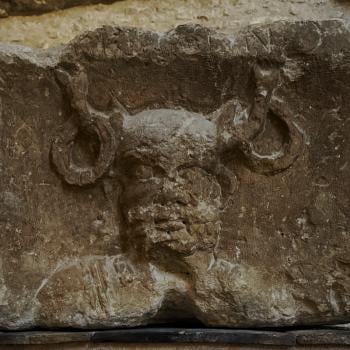
The Pillar of the Boatmen: the Ancient Monument...



TRENDING AT PATHEOS Pagan

Emotion in Early Christianity by Andrew Crislip
Andrew Crislip’s Emotion in Early Christianity examines an often overlooked dimension of...

16 Spiritual Touchstones for a More Grounded Life
After decades of spiritual study, here are 16 principles I try...

Catholic Evangelization: Sharing Your Faith Every Day
Welcome back to the Graceful Awakening mini-series called, “From Faith to Mission.” ...

The Pillar of the Boatmen: the Ancient Monument...
The Pillar of the Boatmen is a Romano-Gaulish sculpture that dates from...

In one sense walking into Westminster Abbey is like walking down the...

'Super Scam Me' Exposes AI Jon Bon Jovi...
Leslie Pickett believed she was in a relationship with Jon Bon Jovi....
view all Pagan blogs
Ad-Free & Subscriber Log-In Subscription Support
- About Us
- 2026 Calendar
- Videos
- Podcasts
- Library of World Religions
- Faith In Media Tracker
- Advertise With Us
- Write for Us
- Privacy Policy
- Terms of Service
- Do Not Sell My Data
- Contact Us
- Radiant Digital
- Manage Newsletter Subscriptions
- Unsubscribe From Notifications
- Sitemap
Copyright 2008-2026, Patheos. All rights reserved.
Subscription Support Ad-Free & Subscriber Log-In
Follow Patheos