
BuddhistCatholicContemplativeEvangelicalGeneral ChristianHinduJewishLatter-day SaintMuslimNew VisionsProgressive Christian
Beliefs
- Buddhist
- Catholic
- Contemplative
- Evangelical
- General Christian
- Hindu
- Jewish
- Latter-day Saint
- More Voices
- Muslim
- New Visions
- Pagan
- Progressive Christian
Topics
- Religion News
- Food and Religion
- Sports and Religion
- Religious Art
- Religious Music and Entertainment
- Religious Events
- History and Religion
- Style and Religion
- Politics and Religion
- Women in Religion
- Recreation Outdoors and Religion
- Business Finance and Religion
- Careers Workplace and Religion
- Education and Religion
- Family Parenting and Religion
- Health Fitness and Religion
- Home and Religion
- Relationships and Religion
- Technology and Religion
- Travel and Religion
Columnists
- Buddhist Columnists
- Business Finance and Religion Columnists
- Careers Workplace and Religion Columnists
- Catholic Columnists
- Contemplative Columnists
- Education and Religion Columnists
- Evangelists Columnists
- Family Parenting and Religion Columnists
- General Christian Columnists
- Health Fitness and Religion Columnists
- Hindu Columnists
- History and Religion Columnists
- Home and Religion Columnists
- Jewish Columnists
- More Voices Columnists
- Latter Day Columnists
- Muslim Columnists
- New Visions Columnists
- Nonreligious Columnists
- Pagan Columnists
- Politics and Religion Columnists
- Progressive Columnists
- Recreation Outdoors and Religion Columnists
- Relationships and Religion Columnists
- Religion News Columnists
- Religious Art Columnists
- Religious Events Columnists
- Religious Music and Entertainment Columnists
- Sports and Religion Columnists
- Style and Religion Columnists
- Technology and Religion Columnists
- Travel and Religion Columnists
- Women in Religion Columnists
Resource Library
- 2026 Calendar
- Library of World Religions
- The 100 Most Holy Places on Earth
- Patheos Answers
- Podcasts
- Videos
- Faith Leaders Database
- Anglican Episcopalian
- Bahai
- Baptist
- Buddhism
- Christianity
- Confucianism
- Eastern Orthodoxy
- Hinduism
- Holiness and Pentecostal
- ISKCON
- Islam
- Judaism
- Lutheran
- Methodist
- The Church of Jesus Christ of Latter-day Saints
- New Age
- Paganism
- Presbytarian and Reformed
- Protestantism
- Religion Behind the Scenes
- Roman Catholic
- Scientology
- Shia Islam
- Sikhism
- Sufism
- Sunni Islam
- Taoism
- Zen
- See all religions
Research Tools
 Ad-Free & Subscriber Log-In Subscription Support
Ad-Free & Subscriber Log-In Subscription Support
Follow Patheos 

- Trending:
- Forgiveness
- |
- Marriage
- |
- Consciousness
- |
- Death Penalty
- |
- Election
- |
- Halloween

- Home
- Pagan
- Inspiration, Imagination, and Experience – A Call For Discernment
Inspiration, Imagination, and Experience – A Call For Discernment
Last updated on: August 23, 2020 at 3:00 am by John Beckett
Inspiration, Imagination, and Experience – A Call For Discernment 2020-08-19T18:53:06-06:00 John Beckett
Patheos Explore the world's faith through different perspectives on religion and spirituality! Patheos has the views of the prevalent religions and spiritualities of the world.
In last week’s post Folklore, Fiction, Scripture, and Myth: Know the Differences! I argued for people to understand that fiction and folklore are two different things. Folklore is grounded in someone’s real-life experiences, while fiction is a product of the imagination.
WanderingDruid raised an important point in the comments:
It feels to me like you are missing a category when you say a story either comes from experience or imagination. What of Awen (inspiration)?
Sometimes when you write a story, it is clearly something created by you. But sometimes it can feel more like the story is a living thing or a whisper from elsewhere, just looking for someone to manifest it in this world.
My post was a response to people who are basing their beliefs about the Fair Folk on fictional stories that are clearly and properly classified as fiction. They’re like those who try to base their witchcraft on Charmed or something like that. It’s one thing to see fictional portrayals of magic and say “I want to learn the reality behind this.” It’s another thing entirely to build your practice on a work of fiction.
Still, we recognize that some stories aren’t just made up. They tap into something deeper and more meaningful. Sometimes this is an insightful author who reads the mood of society, or who spots trends years before they begin to spread.
And sometimes it’s more than that. A quote usually attributed to Carl Jung says “people don’t have ideas – ideas have people.” The Awen doesn’t only come to us for our benefit, it comes to call us into service to something greater than ourselves.
If your worldview includes Gods and spirits who interact with us, then you know that sometimes inspiration comes to us in the form of first-hand experience of them.
So let’s take a deeper look into the question of whether something comes from imagination or experience.

Our experiences are always filtered through our brains
When we’re engaging in imagination, we’re using our brains. And probably some other things, but mainly our brains.
When we’re engaging in experience, we’re using all our senses. But those senses are filtered through our brains, which orient the experiences, contextualize them, and help us interpret them.
What comes to us from an external source and what comes from inside our heads? What is raw experience and what is our interpretation of our experiences? If we aren’t very careful, it’s easy to mistake one for the other.
Know thyself!
I almost never hear anything from a God or spirit with my ears. It’s usually a thought that pops into my head from nowhere.
When I talk with people who are just starting to interact with Gods and spirits, they often ask “how can I be sure I’m not making it all up?”
It’s challenging. But the most straightforward way is to know yourself. Know your thoughts, your feelings, your hopes and fears. Know what’s you. Then when you “hear” something that’s not you, you can be fairly confident it’s coming from an external source.
I remember walking through the crowded lobby of the Doubletree at Pantheacon and recognizing Jason Mankey’s voice out of a loud crowd – it was familiar. Likewise, the more you work with a deity, the more accustomed you grow to Their voice. I recognize the Morrigan and Cernunnos and rarely question if what I’m hearing is really from Them. With, say, Cerridwen, I’m much less certain.
Of course, it helps to have had a strong religious experience that leaves you with no doubts that your deities are real, but that’s another topic for another time.
If you know what’s you it’s much easier to figure out what’s not you.

Sometimes inspiration is both experience and imagination
I can’t tell you how many times I’ve heard “you, Druid – write this!” And so I start writing.
The words are mine. The sentences are mine. The movements in the ritual are mine.
But the ideas that those words, sentences, and movements communicate are not mine. They are the result of my experience.
Sometimes it’s not as straightforward as “you, Druid – write this!” I get the feeling that I need to write about something, not because I have something to say but because something needs to be said. An idea has me, to use Jung’s phrase.
And it’s not just me. Virtually every polytheist writer I know (plus a lot who aren’t polytheists) say the same thing, or something similar.
Important things rarely come through only one channel
We call the wisdom and information we gather through first-hand experiences “UPG” – Unverified Personal Gnosis. This label acknowledges that while these experiences are meaningful and powerful, we can’t expect someone else to take our word that a deity wants them to do this or that… even though sometimes a deity “asks” us to tell them just that.
But our Gods never choose only one prophet. If something is important, I’ll hear it, and you’ll hear it, and someone in another country will hear it. That’s why I often ask “what are you hearing?” in a public forum – our stories provide confirmation for others. If multiple people get the same UPG, it becomes SPG – Shared Personal Gnosis. If enough people get it and accept it, it becomes confirmed gnosis – a new part of the lore of a tradition.
Some of whatever needs to be communicated (whether from the Gods or the Fair Folk or other non-ordinary persons) may come through fiction writers who will incorporate it into their stories – that’s what fiction writers do. So yes, a fiction writer can document what amounts to new or updated folklore in their stories.
But because important things rarely come through only one channel, they won’t be the only ones talking about it.

Experience is inherently anecdotal
UPG is personal experience – my experience happened to me, not to you. You may have a similar experience – that happens a lot – but yours will be different, if only because your experience is filtered through your brain and my experience is filtered through my brain.
The same thing is true with the experiences from long ago (and in some cases, not so long ago) that became our folklore. This thing happened to that person.
When we combine multiple reports of multiple experience over many years, we start to notice patterns. We develop belief systems from those patterns. The more accurate those belief systems are (i.e. – the more they conform to reality) the more useful they’ll be as roadmaps and guides for regular practice and future experiences.
But they are never fully complete. When we come across UPG not supported by lore, it’s possible that things have changed. It’s also possible that we’re just now encountering it. But also, we may also determine that it was mistaken and that we should discard it.
The point is that our Pagan religious traditions are never fixed. While things that have proven true and helpful over the years should never be discarded carelessly, neither should we allow our Paganisms to become stagnant.
Discernment is always required
So, are imagination and experience always separate things? If something contradicts the stories of our ancestors must it be rejected entirely? As always, it’s complicated.
Before you incorporate something into your belief system or your regular practice, see where it comes from. If it comes from the experiences of many people, it’s probably good and useful. If it comes from pop culture, it’s highly suspect.
If the source is questionable but the method seems to work, think about why that might be. Maybe they have a piece of the truth and if you check some other sources you can find more pieces. Maybe they’ve taken artistic license with a sacred tradition, and if the changes are removed you can more fully connect with that tradition and the spiritual persons associated with it.
Or perhaps the Awen is flowing through them and they’re hearing something that the rest of us aren’t… yet. If so, pay attention. You’re likely to be hearing about it from other sources before too long.
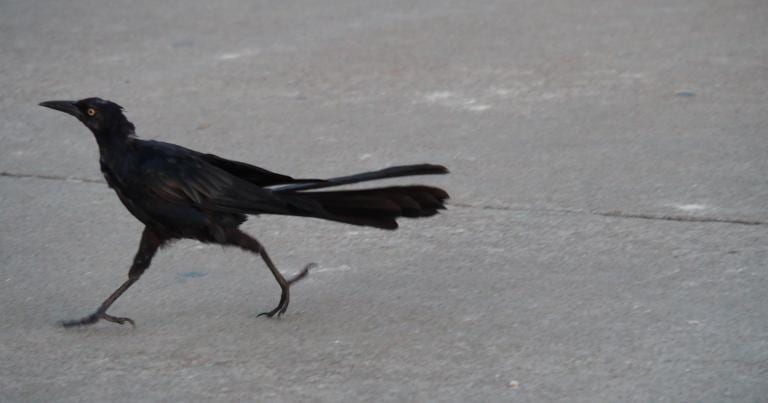
If it works, it’s true… just make sure it really does work
Any time I write about beliefs and concepts, someone will pop up with “who are you to tell me what to believe?”
That’s the wrong question.
You are of course free to believe whatever seems right to you. Religious questions are inherently uncertain and I take a very pragmatic approach to them – if it works for you, I’m happy for you.
But before you become too invested in beliefs that are comfortable and convenient, make sure they really do work. Make sure they’re strong enough and resilient enough to support you when things get tough.
Make sure they’re grounded in experience, not in imagination.
Previous Post

August 20, 2020
9 Things You Can Do To End Fundamentalism
Next Post

August 25, 2020 Sunday Morning in a Park at Dawn
Browse Our Archives
Select a Category Books Community CUUPS Druidry Foundations and Context Gods and Goddesses Magic Myth Nature Ritual Spiritual Practice Theology Travel Uncategorized Videos
Select a Month October 2026 September 2026 August 2026 July 2026 June 2026 May 2026 April 2026 March 2026 February 2026 January 2026 December 2025 November 2025 October 2025 September 2025 August 2025 July 2025 June 2025 May 2025 April 2025 March 2025 February 2025 January 2025 December 2024 November 2024 October 2024 September 2024 August 2024 July 2024 June 2024 May 2024 April 2024 March 2024 February 2024 January 2024 December 2023 November 2023 October 2023 September 2023 August 2023 July 2023 June 2023 May 2023 April 2023 March 2023 February 2023 January 2023 December 2022 November 2022 October 2022 September 2022 August 2022 July 2022 June 2022 May 2022 April 2022 March 2022 February 2022 January 2022 December 2021 November 2021 October 2021 September 2021 August 2021 July 2021 June 2021 May 2021 April 2021 March 2021 February 2021 January 2021 December 2020 November 2020 October 2020 September 2020 August 2020 July 2020 June 2020 May 2020 April 2020 March 2020 February 2020 January 2020 December 2019 November 2019 October 2019 September 2019 August 2019 July 2019 June 2019 May 2019 April 2019 March 2019 February 2019 January 2019 December 2018 November 2018 October 2018 September 2018 August 2018 July 2018 June 2018 May 2018 April 2018 March 2018 February 2018 January 2018 December 2017 November 2017 October 2017 September 2017 August 2017 July 2017 June 2017 May 2017 April 2017 March 2017 February 2017 January 2017 December 2016 November 2016 October 2016 September 2016 August 2016 July 2016 June 2016 May 2016 April 2016 March 2016 February 2016 January 2016 December 2015 November 2015 October 2015 September 2015 August 2015 July 2015 June 2015 May 2015 April 2015 March 2015 February 2015 January 2015 December 2014 November 2014 October 2014 September 2014 August 2014 July 2014 June 2014 May 2014 April 2014 March 2014 February 2014 January 2014 December 2013 November 2013 October 2013 September 2013 August 2013 July 2013 June 2013 May 2013 April 2013 March 2013 February 2013 January 2013 December 2012 November 2012 October 2012 September 2012 August 2012 July 2012 June 2012 May 2012 April 2012 March 2012 February 2012 January 2012 December 2011 November 2011 October 2011 September 2011 August 2011 July 2011 June 2011 May 2011 April 2011 March 2011 February 2011 January 2011 December 2010 November 2010 October 2010 September 2010 August 2010 July 2010 June 2010 May 2010 April 2010 March 2010 February 2010 January 2010 December 2009 November 2009 October 2009 September 2009 August 2009 July 2009 June 2009 May 2009 April 2009 March 2009 February 2009 January 2009 December 2008 November 2008 October 2008 September 2008 August 2008 July 2008 June 2008
Follow Us!
TAKE THE
Religious Wisdom Quiz
Who said, "Even the wind and the waves obey him!"?
Select your answer to see how you score.
John the Baptist The Roman governor Jesus' disciples The Pharisees
Related posts from John Beckett




What We Lose When “Ask AI” Becomes A...
TRENDING AT PATHEOS Pagan

Methodist Central Hall and Westminster Abbey
Situated on the same square is Methodist Central Hall and Westminster Abbey. ...

57th Dove Awards Honor Dolly Parton, Crown New...
On gospel music’s biggest night, the 57th annual GMA Dove Awards honored...

The First Eucharistic Controversy: Christ’s Real Presence
For Catholics, the Eucharist is the source and summit of the Christian...

What a Stop Sign Can Teach Us About...
How to Make a Decision When You Can't Hear God Main point:...

Archdiocese Hosts Military Marriage Retreat in Germany
RASTATT, Germany — The transient military lifestyle, with its frequent deployments and...

Nearly every morning, I make the drive to Detroit with my high-school-age...
view all Pagan blogs
Ad-Free & Subscriber Log-In Subscription Support
- About Us
- 2026 Calendar
- Videos
- Podcasts
- Library of World Religions
- Faith In Media Tracker
- Advertise With Us
- Write for Us
- Privacy Policy
- Terms of Service
- Do Not Sell My Data
- Contact Us
- Radiant Digital
- Manage Newsletter Subscriptions
- Unsubscribe From Notifications
- Sitemap
Copyright 2008-2026, Patheos. All rights reserved.
Subscription Support Ad-Free & Subscriber Log-In
Follow Patheos