
BuddhistCatholicContemplativeEvangelicalGeneral ChristianHinduJewishLatter-day SaintMuslimNew VisionsProgressive Christian
Beliefs
- Buddhist
- Catholic
- Contemplative
- Evangelical
- General Christian
- Hindu
- Jewish
- Latter-day Saint
- More Voices
- Muslim
- New Visions
- Pagan
- Progressive Christian
Topics
- Religion News
- Food and Religion
- Sports and Religion
- Religious Art
- Religious Music and Entertainment
- Religious Events
- History and Religion
- Style and Religion
- Politics and Religion
- Women in Religion
- Recreation Outdoors and Religion
- Business Finance and Religion
- Careers Workplace and Religion
- Education and Religion
- Family Parenting and Religion
- Health Fitness and Religion
- Home and Religion
- Relationships and Religion
- Technology and Religion
- Travel and Religion
Columnists
- Buddhist Columnists
- Business Finance and Religion Columnists
- Careers Workplace and Religion Columnists
- Catholic Columnists
- Contemplative Columnists
- Education and Religion Columnists
- Evangelists Columnists
- Family Parenting and Religion Columnists
- General Christian Columnists
- Health Fitness and Religion Columnists
- Hindu Columnists
- History and Religion Columnists
- Home and Religion Columnists
- Jewish Columnists
- More Voices Columnists
- Latter Day Columnists
- Muslim Columnists
- New Visions Columnists
- Nonreligious Columnists
- Pagan Columnists
- Politics and Religion Columnists
- Progressive Columnists
- Recreation Outdoors and Religion Columnists
- Relationships and Religion Columnists
- Religion News Columnists
- Religious Art Columnists
- Religious Events Columnists
- Religious Music and Entertainment Columnists
- Sports and Religion Columnists
- Style and Religion Columnists
- Technology and Religion Columnists
- Travel and Religion Columnists
- Women in Religion Columnists
Resource Library
- 2026 Calendar
- Library of World Religions
- The 100 Most Holy Places on Earth
- Patheos Answers
- Podcasts
- Videos
- Faith Leaders Database
- Anglican Episcopalian
- Bahai
- Baptist
- Buddhism
- Christianity
- Confucianism
- Eastern Orthodoxy
- Hinduism
- Holiness and Pentecostal
- ISKCON
- Islam
- Judaism
- Lutheran
- Methodist
- The Church of Jesus Christ of Latter-day Saints
- New Age
- Paganism
- Presbytarian and Reformed
- Protestantism
- Religion Behind the Scenes
- Roman Catholic
- Scientology
- Shia Islam
- Sikhism
- Sufism
- Sunni Islam
- Taoism
- Zen
- See all religions
Research Tools
 Ad-Free & Subscriber Log-In Subscription Support
Ad-Free & Subscriber Log-In Subscription Support
Follow Patheos 

- Trending:
- Forgiveness
- |
- Marriage
- |
- Consciousness
- |
- Death Penalty
- |
- Election
- |
- Halloween

- Home
- Pagan
- Pagans and Politics: A Need For Both Action and Devotion
Pagans and Politics: A Need For Both Action and Devotion
Last updated on: February 6, 2020 at 3:00 am by John Beckett
Pagans and Politics: A Need For Both Action and Devotion 2020-02-04T19:53:30-06:00 John Beckett
Patheos Explore the world's faith through different perspectives on religion and spirituality! Patheos has the views of the prevalent religions and spiritualities of the world.
It’s time for another round of Conversations Under the Oaks. This time we begin with two questions about Pagans and politics.
Is it an accurate assumption that Pagans lean toward being politically liberal? I would think yes, since practicing a minority religion would lead one to be more tolerant and accepting of diversity, particularly in religious freedom arena.
Your phrasing of the question is very appropriate – Pagans “lean toward” the liberal side of politics.
I have no hard data. Someone mentioned a study that said 80% of Pagans are liberals. After over 15 years in the Pagan community, that seems about right. We tend to vote Democratic, we support progressive economic policies, and we’re very socially liberal. Many of us would vote for Green Party candidates if they were viable – some vote for them anyway. Some are communists, though more from an anarchist model than from any favorable view of Soviet-style dictatorship.

But 80% is not 100%. There’s a small but significant libertarian current in Paganism – people who support marriage equality, decriminalization of drugs and sex work, and basically want government out of people’s personal lives; but who also want low taxes, minimal public services, and a low – or no – social safety net.
There are a few Pagan Trump supporters. There are probably more than we think, they’re just afraid to admit it in public. Some of them didn’t like Hillary, while others are nationalists who believed Trump really would restore some kind of greatness to the country.
There are fascists in the Pagan movement. Some are obvious and some are not. In 2016 Rhyd Wildermuth wrote a piece for Gods & Radicals listing some of the ideas and personalities in the “New Right.” That essay was overly broad and implicated many Pagan traditions that have no connection to fascism (my rebuttal is here) but its core presentation of facts was and still is accurate and useful.
The days when Paganism (and to a lesser extent, witchcraft) was mostly a thing of the well-educated middle class are over. Today the movement draws from all segments of society, so it should come as no surprise we have political opinions from across the spectrum. Our challenge is to be welcoming to as many political viewpoints as we can, while still knowing where to draw the line.
And that brings us to a related question from a different reader.

Your recent article enjoined your readers to “vote with their hearts” in the Democratic primaries. How does your Paganism interact with your politics? Do you have any advice on how to manage these two things and the connections between them?
There is so much misunderstanding about the relationship between religion and politics in our wider society, and in the Pagan movement.
Religion is where we find our highest values: the inherent worth and dignity of every person, the interconnectedness of all life, the key virtues of hospitality and reciprocity, and much more.
Politics is the collective expression of our values.
The first problem comes when those with political power try to use that power to advance their religion and its doctrines and customs. Things like Christian holidays as public holidays, Christian prayer (or really, any prayer) at public gatherings, restrictions on women’s rights, and legal attacks on LGBTQ people.
You can never fully separate religion and politics. My Pagan religious belief that the Earth is sacred inspires me to support candidates and policies that will reduce pollution, eliminate human-caused extinctions, and promote sustainable farming and energy production. But in the public square it is my responsibility to articulate solid secular reasons for these things and not just claim “the Earth is sacred therefore we must outlaw fracking.” That’s no better than fundamentalists who argue “the Bible says…”

The second problem is that political disagreements can be, well, disagreeable. And so too many Pagans (and other people) say “don’t bring politics into my religion.”
No matter what you intend to say, “I don’t want to discuss politics” means “I support the status quo.” Because if you don’t at least talk about the challenges we face, nothing will ever change. We can’t afford to “just don’t talk about it.” We have to learn how to have difficult conversations about difficult matters.
The third problem occurs when people become so involved with politics they lose connection with their religion. Climate change is important – so is honoring your Gods and ancestors. Universal health care is important – so is daily spiritual practice. Voting and working for political change is important – so is meditation and working for magical change.
If you find yourself saying “but this is so much more important than that” (however “this” and “that” align for you) you’ve missed the point. Both are important. Different people may prioritize one or the other, but as individuals and as a society, we need both.
Politics is no substitute for devotion. Devotion is no substitute for political action.

So, how do I manage this?
First, by doing both. You can see this by scrolling through the blog. Most times I write about religion and spirituality. Sometimes I write about politics. Sometimes I write about their intersection and overlap, as with the Tower Time posts.
Second, by trying to keep political zealotry to a minimum. All political philosophies, systems, and candidates have their strengths and weaknesses – often what we choose is less important than how we implement it.
Most contentious issues are complicated and we can agree to disagree, up to a point. For example, I favor very liberal immigration policies because I believe hospitality demands we open our doors to those in need. If you prefer restricted immigration policies to protect the jobs and wages of the American poor, I respect that.
However, if you want to keep people out of the country because they don’t look or sound like you, and especially if you want to treat refugees like criminals, separate families, and put kids in cages and camps, I do not respect your opinion and I’m going to have a very hard time standing in circle with you.
That’s the third thing I do – draw boundaries with careful consideration, but draw them where they’re necessary.
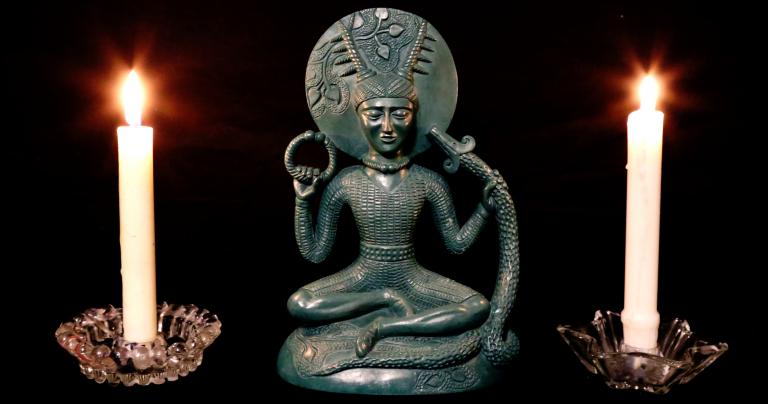
Finally, there’s another line to be drawn – a line between being a responsible and engaged citizen on one hand, and being obsessed with politics on the other. If we become obsessed with politics – particularly as a spectator – we put our faith in the wrong thing.
You may think government is strong, but Nature is stronger. You may think politics is strong, but the human spirit is stronger. You may think the law is strong, but magic is stronger.
Who can stand against us when we align ourselves with the currents of Nature? Who can stand against us when we ally ourselves with all our Neighbors in honor and respect? Who can stand against us when rank upon rank of mighty ancestors surround us? And who can stand against us when we ally ourselves with the Gods?
We are living in Tower Time. We are living in the last throes of Empire, and those in power are not going quietly. We may not be able to change the system, but we can make the system irrelevant in our lives and in the lives of those around us.
Alone, we will be trampled.
Together, who can stand against us?
Previous Post

February 4, 2020
Animism: Relating to Persons Who Aren’t Human

Browse Our Archives
Select a Category Books Community CUUPS Druidry Foundations and Context Gods and Goddesses Magic Myth Nature Ritual Spiritual Practice Theology Travel Uncategorized Videos
Select a Month October 2026 September 2026 August 2026 July 2026 June 2026 May 2026 April 2026 March 2026 February 2026 January 2026 December 2025 November 2025 October 2025 September 2025 August 2025 July 2025 June 2025 May 2025 April 2025 March 2025 February 2025 January 2025 December 2024 November 2024 October 2024 September 2024 August 2024 July 2024 June 2024 May 2024 April 2024 March 2024 February 2024 January 2024 December 2023 November 2023 October 2023 September 2023 August 2023 July 2023 June 2023 May 2023 April 2023 March 2023 February 2023 January 2023 December 2022 November 2022 October 2022 September 2022 August 2022 July 2022 June 2022 May 2022 April 2022 March 2022 February 2022 January 2022 December 2021 November 2021 October 2021 September 2021 August 2021 July 2021 June 2021 May 2021 April 2021 March 2021 February 2021 January 2021 December 2020 November 2020 October 2020 September 2020 August 2020 July 2020 June 2020 May 2020 April 2020 March 2020 February 2020 January 2020 December 2019 November 2019 October 2019 September 2019 August 2019 July 2019 June 2019 May 2019 April 2019 March 2019 February 2019 January 2019 December 2018 November 2018 October 2018 September 2018 August 2018 July 2018 June 2018 May 2018 April 2018 March 2018 February 2018 January 2018 December 2017 November 2017 October 2017 September 2017 August 2017 July 2017 June 2017 May 2017 April 2017 March 2017 February 2017 January 2017 December 2016 November 2016 October 2016 September 2016 August 2016 July 2016 June 2016 May 2016 April 2016 March 2016 February 2016 January 2016 December 2015 November 2015 October 2015 September 2015 August 2015 July 2015 June 2015 May 2015 April 2015 March 2015 February 2015 January 2015 December 2014 November 2014 October 2014 September 2014 August 2014 July 2014 June 2014 May 2014 April 2014 March 2014 February 2014 January 2014 December 2013 November 2013 October 2013 September 2013 August 2013 July 2013 June 2013 May 2013 April 2013 March 2013 February 2013 January 2013 December 2012 November 2012 October 2012 September 2012 August 2012 July 2012 June 2012 May 2012 April 2012 March 2012 February 2012 January 2012 December 2011 November 2011 October 2011 September 2011 August 2011 July 2011 June 2011 May 2011 April 2011 March 2011 February 2011 January 2011 December 2010 November 2010 October 2010 September 2010 August 2010 July 2010 June 2010 May 2010 April 2010 March 2010 February 2010 January 2010 December 2009 November 2009 October 2009 September 2009 August 2009 July 2009 June 2009 May 2009 April 2009 March 2009 February 2009 January 2009 December 2008 November 2008 October 2008 September 2008 August 2008 July 2008 June 2008
Follow Us!
TAKE THE
Religious Wisdom Quiz
Who urged Esther to approach the king, saying, "For such a time as this"?
Select your answer to see how you score.
Nehemiah Mordecai Haggai Ezra
Related posts from John Beckett


The Vampire Films of Jean Rollin


Bo French Doesn’t Understand Texas
TRENDING AT PATHEOS Pagan

Janie Learns the Way of the Cross: A...
Teaching children about Jesus' Passion can be challenging. Many parents and educators...

Looking For Good Catholic Writing - October 2026
He alone extends the heavens, and he walks upon the waves of...

In "Irreplaceable," our book on vocation and technology, Trevor Sutton and I...

I was strolling through the top floor of the brand new Parthenon...

What Does Gêvâh Mean For Kimberley Guifoyle &...
This week, a lot of the news is focused on Kimberly Guilfoyle....

INNER CIRCLE: Profound Mystery (Of Christ In All...
Ephesians 5:31-32 “For this reason, a man will leave his father and...
view all Pagan blogs
Ad-Free & Subscriber Log-In Subscription Support
- About Us
- 2026 Calendar
- Videos
- Podcasts
- Library of World Religions
- Faith In Media Tracker
- Advertise With Us
- Write for Us
- Privacy Policy
- Terms of Service
- Do Not Sell My Data
- Contact Us
- Radiant Digital
- Manage Newsletter Subscriptions
- Unsubscribe From Notifications
- Sitemap
Copyright 2008-2026, Patheos. All rights reserved.
Subscription Support Ad-Free & Subscriber Log-In
Follow Patheos