
BuddhistCatholicContemplativeEvangelicalGeneral ChristianHinduJewishLatter-day SaintMuslimNew VisionsProgressive Christian
Beliefs
- Buddhist
- Catholic
- Contemplative
- Evangelical
- General Christian
- Hindu
- Jewish
- Latter-day Saint
- More Voices
- Muslim
- New Visions
- Pagan
- Progressive Christian
Topics
- Religion News
- Food and Religion
- Sports and Religion
- Religious Art
- Religious Music and Entertainment
- Religious Events
- History and Religion
- Style and Religion
- Politics and Religion
- Women in Religion
- Recreation Outdoors and Religion
- Business Finance and Religion
- Careers Workplace and Religion
- Education and Religion
- Family Parenting and Religion
- Health Fitness and Religion
- Home and Religion
- Relationships and Religion
- Technology and Religion
- Travel and Religion
Columnists
- Buddhist Columnists
- Business Finance and Religion Columnists
- Careers Workplace and Religion Columnists
- Catholic Columnists
- Contemplative Columnists
- Education and Religion Columnists
- Evangelists Columnists
- Family Parenting and Religion Columnists
- General Christian Columnists
- Health Fitness and Religion Columnists
- Hindu Columnists
- History and Religion Columnists
- Home and Religion Columnists
- Jewish Columnists
- More Voices Columnists
- Latter Day Columnists
- Muslim Columnists
- New Visions Columnists
- Nonreligious Columnists
- Pagan Columnists
- Politics and Religion Columnists
- Progressive Columnists
- Recreation Outdoors and Religion Columnists
- Relationships and Religion Columnists
- Religion News Columnists
- Religious Art Columnists
- Religious Events Columnists
- Religious Music and Entertainment Columnists
- Sports and Religion Columnists
- Style and Religion Columnists
- Technology and Religion Columnists
- Travel and Religion Columnists
- Women in Religion Columnists
Resource Library
- 2026 Calendar
- Library of World Religions
- The 100 Most Holy Places on Earth
- Patheos Answers
- Podcasts
- Videos
- Faith Leaders Database
- Anglican Episcopalian
- Bahai
- Baptist
- Buddhism
- Christianity
- Confucianism
- Eastern Orthodoxy
- Hinduism
- Holiness and Pentecostal
- ISKCON
- Islam
- Judaism
- Lutheran
- Methodist
- The Church of Jesus Christ of Latter-day Saints
- New Age
- Paganism
- Presbytarian and Reformed
- Protestantism
- Religion Behind the Scenes
- Roman Catholic
- Scientology
- Shia Islam
- Sikhism
- Sufism
- Sunni Islam
- Taoism
- Zen
- See all religions
Research Tools
 Ad-Free & Subscriber Log-In Subscription Support
Follow Patheos 

- Trending:
- Advent
- |
- Forgiveness
- |
- Thanksgiving
- |
- Election
- |
- Seasonal Holidays
- |
- Marriage

- Home
- Pagan
- Stories are Myths – Gods are Persons
Stories are Myths – Gods are Persons
Last updated on: January 19, 2020 at 3:00 am by John Beckett
Stories are Myths – Gods are Persons 2020-01-15T13:54:03-06:00 John Beckett
Patheos Explore the world's faith through different perspectives on religion and spirituality! Patheos has the views of the prevalent religions and spiritualities of the world.
I’m getting ready to teach an on-line class on Building a New Myth and I came across this interview from the National Catholic Register. French philosopher Chantal Delsol discusses Post-Christendom and the Return of Paganism in the West. Now of course, by “Paganism” she doesn’t mean what we do here (for the most part). Rather, she uses the term in its imperial sense: not like me, therefore wrong and in need of correction.
Instead of ranting against the NCR piece, I think it’s helpful to use it to illustrate some of the misunderstandings our mainstream culture (and by extension all of us, unless we are very mindful) has about myths.
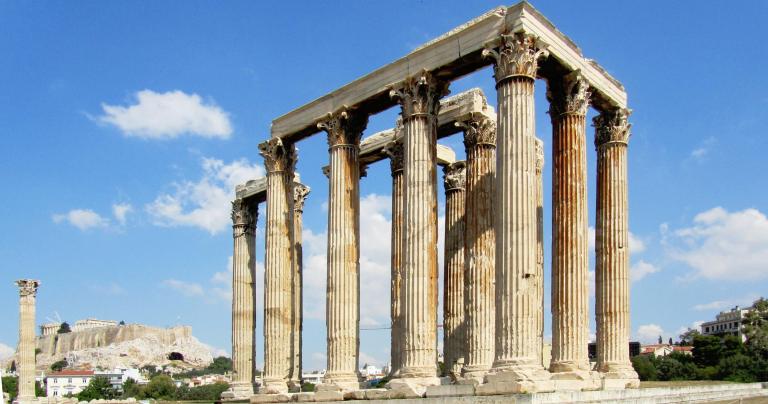
“Paganism is all about myths” and other errors
Chantal Delsol is a philosophy professor in France who has written numerous books and scholarly articles. Most of them are in French, and while Google Translate is helpful I’m reluctant to use it to dissect her writing. But the interview is in English, and the ideas I want to discuss are not easily confused in translation.
I’m troubled by Delsol’s frequent use of “Judeo-Christian.” Yes, Judaism and Christianity have common roots, but they’ve been different religions for 2000 years. And for most of that 2000 years Christians have been trying to eliminate Jews by conversion, expulsion, or murder. More relevantly here, the philosophy and especially the theology Delsol espouses is Christian, not Jewish.
Delsol is correct that myths are stories that give meaning, and that all people have myths. But when she says that Paganism is only about myths, she’s flat-out wrong.
People raise statues to myths and metaphors all the time – that’s how we got so many “Pagan” statues in Christian-dominated America. But nobody becomes a priest of a myth or makes ritual sacrifice to a myth. While the evidence indicates a diversity of belief (and occasionally, of unbelief) in ancient times, most of those beliefs were centered around the reality of the Gods.
Socrates’ last words were “Crito, we owe a cock to Asclepius – pay it and don’t forget.” Myths can bring comfort in the face of death, but no one owes a debt to a myth, much less makes paying it their dying words. Socrates was an exceptional individual, but in this regard he was typical of his religion and culture – and really, of most religions and cultures.
The stories of the many Gods are myths. They tell us something about the Gods and in the process they help us understand how to live. But behind the stories lies the reality of the persons we call Gods.
Misunderstanding religious history is one thing. More critical is our wider society’s misunderstanding of the role of historicity in stories.
Truth is more than historicity
Delsol repeats orthodox Christian doctrine when she says “Christ is no longer a myth but a true story.”
The context makes the meaning clear: a true story is an accurate account of an event that actually happened. Certainly that’s one definition. But in a religious setting there are two problems with it.
The first problem is that there is substantial reason to doubt the historicity of the stories of Jesus. At the top of the list are the implausibility of a virgin (in the contemporary meaning of the word) giving birth and of a bodily resurrection from the dead. More importantly, the gospels were not written as a newspaper report – they were written as a religious message to encourage people to become Christians.
But even if those stories are historically accurate (and to be clear, I do not believe they are), they do not prove the Truth-with-a-capital-T that Catholics, Evangelicals, and other exclusivist Christians claim for their religions. And that’s because any story – whether historical, mythical, or fictional – still has to be interpreted. Catholics have one way of interpreting that story. Evangelicals have a rather different one. Mainline Protestants have yet another. So do Unitarian Christians, who believe in “the unity of God and the humanity of Jesus.” Perhaps one of those interpretations is True, but if so which one? More likely, all of them contain truth but none of them are True.
Alfred North Whitehead said “There are no whole truths; all truths are half-truths. It is trying to treat them as whole truths that plays the devil.”
Truth-with-a-capital-T requires more than an accurate set of facts. It requires an interpretation – something to tell us what it means and how we should respond.
And now we’re back into the territory of myths.

Christian domination: 2000 years of Akhenaten
In 1348 BCE (we think), Pharaoh Amenhotep IV of Egypt changed his name to Akhenaten and began worshipping only the Aten, a Sun God. He removed royal patronage from all other deities and Their temples and priesthoods. The extent to which he forbade Their private worship is uncertain, though it seems likely.
It was not a popular move. After his death traditional polytheist worship was restored and his name was erased from history. We only know about him because the city he built was abandoned and then rediscovered in the 19th century.
Monotheism is simply not natural for humans. The story of Christianity – and of Islam – is at least in part the story of a never-ending fight to stamp out heresy and to maintain orthodoxy.
We experience many Gods and spirits, not just one. We see the agency of many deities in the world, not just one. Left to themselves, people intuitively begin to petition the God of This or the Goddess of That to look favorably on them. They intuitively begin to deify ancestors. They intuitively see the sacred in Nature.
There is value in the teachings of Jesus, no matter where they came from. Love your God and love your neighbor is true wisdom. But Christian orthodoxy is counterintuitive and requires constant reinforcement to maintain. And the days when the Church had Akhenaten-like powers to outlaw its competition are gone.
And so in this, Chantal Delsol is exactly correct – “Christendom” is over and the West is returning to Paganism. Not Classical Paganism and not the kind of Paganism I practice, at least not always. But rather, the kind of animistic polytheist religion that is intuitive to all of humanity.

The role of myths in modern Pagan religion
The stories our ancestors told about the Gods are treasures. They tell us something about both Gods and ancestors, and in many cases they are our best connection to the religions which were driven to extinction by the expansion of Christianity.
The question of whether these stories are historically true is not relevant – the stories are not our Gods. Rather, these stories point us toward our Gods. They tell us how to approach Them, how to relate to Them, and – perhaps most importantly in this time of polytheist restoration – how to recognize Them when we encounter Them.
This is where the Truth of the Gods is found: in our prayers, in our meditations, and in our offerings. It’s found in our ecstatic communion with Them. It’s found in Their virtues and in our helpful-if-always-imperfect attempts to embody those virtues – because in doing so, we become a little more God-like ourselves.
Truth is more than the historicity of a story. Truth is the reality behind the story – the reality of the many Gods.
Previous Post

January 16, 2020
Six Ways and The Morrigan – Two Books Worth Reading
Next Post

January 21, 2020 Building Paganism in a Culture that Trivializes the Sacred
Browse Our Archives
Select a Category Books Community CUUPS Druidry Foundations and Context Gods and Goddesses Magic Myth Nature Ritual Spiritual Practice Theology Travel Uncategorized Videos
Select a Month November 2026 October 2026 September 2026 August 2026 July 2026 June 2026 May 2026 April 2026 March 2026 February 2026 January 2026 December 2025 November 2025 October 2025 September 2025 August 2025 July 2025 June 2025 May 2025 April 2025 March 2025 February 2025 January 2025 December 2024 November 2024 October 2024 September 2024 August 2024 July 2024 June 2024 May 2024 April 2024 March 2024 February 2024 January 2024 December 2023 November 2023 October 2023 September 2023 August 2023 July 2023 June 2023 May 2023 April 2023 March 2023 February 2023 January 2023 December 2022 November 2022 October 2022 September 2022 August 2022 July 2022 June 2022 May 2022 April 2022 March 2022 February 2022 January 2022 December 2021 November 2021 October 2021 September 2021 August 2021 July 2021 June 2021 May 2021 April 2021 March 2021 February 2021 January 2021 December 2020 November 2020 October 2020 September 2020 August 2020 July 2020 June 2020 May 2020 April 2020 March 2020 February 2020 January 2020 December 2019 November 2019 October 2019 September 2019 August 2019 July 2019 June 2019 May 2019 April 2019 March 2019 February 2019 January 2019 December 2018 November 2018 October 2018 September 2018 August 2018 July 2018 June 2018 May 2018 April 2018 March 2018 February 2018 January 2018 December 2017 November 2017 October 2017 September 2017 August 2017 July 2017 June 2017 May 2017 April 2017 March 2017 February 2017 January 2017 December 2016 November 2016 October 2016 September 2016 August 2016 July 2016 June 2016 May 2016 April 2016 March 2016 February 2016 January 2016 December 2015 November 2015 October 2015 September 2015 August 2015 July 2015 June 2015 May 2015 April 2015 March 2015 February 2015 January 2015 December 2014 November 2014 October 2014 September 2014 August 2014 July 2014 June 2014 May 2014 April 2014 March 2014 February 2014 January 2014 December 2013 November 2013 October 2013 September 2013 August 2013 July 2013 June 2013 May 2013 April 2013 March 2013 February 2013 January 2013 December 2012 November 2012 October 2012 September 2012 August 2012 July 2012 June 2012 May 2012 April 2012 March 2012 February 2012 January 2012 December 2011 November 2011 October 2011 September 2011 August 2011 July 2011 June 2011 May 2011 April 2011 March 2011 February 2011 January 2011 December 2010 November 2010 October 2010 September 2010 August 2010 July 2010 June 2010 May 2010 April 2010 March 2010 February 2010 January 2010 December 2009 November 2009 October 2009 September 2009 August 2009 July 2009 June 2009 May 2009 April 2009 March 2009 February 2009 January 2009 December 2008 November 2008 October 2008 September 2008 August 2008 July 2008 June 2008
Follow Us!
TAKE THE
Religious Wisdom Quiz
What color is the first horse in Revelation 6?
Select your answer to see how you score.
Pale White Red Black
Related posts from John Beckett

Pagans And The Rise Of The Religious Left

Why Halloween Is So Popular – And So...
The Pillar of the Boatmen: the Ancient Monument...
TRENDING AT PATHEOS Pagan

The Wasp And I: Meditations on Repentance
How can we enter the power and joy of the repentant self...

Reflections on the Evangelical Theological Society
As I mentioned before, this year, for the first time since 2005,...

Demmed if it do and demmed if it...
"First Presidency Announces Salt Lake Temple Rededication Date" Apropos of that,...

Stop Making Thanksgiving Problematic And Just Give Thanks
“What if, today, we were grateful for everything?” –Charlie Brown I...

Sunday Readings: Stay Awake and Hope
The First Sunday of Advent begins a new liturgical year, and the...

Are You a Scrooge or an Ebenezer?
A Call to Remember As the Christmas season begins, will we remember...
view all Pagan blogs
Ad-Free & Subscriber Log-In Subscription Support
- About Us
- 2026 Calendar
- Videos
- Podcasts
- Library of World Religions
- Faith In Media Tracker
- Advertise With Us
- Write for Us
- Privacy Policy
- Terms of Service
- Do Not Sell My Data
- Contact Us
- Radiant Digital
- Manage Newsletter Subscriptions
- Unsubscribe From Notifications
- Sitemap
Copyright 2008-2026, Patheos, part of the Radiant Digital network of media brands. All rights reserved.
Subscription Support Ad-Free & Subscriber Log-In
Follow Patheos