
BuddhistCatholicContemplativeEvangelicalGeneral ChristianHinduJewishLatter-day SaintMuslimNew VisionsProgressive Christian
Beliefs
- Buddhist
- Catholic
- Contemplative
- Evangelical
- General Christian
- Hindu
- Jewish
- Latter-day Saint
- More Voices
- Muslim
- New Visions
- Pagan
- Progressive Christian
Topics
- Religion News
- Food and Religion
- Sports and Religion
- Religious Art
- Religious Music and Entertainment
- Religious Events
- History and Religion
- Style and Religion
- Politics and Religion
- Women in Religion
- Recreation Outdoors and Religion
- Business Finance and Religion
- Careers Workplace and Religion
- Education and Religion
- Family Parenting and Religion
- Health Fitness and Religion
- Home and Religion
- Relationships and Religion
- Technology and Religion
- Travel and Religion
Columnists
- Buddhist Columnists
- Business Finance and Religion Columnists
- Careers Workplace and Religion Columnists
- Catholic Columnists
- Contemplative Columnists
- Education and Religion Columnists
- Evangelists Columnists
- Family Parenting and Religion Columnists
- General Christian Columnists
- Health Fitness and Religion Columnists
- Hindu Columnists
- History and Religion Columnists
- Home and Religion Columnists
- Jewish Columnists
- More Voices Columnists
- Latter Day Columnists
- Muslim Columnists
- New Visions Columnists
- Nonreligious Columnists
- Pagan Columnists
- Politics and Religion Columnists
- Progressive Columnists
- Recreation Outdoors and Religion Columnists
- Relationships and Religion Columnists
- Religion News Columnists
- Religious Art Columnists
- Religious Events Columnists
- Religious Music and Entertainment Columnists
- Sports and Religion Columnists
- Style and Religion Columnists
- Technology and Religion Columnists
- Travel and Religion Columnists
- Women in Religion Columnists
Resource Library
- 2026 Calendar
- Library of World Religions
- The 100 Most Holy Places on Earth
- Patheos Answers
- Podcasts
- Videos
- Faith Leaders Database
- Anglican Episcopalian
- Bahai
- Baptist
- Buddhism
- Christianity
- Confucianism
- Eastern Orthodoxy
- Hinduism
- Holiness and Pentecostal
- ISKCON
- Islam
- Judaism
- Lutheran
- Methodist
- The Church of Jesus Christ of Latter-day Saints
- New Age
- Paganism
- Presbytarian and Reformed
- Protestantism
- Religion Behind the Scenes
- Roman Catholic
- Scientology
- Shia Islam
- Sikhism
- Sufism
- Sunni Islam
- Taoism
- Zen
- See all religions
Research Tools
 Ad-Free & Subscriber Log-In Subscription Support
Follow Patheos 

- Trending:
- Advent
- |
- Forgiveness
- |
- Thanksgiving
- |
- Election
- |
- Seasonal Holidays
- |
- Marriage

- Home
- Pagan
- A Letter to Beginning Polytheists
A Letter to Beginning Polytheists
Last updated on: January 23, 2020 at 3:00 am by John Beckett
A Letter to Beginning Polytheists 2020-01-20T20:16:19-06:00 John Beckett
Patheos Explore the world's faith through different perspectives on religion and spirituality! Patheos has the views of the prevalent religions and spiritualities of the world.
One of the reasons I keep this blog is to be a resource for people who come into the Big Tent of Paganism.
A few know exactly what they’re looking for, they’re just not sure where to find it. Others have a vague idea of what they need (or what they don’t need) and they’re looking for more details. Many, though, are so overwhelmed by our Christian-dominated, atheist-influenced society they have no idea what’s even possible.
Especially those who feel called by or called to one or more of the many Gods.
There are plenty of books, blogs, and websites devoted to Wicca and to every form of witchcraft imaginable. There is less for Druidry but still quite a bit.
For polytheism there is much, much less.
Polytheism is not a religion. Rather, it is a religious outlook or perhaps, a religious orientation. There are many polytheist religions. Some are centered on ethnic identities. Some are attempts to re-create the religions of our ancient ancestors. A few are living indigenous traditions going back thousands of years. What they share – what makes each religion a polytheist religion – is the religious regard for many real Gods (to borrow the definition first proposed by the Anomalous Thracian).
I’m not an authority on all these religions. I’m not an authority on any of them. What I am is someone who has traveled the road from monotheism to deism to Paganism to what I call (for lack of a better term) ancestral, devotional, ecstatic, oracular, magical, public, Pagan polytheism. Along the way I’ve learned some things, things that may be useful to beginning polytheists.
And so here is my letter to beginning polytheists.
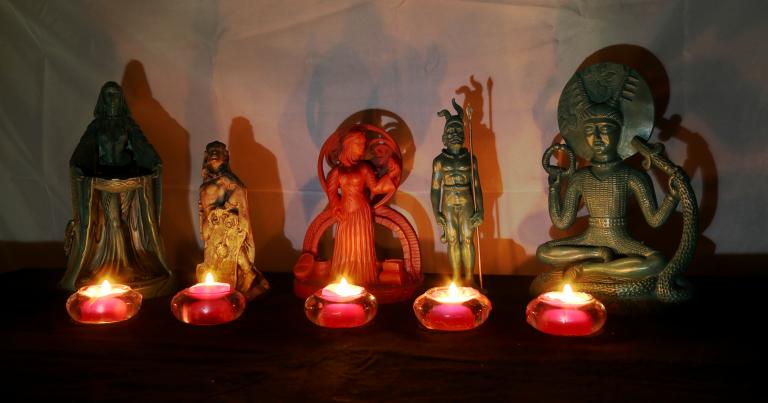
the Gods whose statues sit on my altar: Danu, the Morrigan, Brighid, Lugh, and Cernunnos
Worship the Gods
This is where polytheism begins – with the worship of one or more of the many Gods.
Worship is not self-debasement. Worship is proclaiming what we find worthy – and there is nothing more worthy than the Gods.
Worship Them with offerings of food, drink, and incense. Worship them with song, dance, and poetry. Tell Their stories and proclaim Their mighty deeds, both ancient and modern. Honor Them with your service to Their virtues and values, and with your labor to re-establish Their place of prominence in human society.
There are many ways to worship – choose the one that seems most right to you. But make Their worship the center of your practice.
Honor your ancestors
Strictly speaking, ancestor veneration is not a requirement of polytheism. But I know of no polytheist religion, ancient or modern, that does not include reverence for its ancestors.
We owe a debt to those who came before us. We have a sacred obligation to honor our ancestors of blood, for without them we would not be. We also have an obligation to honor our ancestors of spirit, those who created the religious and spiritual foundations upon which we build.
Our ancestors are often our most readily available spiritual allies. Beyond our sacred obligations, there are practical reasons to keep them present in your life. Honor them on a regular basis.
Don’t forget the other spirits in your life
Our Gods and ancestors are important. So are the spirits of the places where we live and work and visit. So are the Fair Folk and other persons who share the land with us. Do your best to form and maintain good relationships with all of them.
Remember that they’re persons with their own lives and own priorities – they’re not here to be your teachers, much less to serve you. But it helps to be on good speaking terms with your neighbors – all your neighbors.
Learn from the past – live in the present
The stories our ancient ancestors told about their Gods are treasures. So are their temples and other holy places, even if all that’s left are ruins. Mainstream scholarship has been very helpful as we attempt to puzzle out the key beliefs and practices of religions that haven’t been actively practiced in over a thousand years. As polytheists we need to learn as much as we can from history, archaeology, anthropology, and the other social sciences.
At the same time, we are not Pharaonic Egyptians or pre-Roman Celts. We are different people living in different places at a different time. Our polytheist religions should be grounded in the past, but they must live in the present – they must speak to our culture, environment, and relationships here today.
If you believe the Gods spoke (in any sense of the term) to our ancestors and told them how They should be worshipped, there is no reason not to believe those same Gods will speak to us here and now and tell us what we need to know to honor Them properly.
Of course, that means we have to actually listen for Them. And when we hear Them, it means we have to pay attention to what we hear.
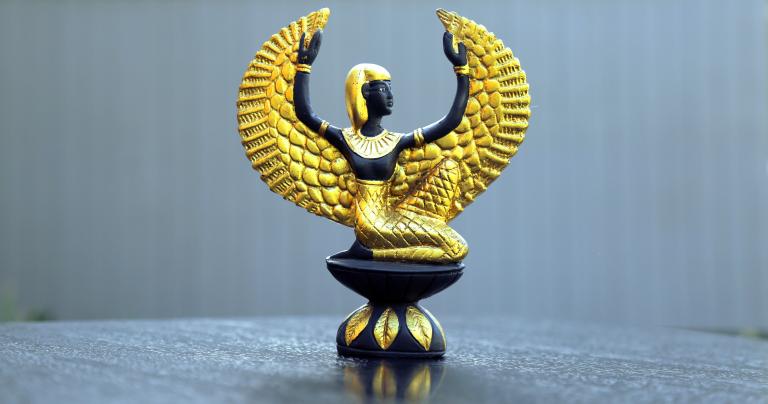
Auset – better known as Isis
You don’t need a patron deity
I’m not sure where the idea that everyone should have a patron deity came from, but it’s rather common in the Pagan movement. In ancient times, deities were patrons of cities or nations or professions, but rarely of individuals.
You don’t need a patron deity to be a polytheist. You don’t need to be called. All you need is the desire to honor one or more of the Gods, and then to act on that desire. It is always good to worship the Gods.
Priesthood is not the only way to serve
Honoring a God does not make you Their priest – it makes you Their devotee. Priesthood is a formal relationship that focuses on service to a specific deity or group of deities. It has requirements that are sometimes harsh and it should never be taken lightly.
This is also a good time to point out that our popular image of a priest is drawn heavily from what we see Catholic priests and Protestant ministers doing. That wasn’t what polytheist priests did in ancient times, and it’s not necessarily what our Gods are calling priests to do in our time.
Both the Gods and the polytheist movement have a need for sacred service in ways that are not priesthood: community service, academic research, theological and philosophical work, and much more. Find the role where you can do the most good.
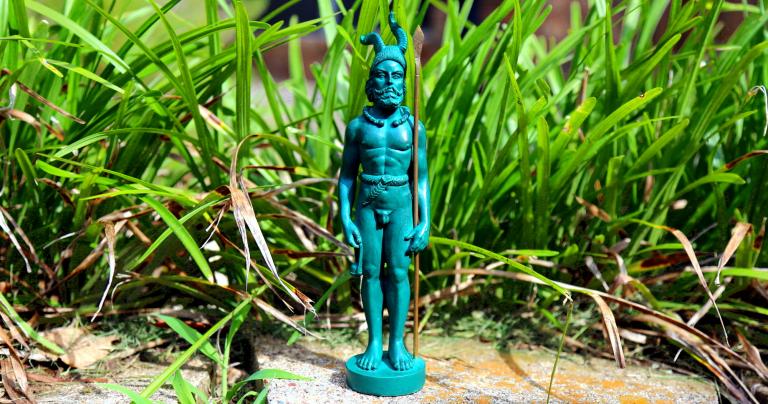
Lugh
You will never understand the Gods – try anyway
I have previously compared humans contemplating the nature of the Gods to cats contemplating the nature of humans. We can know a few things about the Gods because we experience Them and we have relationships with Them. But however wise we may be, the Gods are more. So much more that our theologies say as much about how we see ourselves as how we see the Gods.
If you are in a relationship with another human, you naturally want to know all you can about them. The same is true of our relationships with the Gods. There is value in contemplating Their nature, and especially in the dialogue such contemplation produces.
But if you ever get to the point where you’re absolutely sure you know exactly who They are and what They want, turn around. You’ve made a wrong turn somewhere.
Listen to the wise, ignore the foolish
Many people are eager to tell you all they know about this God or that Goddess or about the Gods in general. Others are more reserved, but when prompted will share what they know from history, tradition, or personal experience. Learning from the wise can be very helpful. Trying to learn from the foolish is not.
So who is wise and who is foolish? That’s the challenge, isn’t it?
I respect people who state facts and cite sources, especially those who understand the limitations of their sources. UPG (unverified personal gnosis) is real and it can be helpful, but it is only authoritative for those who receive it, or who choose to accept it. Good history is generally reliable, but just because they did it one way in ancient times doesn’t mean we must do it that way now – or that we should do it at all.
Mainly I respect people who understand that religious questions are ultimately uncertain, and that foundational assumptions are critical. If someone sees the world in much the same way as I do, I’m going to pay careful attention to their opinions. If their worldview is filled with concepts from monotheism or from atheism, I’m not going to pay much attention at all.
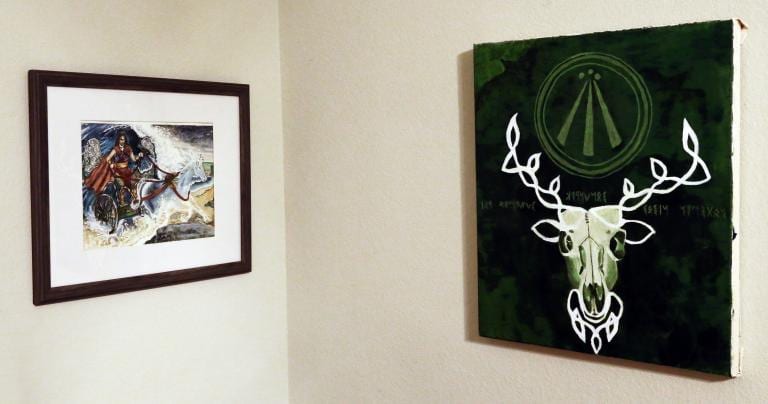
Manannan mac Lyr (painting by Ashley Bryner) and Cernunnos Denton (painting by Morgan Milburn)
You must choose your path
Which God or Gods will you follow? How will you worship Them? How will you incorporate non-divine persons into your practice? How much weight will you give to what is known about how our ancestors worshipped these deities?
These are only a few of the questions you must answer. There are some current groups that have established religions around the worship of certain deities. If you find one of them – and if you’re compatible with them – they may be able to answer some of these questions for you.
Most likely, though, you’ll be trying to answer these questions on your own. And that’s OK.
Remember: there is no such thing as “my truth.” Something is either true or it isn’t. But there is “the truth as I see it” – your best guess based on your research and experience.
We are not Christian or Islamic fundamentalists – choosing the “wrong” God or worshipping Them in the “wrong” way will not cost you your soul. But our religions contain our most sacred relationships, and we must approach them in the way we honestly think best, not in the way some authority figure tells us we must.
But you don’t have to travel it alone
Whichever God or Gods you decide to worship, whatever theologies you subscribe to, whatever spiritual practices you adopt to maintain and enhance your sacred relationships, the odds are good someone else is doing much the same thing, if not exactly in the same way.
Find them.
Humans are social animals and religion is a group effort. Together we can do more, and better. Besides, it’s just more fun with more people. And also more complicated, but I prefer complicated to alone.
May the Gods bless you as you respond to Their call!
Previous Post

January 21, 2020
Building Paganism in a Culture that Trivializes the Sacred
Next Post

January 26, 2020 A Practical Guide to Pagan Priesthood: A Book Review
Browse Our Archives
Select a Category Books Community CUUPS Druidry Foundations and Context Gods and Goddesses Magic Myth Nature Ritual Spiritual Practice Theology Travel Uncategorized Videos
Select a Month November 2026 October 2026 September 2026 August 2026 July 2026 June 2026 May 2026 April 2026 March 2026 February 2026 January 2026 December 2025 November 2025 October 2025 September 2025 August 2025 July 2025 June 2025 May 2025 April 2025 March 2025 February 2025 January 2025 December 2024 November 2024 October 2024 September 2024 August 2024 July 2024 June 2024 May 2024 April 2024 March 2024 February 2024 January 2024 December 2023 November 2023 October 2023 September 2023 August 2023 July 2023 June 2023 May 2023 April 2023 March 2023 February 2023 January 2023 December 2022 November 2022 October 2022 September 2022 August 2022 July 2022 June 2022 May 2022 April 2022 March 2022 February 2022 January 2022 December 2021 November 2021 October 2021 September 2021 August 2021 July 2021 June 2021 May 2021 April 2021 March 2021 February 2021 January 2021 December 2020 November 2020 October 2020 September 2020 August 2020 July 2020 June 2020 May 2020 April 2020 March 2020 February 2020 January 2020 December 2019 November 2019 October 2019 September 2019 August 2019 July 2019 June 2019 May 2019 April 2019 March 2019 February 2019 January 2019 December 2018 November 2018 October 2018 September 2018 August 2018 July 2018 June 2018 May 2018 April 2018 March 2018 February 2018 January 2018 December 2017 November 2017 October 2017 September 2017 August 2017 July 2017 June 2017 May 2017 April 2017 March 2017 February 2017 January 2017 December 2016 November 2016 October 2016 September 2016 August 2016 July 2016 June 2016 May 2016 April 2016 March 2016 February 2016 January 2016 December 2015 November 2015 October 2015 September 2015 August 2015 July 2015 June 2015 May 2015 April 2015 March 2015 February 2015 January 2015 December 2014 November 2014 October 2014 September 2014 August 2014 July 2014 June 2014 May 2014 April 2014 March 2014 February 2014 January 2014 December 2013 November 2013 October 2013 September 2013 August 2013 July 2013 June 2013 May 2013 April 2013 March 2013 February 2013 January 2013 December 2012 November 2012 October 2012 September 2012 August 2012 July 2012 June 2012 May 2012 April 2012 March 2012 February 2012 January 2012 December 2011 November 2011 October 2011 September 2011 August 2011 July 2011 June 2011 May 2011 April 2011 March 2011 February 2011 January 2011 December 2010 November 2010 October 2010 September 2010 August 2010 July 2010 June 2010 May 2010 April 2010 March 2010 February 2010 January 2010 December 2009 November 2009 October 2009 September 2009 August 2009 July 2009 June 2009 May 2009 April 2009 March 2009 February 2009 January 2009 December 2008 November 2008 October 2008 September 2008 August 2008 July 2008 June 2008
Follow Us!
TAKE THE
Religious Wisdom Quiz
What does Revelation say will wipe away every tear from their eyes?
Select your answer to see how you score.
The river of life The tree of life God himself An angel
Related posts from John Beckett
Pope Francis and The Devil – A Pagan...

Pagans And The Rise Of The Religious Left

Why Halloween Is So Popular – And So...
The Pillar of the Boatmen: the Ancient Monument...
TRENDING AT PATHEOS Pagan

As was predicted many years ago, the Interpreter Foundation's website is...

"Why Do Churches Talk So Much About Money?"
If you were inclined to do so, you could probably find any...

Watch and Pray: On Mark 13:33-37
Jesus said to his disciples: “Be watchful! Be alert! You do not...

Debate on Purgatory & Biblical Evidences for It
This is from a combox on my video channel, Catholic Bible Highlights....

Set the table for the coming King
On Thursday we visited my sister-in-law for Thanksgiving, and throughout the entire...

If I Stop Becoming, Will I Disappear?
(At our most recent half day Zen retreat, Dr Chris Hoff, a...
view all Pagan blogs
Ad-Free & Subscriber Log-In Subscription Support
- About Us
- 2026 Calendar
- Videos
- Podcasts
- Library of World Religions
- Faith In Media Tracker
- Advertise With Us
- Write for Us
- Privacy Policy
- Terms of Service
- Do Not Sell My Data
- Contact Us
- Radiant Digital
- Manage Newsletter Subscriptions
- Unsubscribe From Notifications
- Sitemap
Copyright 2008-2026, Patheos, part of the Radiant Digital network of media brands. All rights reserved.
Subscription Support Ad-Free & Subscriber Log-In
Follow Patheos