
BuddhistCatholicContemplativeEvangelicalGeneral ChristianHinduJewishLatter-day SaintMuslimNew VisionsProgressive Christian
Beliefs
- Buddhist
- Catholic
- Contemplative
- Evangelical
- General Christian
- Hindu
- Jewish
- Latter-day Saint
- More Voices
- Muslim
- New Visions
- Pagan
- Progressive Christian
Topics
- Religion News
- Food and Religion
- Sports and Religion
- Religious Art
- Religious Music and Entertainment
- Religious Events
- History and Religion
- Style and Religion
- Politics and Religion
- Women in Religion
- Recreation Outdoors and Religion
- Business Finance and Religion
- Careers Workplace and Religion
- Education and Religion
- Family Parenting and Religion
- Health Fitness and Religion
- Home and Religion
- Relationships and Religion
- Technology and Religion
- Travel and Religion
Columnists
- Buddhist Columnists
- Business Finance and Religion Columnists
- Careers Workplace and Religion Columnists
- Catholic Columnists
- Contemplative Columnists
- Education and Religion Columnists
- Evangelists Columnists
- Family Parenting and Religion Columnists
- General Christian Columnists
- Health Fitness and Religion Columnists
- Hindu Columnists
- History and Religion Columnists
- Home and Religion Columnists
- Jewish Columnists
- More Voices Columnists
- Latter Day Columnists
- Muslim Columnists
- New Visions Columnists
- Nonreligious Columnists
- Pagan Columnists
- Politics and Religion Columnists
- Progressive Columnists
- Recreation Outdoors and Religion Columnists
- Relationships and Religion Columnists
- Religion News Columnists
- Religious Art Columnists
- Religious Events Columnists
- Religious Music and Entertainment Columnists
- Sports and Religion Columnists
- Style and Religion Columnists
- Technology and Religion Columnists
- Travel and Religion Columnists
- Women in Religion Columnists
Resource Library
- 2026 Calendar
- Library of World Religions
- The 100 Most Holy Places on Earth
- Patheos Answers
- Podcasts
- Videos
- Faith Leaders Database
- Anglican Episcopalian
- Bahai
- Baptist
- Buddhism
- Christianity
- Confucianism
- Eastern Orthodoxy
- Hinduism
- Holiness and Pentecostal
- ISKCON
- Islam
- Judaism
- Lutheran
- Methodist
- The Church of Jesus Christ of Latter-day Saints
- New Age
- Paganism
- Presbytarian and Reformed
- Protestantism
- Religion Behind the Scenes
- Roman Catholic
- Scientology
- Shia Islam
- Sikhism
- Sufism
- Sunni Islam
- Taoism
- Zen
- See all religions
Research Tools
 Ad-Free & Subscriber Log-In Subscription Support
Ad-Free & Subscriber Log-In Subscription Support
Follow Patheos 

- Trending:
- Forgiveness
- |
- Marriage
- |
- Consciousness
- |
- Death Penalty
- |
- Election
- |
- Halloween

- Home
- Pagan
- You Don’t Have to Use Magic to be a Pagan (but why wouldn’t you?)
You Don’t Have to Use Magic to be a Pagan (but why wouldn’t you?)
Last updated on: November 5, 2019 at 4:00 am by John Beckett
You Don’t Have to Use Magic to be a Pagan (but why wouldn’t you?) 2019-11-03T08:40:39-06:00 John Beckett
Patheos Explore the world's faith through different perspectives on religion and spirituality! Patheos has the views of the prevalent religions and spiritualities of the world.
Magic isn’t the most important part of my Paganism, but it is a part. It’s one tool in the toolbox I use to navigate the challenges of life, both spiritual and mundane.
There are many views of magic in the Pagan community, ranging from “magic is my life” to “magic is dangerous” to “magic is impious.”
And that brings us to this question from the most recent Conversations Under the Oaks:
There is a hesitancy on the part of many Pagans to really do magic (due to the Wiccan Rede or trying to appear ethical in a Christian world). I have heard it said that we shouldn’t interfere in the world. I have also heard it said that we are not witches, Druids, or any magic-working Pagan if we hold back.
Question: to use magic or to not use magic?
I see two questions. The first is “how did we get here?” The second is “what should we do going forward?”
I can give what I think is a fairly objective answer to the first question. Everyone must make up their own mind about the second, but it will come as no surprise that I have an opinion I’ll be happy to share.
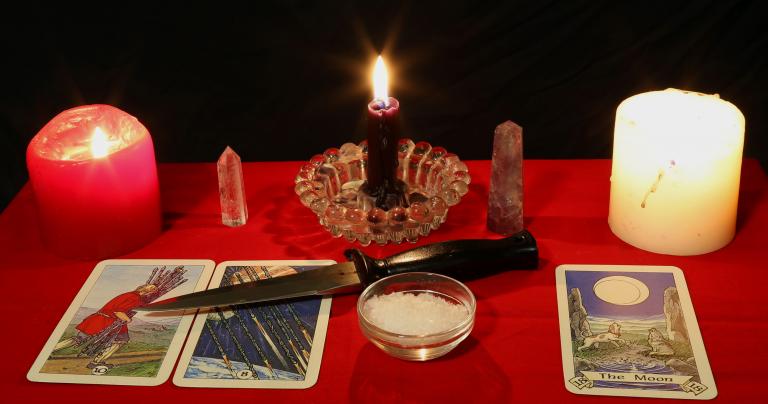
A search for safety and equality… and respectability
Our modern secular society may have decided that “real” witches don’t exist, but it still fears magic. Remember that witchcraft was illegal in Britain until 1951, and the last person convicted of witchcraft was Helen Duncan in 1944. In some parts of the world suspected witches are still tortured and killed. Those who have adopted the name “witch” over the past hundred years or so have had a strong incentive to tell their neighbors “I’m no threat to you.”
Margaret Murray’s theory of witchcraft as the remnants of an ancient Goddess religion may have been wrong, but it was the right idea at the right time. It’s no coincidence that modern Paganism has grown up alongside the movement for women’s empowerment. Throw in the Nature-worship aspects of Paganism and you can see that many people who call themselves Pagans or even witches want nothing to do with magic or deities – their focus is entirely this-world oriented.
Beyond that, many in our mainstream society are religiously shallow: “deep down it’s all the same.” Too many Pagans want to tell their Christian and atheist friends “I’m just like you.” In the words of Peter Grey “How tame we have become. How polite about our witchcraft. In our desire to harm none we have become harmless.”
That’s how we got here. Now, what should we do going forward?
Magic is not a requirement of Paganism
If you don’t want to practice magic – for whatever reason or for no reason at all – you don’t have to.
You certainly don’t need magic to worship the Gods. Some polytheists argue that we shouldn’t practice magic because it attempts to claim for ourselves what rightly belongs to the Gods. Even though I sometimes say that magic is stealing fire from the Gods, I don’t see it as impiety. Rather, it’s accepting the responsibility to learn to use power skillfully. The challenge is to work magic in virtuous ways for virtuous reasons… with the understanding that “virtuous” doesn’t mean “nice.”
Non-theistic Pagans and Pagans whose religious focus is Nature may have no need or desire for magic.

Given the historical understanding of witchcraft as the unauthorized use of magic, I think it’s hard to call yourself a witch if you don’t practice magic. However, I’m well aware that many people – often young women – call themselves witches for political or aesthetic reasons. As I wrote in 2017 I’m not terribly concerned with that.
The bottom line is that there is plenty of room in the Big Tent of Paganism for people who don’t practice magic.
But I do.
Magic isn’t as certain as mundane effort
There’s an amusing scene in Harry Potter and the Order of the Phoenix where Molly Weasley has had enough of Fred and George using magic where ordinary effort would be easier. “Just because you’re allowed to use magic now, you don’t have to whip out your wands for every tiny little thing!”
Magic in our world (as opposed to the Harry Potter world) doesn’t directly accomplish anything. Rather, it increases the odds that something will happen. So if the odds on a particular thing happening are 20%, with good magic you can raise them to, say, 80%. But if you can do it with mundane effort, your odds are pretty close to 100%.
But magic can accomplish what mundane effort alone cannot
But if the odds are 20% and you simply can’t do it with mundane effort – especially if you’re blocked by financial, legal, or political constraints – raising the odds to 80% with magic is a smart move. You’re still not guaranteed to get what you want, but an 80% chance is a lot better than a 20% chance.
Ask someone to imagine a witch and they often think of those executed during the witchcraft trials because they were other – old, poor, and vulnerable. Or they think of a witch living alone in a cottage deep in the forest. Magic has always been the recourse of those denied access to ordinary power.
But magic has also been the province of the wealthy. Kings kept court astrologers, John Dee was an advisor to Queen Elizabeth I, and the grimoires were the product of a very literate and scholarly tradition. Sometimes magic is used by the powerless to get a little power, but other times it’s used by the very powerful to get even more power.
I do not believe the oligarchs who run the world (or at least, who wield vastly disproportionate power) are part of some Ninth Gate style occult society. But if you don’t think they’re using magic to maintain and expand their power, you aren’t paying attention.
If you need something badly enough why wouldn’t you use all the tools available – including magic?

Magic isn’t safe
One of the answers to that question is “because it’s dangerous.”
As I discussed in the last post, different people have different tolerances for different kinds of risk. Using magic makes you visible to other magic users, most of whom aren’t human and many of whom have rather ambivalent ethics. And while I see no evidence the Threefold Law works as described, when you drop a stone into a pond you have no idea what all the ripples will impact… or what the stone will strike when it hits bottom.
The answer is not to hamstring your magic with disclaimers like “for the good of all with harm to none.” There is no such thing as “harm none” and expecting that “the Universe” will sort it all out is an abdication of responsibility. Interfering with someone else’s free will is not a mortal sin – when dealing with those who would do you harm, it’s a necessity.
Know the risks, choose your targets carefully, accept that there will be collateral damage, and clean up after yourself.
Magic works – do you want to use it or not?
At the end of the day, there is no nice clean simple easy answer here. Magic is neither good nor evil. Like all forms of power, it comes down to how it’s used.
Who do you trust to use that power wisely?
I trust myself a lot more than I trust politicians, mainstream religious leaders, or the ultrarich. While I trust my Gods implicitly, I trust myself more than I trust any non-divine spiritual being. I trust myself more than I trust you – and I trust some of you very much.
If these other persons are using magic, I want it too.
Magic has been a part of my life since before I understood that magic is real. It has helped me build a life that while far from perfect, is meaningful and manageable. The older I get the less I work magic for ordinary things and the more I do it for deep, big goals.
If you choose to avoid magic – for whatever reason – that’s your decision and I respect it. You don’t have to be a magician of any sort to be a good Pagan or a good polytheist.
But I want all the tools in my toolbox that I can get, and magic is one of them.
Previous Post

November 3, 2019
Paganism Isn’t Safe: When Rituals Scare You
Next Post

November 7, 2019 A Druid’s Perspective on the Fair Folk
Browse Our Archives
Select a Category Books Community CUUPS Druidry Foundations and Context Gods and Goddesses Magic Myth Nature Ritual Spiritual Practice Theology Travel Uncategorized Videos
Select a Month October 2026 September 2026 August 2026 July 2026 June 2026 May 2026 April 2026 March 2026 February 2026 January 2026 December 2025 November 2025 October 2025 September 2025 August 2025 July 2025 June 2025 May 2025 April 2025 March 2025 February 2025 January 2025 December 2024 November 2024 October 2024 September 2024 August 2024 July 2024 June 2024 May 2024 April 2024 March 2024 February 2024 January 2024 December 2023 November 2023 October 2023 September 2023 August 2023 July 2023 June 2023 May 2023 April 2023 March 2023 February 2023 January 2023 December 2022 November 2022 October 2022 September 2022 August 2022 July 2022 June 2022 May 2022 April 2022 March 2022 February 2022 January 2022 December 2021 November 2021 October 2021 September 2021 August 2021 July 2021 June 2021 May 2021 April 2021 March 2021 February 2021 January 2021 December 2020 November 2020 October 2020 September 2020 August 2020 July 2020 June 2020 May 2020 April 2020 March 2020 February 2020 January 2020 December 2019 November 2019 October 2019 September 2019 August 2019 July 2019 June 2019 May 2019 April 2019 March 2019 February 2019 January 2019 December 2018 November 2018 October 2018 September 2018 August 2018 July 2018 June 2018 May 2018 April 2018 March 2018 February 2018 January 2018 December 2017 November 2017 October 2017 September 2017 August 2017 July 2017 June 2017 May 2017 April 2017 March 2017 February 2017 January 2017 December 2016 November 2016 October 2016 September 2016 August 2016 July 2016 June 2016 May 2016 April 2016 March 2016 February 2016 January 2016 December 2015 November 2015 October 2015 September 2015 August 2015 July 2015 June 2015 May 2015 April 2015 March 2015 February 2015 January 2015 December 2014 November 2014 October 2014 September 2014 August 2014 July 2014 June 2014 May 2014 April 2014 March 2014 February 2014 January 2014 December 2013 November 2013 October 2013 September 2013 August 2013 July 2013 June 2013 May 2013 April 2013 March 2013 February 2013 January 2013 December 2012 November 2012 October 2012 September 2012 August 2012 July 2012 June 2012 May 2012 April 2012 March 2012 February 2012 January 2012 December 2011 November 2011 October 2011 September 2011 August 2011 July 2011 June 2011 May 2011 April 2011 March 2011 February 2011 January 2011 December 2010 November 2010 October 2010 September 2010 August 2010 July 2010 June 2010 May 2010 April 2010 March 2010 February 2010 January 2010 December 2009 November 2009 October 2009 September 2009 August 2009 July 2009 June 2009 May 2009 April 2009 March 2009 February 2009 January 2009 December 2008 November 2008 October 2008 September 2008 August 2008 July 2008 June 2008
Follow Us!
TAKE THE
Religious Wisdom Quiz
True or False: John's Gospel does not record any parables.
Select your answer to see how you score.
TRUE FALSE
Related posts from John Beckett




What We Lose When “Ask AI” Becomes A...
TRENDING AT PATHEOS Pagan

Swimfan: Forgotten Aughts Pleasures
This is a recovery effort. In 2002, My Big Fat Greek Wedding...

Top Three Anti-Catholic Lies About Catholicism
This is my initial transcript for the video, "THE 3 WORST...

Pope Leo Celebrates Mass for Nurses & Docs...
I don't have any idea how he did it, but Pope Leo...

The Sermon on the Mount, Part I: Matthew...
The Sermon on the Mount, Part I (Matthew 4:12-5:12) St. Matthew moves...

What's up from Crossway: Reviewing some of their latest A few weeks...

Janie Learns the Way of the Cross: A...
Teaching children about Jesus' Passion can be challenging. Many parents and educators...
view all Pagan blogs
Ad-Free & Subscriber Log-In Subscription Support
- About Us
- 2026 Calendar
- Videos
- Podcasts
- Library of World Religions
- Faith In Media Tracker
- Advertise With Us
- Write for Us
- Privacy Policy
- Terms of Service
- Do Not Sell My Data
- Contact Us
- Radiant Digital
- Manage Newsletter Subscriptions
- Unsubscribe From Notifications
- Sitemap
Copyright 2008-2026, Patheos. All rights reserved.
Subscription Support Ad-Free & Subscriber Log-In
Follow Patheos