
BuddhistCatholicContemplativeEvangelicalGeneral ChristianHinduJewishLatter-day SaintMuslimNew VisionsProgressive Christian
Beliefs
- Buddhist
- Catholic
- Contemplative
- Evangelical
- General Christian
- Hindu
- Jewish
- Latter-day Saint
- More Voices
- Muslim
- New Visions
- Pagan
- Progressive Christian
Topics
- Religion News
- Food and Religion
- Sports and Religion
- Religious Art
- Religious Music and Entertainment
- Religious Events
- History and Religion
- Style and Religion
- Politics and Religion
- Women in Religion
- Recreation Outdoors and Religion
- Business Finance and Religion
- Careers Workplace and Religion
- Education and Religion
- Family Parenting and Religion
- Health Fitness and Religion
- Home and Religion
- Relationships and Religion
- Technology and Religion
- Travel and Religion
Columnists
- Buddhist Columnists
- Business Finance and Religion Columnists
- Careers Workplace and Religion Columnists
- Catholic Columnists
- Contemplative Columnists
- Education and Religion Columnists
- Evangelists Columnists
- Family Parenting and Religion Columnists
- General Christian Columnists
- Health Fitness and Religion Columnists
- Hindu Columnists
- History and Religion Columnists
- Home and Religion Columnists
- Jewish Columnists
- More Voices Columnists
- Latter Day Columnists
- Muslim Columnists
- New Visions Columnists
- Nonreligious Columnists
- Pagan Columnists
- Politics and Religion Columnists
- Progressive Columnists
- Recreation Outdoors and Religion Columnists
- Relationships and Religion Columnists
- Religion News Columnists
- Religious Art Columnists
- Religious Events Columnists
- Religious Music and Entertainment Columnists
- Sports and Religion Columnists
- Style and Religion Columnists
- Technology and Religion Columnists
- Travel and Religion Columnists
- Women in Religion Columnists
Resource Library
- 2026 Calendar
- Library of World Religions
- The 100 Most Holy Places on Earth
- Patheos Answers
- Podcasts
- Videos
- Faith Leaders Database
- Anglican Episcopalian
- Bahai
- Baptist
- Buddhism
- Christianity
- Confucianism
- Eastern Orthodoxy
- Hinduism
- Holiness and Pentecostal
- ISKCON
- Islam
- Judaism
- Lutheran
- Methodist
- The Church of Jesus Christ of Latter-day Saints
- New Age
- Paganism
- Presbytarian and Reformed
- Protestantism
- Religion Behind the Scenes
- Roman Catholic
- Scientology
- Shia Islam
- Sikhism
- Sufism
- Sunni Islam
- Taoism
- Zen
- See all religions
Research Tools
 Ad-Free & Subscriber Log-In Subscription Support
Ad-Free & Subscriber Log-In Subscription Support
Follow Patheos 

- Trending:
- Forgiveness
- |
- Marriage
- |
- Consciousness
- |
- Death Penalty
- |
- Election
- |
- Halloween

- Home
- Pagan
- A Druid’s Perspective on the Fair Folk
A Druid’s Perspective on the Fair Folk
Last updated on: November 7, 2019 at 4:00 am by John Beckett
A Druid’s Perspective on the Fair Folk 2019-10-30T18:06:56-06:00 John Beckett
Patheos Explore the world's faith through different perspectives on religion and spirituality! Patheos has the views of the prevalent religions and spiritualities of the world.
I never had any intention of working with the Fair Folk.
As a Pagan, I wanted to worship the Gods, honor my ancestors, and live in harmony with the Spirits of Nature… and learn a little magic along the way.
Themselves had other plans.
Anthropology professor and fellow Druid Kimberly Kirner asked this question:
What is your perspective on the fae? Does your perspective come from scholarship, experience, or something else? What are your thoughts on working with them or not?
I work far more with fae (and have for much longer) than with Gods, but when I became a Druid and started reading about them, I found it curious that many Druids seem to avoid them entirely.
In anthropological terms, the fae are a “domain” that seem to vary much more in terms of how they’re conceptualized, understood, and interacted with than other spirit categories such as Gods, nature spirits, or ancestors.
I’ve written on this topic before:
The Re-emergence of the Fair Folk in the Ordinary World (March 2017)
Bargaining at the Goblin Market (June 2017)
Why The Fair Folk Aren’t Nature Spirits (April 2019)
Like Taking Selfies With an Elk: Approaching the Fair Folk with Ignorance and Arrogance (June 2019)
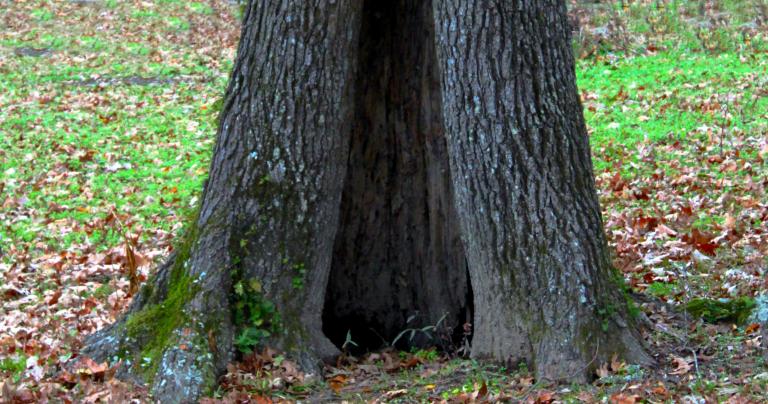
I’m not an expert on the fae. If you find this interesting, get Morgan Daimler’s book Fairies: A Guide to the Celtic Fair Folk. Read it, read Daimler’s other work, and read the source material they draw from.
But I am someone with some experience with the Good Neighbors (not a great deal, but some), and some thoughts about them. So while I’m tempted to let these previous posts speak for me, they don’t directly answer the questions posed. More importantly, I think these questions are worth discussing – because they’re becoming more and more relevant all the time.
Grounded in folklore
I came into Paganism knowing virtually nothing about the fae, and I didn’t learn much in my early reading and exploration. The only mention of them in my notes from the OBOD course is a line in my Ovate file, in the tree lore section: “it is said that fairies frequent aspen trees and use them to transmit their messages.” That’s it.
I started learning about them when I became friends with some local Pagans who cosplayed fairies at Renaissance fairs. They put a lot of effort into making their characters and costumes as faithful to folklore as possible. Their story is not mine to tell, except to say that in a couple of cases they attracted the attention of the persons they were portraying – persons who seemed pleased they were telling their stories without Disney-fying them.
About the time my polytheism began to harden, I started reading some of the stories of our ancestors and their experiences of the Fair Folk. I learned a few of them and told them at bardic competitions – or as children’s stories for UU Sunday services.
Folklore and scholarship about folklore is a good and necessary foundation. But my Paganism is ultimately based on experience.
Informed by first-hand experience
I’m pretty open about my ecstatic experiences of Cernunnos, the Morrigan, and other deities. Some things simply can’t be put into words, but for the most part I’ve tried to communicate what I’ve heard and seen and done in Their presence.
Things are different with the Fair Folk. I’ve told the story of them taking a pitcher of wine for themselves. I’ve told the story of encountering a fairy dog at Fourknocks in Ireland last year. But those are stories of things that happened in this world, even if they weren’t ordinary occurrences.
My spiritual encounters with the Fair Folk are on a need-to-know basis. They aren’t impossible to describe (though there is an element of ineffability to them) so much as I’m forbidden to discuss them in casual conversation. If you’re familiar with folklore this will come as no surprise – people who received gifts from the fairies and then bragged about them often lost them immediately afterwards.
I don’t want to imply that I’ve been taking tea with the Queen of Fairy every week or anything like that. For the most part my experiences have been few and mild. But my perspective on the Fair Folk is influenced every bit as much by my own experiences as it is by the experiences reported by others in folklore and scholarship.
What are the Fair Folk?
I certainly agree that there is more variation among the fae than among other spiritual beings. Trying to create a fairy taxonomy is far beyond my capabilities, and even if I could I’m not sure I would.
Although folklore says they have physical bodies, I see them as spiritual persons who occasionally take physical forms.
I like to think of all spiritual persons as existing on spectrum. There are Gods, ancestors, and the various Nature spirits. There are living humans and other persons with a physical presence in this world. There are the many fae.
These categories are loosely defined and loosely gathered, with more than a little overlap. Some Gods are also ancestors. While the fae are not Nature spirits, some Nature spirits are fae (I mean that as an example of set theory, not as a paradox). Some say the fae are the Old Gods driven underground with the coming of Christianity.
Ultimately, all we can say about the Fair Folk is that they are the Fair Folk. If you encounter any of them, assume you know nothing about them… because you probably don’t.
Working with the Fair Folk
I wrote Bargaining at the Goblin Market for this exact reason. Historically the Goblin Market is a marketplace by and for the fae which humans are advised to avoid. But now, more and more people are encountering the fae and are discovering that we have common interests – and common enemies. There are areas where we can and should work together for our mutual benefit.
But we should never assume that means they’re “on our side.” The Fair Folk are ever and always on their own side. Further, they’re not monolithic. The idea of fairy courts is beyond the scope of this post, but I think it’s safe to say that different groups of fairies have different desires and different priorities that sometimes put them in conflict with each other. Your bargain with one individual or group may mean nothing to another.
Further, I’m not sure how much any of us can choose to work with the Fair Folk. We can seek them out (though folklore says that’s not wise) but while Gods usually respond to overtures (eventually if not right away) the Fair Folk tend to be far less responsive… unless they want to respond.
Still, if you put yourself in a place where you’re likely to encounter themselves, you may find opportunities to work with them. As always, though, negotiate carefully, and do not promise what you cannot or will not do.
Opportunities in the Storm
In The Myth of Disenchantment Jason Josephson-Storm described how for at least the past 600 years people have said that fairies belong to a previous age and now they’re gone… at the same time they told stories of their own fairy encounters that would become folklore for future generations.
While people in the West occasionally talk about “re-enchanting the world” few if any of us are talking about how the Fair Folk belong to a bygone era. Instead, we’re talking about how we’re encountering fairies and negotiating with fairies and working with fairies.
This is one element of the Storm or Tower Time: the massive political, environmental, and metaphysical changes we’re seeing in our world. These changes have an Otherworldly component. My own UPG is that the Fair Folk see opportunities in the Storm and are positioning themselves to take advantage of them. Sometimes that means working with or even forming alliances with humans.
I see opportunities too.
Previous Post

November 5, 2019
You Don’t Have to Use Magic to be a Pagan (but why wouldn’t you?)
Next Post

November 10, 2019 Druids, Pop Culture, and Pagan Advice for Beginners
Browse Our Archives
Select a Category Books Community CUUPS Druidry Foundations and Context Gods and Goddesses Magic Myth Nature Ritual Spiritual Practice Theology Travel Uncategorized Videos
Select a Month October 2026 September 2026 August 2026 July 2026 June 2026 May 2026 April 2026 March 2026 February 2026 January 2026 December 2025 November 2025 October 2025 September 2025 August 2025 July 2025 June 2025 May 2025 April 2025 March 2025 February 2025 January 2025 December 2024 November 2024 October 2024 September 2024 August 2024 July 2024 June 2024 May 2024 April 2024 March 2024 February 2024 January 2024 December 2023 November 2023 October 2023 September 2023 August 2023 July 2023 June 2023 May 2023 April 2023 March 2023 February 2023 January 2023 December 2022 November 2022 October 2022 September 2022 August 2022 July 2022 June 2022 May 2022 April 2022 March 2022 February 2022 January 2022 December 2021 November 2021 October 2021 September 2021 August 2021 July 2021 June 2021 May 2021 April 2021 March 2021 February 2021 January 2021 December 2020 November 2020 October 2020 September 2020 August 2020 July 2020 June 2020 May 2020 April 2020 March 2020 February 2020 January 2020 December 2019 November 2019 October 2019 September 2019 August 2019 July 2019 June 2019 May 2019 April 2019 March 2019 February 2019 January 2019 December 2018 November 2018 October 2018 September 2018 August 2018 July 2018 June 2018 May 2018 April 2018 March 2018 February 2018 January 2018 December 2017 November 2017 October 2017 September 2017 August 2017 July 2017 June 2017 May 2017 April 2017 March 2017 February 2017 January 2017 December 2016 November 2016 October 2016 September 2016 August 2016 July 2016 June 2016 May 2016 April 2016 March 2016 February 2016 January 2016 December 2015 November 2015 October 2015 September 2015 August 2015 July 2015 June 2015 May 2015 April 2015 March 2015 February 2015 January 2015 December 2014 November 2014 October 2014 September 2014 August 2014 July 2014 June 2014 May 2014 April 2014 March 2014 February 2014 January 2014 December 2013 November 2013 October 2013 September 2013 August 2013 July 2013 June 2013 May 2013 April 2013 March 2013 February 2013 January 2013 December 2012 November 2012 October 2012 September 2012 August 2012 July 2012 June 2012 May 2012 April 2012 March 2012 February 2012 January 2012 December 2011 November 2011 October 2011 September 2011 August 2011 July 2011 June 2011 May 2011 April 2011 March 2011 February 2011 January 2011 December 2010 November 2010 October 2010 September 2010 August 2010 July 2010 June 2010 May 2010 April 2010 March 2010 February 2010 January 2010 December 2009 November 2009 October 2009 September 2009 August 2009 July 2009 June 2009 May 2009 April 2009 March 2009 February 2009 January 2009 December 2008 November 2008 October 2008 September 2008 August 2008 July 2008 June 2008
Follow Us!
TAKE THE
Religious Wisdom Quiz
Who lamented Saul and Jonathan's death with a song?
Select your answer to see how you score.
Samuel David Abiathar Nathan
Related posts from John Beckett




What We Lose When “Ask AI” Becomes A...
TRENDING AT PATHEOS Pagan

A new article, written by Jeff Lindsay and Gale L. Pooley,...

Swimfan: Forgotten Aughts Pleasures
This is a recovery effort. In 2002, My Big Fat Greek Wedding...

Top Three Anti-Catholic Lies About Catholicism
This is my initial transcript for the video, "THE 3 WORST...

Pope Leo Celebrates Mass for Nurses & Docs...
I don't have any idea how he did it, but Pope Leo...

The Sermon on the Mount, Part I: Matthew...
The Sermon on the Mount, Part I (Matthew 4:12-5:12) St. Matthew moves...

What's up from Crossway: Reviewing some of their latest A few weeks...
view all Pagan blogs
Ad-Free & Subscriber Log-In Subscription Support
- About Us
- 2026 Calendar
- Videos
- Podcasts
- Library of World Religions
- Faith In Media Tracker
- Advertise With Us
- Write for Us
- Privacy Policy
- Terms of Service
- Do Not Sell My Data
- Contact Us
- Radiant Digital
- Manage Newsletter Subscriptions
- Unsubscribe From Notifications
- Sitemap
Copyright 2008-2026, Patheos. All rights reserved.
Subscription Support Ad-Free & Subscriber Log-In
Follow Patheos