
BuddhistCatholicContemplativeEvangelicalGeneral ChristianHinduJewishLatter-day SaintMuslimNew VisionsProgressive Christian
Beliefs
- Buddhist
- Catholic
- Contemplative
- Evangelical
- General Christian
- Hindu
- Jewish
- Latter-day Saint
- More Voices
- Muslim
- New Visions
- Pagan
- Progressive Christian
Topics
- Religion News
- Food and Religion
- Sports and Religion
- Religious Art
- Religious Music and Entertainment
- Religious Events
- History and Religion
- Style and Religion
- Politics and Religion
- Women in Religion
- Recreation Outdoors and Religion
- Business Finance and Religion
- Careers Workplace and Religion
- Education and Religion
- Family Parenting and Religion
- Health Fitness and Religion
- Home and Religion
- Relationships and Religion
- Technology and Religion
- Travel and Religion
Columnists
- Buddhist Columnists
- Business Finance and Religion Columnists
- Careers Workplace and Religion Columnists
- Catholic Columnists
- Contemplative Columnists
- Education and Religion Columnists
- Evangelists Columnists
- Family Parenting and Religion Columnists
- General Christian Columnists
- Health Fitness and Religion Columnists
- Hindu Columnists
- History and Religion Columnists
- Home and Religion Columnists
- Jewish Columnists
- More Voices Columnists
- Latter Day Columnists
- Muslim Columnists
- New Visions Columnists
- Nonreligious Columnists
- Pagan Columnists
- Politics and Religion Columnists
- Progressive Columnists
- Recreation Outdoors and Religion Columnists
- Relationships and Religion Columnists
- Religion News Columnists
- Religious Art Columnists
- Religious Events Columnists
- Religious Music and Entertainment Columnists
- Sports and Religion Columnists
- Style and Religion Columnists
- Technology and Religion Columnists
- Travel and Religion Columnists
- Women in Religion Columnists
Resource Library
- 2026 Calendar
- Library of World Religions
- The 100 Most Holy Places on Earth
- Patheos Answers
- Podcasts
- Videos
- Faith Leaders Database
- Anglican Episcopalian
- Bahai
- Baptist
- Buddhism
- Christianity
- Confucianism
- Eastern Orthodoxy
- Hinduism
- Holiness and Pentecostal
- ISKCON
- Islam
- Judaism
- Lutheran
- Methodist
- The Church of Jesus Christ of Latter-day Saints
- New Age
- Paganism
- Presbytarian and Reformed
- Protestantism
- Religion Behind the Scenes
- Roman Catholic
- Scientology
- Shia Islam
- Sikhism
- Sufism
- Sunni Islam
- Taoism
- Zen
- See all religions
Research Tools
 Ad-Free & Subscriber Log-In Subscription Support
Ad-Free & Subscriber Log-In Subscription Support
Follow Patheos 

- Trending:
- Forgiveness
- |
- Marriage
- |
- Consciousness
- |
- Death Penalty
- |
- Election
- |
- Halloween

- Home
- Pagan
- 8 Essential Elements of Good Pagan Ritual
8 Essential Elements of Good Pagan Ritual
Last updated on: October 15, 2019 at 3:00 am by John Beckett
8 Essential Elements of Good Pagan Ritual 2019-10-10T15:38:25-06:00 John Beckett
Patheos Explore the world's faith through different perspectives on religion and spirituality! Patheos has the views of the prevalent religions and spiritualities of the world.
We’ve all suffered through bad rituals at one time or another – I’ll spare you the further suffering of listing examples. But sometimes what’s even more frustrating than a bad ritual is a good ritual that’s just one thing away from being a great ritual – the kind that inspires participants to do great things and that people still talk about months and even years later.
Let’s be clear: any time we gather to honor the Gods, work magic, and celebrate being Pagan is a good time. Public ritual is not a competition. The most important part of a good ritual is the presence and participation of the Gods, and that is something we cannot control.
But we can facilitate a good experience of the Gods, of magic, and of a healthy and vibrant community. If we’re going to go to the trouble of planning, staging, and presenting a ritual, shouldn’t it be the best it can be?
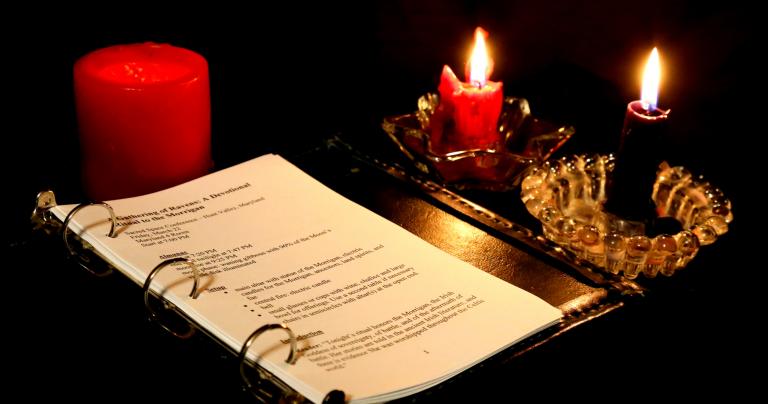
I’m not talking about rituals that just aren’t your thing. As a part of a CUUPS group with a wide variety of members, I often leave a ritual thinking “that wasn’t what I would have done, but it was really good and people seemed to enjoy it.”
Rather, I’m talking about a ritual that reminds you of a soup that needed one more vegetable or a book that kept you enthralled for 300 pages and then disappointed you in the last five. It was good, but it was almost great.
When I think back on these so-close-but-not-quite rituals (some of which I wrote, to be perfectly honest) what I notice is that they were all missing essential elements. And that got me to thinking about what those essential elements (or more precisely, categories of elements) might be.
To hopefully head off needless comments that miss the point of the post, this is not some Joseph Campbell-ish attempt to universalize all Pagan rituals into one “monoritual.” Diversity is good, and if your tradition has a standard liturgy, you should follow it. Tradition is the collective wisdom of our ancestors, mainly about what works and what doesn’t.
But if you’re writing a ritual for a mixed audience like a Pagan Pride Day, a CUUPS group, or a new assortment of folks who haven’t decided what they want to be yet; and especially if you found this post by googling “Pagan ritual” I encourage you to think carefully about these eight elements.
1. Gathering
The ritual does not begin with the opening bell. The ritual begins with the arrival of the first participant.
We often think of hospitality as something we do so people will like us and say good things about us, or because it’s a virtue and a sacred obligation. More than that, though, good hospitality helps people feel comfortable and welcome, which helps them participate more fully.
What do people see and hear when they walk through the door? Does it help get them in the proper frame of mind for ritual, and especially for this ritual? Atmosphere is important.
Gathering includes what ADF calls the “pre-ritual briefing.” We need to give people the information they need to fully participate, without explaining it all in advance. Leave room for mystery.
2. Opening
A formal opening is so quick, so simple, so important… and so easy to overlook.
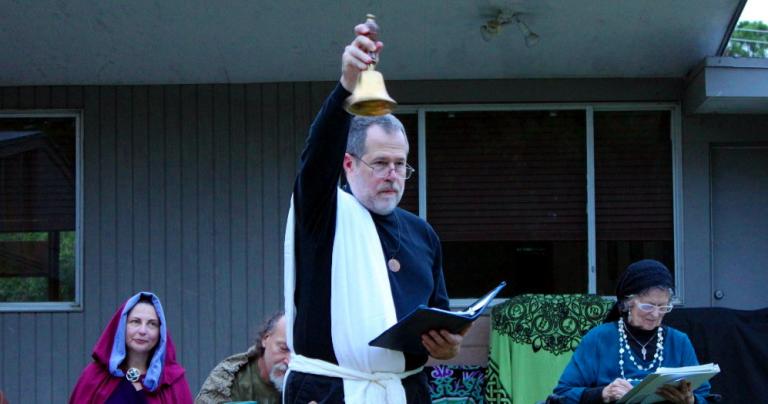
I like to use a bell for this. You can change the lighting or play a musical prelude. Merely pausing for a moment and saying the words “let us now begin” works well. You can combine it with a grounding and centering meditation, though I’ve found myself de-emphasizing opening meditations in recent years.
All participants – including the ritual leaders – need an overt signal that we are leaving ordinary time and entering sacred time.
3. Preparing the Space
If we had dedicated temples and other permanent sacred spaces, perhaps this wouldn’t be necessary. Or at least, not as necessary. But by and large, we don’t. We hold our rituals in living rooms, public parks, and UU churches. We have to turn them into temples and groves – we have to show our participants that they’re not in ordinary space anymore.
There are two parts to this. The first is physical and atmospheric. Light candles and incense, put up banners and tapestries, cover unused furniture. Cover or take down clocks – you don’t want any reminders of ordinary time. The atmosphere doesn’t have to be anachronistic (although I’m rather fond of that) it just has to be non-ordinary. Make it mysterious, but mainly, make it beautiful.
The second part is liturgical and energetic. Before we can move between the worlds, we need to ground ourselves in this world. We need to orient ourselves and affirm our relationship with the land where we are.
Some ritualists say that all Pagan ritual should begin by recreating the cosmos. This is what’s done with the Wiccan circle casting and elemental consecration, and with the ADF invocation of fire, well, and tree. I’m not going to say that’s always necessary, but I almost always do it.
Skipping this step or doing it poorly can leave participants both disconnected from the land and overly tied to the mundane world. Neither is conducive to good Pagan ritual.
4. Inviting and Welcoming
Religion is ultimately about relationships, and one of the main goals of Pagan ritual is to form and strengthen relationships with our Gods, our ancestors, and other spiritual beings.
As a polytheist, almost all the rituals I write include invitations to specific deities. Sometimes the whole purpose of the ritual is to honor and commune with Them. Other times we ask Them to attend our rite and bless it with Their presence and power. We also invite our ancestors, the spirits of the land where we are, and in some cases, the Fair Folk.
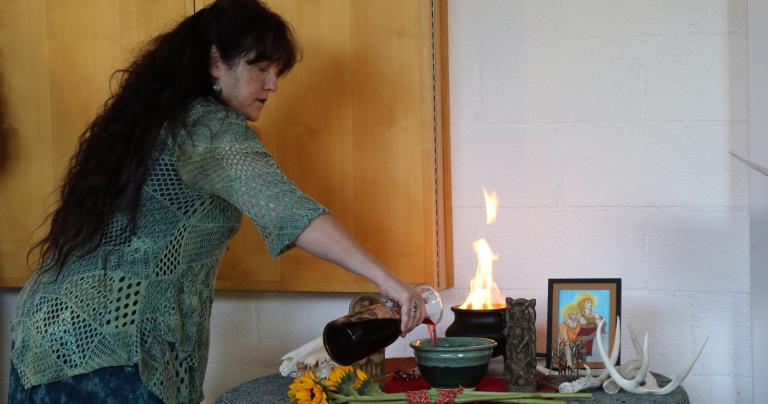
In the Gathering we provide hospitality to our physical guests. Here we provide hospitality to our spiritual guests. Greet Them with kind words and make offerings of food and drink. We may light candles or anoint statues to represent Their arrival.
If we do these four elements and do them well, we should now be ready for the main working of the ritual.
5. The Main Working
Normally this is the hardest part of composing a ritual. Most groups and traditions have a fairly standard opening and closing liturgy that can be adapted to any occasion. The hard part is coming up with what to do for this specific Samhain or Solstice or Full Moon.
But in virtually every so-close-but-so-far-away ritual, the main event has been good. Amazing, even. It’s like the leaders had this great main working and put all their time and energy into it, but then forgot to build a complete ritual around it.
This can be especially challenging when trying to revive or recreate an ancient festival. You don’t want to drop an Egyptian temple ritual into a generic Pagan liturgy, and rightly so. But that beautiful and authentic ritual someone found on a pyramid wall wasn’t done in isolation. There were preparations and purifications, gatherings and invocations. The ancients may not have used all eight of these elements, but they used some of them. Do some more research and see what else you need to make your authentic ritual complete.
Or accept the fact that you’re not an ancient Greek or a pre-Roman Celt and reimagine the rite for here and now. The idea of perfect continuity with the past is mostly a fiction, and not a very good fiction at that. A good religion is a living religion.
As always, credit your sources and don’t pretend to be something you aren’t.
Bad rituals usually have bad main workings. Could-have-been-great rituals often have good main workings but little else.
6. Regathering
The ritual isn’t over when the main working is over. If thing have gone well so far, the magic is flowing and the participants are inspired and energized. But there is still some liturgical work to do, and we need to give everyone a chance to come back to the mundane world in a soft and gradual manner.
This is where most contemporary Pagan rituals put the Simple Feast, Reversion of Offerings, or Sharing of Blessings. Those aren’t all the same things even though they often take the same form. In addition to whatever magical or divine energy they may conduct, eating and drinking helps ground people in the ordinary world.
I’m not fond of “anybody want to talk about what they just experienced?” for a variety of reasons, but in a small intimate setting it can work. If so, this is the place to put it. Poetry and music also give people a chance to come down in a good way.
Sudden stops are rarely a good thing, and the higher the high the worse the crash. Bring things down slowly and carefully.
7. Thanksgiving
Want to ruin a good ritual? Invite the Gods, experience Their blessings, and then neglect to say thank you. Or worse, “dismiss” Them… as if the Morrigan would take orders from you.
Tradition says we do not thank the Fair Folk, but we can express our gladness that they were present and that all went well.
This isn’t complicated and it need not take long. But anyone you invite should be recognized as they depart.
8. Closing
As with the opening, a formal closing can be quick and simple. But it’s just as necessary. We all need a clear signal the rite is over and we have returned to the ordinary world.
I like to end the ritual with a benediction: a brief summary and a departing blessing. But by “brief summary” I mean three or four lines, not three or four paragraphs. Trying to recap the whole thing – or worse, trying to explain it – is like a good long novel with a lousy ending.
Additional Resources
I’ve spoken rather generally about these eight categories of elements. Experienced ritualists will know what usually goes in them. If you don’t, or if you’d like some other suggestions, here are three books you may find helpful.
There’s a whole chapter on planning and facilitating rituals in my first book The Path of Paganism (2017), including an outline that can be used as a template.
The best single resource is Neopagan Rites: A Guide to Creating Public Rituals that Work by Isaac Bonewits (2007). This was originally titled Rites of Worship. That version is out of print, but Neopagan Rites is readily available.
Another good resource is The Elements of Ritual by Deborah Lipp (2003). This book deals specifically with Wiccan ritual, but it does a very good job of explaining ritual theory.
Previous Post

October 13, 2019
Pagan Conventions in the Post-Pantheacon Era
Next Post

October 17, 2019 Serving as an Oracle: When the Messenger is You
Browse Our Archives
Select a Category Books Community CUUPS Druidry Foundations and Context Gods and Goddesses Magic Myth Nature Ritual Spiritual Practice Theology Travel Uncategorized Videos
Select a Month October 2026 September 2026 August 2026 July 2026 June 2026 May 2026 April 2026 March 2026 February 2026 January 2026 December 2025 November 2025 October 2025 September 2025 August 2025 July 2025 June 2025 May 2025 April 2025 March 2025 February 2025 January 2025 December 2024 November 2024 October 2024 September 2024 August 2024 July 2024 June 2024 May 2024 April 2024 March 2024 February 2024 January 2024 December 2023 November 2023 October 2023 September 2023 August 2023 July 2023 June 2023 May 2023 April 2023 March 2023 February 2023 January 2023 December 2022 November 2022 October 2022 September 2022 August 2022 July 2022 June 2022 May 2022 April 2022 March 2022 February 2022 January 2022 December 2021 November 2021 October 2021 September 2021 August 2021 July 2021 June 2021 May 2021 April 2021 March 2021 February 2021 January 2021 December 2020 November 2020 October 2020 September 2020 August 2020 July 2020 June 2020 May 2020 April 2020 March 2020 February 2020 January 2020 December 2019 November 2019 October 2019 September 2019 August 2019 July 2019 June 2019 May 2019 April 2019 March 2019 February 2019 January 2019 December 2018 November 2018 October 2018 September 2018 August 2018 July 2018 June 2018 May 2018 April 2018 March 2018 February 2018 January 2018 December 2017 November 2017 October 2017 September 2017 August 2017 July 2017 June 2017 May 2017 April 2017 March 2017 February 2017 January 2017 December 2016 November 2016 October 2016 September 2016 August 2016 July 2016 June 2016 May 2016 April 2016 March 2016 February 2016 January 2016 December 2015 November 2015 October 2015 September 2015 August 2015 July 2015 June 2015 May 2015 April 2015 March 2015 February 2015 January 2015 December 2014 November 2014 October 2014 September 2014 August 2014 July 2014 June 2014 May 2014 April 2014 March 2014 February 2014 January 2014 December 2013 November 2013 October 2013 September 2013 August 2013 July 2013 June 2013 May 2013 April 2013 March 2013 February 2013 January 2013 December 2012 November 2012 October 2012 September 2012 August 2012 July 2012 June 2012 May 2012 April 2012 March 2012 February 2012 January 2012 December 2011 November 2011 October 2011 September 2011 August 2011 July 2011 June 2011 May 2011 April 2011 March 2011 February 2011 January 2011 December 2010 November 2010 October 2010 September 2010 August 2010 July 2010 June 2010 May 2010 April 2010 March 2010 February 2010 January 2010 December 2009 November 2009 October 2009 September 2009 August 2009 July 2009 June 2009 May 2009 April 2009 March 2009 February 2009 January 2009 December 2008 November 2008 October 2008 September 2008 August 2008 July 2008 June 2008
Follow Us!
TAKE THE
Religious Wisdom Quiz
What did God send to feed Elijah during the drought?
Select your answer to see how you score.
Serpent Ravens Camels Sheep
Related posts from John Beckett




What We Lose When “Ask AI” Becomes A...
TRENDING AT PATHEOS Pagan

The Sermon on the Mount, Part I: Matthew...
The Sermon on the Mount, Part I (Matthew 4:12-5:12) St. Matthew moves...

What's up from Crossway: Reviewing some of their latest A few weeks...

Janie Learns the Way of the Cross: A...
Teaching children about Jesus' Passion can be challenging. Many parents and educators...

Looking For Good Catholic Writing - October 2026
He alone extends the heavens, and he walks upon the waves of...

In "Irreplaceable," our book on vocation and technology, Trevor Sutton and I...

I was strolling through the top floor of the brand new Parthenon...
view all Pagan blogs
Ad-Free & Subscriber Log-In Subscription Support
- About Us
- 2026 Calendar
- Videos
- Podcasts
- Library of World Religions
- Faith In Media Tracker
- Advertise With Us
- Write for Us
- Privacy Policy
- Terms of Service
- Do Not Sell My Data
- Contact Us
- Radiant Digital
- Manage Newsletter Subscriptions
- Unsubscribe From Notifications
- Sitemap
Copyright 2008-2026, Patheos. All rights reserved.
Subscription Support Ad-Free & Subscriber Log-In
Follow Patheos