
BuddhistCatholicContemplativeEvangelicalGeneral ChristianHinduJewishLatter-day SaintMuslimNew VisionsProgressive Christian
Beliefs
- Buddhist
- Catholic
- Contemplative
- Evangelical
- General Christian
- Hindu
- Jewish
- Latter-day Saint
- More Voices
- Muslim
- New Visions
- Pagan
- Progressive Christian
Topics
- Religion News
- Food and Religion
- Sports and Religion
- Religious Art
- Religious Music and Entertainment
- Religious Events
- History and Religion
- Style and Religion
- Politics and Religion
- Women in Religion
- Recreation Outdoors and Religion
- Business Finance and Religion
- Careers Workplace and Religion
- Education and Religion
- Family Parenting and Religion
- Health Fitness and Religion
- Home and Religion
- Relationships and Religion
- Technology and Religion
- Travel and Religion
Columnists
- Buddhist Columnists
- Business Finance and Religion Columnists
- Careers Workplace and Religion Columnists
- Catholic Columnists
- Contemplative Columnists
- Education and Religion Columnists
- Evangelists Columnists
- Family Parenting and Religion Columnists
- General Christian Columnists
- Health Fitness and Religion Columnists
- Hindu Columnists
- History and Religion Columnists
- Home and Religion Columnists
- Jewish Columnists
- More Voices Columnists
- Latter Day Columnists
- Muslim Columnists
- New Visions Columnists
- Nonreligious Columnists
- Pagan Columnists
- Politics and Religion Columnists
- Progressive Columnists
- Recreation Outdoors and Religion Columnists
- Relationships and Religion Columnists
- Religion News Columnists
- Religious Art Columnists
- Religious Events Columnists
- Religious Music and Entertainment Columnists
- Sports and Religion Columnists
- Style and Religion Columnists
- Technology and Religion Columnists
- Travel and Religion Columnists
- Women in Religion Columnists
Resource Library
- 2026 Calendar
- Library of World Religions
- The 100 Most Holy Places on Earth
- Patheos Answers
- Podcasts
- Videos
- Faith Leaders Database
- Anglican Episcopalian
- Bahai
- Baptist
- Buddhism
- Christianity
- Confucianism
- Eastern Orthodoxy
- Hinduism
- Holiness and Pentecostal
- ISKCON
- Islam
- Judaism
- Lutheran
- Methodist
- The Church of Jesus Christ of Latter-day Saints
- New Age
- Paganism
- Presbytarian and Reformed
- Protestantism
- Religion Behind the Scenes
- Roman Catholic
- Scientology
- Shia Islam
- Sikhism
- Sufism
- Sunni Islam
- Taoism
- Zen
- See all religions
Research Tools
 Ad-Free & Subscriber Log-In Subscription Support
Ad-Free & Subscriber Log-In Subscription Support
Follow Patheos 

- Trending:
- Forgiveness
- |
- Marriage
- |
- Consciousness
- |
- Death Penalty
- |
- Election
- |
- Halloween

- Home
- Pagan
- What It Means When We Talk About “The Universe”
What It Means When We Talk About “The Universe”
Last updated on: September 8, 2019 at 3:00 am by John Beckett
What It Means When We Talk About “The Universe” 2019-09-04T18:26:27-06:00 John Beckett
Patheos Explore the world's faith through different perspectives on religion and spirituality! Patheos has the views of the prevalent religions and spiritualities of the world.
When we talk about “the Universe” there are almost always unstated assumptions behind our words, assumptions that may or may not be true but that say something about how we see the world and the way it works. Many times these assumptions are not in alignment with the religion we practice, because we’ve never given them any thought. We’ve just always assumed they were true, and when someone challenges us on them, we get defensive.
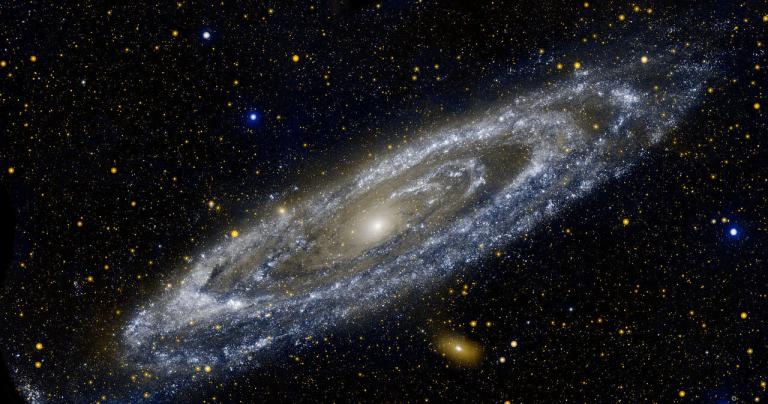
public domain image via WikiMedia Commons

When I talk to Christians about finding the Divine in Nature, they almost always agree with me. Our vocabulary may differ but we’re on common ground.
When I talk about magic I usually get a smile and a look that says “isn’t that quaint?” Many times, though, that’s followed up with a request to work a spell or do a reading for them. The belief in magic dies hard, if it dies at all.
But when I talk about the many Gods, I usually get an angry response. “There is only one God!!!”
Some of this anger comes from ignorance and some comes from religious bigotry. But mostly, polytheism breaks their worldview – their foundational assumptions about the world and the way it works. They’ve always been told there is only one God and they’ve never questioned it. To accept that a reasonable person might think otherwise forces them to consider that they might be wrong.
And considering that you might be wrong is a difficult thing indeed.
This post is not about the inability of some Christians to accept that they might be wrong, or to treat their polytheist neighbors like neighbors despite our religious differences. Rather, I hope to use a situation many Pagans have experienced to get us to look at our own foundational assumptions – to consider that there are things we believe simply because we’ve always assumed they were true, even though it’s likely they aren’t.
I talked about worldview and foundational assumptions in The Path of Paganism. I gave it its own chapter in Paganism In Depth: “Seeing the World in a Different Way.” It was the first module in Paganism In Depth – The On-Line class.
And I still feel like I’m not getting my point across. I’m trying to get people (some people – not everyone) to “look over there” and they’re not seeing the elephant in the room… or the lion in the bushes. Here’s another try.

What it means when you talk about “the Universe”
“If you speak, the Universe responds.”
“The Universe has something good for me.”
“We can trust the Universe.”
These are three examples of countless statements I see on a regular basis. They’re pleasant and comforting. They’re also almost certainly false, but that’s not the point of this post. The point of this post is to consider what it would mean if they were true.
What are the unstated foundational assumptions behind these claims?
Bad assumption: the Universe is an omniscient individual
Look at the three sample statements. Consider others you’ve heard. Behind them is the assumption that the Universe is an individual, and an omniscient individual at that. “The Universe” is listening to you, paying attention to you, and trying to help you live a better life.
This is monotheism lite. It replaces the one not-very-nice creator God of the Abrahamic religions with a blank slate onto which we can project our desires – in particular, the desire for a divine parent to watch out for us. In a more mature form it could be panentheism, but in no way is it polytheism. And despite what some thing, it has nothing to do with the Neoplatonic idea of “The One.”
A better assumption is that “the Universe” is a collective noun for everything that exists in the material world (and possibly the non-material world as well). All of these things – these persons – are connected, but in the way that a family is a collection of individuals, not one person… and certainly not one person who knows, sees, and hears all.
Bad assumption: the well-being of individual humans is of ultimate importance
It takes a certain amount of arrogance to believe the Universe cares about you. A hurricane just wiped out the Bahama Islands. Refugees are suffering and dying in this country and elsewhere in the world. Whole species are going extinct. But “the Universe” is looking out for your spiritual growth?
This assumption comes straight out of Christianity:
Look at the birds of the air; they neither sow nor reap nor gather into barns, and yet your heavenly Father feeds them. Are you not of more value than they? … strive first for the kingdom of God and his righteousness, and all these things will be given to you as well.
The teachings of Jesus are mostly a good way to live your life, even if the doctrines made up about Jesus aren’t. But these words – whether they were said by Jesus or just attributed to Jesus – are flat-out wrong.
A better assumption is that while we are beings of inherent worth and dignity, we are of no greater importance than any other person – human or otherwise. Our species is of no greater importance than every other species. Our greater intelligence (another assumption, one that I frequently have reason to doubt) means we have greater power, but also a greater responsibility to use it for the good of all, not merely for ourselves.
Bad assumption: the Universe has a plan
This is another holdover from Christianity, especially the vague generic Evangelicalism that dominates the United States. “It’s all part of God’s plan” is usually said to hurting people by those who would rather offer empty words than tangible actions.
There is no Grand Plan in Paganism, either ancient or modern. The many Gods have many plans and goals as They spread Their values and virtues. Sometimes those plans are in harmony with each other and other times they’re in conflict, as with the story of Osiris and Set.
I sometimes think I speak of “the Gods” too often – that I imply They’re all on the same page all the time. There are some things we can say about Gods as a class of persons (namely, They are all virtuous), but They are many, not one. And so They have no unified plan.
A better assumption is that life is far more random than we care to admit. We can form our own plans and work to bring good things into our lives (using both magic and mundane effort), but at the end of the day no one is “in control” – not the Universe, not Yahweh, not the Illuminati. For better or for worse, we’re on our own. We’re stronger together than alone, but that’s another post for another time.

The assumptions behind “we are the Universe contemplating itself”
Philosopher Alan Watts said “through our eyes, the universe is perceiving itself.” Astronomer Carl Sagan said “we are the way for the cosmos to know itself.” At a certain level these statements are true. But while many bad assumptions are grounded in Christianity, this quote is a declaration of atheism.
The ultimate nature of the Universe, of life and being, is properly in the realm of both science and philosophy, of astronomers and mystics. But the answers that come from either camp have religious implications.
If we are the Universe contemplating itself, then there is nothing in the Universe bigger than us. There is no consciousness bigger than human consciousness. There is no knowledge bigger than human knowledge.
Now, it’s entirely possible that this is true. But if there is nothing bigger than us, then there are no Gods: neither as the monotheists conceive of their one God or as polytheists conceive of our many Gods.
A better understanding of the Universe is expressed in a different quote, this one from biologist J.B.S. Haldane: “the universe is not only queerer than we suppose, but queerer than we can suppose.” To which I would add “and we’re a part of it all.”
Why all this matters
As with Christians who get angry when a polytheist tells them the Gods are many, Pagans and others often get angry when someone tells them that the Universe isn’t looking out for them. It’s hard when you’re challenged on something you’ve always assumed was true – especially when you really want it to be true.
But when we speak of “the Universe” as though it’s an individual being, we reinforce the assumptions of monotheism. That makes it harder to practice our polytheism deeply and authentically. When we make statements about the Universe that assume there are no Gods, it becomes virtually impossible to practice polytheism deeply and authentically.
Being a Pagan and a polytheist in a world dominated by Christianity and atheism is hard. Doing it well requires challenging our assumptions about the world and the way it works, and changing the assumptions that don’t support us on our journey.
Previous Post

September 5, 2019
Sola Busca Tarot – A Review
Next Post

September 10, 2019 You Will Never Be Ready – Do It Anyway
Browse Our Archives
Select a Category Books Community CUUPS Druidry Foundations and Context Gods and Goddesses Magic Myth Nature Ritual Spiritual Practice Theology Travel Uncategorized Videos
Select a Month October 2026 September 2026 August 2026 July 2026 June 2026 May 2026 April 2026 March 2026 February 2026 January 2026 December 2025 November 2025 October 2025 September 2025 August 2025 July 2025 June 2025 May 2025 April 2025 March 2025 February 2025 January 2025 December 2024 November 2024 October 2024 September 2024 August 2024 July 2024 June 2024 May 2024 April 2024 March 2024 February 2024 January 2024 December 2023 November 2023 October 2023 September 2023 August 2023 July 2023 June 2023 May 2023 April 2023 March 2023 February 2023 January 2023 December 2022 November 2022 October 2022 September 2022 August 2022 July 2022 June 2022 May 2022 April 2022 March 2022 February 2022 January 2022 December 2021 November 2021 October 2021 September 2021 August 2021 July 2021 June 2021 May 2021 April 2021 March 2021 February 2021 January 2021 December 2020 November 2020 October 2020 September 2020 August 2020 July 2020 June 2020 May 2020 April 2020 March 2020 February 2020 January 2020 December 2019 November 2019 October 2019 September 2019 August 2019 July 2019 June 2019 May 2019 April 2019 March 2019 February 2019 January 2019 December 2018 November 2018 October 2018 September 2018 August 2018 July 2018 June 2018 May 2018 April 2018 March 2018 February 2018 January 2018 December 2017 November 2017 October 2017 September 2017 August 2017 July 2017 June 2017 May 2017 April 2017 March 2017 February 2017 January 2017 December 2016 November 2016 October 2016 September 2016 August 2016 July 2016 June 2016 May 2016 April 2016 March 2016 February 2016 January 2016 December 2015 November 2015 October 2015 September 2015 August 2015 July 2015 June 2015 May 2015 April 2015 March 2015 February 2015 January 2015 December 2014 November 2014 October 2014 September 2014 August 2014 July 2014 June 2014 May 2014 April 2014 March 2014 February 2014 January 2014 December 2013 November 2013 October 2013 September 2013 August 2013 July 2013 June 2013 May 2013 April 2013 March 2013 February 2013 January 2013 December 2012 November 2012 October 2012 September 2012 August 2012 July 2012 June 2012 May 2012 April 2012 March 2012 February 2012 January 2012 December 2011 November 2011 October 2011 September 2011 August 2011 July 2011 June 2011 May 2011 April 2011 March 2011 February 2011 January 2011 December 2010 November 2010 October 2010 September 2010 August 2010 July 2010 June 2010 May 2010 April 2010 March 2010 February 2010 January 2010 December 2009 November 2009 October 2009 September 2009 August 2009 July 2009 June 2009 May 2009 April 2009 March 2009 February 2009 January 2009 December 2008 November 2008 October 2008 September 2008 August 2008 July 2008 June 2008
Follow Us!
TAKE THE
Religious Wisdom Quiz
According to 1 Peter, Jesus bore our sins in his body where?
Select your answer to see how you score.
In the tomb On the mountain In the garden On the tree (cross)
Related posts from John Beckett




What We Lose When “Ask AI” Becomes A...
TRENDING AT PATHEOS Pagan

57th Dove Awards Honor Dolly Parton, Crown New...
On gospel music’s biggest night, the 57th annual GMA Dove Awards honored...

The First Eucharistic Controversy: Christ’s Real Presence
For Catholics, the Eucharist is the source and summit of the Christian...

What a Stop Sign Can Teach Us About...
How to Make a Decision When You Can't Hear God Main point:...

Archdiocese Hosts Military Marriage Retreat in Germany
RASTATT, Germany — The transient military lifestyle, with its frequent deployments and...

Nearly every morning, I make the drive to Detroit with my high-school-age...

The Real AI Story Is Adoption Without Trust
Artificial intelligence has crossed a political threshold. It is no longer a...
view all Pagan blogs
Ad-Free & Subscriber Log-In Subscription Support
- About Us
- 2026 Calendar
- Videos
- Podcasts
- Library of World Religions
- Faith In Media Tracker
- Advertise With Us
- Write for Us
- Privacy Policy
- Terms of Service
- Do Not Sell My Data
- Contact Us
- Radiant Digital
- Manage Newsletter Subscriptions
- Unsubscribe From Notifications
- Sitemap
Copyright 2008-2026, Patheos. All rights reserved.
Subscription Support Ad-Free & Subscriber Log-In
Follow Patheos