
BuddhistCatholicContemplativeEvangelicalGeneral ChristianHinduJewishLatter-day SaintMuslimNew VisionsProgressive Christian
Beliefs
- Buddhist
- Catholic
- Contemplative
- Evangelical
- General Christian
- Hindu
- Jewish
- Latter-day Saint
- More Voices
- Muslim
- New Visions
- Pagan
- Progressive Christian
Topics
- Religion News
- Food and Religion
- Sports and Religion
- Religious Art
- Religious Music and Entertainment
- Religious Events
- History and Religion
- Style and Religion
- Politics and Religion
- Women in Religion
- Recreation Outdoors and Religion
- Business Finance and Religion
- Careers Workplace and Religion
- Education and Religion
- Family Parenting and Religion
- Health Fitness and Religion
- Home and Religion
- Relationships and Religion
- Technology and Religion
- Travel and Religion
Columnists
- Buddhist Columnists
- Business Finance and Religion Columnists
- Careers Workplace and Religion Columnists
- Catholic Columnists
- Contemplative Columnists
- Education and Religion Columnists
- Evangelists Columnists
- Family Parenting and Religion Columnists
- General Christian Columnists
- Health Fitness and Religion Columnists
- Hindu Columnists
- History and Religion Columnists
- Home and Religion Columnists
- Jewish Columnists
- More Voices Columnists
- Latter Day Columnists
- Muslim Columnists
- New Visions Columnists
- Nonreligious Columnists
- Pagan Columnists
- Politics and Religion Columnists
- Progressive Columnists
- Recreation Outdoors and Religion Columnists
- Relationships and Religion Columnists
- Religion News Columnists
- Religious Art Columnists
- Religious Events Columnists
- Religious Music and Entertainment Columnists
- Sports and Religion Columnists
- Style and Religion Columnists
- Technology and Religion Columnists
- Travel and Religion Columnists
- Women in Religion Columnists
Resource Library
- 2026 Calendar
- Library of World Religions
- The 100 Most Holy Places on Earth
- Patheos Answers
- Podcasts
- Videos
- Faith Leaders Database
- Anglican Episcopalian
- Bahai
- Baptist
- Buddhism
- Christianity
- Confucianism
- Eastern Orthodoxy
- Hinduism
- Holiness and Pentecostal
- ISKCON
- Islam
- Judaism
- Lutheran
- Methodist
- The Church of Jesus Christ of Latter-day Saints
- New Age
- Paganism
- Presbytarian and Reformed
- Protestantism
- Religion Behind the Scenes
- Roman Catholic
- Scientology
- Shia Islam
- Sikhism
- Sufism
- Sunni Islam
- Taoism
- Zen
- See all religions
Research Tools
 Ad-Free & Subscriber Log-In Subscription Support
Ad-Free & Subscriber Log-In Subscription Support
Follow Patheos 

- Trending:
- Forgiveness
- |
- Marriage
- |
- Consciousness
- |
- Death Penalty
- |
- Election
- |
- Halloween

- Home
- Pagan
- How Do You Facilitate Engagement and Make a Group Grow?
How Do You Facilitate Engagement and Make a Group Grow?
Last updated on: July 16, 2019 at 3:00 am by John Beckett
How Do You Facilitate Engagement and Make a Group Grow? 2019-07-10T19:09:03-06:00 John Beckett
Patheos Explore the world's faith through different perspectives on religion and spirituality! Patheos has the views of the prevalent religions and spiritualities of the world.
I was scrolling through Facebook last Wednesday morning when I came across this question in a big font on an attention-grabbing background:
How do you get people engaged and make a group grow?
My half-awake short answer was “you give them something to be engaged with, something they’re passionate about.”
But this is a deep question that requires a lot more than a quick answer. It’s also an important question. I keep talking about the need for Pagan groups and institutions – you can’t build them if you don’t have leaders and contributors who are engaged and committed.
I’m not an organizational consultant or a team building expert. But I’ve been in leadership positions in both paid and volunteer organization for a long time. I’ve seen what works well, what kinda sorta works, and what is guaranteed to fail.
This is written in the context of a Pagan religious group, but the process is the same in pretty much any organization.

You can’t make people engage
When we’re talking about someone else’s situation, we intuitively recognize that people either want to do something or they don’t.
When it’s our situation, when it’s the Pagan group we’re trying to start, that the Gods are asking – demanding – that we start, we sometimes forget it.
When people say they want to be involved because it sounds like fun at the time and then later decide they’d rather do something else, we frequently forget it.
The cold hard fact is that many people say they want to be part of a group, but when it gets hard or just inconvenient, they drop out. This isn’t unique to Pagans. I see the same thing in the UU movement, I saw it in Methodist churches, and I saw it in D-level amateur softball leagues.
We can’t make people engage. We can’t even make them do what they said they’d do.
But there are things we can do to facilitate engagement, to make it more likely that committed people will stay committed, and that casual participants will stay involved.
It starts with a vision
Every human creation – art, institutions, inventions, infrastructure – began as a vision. It didn’t exist, then someone had an idea to create it. Maybe they had a perfect picture of what they wanted and developed a plan to build it, or maybe they only had a vague idea and started moving in that direction. Either way, someone or someones had to decide where they wanted to go.
Liberal movements (which include most of Paganism) often fetishize the consensus process – everyone should be heard, and the goal should be something everyone agrees on. When a group is already established and its boundaries are known and understood, this can work (it can also fail miserably, but that’s another rant for another time). But when nothing exists, someone has to articulate a vision.
Why does the group exist? What’s it going to do? How will you do it? How will it benefit the people who belong to it?
The more specific the vision the greater likelihood people will buy into it.

Show them something tangible
You have to start with a vision, but the sooner you can make that vision tangible the better.
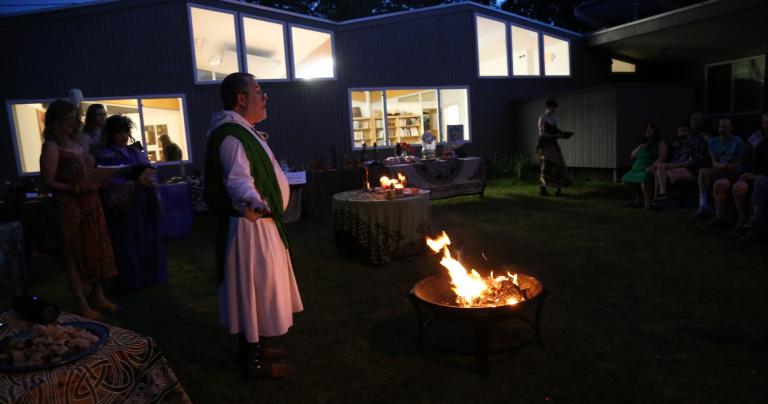
Why do you want a group? To do rituals on the eight high days? Then lead a ritual for the next sabbat… and do it very well. Is your group meant to provide community service? Find a project and get going with it. Is it supposed to be a coven or other tightly-knit closed group? Host a dinner at your house.
Here’s the thing: you’re going to have to do most of the work yourself. If people will help, great. If they’ll take over part of the planning, even better – so long as they’ll follow through. But you can’t expect unengaged or casually involved people to give your vision the same priority you will.
A mental picture is a necessary start. But something you can see with your own eyes is better.
People recognize substance… and the lack thereof
I can’t emphasize this enough: quality matters. There’s a huge difference between a ritual that’s well-researched, well-planned, and well-executed and a ritual that you copied out of a book the day before you did it. Beginners may not be able to articulate why the first was good and the second wasn’t, but they can recognize the difference. The same is true for classes, book study programs, and even group dinners.
Good, substantive, high-quality events get people excited. They make people want to come back. They make them think that this group isn’t like those dysfunctional groups they’ve been in before. They make people want to be engaged.
There is no substitute for substance.
Start small and always deliver
Articulating a vision is one thing. Unrealistic, grandiose plans are another.
Some years ago I attended the opening meeting for a new Pagan group. I wasn’t in a position to be a leader, but I could be a contributing participant and I wanted the group to succeed. At the first meeting, the leader laid out plans for public high day rituals, monthly private gatherings, service projects, annual retreats, and “in five years we’ll have our own land where we can do this.”
I knew right then the group was doomed. The leader was committing to things they didn’t have the resources to deliver. Or, as it turns out, their own ability and willingness. Sure enough, the next event was delayed for “personal reasons.” Event after event was rescheduled or canceled. I stopped trying to participate.
It’s OK to start by doing one thing. Just do that one thing well, and do it consistently. Every event that goes off as announced builds credibility. Every event that doesn’t destroys credibility.
And credibility drives engagement.
Never let the group fail
Mostly this means having a good plan (tasks and due dates) and then making sure the event (ritual, class, other project) stays on plan. That requires checking in with people who volunteered to do things and making sure they’re actually doing them. It requires having a backup plan in case they don’t. Sometimes that means stepping in an doing it for them.
That’s a last resort. If you have to do things for people more than occasionally either 1) you’re a control freak, or 2) your group isn’t really engaged. Neither of those is conducive to a healthy organization.
But the cost of a failure – a last minute cancellation or a ritual that’s weak, or worse, inappropriate – is far greater than the cost of annoying someone because you called them to make sure everything was still on schedule.

You need more than one core leader
Articulate a vision. Show them something tangible. Make it good – every time. No matter what.
That’s hard to do. It’s impossible to do week after week, month after month, year after year. You need at least two core leaders, and preferably three. Multiple core leaders mean you can share the workload, so nobody gets burned out. You can discuss plans and dreams without worrying about how they’ll be received. Perhaps most importantly, it makes it easier to refute the charges that you’re trying to be a dictator.
It also makes it less likely that you’ll actually try to become a dictator. Power can be corrupting, even with those whose motives are pure.
Always remember Point 1
You can’t make people engage. When I’ve done these things – and done them well, and had help from other engaged leaders and participants – we’ve generally gotten more and better engagement. Generally. Most of the time. But not all of the time.
In every volunteer group I’ve ever been a part of (which includes churches and other religious groups) 20% of the people do 80% of the work. Perhaps somewhere a perfectly balanced, perfectly egalitarian Pagan group exists, but I’ve never seen it.
It is possible to all these things, do them well and do them diligently, and still not create engagement – because people don’t want to be engaged. They don’t share your vision. They aren’t willing to do the work necessary to create a strong and vibrant group. And sometimes life happens and people who were deeply committed find themselves moving hundreds of miles away.
But while you’re doing all these things, you’re keeping the group alive and you’re building a healthy culture. You’re extending the window of opportunity for people who want to be engaged to find your group and get involved. And when they get involved they’ll like what they see.
How long does that take? Maybe you get lucky and the right people show up in six months. Maybe it’s six years. And maybe they never show up. Every situation is different.
But if you don’t do it, you’re guaranteed to fail.
You can’t force people to engage. But you can create an environment where people who want to engage will find your group a welcoming place.

Next Post

July 18, 2019 Why Pagans Don’t Proselytize
Browse Our Archives
Select a Category Books Community CUUPS Druidry Foundations and Context Gods and Goddesses Magic Myth Nature Ritual Spiritual Practice Theology Travel Uncategorized Videos
Select a Month October 2026 September 2026 August 2026 July 2026 June 2026 May 2026 April 2026 March 2026 February 2026 January 2026 December 2025 November 2025 October 2025 September 2025 August 2025 July 2025 June 2025 May 2025 April 2025 March 2025 February 2025 January 2025 December 2024 November 2024 October 2024 September 2024 August 2024 July 2024 June 2024 May 2024 April 2024 March 2024 February 2024 January 2024 December 2023 November 2023 October 2023 September 2023 August 2023 July 2023 June 2023 May 2023 April 2023 March 2023 February 2023 January 2023 December 2022 November 2022 October 2022 September 2022 August 2022 July 2022 June 2022 May 2022 April 2022 March 2022 February 2022 January 2022 December 2021 November 2021 October 2021 September 2021 August 2021 July 2021 June 2021 May 2021 April 2021 March 2021 February 2021 January 2021 December 2020 November 2020 October 2020 September 2020 August 2020 July 2020 June 2020 May 2020 April 2020 March 2020 February 2020 January 2020 December 2019 November 2019 October 2019 September 2019 August 2019 July 2019 June 2019 May 2019 April 2019 March 2019 February 2019 January 2019 December 2018 November 2018 October 2018 September 2018 August 2018 July 2018 June 2018 May 2018 April 2018 March 2018 February 2018 January 2018 December 2017 November 2017 October 2017 September 2017 August 2017 July 2017 June 2017 May 2017 April 2017 March 2017 February 2017 January 2017 December 2016 November 2016 October 2016 September 2016 August 2016 July 2016 June 2016 May 2016 April 2016 March 2016 February 2016 January 2016 December 2015 November 2015 October 2015 September 2015 August 2015 July 2015 June 2015 May 2015 April 2015 March 2015 February 2015 January 2015 December 2014 November 2014 October 2014 September 2014 August 2014 July 2014 June 2014 May 2014 April 2014 March 2014 February 2014 January 2014 December 2013 November 2013 October 2013 September 2013 August 2013 July 2013 June 2013 May 2013 April 2013 March 2013 February 2013 January 2013 December 2012 November 2012 October 2012 September 2012 August 2012 July 2012 June 2012 May 2012 April 2012 March 2012 February 2012 January 2012 December 2011 November 2011 October 2011 September 2011 August 2011 July 2011 June 2011 May 2011 April 2011 March 2011 February 2011 January 2011 December 2010 November 2010 October 2010 September 2010 August 2010 July 2010 June 2010 May 2010 April 2010 March 2010 February 2010 January 2010 December 2009 November 2009 October 2009 September 2009 August 2009 July 2009 June 2009 May 2009 April 2009 March 2009 February 2009 January 2009 December 2008 November 2008 October 2008 September 2008 August 2008 July 2008 June 2008
Follow Us!
TAKE THE
Religious Wisdom Quiz
What city's walls fell after the Israelites marched around them?
Select your answer to see how you score.
Jericho Bethel Ai Jerusalem
Related posts from John Beckett


The Vampire Films of Jean Rollin


Bo French Doesn’t Understand Texas
TRENDING AT PATHEOS Pagan

57th Dove Awards Honor Dolly Parton, Crown New...
On gospel music’s biggest night, the 57th annual GMA Dove Awards honored...

The First Eucharistic Controversy: Christ’s Real Presence
For Catholics, the Eucharist is the source and summit of the Christian...

What a Stop Sign Can Teach Us About...
How to Make a Decision When You Can't Hear God Main point:...

Archdiocese Hosts Military Marriage Retreat in Germany
RASTATT, Germany — The transient military lifestyle, with its frequent deployments and...

Nearly every morning, I make the drive to Detroit with my high-school-age...

The Real AI Story Is Adoption Without Trust
Artificial intelligence has crossed a political threshold. It is no longer a...
view all Pagan blogs
Ad-Free & Subscriber Log-In Subscription Support
- About Us
- 2026 Calendar
- Videos
- Podcasts
- Library of World Religions
- Faith In Media Tracker
- Advertise With Us
- Write for Us
- Privacy Policy
- Terms of Service
- Do Not Sell My Data
- Contact Us
- Radiant Digital
- Manage Newsletter Subscriptions
- Unsubscribe From Notifications
- Sitemap
Copyright 2008-2026, Patheos. All rights reserved.
Subscription Support Ad-Free & Subscriber Log-In
Follow Patheos