
BuddhistCatholicContemplativeEvangelicalGeneral ChristianHinduJewishLatter-day SaintMuslimNew VisionsProgressive Christian
Beliefs
- Buddhist
- Catholic
- Contemplative
- Evangelical
- General Christian
- Hindu
- Jewish
- Latter-day Saint
- More Voices
- Muslim
- New Visions
- Pagan
- Progressive Christian
Topics
- Religion News
- Food and Religion
- Sports and Religion
- Religious Art
- Religious Music and Entertainment
- Religious Events
- History and Religion
- Style and Religion
- Politics and Religion
- Women in Religion
- Recreation Outdoors and Religion
- Business Finance and Religion
- Careers Workplace and Religion
- Education and Religion
- Family Parenting and Religion
- Health Fitness and Religion
- Home and Religion
- Relationships and Religion
- Technology and Religion
- Travel and Religion
Columnists
- Buddhist Columnists
- Business Finance and Religion Columnists
- Careers Workplace and Religion Columnists
- Catholic Columnists
- Contemplative Columnists
- Education and Religion Columnists
- Evangelists Columnists
- Family Parenting and Religion Columnists
- General Christian Columnists
- Health Fitness and Religion Columnists
- Hindu Columnists
- History and Religion Columnists
- Home and Religion Columnists
- Jewish Columnists
- More Voices Columnists
- Latter Day Columnists
- Muslim Columnists
- New Visions Columnists
- Nonreligious Columnists
- Pagan Columnists
- Politics and Religion Columnists
- Progressive Columnists
- Recreation Outdoors and Religion Columnists
- Relationships and Religion Columnists
- Religion News Columnists
- Religious Art Columnists
- Religious Events Columnists
- Religious Music and Entertainment Columnists
- Sports and Religion Columnists
- Style and Religion Columnists
- Technology and Religion Columnists
- Travel and Religion Columnists
- Women in Religion Columnists
Resource Library
- 2026 Calendar
- Library of World Religions
- The 100 Most Holy Places on Earth
- Patheos Answers
- Podcasts
- Videos
- Faith Leaders Database
- Anglican Episcopalian
- Bahai
- Baptist
- Buddhism
- Christianity
- Confucianism
- Eastern Orthodoxy
- Hinduism
- Holiness and Pentecostal
- ISKCON
- Islam
- Judaism
- Lutheran
- Methodist
- The Church of Jesus Christ of Latter-day Saints
- New Age
- Paganism
- Presbytarian and Reformed
- Protestantism
- Religion Behind the Scenes
- Roman Catholic
- Scientology
- Shia Islam
- Sikhism
- Sufism
- Sunni Islam
- Taoism
- Zen
- See all religions
Research Tools
 Ad-Free & Subscriber Log-In Subscription Support
Ad-Free & Subscriber Log-In Subscription Support
Follow Patheos 

- Trending:
- Forgiveness
- |
- Marriage
- |
- Consciousness
- |
- Death Penalty
- |
- Election
- |
- Halloween

- Home
- Pagan
- Priesthood as Service to the Gods
Priesthood as Service to the Gods
Last updated on: May 19, 2019 at 8:43 am by John Beckett
Priesthood as Service to the Gods 2019-05-19T08:43:31-06:00 John Beckett
Patheos Explore the world's faith through different perspectives on religion and spirituality! Patheos has the views of the prevalent religions and spiritualities of the world.
Many years ago a Methodist minister – who was a very good minister – told me “I serve God by serving people.”
That’s the expectation most people – whether Christian or Pagan or something else – have for clergy. I’ve had devout polytheists tell me “you can’t be a priest if you don’t serve a community.” I’ve had others tell me that if a clergy training program doesn’t include classes in pastoral counseling and community activism it’s worthless.
When people ask me to define priesthood, I have a three-part answer. Priests serve their Gods, mediate for their Gods, and serve their communities. It is up to each priest and the God or Gods they serve to determine the proper mix of those three elements. For many, community service is top priority.
But for some, their first – and in a few cases, their only – priority is service to the Gods Themselves.
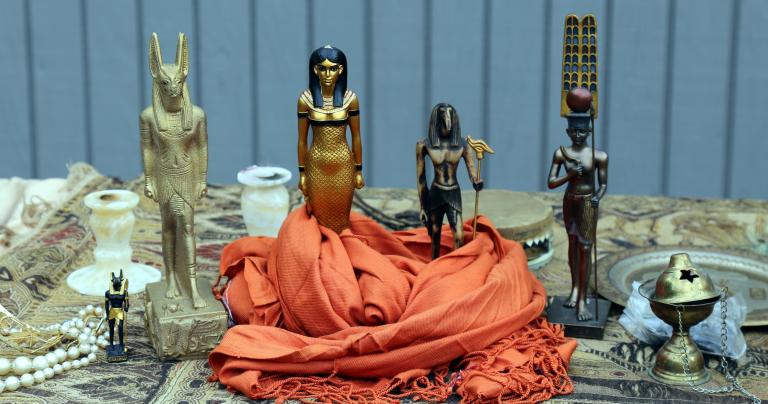
Recently Morgan Daimler had a three-part series titled “Priesthood in Service to the Other” where they talk about how their priesthood is only about service to the Good Neighbors. It’s about taking care of their needs, wants, and demands, not about serving humans.
Part 3: The Trouble With Terms
They’re all worth your time to read, and if you consider yourself a priest or are considering becoming a priest I strongly urge you to do so. Here’s a key quote from Part 1:
From my own perspective, admittedly as someone raised a bit feral and without structured religion, it has often seemed to me that Pagan priesthood today is heavily modeled after Christian clergy. There is an ingrained idea that a single person can or does serve all roles – ritualist, teacher, counselor, mediator between humans and spirits, magician, organizer. I don’t often see the idea of Pagan priesthood specializing, or the acknowledgement that a single person may not be equipped to handle all aspects of such service. There’s also a pervasive sense that the clergy person may be serving the Gods or spirits but is primarily serving the human community and in place to aid that human community and to help it grow and flourish in its spirituality.
I am not part of that kind of priesthood, although clergy I certainly am.
This rings true. Much of my priesthood is about serving a wider community of which the Gods are a part. But there are elements that are solely about serving Them in ways that have no clear benefit to me or any other living human.
Ancient Pagan priests were not pastors
The temples of ancient Greece, Rome, Egypt, and other places were not churches. They were not gathering places for the faithful – they were homes for the Gods. In many cases ordinary people weren’t even allowed inside the temples. The temple priests performed the rites necessary to maintain good relations between the Gods and the people, but that focused primarily on the needs of the Gods, not the needs of the people.
You did not go to a temple priest to get married or for counseling about how to recover from abusive parents. The idea of priests as counselors is largely a Christian thing. We expect our priests to do all the things we see Catholic priests and Protestant ministers doing, without ever asking if that’s the right model for Pagan priesthood or not.
Much of our expectation of “priests as religious generalists” that Morgan Daimler complains about is out of necessity – we don’t have enough trained priests to do a lot of specialization.
But that doesn’t change the fact the some priests are called to specialize, and some of them are specifically required to serve the Gods and only the Gods.
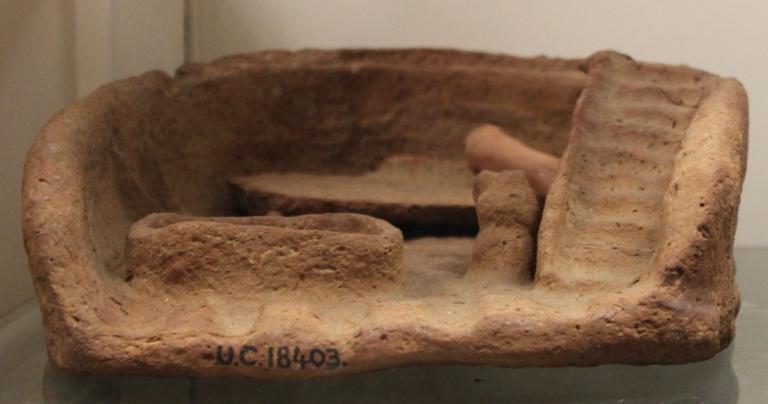
Egyptian offering tray – Ptolemaic period – from the Petrie Museum in London
Feeding the Gods
One of the primary ways priests serve the Gods is by making offerings to Them, and many of those offerings are food and drink. What does a God need with wine? What possible benefit could a deity gain from a human crumbling bread on the ground, or from setting the bread in front of an image of the deity before eating it themselves?
I do not know. Neoplatonists argue that the Gods are perfect and therefore need nothing. I’m not sure I agree with that, but even if it’s true, it is also true that the Gods have always demanded offerings and sacrifices.
Making weekly offerings to certain deities is a regular part of my practice, and has been for several years. Mostly that means libations of wine or whiskey. A few months ago I started thinking that I should change the practice and focus more on meditation and communion, and on less tangible offerings.
The response from Themselves (both individually and collectively) was a loud and clear “NO!” I am to continue weekly offerings for the rest of this life. There was no reason given – transparency is not one of Their virtues.
I do not mindlessly follow the orders of anyone, including the Gods. If They tell me to do something I find unethical I will refuse. So far They haven’t – I don’t expect They ever will. But feeding the Gods has a long tradition in polytheist religions and if one or more of Them want me to do it, I will. And I do.
Promoting Their virtues and values
Gods are whole persons – They are more than the personification of Their functions and Their virtues. Cernunnos is more than a God of the Wild, the Morrigan is more than a Goddess of Sovereignty, and Aphrodite is more than a Goddess of Love. But whatever else They may be, They are also these things. And one of the ways we can serve Them – directly or indirectly – is by embodying Their values and virtues and promoting them in the wider world.
Certainly human society benefits when we increase the quantity and quality of divine virtue in the world. But this is the opposite side of the Methodist minister I mentioned at the beginning. We serve people – and non-human persons – by serving the Gods.
I tend to be rather pragmatic – if you do the right things, I don’t much care why you do them. But for those of us called to serve the Gods as priests, the difference matters. We serve the Gods by promoting Their virtues and values – the benefit to human society is secondary.

Moving away from a human-centric worldview
If there is a practical, easily-comprehended reason behind the Gods’ requirement that we serve Them directly, it is this: putting service to the Gods first reminds us that humans and human society are not the primary concern of the universe.
There is already a religion that places humans at the center of the universe: humanism. Now, humanism can be a fine ethical religion or religious approach. When you consider all the evil that’s been done in the name of the Christian God (who is usually presumed to be the only God by those doing the bad things), humanism looks rather attractive.
But putting humans at the center of the universe requires a materialist worldview – the idea that there is nothing but matter and its interactions. Those of us grounded in animism – the idea that everything is not a thing but a person – understand that humans have inherent dignity and worth, but so does every other species, natural feature, and forces of nature. Our big brains and opposable thumbs give us great power, but no greater worth.*
That’s hard to accept, particularly for those of us who grew up in a religion that taught humans alone are made in the image of the Divine. But when we place service to the Gods ahead of service to people, we remind ourselves and others that there are there are things (persons) that are at least as worthy of our consideration as ourselves.
Given the destructive arrogance with which we have used our great power (resulting in climate change and the extinction of multiple species), I’d say that’s pretty important.
Priesthood as service to the Gods
We are still trying to figure out what priesthood needs to look like in our contemporary Pagan and polytheist religions. And there is an overwhelming tendency to look at our Christian neighbors and say “we need all that too.” We forget that different religions have different needs and different functions to perform.
While we do need “ritualists, teachers, counselors, mediators between humans and spirits, magicians, and organizers” it is unreasonable to expect any one person to be an expert in all those functions. Some of us manage to be adequate in most of them, but the sooner we can begin supporting specialists, the better.
Serving both my local community and the wider Pagan movement is part of my priesthood. Mediating for the Gods – which includes presenting Them to the community as well as occasionally relaying individual messages for Them – is another important part.
But I am also called to the third element of priesthood: service to directly to the Gods, in the ways that They request/demand, for reasons that are known only to Them, and that often have no obvious value in this world.

* To (hopefully) avoid any unnecessary arguments: it is not true and I am not saying that humanists do not care about non-human species and forces of nature. Many of them do, some very deeply. But humanism is by definition human-centered, even if it’s not exclusively concerned with humans.
Previous Post

May 16, 2019
Dealing With Catholic Envy in the Pagan World
Next Post

May 20, 2019 Game of Thrones: Did You Really Expect a Happy Ending?
Browse Our Archives
Select a Category Books Community CUUPS Druidry Foundations and Context Gods and Goddesses Magic Myth Nature Ritual Spiritual Practice Theology Travel Uncategorized Videos
Select a Month October 2026 September 2026 August 2026 July 2026 June 2026 May 2026 April 2026 March 2026 February 2026 January 2026 December 2025 November 2025 October 2025 September 2025 August 2025 July 2025 June 2025 May 2025 April 2025 March 2025 February 2025 January 2025 December 2024 November 2024 October 2024 September 2024 August 2024 July 2024 June 2024 May 2024 April 2024 March 2024 February 2024 January 2024 December 2023 November 2023 October 2023 September 2023 August 2023 July 2023 June 2023 May 2023 April 2023 March 2023 February 2023 January 2023 December 2022 November 2022 October 2022 September 2022 August 2022 July 2022 June 2022 May 2022 April 2022 March 2022 February 2022 January 2022 December 2021 November 2021 October 2021 September 2021 August 2021 July 2021 June 2021 May 2021 April 2021 March 2021 February 2021 January 2021 December 2020 November 2020 October 2020 September 2020 August 2020 July 2020 June 2020 May 2020 April 2020 March 2020 February 2020 January 2020 December 2019 November 2019 October 2019 September 2019 August 2019 July 2019 June 2019 May 2019 April 2019 March 2019 February 2019 January 2019 December 2018 November 2018 October 2018 September 2018 August 2018 July 2018 June 2018 May 2018 April 2018 March 2018 February 2018 January 2018 December 2017 November 2017 October 2017 September 2017 August 2017 July 2017 June 2017 May 2017 April 2017 March 2017 February 2017 January 2017 December 2016 November 2016 October 2016 September 2016 August 2016 July 2016 June 2016 May 2016 April 2016 March 2016 February 2016 January 2016 December 2015 November 2015 October 2015 September 2015 August 2015 July 2015 June 2015 May 2015 April 2015 March 2015 February 2015 January 2015 December 2014 November 2014 October 2014 September 2014 August 2014 July 2014 June 2014 May 2014 April 2014 March 2014 February 2014 January 2014 December 2013 November 2013 October 2013 September 2013 August 2013 July 2013 June 2013 May 2013 April 2013 March 2013 February 2013 January 2013 December 2012 November 2012 October 2012 September 2012 August 2012 July 2012 June 2012 May 2012 April 2012 March 2012 February 2012 January 2012 December 2011 November 2011 October 2011 September 2011 August 2011 July 2011 June 2011 May 2011 April 2011 March 2011 February 2011 January 2011 December 2010 November 2010 October 2010 September 2010 August 2010 July 2010 June 2010 May 2010 April 2010 March 2010 February 2010 January 2010 December 2009 November 2009 October 2009 September 2009 August 2009 July 2009 June 2009 May 2009 April 2009 March 2009 February 2009 January 2009 December 2008 November 2008 October 2008 September 2008 August 2008 July 2008 June 2008
Follow Us!
TAKE THE
Religious Wisdom Quiz
Who said, "Come, follow me, and I will make you fishers of men"?
Select your answer to see how you score.
John the Baptist Peter Paul Jesus
Related posts from John Beckett




What We Lose When “Ask AI” Becomes A...
TRENDING AT PATHEOS Pagan

The Sermon on the Mount, Part I: Matthew...
The Sermon on the Mount, Part I (Matthew 4:12-5:12) St. Matthew moves...

What's up from Crossway: Reviewing some of their latest A few weeks...

Janie Learns the Way of the Cross: A...
Teaching children about Jesus' Passion can be challenging. Many parents and educators...

Looking For Good Catholic Writing - October 2026
He alone extends the heavens, and he walks upon the waves of...

In "Irreplaceable," our book on vocation and technology, Trevor Sutton and I...

I was strolling through the top floor of the brand new Parthenon...
view all Pagan blogs
Ad-Free & Subscriber Log-In Subscription Support
- About Us
- 2026 Calendar
- Videos
- Podcasts
- Library of World Religions
- Faith In Media Tracker
- Advertise With Us
- Write for Us
- Privacy Policy
- Terms of Service
- Do Not Sell My Data
- Contact Us
- Radiant Digital
- Manage Newsletter Subscriptions
- Unsubscribe From Notifications
- Sitemap
Copyright 2008-2026, Patheos. All rights reserved.
Subscription Support Ad-Free & Subscriber Log-In
Follow Patheos