
BuddhistCatholicContemplativeEvangelicalGeneral ChristianHinduJewishLatter-day SaintMuslimNew VisionsProgressive Christian
Beliefs
- Buddhist
- Catholic
- Contemplative
- Evangelical
- General Christian
- Hindu
- Jewish
- Latter-day Saint
- More Voices
- Muslim
- New Visions
- Pagan
- Progressive Christian
Topics
- Religion News
- Food and Religion
- Sports and Religion
- Religious Art
- Religious Music and Entertainment
- Religious Events
- History and Religion
- Style and Religion
- Politics and Religion
- Women in Religion
- Recreation Outdoors and Religion
- Business Finance and Religion
- Careers Workplace and Religion
- Education and Religion
- Family Parenting and Religion
- Health Fitness and Religion
- Home and Religion
- Relationships and Religion
- Technology and Religion
- Travel and Religion
Columnists
- Buddhist Columnists
- Business Finance and Religion Columnists
- Careers Workplace and Religion Columnists
- Catholic Columnists
- Contemplative Columnists
- Education and Religion Columnists
- Evangelists Columnists
- Family Parenting and Religion Columnists
- General Christian Columnists
- Health Fitness and Religion Columnists
- Hindu Columnists
- History and Religion Columnists
- Home and Religion Columnists
- Jewish Columnists
- More Voices Columnists
- Latter Day Columnists
- Muslim Columnists
- New Visions Columnists
- Nonreligious Columnists
- Pagan Columnists
- Politics and Religion Columnists
- Progressive Columnists
- Recreation Outdoors and Religion Columnists
- Relationships and Religion Columnists
- Religion News Columnists
- Religious Art Columnists
- Religious Events Columnists
- Religious Music and Entertainment Columnists
- Sports and Religion Columnists
- Style and Religion Columnists
- Technology and Religion Columnists
- Travel and Religion Columnists
- Women in Religion Columnists
Resource Library
- 2026 Calendar
- Library of World Religions
- The 100 Most Holy Places on Earth
- Patheos Answers
- Podcasts
- Videos
- Faith Leaders Database
- Anglican Episcopalian
- Bahai
- Baptist
- Buddhism
- Christianity
- Confucianism
- Eastern Orthodoxy
- Hinduism
- Holiness and Pentecostal
- ISKCON
- Islam
- Judaism
- Lutheran
- Methodist
- The Church of Jesus Christ of Latter-day Saints
- New Age
- Paganism
- Presbytarian and Reformed
- Protestantism
- Religion Behind the Scenes
- Roman Catholic
- Scientology
- Shia Islam
- Sikhism
- Sufism
- Sunni Islam
- Taoism
- Zen
- See all religions
Research Tools
 Ad-Free & Subscriber Log-In Subscription Support
Follow Patheos 

- Trending:
- Advent
- |
- Forgiveness
- |
- Thanksgiving
- |
- Election
- |
- Seasonal Holidays
- |
- Marriage

- Home
- Pagan
- 5 Questions on Spiritual Practice
5 Questions on Spiritual Practice
Last updated on: March 21, 2019 at 3:00 am by John Beckett
5 Questions on Spiritual Practice 2019-03-13T17:57:38-06:00 John Beckett
Patheos Explore the world's faith through different perspectives on religion and spirituality! Patheos has the views of the prevalent religions and spiritualities of the world.
Regular and consistent spiritual practice is the core of any religion. This is especially true of Paganism, which is a religion of doing rather than a religion of believing. In this month’s Conversations Under the Oaks, I got several good questions on spiritual practice and so I’m going to address them all here.
1. What are some good ways to have a daily Pagan spiritual practice?
The best way is to pick one thing and get started. Meditation, prayer, offerings, greeting the sun and the moon – pick one thing and then do it every day for three weeks.
Doing one thing every day is better than doing three things every other day and much better than doing five things whenever you decide you feel like doing it. Start small and build from there. If you miss a day, don’t beat yourself up, but do understand why you missed it and what you can do to not miss it next time.
After doing that one thing every day for three weeks straight, add something else. Continue this process until it feels right. The goal isn’t more – the goal is enough.
This post from 2016 on Beginning a Devotional Practice may be helpful.
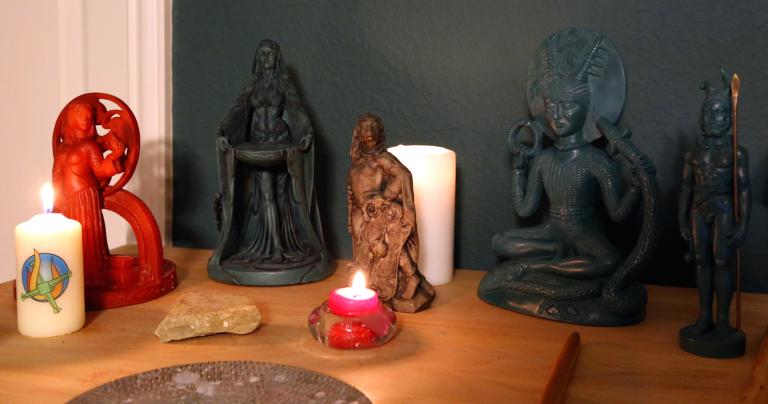
2. How can one gauge what a specific deity might want in offerings, if there isn’t much information on what Their followers did in ancient times?
Particularly when you’re starting out, it’s important not to overthink this. Offerings of food and drink are near-universal in polytheist traditions. With some exceptions, if you like it and you would serve it to your human guests, Gods and spirits will find it acceptable.
As your practice deepens, and especially as your relationship with a particular deity or spirit grows, you’ll start to get an idea of what they prefer – and what they don’t. Talk to other devotees, and especially to priests and those who’ve done extensive work with them.
But mainly, make offerings, with whatever you have to offer.
3. I usually offer food stuff, so I clean off my altar within a couple of days and lay it by a tree. What if you wanted to offer something like a toy, that you can’t burn and it would be polluting to leave in nature? You would want to remove it from the altar some time to leave more offerings I would think. Throwing it away is terrible symbolically.
I completely agree that throwing away offerings is terrible. Offerings should never end up in the trash, or even in recycling (much of which ends up in landfills anyway). If you don’t know how to properly dispose of it, you should seriously consider whether or not it’s an acceptable offering.
Our ancestors often deposited offerings in bodies of water. I’ve done that before and will do it again, but throwing a manufactured item in a lake would probably be considered “dumping trash” rather than a sacred offering.
But our ancestors also buried offerings, sometimes ritually breaking them first to insure they couldn’t be used in this world again. That’s one of the ways we know something about what they offered – they were hidden in the ground, or preserved in a bog.
If I felt compelled to make an offering of something that couldn’t be burned and shouldn’t be deposited in water, I’d bury it.
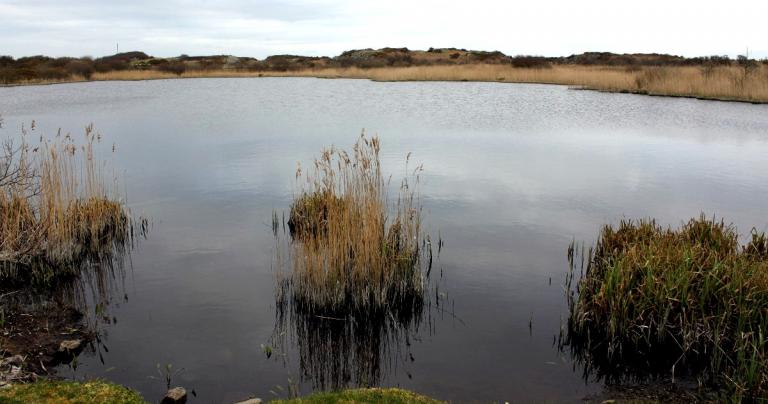
Llyn Cerrig Bach, Anglesey, Wales – many valuable ancient offerings were found here while constructing an air field during World War II
4. Have you found a reason to work with specific non-deific spirits, i.e. the Dead or Landspirits?
Very much so. Both the ancestors (of blood and of spirit) and the spirits of the place where I am are part of my daily cycle of prayers. I make offerings to my ancestors weekly, sometimes collectively and sometimes to those whose names I know. I make offerings to them and to the land spirits as part of most rituals I do. It helps to stay in contact with the ancestors – our most accessible spiritual allies – and with the neighbors who share the land where I live.
I make offerings to the land spirits when I travel to new places – it seems polite to introduce myself. The laws of hospitality say visitors should not show up empty-handed if they can avoid it.
I especially work with them on matters where we have common cause: with the ancestors for healing for myself or for sick relatives; with the land spirits on environmental and weather concerns.
If by “specific” you mean named spirits, I’ve only done that with ancestors who either I knew in this life, or whose names I’ve been able to discover through mundane research. I can occasionally “see” individual land spirits, but I’ve never really been able to interact with them one on one.
5. Do in-laws count as ancestor spirits? One of my husband’s grandparents recently passed away, and I was thinking of including her in my ancestor interactions and offerings.
In my daily invocation of ancestors, I say “hail to my ancestors of blood and ancestors of spirit, you whose child I am and on whose foundations I build.” Ancestors are not just those whose DNA we carry – they’re also those whose practices and ideas live on in us. At the very least your grandmother-in-law helped make your husband who he is and he’s a huge part of your life, so she is your ancestor even if you never knew her. If you did know her, she’s even more your ancestor.
It is good and right – and necessary – to honor the recent dead. Our mainstream society tells us “funerals are for the living” and ignores what we need to do to tell our recently deceased loved ones that we will still love them, but that it’s OK for them to move on. It is good to make offerings to those who have died, to speak to them, and to remember them.
But it’s best if we give them some time before we start asking them for favors from the other side. They have a huge transition to make, and while time runs different in the Otherworld, it still exists. People who know more about these things than I do tell me it’s best to give someone at least two or three years before calling on them for anything other than messages of love and well-being.
Previous Post

March 19, 2019
Repaganizing Ancient Rituals
Next Post

March 24, 2019 The Problems with “Shaman” – Focus on the Work, Not on the Title
Browse Our Archives
Select a Category Books Community CUUPS Druidry Foundations and Context Gods and Goddesses Magic Myth Nature Ritual Spiritual Practice Theology Travel Uncategorized Videos
Select a Month November 2026 October 2026 September 2026 August 2026 July 2026 June 2026 May 2026 April 2026 March 2026 February 2026 January 2026 December 2025 November 2025 October 2025 September 2025 August 2025 July 2025 June 2025 May 2025 April 2025 March 2025 February 2025 January 2025 December 2024 November 2024 October 2024 September 2024 August 2024 July 2024 June 2024 May 2024 April 2024 March 2024 February 2024 January 2024 December 2023 November 2023 October 2023 September 2023 August 2023 July 2023 June 2023 May 2023 April 2023 March 2023 February 2023 January 2023 December 2022 November 2022 October 2022 September 2022 August 2022 July 2022 June 2022 May 2022 April 2022 March 2022 February 2022 January 2022 December 2021 November 2021 October 2021 September 2021 August 2021 July 2021 June 2021 May 2021 April 2021 March 2021 February 2021 January 2021 December 2020 November 2020 October 2020 September 2020 August 2020 July 2020 June 2020 May 2020 April 2020 March 2020 February 2020 January 2020 December 2019 November 2019 October 2019 September 2019 August 2019 July 2019 June 2019 May 2019 April 2019 March 2019 February 2019 January 2019 December 2018 November 2018 October 2018 September 2018 August 2018 July 2018 June 2018 May 2018 April 2018 March 2018 February 2018 January 2018 December 2017 November 2017 October 2017 September 2017 August 2017 July 2017 June 2017 May 2017 April 2017 March 2017 February 2017 January 2017 December 2016 November 2016 October 2016 September 2016 August 2016 July 2016 June 2016 May 2016 April 2016 March 2016 February 2016 January 2016 December 2015 November 2015 October 2015 September 2015 August 2015 July 2015 June 2015 May 2015 April 2015 March 2015 February 2015 January 2015 December 2014 November 2014 October 2014 September 2014 August 2014 July 2014 June 2014 May 2014 April 2014 March 2014 February 2014 January 2014 December 2013 November 2013 October 2013 September 2013 August 2013 July 2013 June 2013 May 2013 April 2013 March 2013 February 2013 January 2013 December 2012 November 2012 October 2012 September 2012 August 2012 July 2012 June 2012 May 2012 April 2012 March 2012 February 2012 January 2012 December 2011 November 2011 October 2011 September 2011 August 2011 July 2011 June 2011 May 2011 April 2011 March 2011 February 2011 January 2011 December 2010 November 2010 October 2010 September 2010 August 2010 July 2010 June 2010 May 2010 April 2010 March 2010 February 2010 January 2010 December 2009 November 2009 October 2009 September 2009 August 2009 July 2009 June 2009 May 2009 April 2009 March 2009 February 2009 January 2009 December 2008 November 2008 October 2008 September 2008 August 2008 July 2008 June 2008
Follow Us!
TAKE THE
Religious Wisdom Quiz
Which book of the Bible records Paul’s shipwreck?
Select your answer to see how you score.
Romans 2 Timothy 1 Corinthians Acts
Related posts from John Beckett

Pagans And The Rise Of The Religious Left

Why Halloween Is So Popular – And So...

The Pillar of the Boatmen: the Ancient Monument...
TRENDING AT PATHEOS Pagan

Are You a Scrooge or an Ebenezer?
A Call to Remember As the Christmas season rings in, will we...

Noah’s Ark Archaeologists: Gopher Wood or Should We...
Ancient wood, a boat-shaped formation and dates that invite a second look:...

Smart people saying smart things (11.24.26)
Please take time to listen to Perry Bacon, Sarah Posner, Adam Serwer,...

The Contingency of Our Technology
Last week we were hit with a raft of massive technology outages....

In 1939, President Franklin D. Roosevelt moved Thanksgiving from November 30 to...

Reasons for Restraint: Ricardo Gonzalez, Florida and Dec...
The Morning of January 3 I begin with the dead. On the...
view all Pagan blogs
Ad-Free & Subscriber Log-In Subscription Support
- About Us
- 2026 Calendar
- Videos
- Podcasts
- Library of World Religions
- Faith In Media Tracker
- Advertise With Us
- Write for Us
- Privacy Policy
- Terms of Service
- Do Not Sell My Data
- Contact Us
- Radiant Digital
- Manage Newsletter Subscriptions
- Unsubscribe From Notifications
- Sitemap
Copyright 2008-2026, Patheos, part of the Radiant Digital network of media brands. All rights reserved.
Subscription Support Ad-Free & Subscriber Log-In
Follow Patheos