
BuddhistCatholicContemplativeEvangelicalGeneral ChristianHinduJewishLatter-day SaintMuslimNew VisionsProgressive Christian
Beliefs
- Buddhist
- Catholic
- Contemplative
- Evangelical
- General Christian
- Hindu
- Jewish
- Latter-day Saint
- More Voices
- Muslim
- New Visions
- Pagan
- Progressive Christian
Topics
- Religion News
- Food and Religion
- Sports and Religion
- Religious Art
- Religious Music and Entertainment
- Religious Events
- History and Religion
- Style and Religion
- Politics and Religion
- Women in Religion
- Recreation Outdoors and Religion
- Business Finance and Religion
- Careers Workplace and Religion
- Education and Religion
- Family Parenting and Religion
- Health Fitness and Religion
- Home and Religion
- Relationships and Religion
- Technology and Religion
- Travel and Religion
Columnists
- Buddhist Columnists
- Business Finance and Religion Columnists
- Careers Workplace and Religion Columnists
- Catholic Columnists
- Contemplative Columnists
- Education and Religion Columnists
- Evangelists Columnists
- Family Parenting and Religion Columnists
- General Christian Columnists
- Health Fitness and Religion Columnists
- Hindu Columnists
- History and Religion Columnists
- Home and Religion Columnists
- Jewish Columnists
- More Voices Columnists
- Latter Day Columnists
- Muslim Columnists
- New Visions Columnists
- Nonreligious Columnists
- Pagan Columnists
- Politics and Religion Columnists
- Progressive Columnists
- Recreation Outdoors and Religion Columnists
- Relationships and Religion Columnists
- Religion News Columnists
- Religious Art Columnists
- Religious Events Columnists
- Religious Music and Entertainment Columnists
- Sports and Religion Columnists
- Style and Religion Columnists
- Technology and Religion Columnists
- Travel and Religion Columnists
- Women in Religion Columnists
Resource Library
- 2026 Calendar
- Library of World Religions
- The 100 Most Holy Places on Earth
- Patheos Answers
- Podcasts
- Videos
- Faith Leaders Database
- Anglican Episcopalian
- Bahai
- Baptist
- Buddhism
- Christianity
- Confucianism
- Eastern Orthodoxy
- Hinduism
- Holiness and Pentecostal
- ISKCON
- Islam
- Judaism
- Lutheran
- Methodist
- The Church of Jesus Christ of Latter-day Saints
- New Age
- Paganism
- Presbytarian and Reformed
- Protestantism
- Religion Behind the Scenes
- Roman Catholic
- Scientology
- Shia Islam
- Sikhism
- Sufism
- Sunni Islam
- Taoism
- Zen
- See all religions
Research Tools
 Ad-Free & Subscriber Log-In Subscription Support
Ad-Free & Subscriber Log-In Subscription Support
Follow Patheos 

- Trending:
- Forgiveness
- |
- Marriage
- |
- Consciousness
- |
- Death Penalty
- |
- Election
- |
- Halloween

- Home
- Pagan
- Ascendant: Modern Essays on Polytheism and Theology
Ascendant: Modern Essays on Polytheism and Theology
Last updated on: February 21, 2019 at 4:00 am by John Beckett
Ascendant: Modern Essays on Polytheism and Theology 2019-02-17T21:39:46-06:00 John Beckett
Patheos Explore the world's faith through different perspectives on religion and spirituality! Patheos has the views of the prevalent religions and spiritualities of the world.
Ascendant: Modern Essays on Polytheism and Theology
edited by Michael Hardy
published by Bibliotheca Alexandrina: January 2019
166 pages
Paperback: $10.99, Kindle: $4.99
Pagans invented theology. The word itself is Greek: theos (God) + logia (the study of)… though in its original form, the first root word would have been theoi, which is plural. The first theologians (that we have records of) were Hesiod and Plato. Yet today, no less a source than Britannica.com says:
Whereas theology as a concept had its origins in the tradition of the ancient Greeks, it obtained its content and method only within Christianity. Thus, theology, because of its peculiarly Christian profile, is not readily transferable in its narrow sense to any other religion.
Certainly Christianity has built its own theological tradition based on Christian foundational assumptions. That does not mean modern polytheists should consider the field off limits to us. Quite the contrary: if our religions are to grow and thrive, they need a strong theological component. But so far we haven’t produced much in the way of theology.
This needs to change. There have been a few works of Pagan and polytheist theology, but not many, and fewer still that are accessible to ordinary readers.
As of January we have another: Ascendant: Modern Essays on Polytheism and Theology, edited by Michael Hardy and published by Bibliotheca Alexandrina. It’s a collection of short essays by modern polytheists, some well-known and others not. They vary in length and emphasis, but they’re all thought-provoking. And at this point in the polytheist restoration, thought-provoking is what we need most.
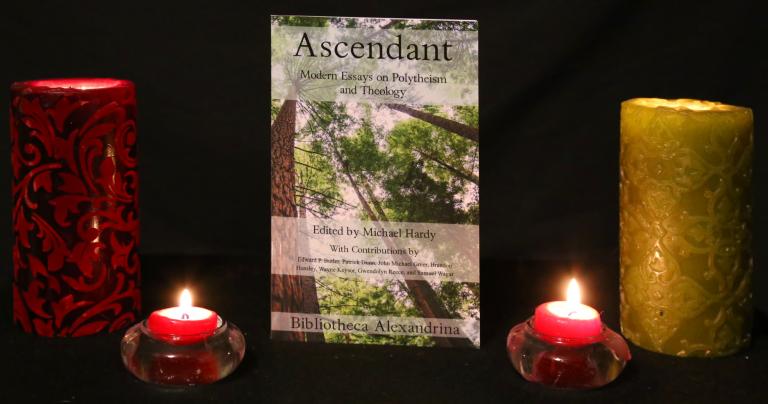
Editor Michael Hardy opens the book with an introduction titled “Theology: What It Is, Why We Need It.” He explains the task ahead of us with this:
The most obvious difference between monotheism and polytheism is the number of gods involved. But there is much more to it than that … Polytheism entails a very different way of understanding the world, and the divine. It raises its own questions that cannot be adequately addressed by answers originally developed in a monotheistic context.
One of the reasons we haven’t developed much new theology is that it hasn’t been a very high priority for us. After all, what is thinking about the Gods compared to actually experiencing the Gods for ourselves? But a deep and vibrant religion needs both. As Wayne Keysor says:
The ecstatic and the irrational works best when it is twinned with its opposite, so they might play off each other in fertile tension, drawing out insights and confusions, and pulling forth questions from the Well of Wisdom that might never have been asked otherwise.
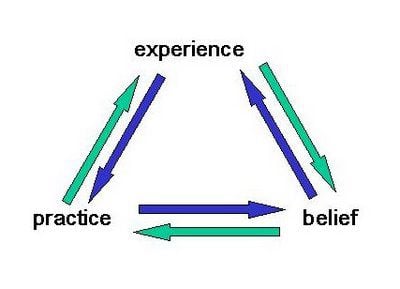
I made a similar point in The Path of Paganism when I described how experience, belief, and practice form a virtuous circle. We have an experience of the Gods, our interpretation of that experience leads us to develop beliefs about it and about the Gods, those beliefs inspire us to deeper practice, and our practice facilitates more first-hand experiences.
The last and best known form of ancient polytheist theology was Neoplatonism. Much of its literature survived to our era and some of it made its way into Christianity. That had negative repercussions, as to this day philosophy and theology that was written in a polytheist context is translated and interpreted as monotheistic – and that’s historically inaccurate.
Edward Butler, whose writing is more accessible here than in some of his articles in academic journals, says:
Nietzsche refers derisively to Christianity as “Platonism for the masses.” This would, however, be news to the polytheistic Platonists whose intellectual opposition was so vigorous in late antiquity as to require the services of the state to silence it through legislation in 529 CE. Only once the law prevented the unbaptized from public teaching did Platonism become safe for Christian appropriation.
John Michael Greer – who wrote A World Full of Gods in 2005 – does an excellent job explaining why Neoplatonism is often assumed to be monotheistic, and why that’s wrong.
The One is not a god. It does not have a spirit, a soul, or a body. It is simply the principle by which all things exist …
Since the One is not a god, has no myths, and receives no worship, it can be left to the contemplation of philosophers and mystics, while ordinary worshipers can do as polytheists have always done, and establish mutually beneficial relationship with those superlative beings we call gods.
Wayne Keysor also makes this point:
“The One” is not a god in the Jewish, Christian, or Islamic sense … rather, “the One” is completely perfect, unchanging, and fundamentally uninterested in the manifest universe, including humans. Its sole activity is contemplating the perfection of itself.
As important as Neoplatonism is, it’s not the only form of polytheist theology available to us. Gwendolyn Reece discusses the theological implications of citizenship and politics from her perspective as a modern devotee of Apollon and Athena.
The word idiot comes from an ancient Greek word for a private citizen and was applied as an insult for people who put their personal gain above the common good.
Wayne Keysor uses the problem of Gods who are said to do evil things in the stories of our ancestors to discuss different models of relationship between humans and Gods. He also reminds us that polytheism was never a unified thing in ancient times and we should not expect it to be unified today.
It is unlikely that any one theological approach will fit all. And there is no one line of reasoning that is ultimately definitive in its ability to convince everyone. This is the normal state of theology and should not be considered a failure or a defect.
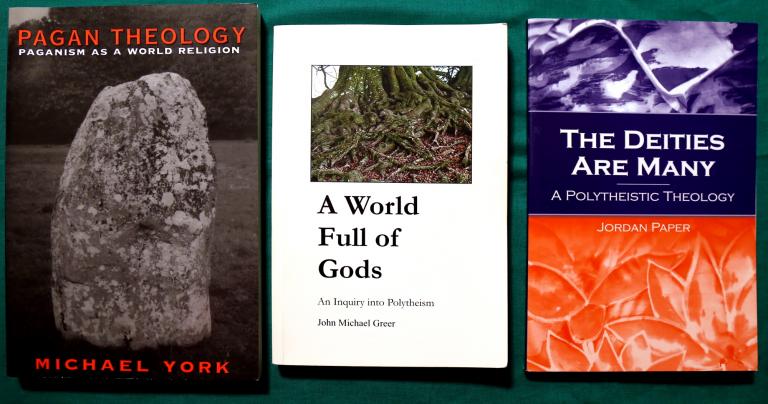
Ascendant joins a very short list of modern works of polytheist theology. In addition to A World Full of Gods, there’s Pagan Theology by Michael York (2003) and The Deities Are Many by Jordan Paper (2005). They’re all worth reading, but I consider Pagan Theology and The Deities Are Many to be religious studies more than theology.
As for me, I’m a Druid and a priest, not a theologian. But I like contemplating the Gods, and I enjoy reading other polytheists’ contemplation of Them. There is much in Ascendant I agree with, some I disagree with, and a lot I need to think about in more depth.
And that’s how theology advances. Ideas are proposed and articulated, then readers respond. Sometimes we pick up where the writers left off, while other times we think they’re wrong and argue against them.
The editor and the publisher are planning additional volumes of Ascendant in the near future. But, like all books, much of that depends on what kind of response this first volume receives. So please, contribute to the advancement of polytheist theology. Buy the book, read it, and talk about what makes an impression on you.
For those who care about such things, Michael Hardy contacted me shortly after Ascendant was published and offered to send me a review copy. He was too late – I had already ordered it. And I’ll be ordering future volumes as well.
Previous Post

February 19, 2019
Is Boredom A Good Thing?

Browse Our Archives
Select a Category Books Community CUUPS Druidry Foundations and Context Gods and Goddesses Magic Myth Nature Ritual Spiritual Practice Theology Travel Uncategorized Videos
Select a Month October 2026 September 2026 August 2026 July 2026 June 2026 May 2026 April 2026 March 2026 February 2026 January 2026 December 2025 November 2025 October 2025 September 2025 August 2025 July 2025 June 2025 May 2025 April 2025 March 2025 February 2025 January 2025 December 2024 November 2024 October 2024 September 2024 August 2024 July 2024 June 2024 May 2024 April 2024 March 2024 February 2024 January 2024 December 2023 November 2023 October 2023 September 2023 August 2023 July 2023 June 2023 May 2023 April 2023 March 2023 February 2023 January 2023 December 2022 November 2022 October 2022 September 2022 August 2022 July 2022 June 2022 May 2022 April 2022 March 2022 February 2022 January 2022 December 2021 November 2021 October 2021 September 2021 August 2021 July 2021 June 2021 May 2021 April 2021 March 2021 February 2021 January 2021 December 2020 November 2020 October 2020 September 2020 August 2020 July 2020 June 2020 May 2020 April 2020 March 2020 February 2020 January 2020 December 2019 November 2019 October 2019 September 2019 August 2019 July 2019 June 2019 May 2019 April 2019 March 2019 February 2019 January 2019 December 2018 November 2018 October 2018 September 2018 August 2018 July 2018 June 2018 May 2018 April 2018 March 2018 February 2018 January 2018 December 2017 November 2017 October 2017 September 2017 August 2017 July 2017 June 2017 May 2017 April 2017 March 2017 February 2017 January 2017 December 2016 November 2016 October 2016 September 2016 August 2016 July 2016 June 2016 May 2016 April 2016 March 2016 February 2016 January 2016 December 2015 November 2015 October 2015 September 2015 August 2015 July 2015 June 2015 May 2015 April 2015 March 2015 February 2015 January 2015 December 2014 November 2014 October 2014 September 2014 August 2014 July 2014 June 2014 May 2014 April 2014 March 2014 February 2014 January 2014 December 2013 November 2013 October 2013 September 2013 August 2013 July 2013 June 2013 May 2013 April 2013 March 2013 February 2013 January 2013 December 2012 November 2012 October 2012 September 2012 August 2012 July 2012 June 2012 May 2012 April 2012 March 2012 February 2012 January 2012 December 2011 November 2011 October 2011 September 2011 August 2011 July 2011 June 2011 May 2011 April 2011 March 2011 February 2011 January 2011 December 2010 November 2010 October 2010 September 2010 August 2010 July 2010 June 2010 May 2010 April 2010 March 2010 February 2010 January 2010 December 2009 November 2009 October 2009 September 2009 August 2009 July 2009 June 2009 May 2009 April 2009 March 2009 February 2009 January 2009 December 2008 November 2008 October 2008 September 2008 August 2008 July 2008 June 2008
Follow Us!
TAKE THE
Religious Wisdom Quiz
What does "Hosanna" mean in Hebrew?
Select your answer to see how you score.
Save us now Praise be to God The Lord reigns Holy One
Related posts from John Beckett




What We Lose When “Ask AI” Becomes A...
TRENDING AT PATHEOS Pagan

In one sense walking into Westminster Abbey is like walking down the...

'Super Scam Me' Exposes AI Jon Bon Jovi...
Leslie Pickett believed she was in a relationship with Jon Bon Jovi....

The Brazilian Remake of Kendricks' 'Flywheel' Opens in...
“Flywheel,” the story that launched the Kendrick Brothers’ filmmaking career is getting...

The Dangers of Gradual Accommodation (Winking at Sin)
Recently, the “law of gradualness” resurfaced during the opening of a weeklong,...

The Iron Gates and the Lion of the...
Yesterday, I didn't finish my report about, well, yesterday. So I'll...

The Image: On the Horror of Capitalism and...
The Image Then went the Pharisees, and took counsel how they might...
view all Pagan blogs
Ad-Free & Subscriber Log-In Subscription Support
- About Us
- 2026 Calendar
- Videos
- Podcasts
- Library of World Religions
- Faith In Media Tracker
- Advertise With Us
- Write for Us
- Privacy Policy
- Terms of Service
- Do Not Sell My Data
- Contact Us
- Radiant Digital
- Manage Newsletter Subscriptions
- Unsubscribe From Notifications
- Sitemap
Copyright 2008-2026, Patheos. All rights reserved.
Subscription Support Ad-Free & Subscriber Log-In
Follow Patheos