
BuddhistCatholicContemplativeEvangelicalGeneral ChristianHinduJewishLatter-day SaintMuslimNew VisionsProgressive Christian
Beliefs
- Buddhist
- Catholic
- Contemplative
- Evangelical
- General Christian
- Hindu
- Jewish
- Latter-day Saint
- More Voices
- Muslim
- New Visions
- Pagan
- Progressive Christian
Topics
- Religion News
- Food and Religion
- Sports and Religion
- Religious Art
- Religious Music and Entertainment
- Religious Events
- History and Religion
- Style and Religion
- Politics and Religion
- Women in Religion
- Recreation Outdoors and Religion
- Business Finance and Religion
- Careers Workplace and Religion
- Education and Religion
- Family Parenting and Religion
- Health Fitness and Religion
- Home and Religion
- Relationships and Religion
- Technology and Religion
- Travel and Religion
Columnists
- Buddhist Columnists
- Business Finance and Religion Columnists
- Careers Workplace and Religion Columnists
- Catholic Columnists
- Contemplative Columnists
- Education and Religion Columnists
- Evangelists Columnists
- Family Parenting and Religion Columnists
- General Christian Columnists
- Health Fitness and Religion Columnists
- Hindu Columnists
- History and Religion Columnists
- Home and Religion Columnists
- Jewish Columnists
- More Voices Columnists
- Latter Day Columnists
- Muslim Columnists
- New Visions Columnists
- Nonreligious Columnists
- Pagan Columnists
- Politics and Religion Columnists
- Progressive Columnists
- Recreation Outdoors and Religion Columnists
- Relationships and Religion Columnists
- Religion News Columnists
- Religious Art Columnists
- Religious Events Columnists
- Religious Music and Entertainment Columnists
- Sports and Religion Columnists
- Style and Religion Columnists
- Technology and Religion Columnists
- Travel and Religion Columnists
- Women in Religion Columnists
Resource Library
- 2026 Calendar
- Library of World Religions
- The 100 Most Holy Places on Earth
- Patheos Answers
- Podcasts
- Videos
- Faith Leaders Database
- Anglican Episcopalian
- Bahai
- Baptist
- Buddhism
- Christianity
- Confucianism
- Eastern Orthodoxy
- Hinduism
- Holiness and Pentecostal
- ISKCON
- Islam
- Judaism
- Lutheran
- Methodist
- The Church of Jesus Christ of Latter-day Saints
- New Age
- Paganism
- Presbytarian and Reformed
- Protestantism
- Religion Behind the Scenes
- Roman Catholic
- Scientology
- Shia Islam
- Sikhism
- Sufism
- Sunni Islam
- Taoism
- Zen
- See all religions
Research Tools
 Ad-Free & Subscriber Log-In Subscription Support
Ad-Free & Subscriber Log-In Subscription Support
Follow Patheos 

- Trending:
- Forgiveness
- |
- Marriage
- |
- Consciousness
- |
- Death Penalty
- |
- Election
- |
- Halloween

- Home
- Pagan
- 6 Reasons You Shouldn’t Swear an Oath to a God (and 3 Reasons You Should)
6 Reasons You Shouldn’t Swear an Oath to a God (and 3 Reasons You Should)
Last updated on: February 24, 2019 at 4:00 am by John Beckett
6 Reasons You Shouldn’t Swear an Oath to a God (and 3 Reasons You Should) 2019-02-15T20:43:11-06:00 John Beckett
Patheos Explore the world's faith through different perspectives on religion and spirituality! Patheos has the views of the prevalent religions and spiritualities of the world.
The topic of oaths to Gods has come up a lot lately. I’ve written about it in the context of working with the Gods, people not keeping their oaths, and what to do with oaths made in a previous (i.e. – Christian) religion. More than that, I’ve had numerous private inquiries about oaths over the past couple of weeks.
There aren’t a lot of resources on oaths made in modern polytheist religions and so there are a lot of misunderstandings around them. A complete guide to oaths is beyond the scope of a blog post, but I do want to talk about some common misunderstandings I see, as well as some signs that yes, it really is time to do this.
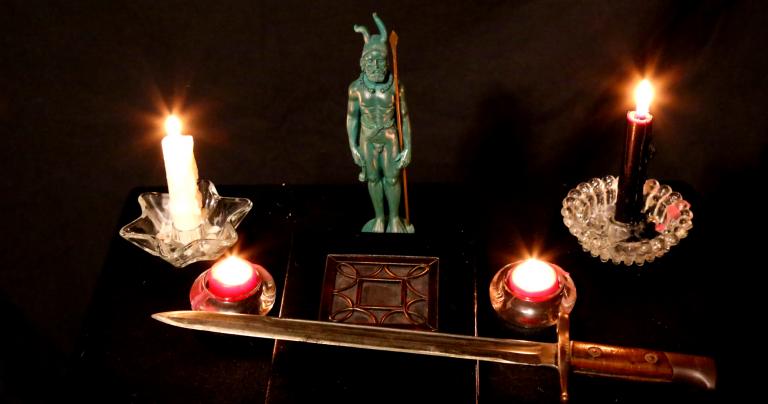
First, six reasons why you shouldn’t swear an oath to a God.
1. You think you have to do it to be a “real” polytheist
I’m not quite sure how the idea that everyone is supposed to have a patron deity became so popular, but I’ve been dealing with it for quite a few years. The Christian idea of patron saints and guardian angels may have seeped into Paganism and polytheism. Or it may simply be that because the most visible polytheists are usually sworn to a God, people assume that’s what everyone is supposed to do.
This type of relationship was extremely uncommon in ancient times. A deity might be the patron of a town or a tribe – Athena was the patron of Athens. Ordinary people participated in that patronage as members of the group, not as individuals. Priests and civic leaders might swear oaths based on their positions, but individual patronage was uncommon.
That doesn’t mean it’s wrong. We live in a much more individualistic society than ancient Athens or Rome or Ireland. Our religious structures will necessarily be different.
But the core of polytheism remains the worship of the many Gods, and that does not require an oath. It is your prayers, offerings, and service to the Gods that make you a polytheist, not your oaths.
2. You’re in an ecstatic afterglow
The first-hand experience of a God is a powerful thing. Ecstatic divine possession is overwhelming, but simply participating in a well-done devotional ritual can allow people to feel Their presence and Their might. So can private devotions, though that’s generally more difficult for beginners.
It is natural to be deeply moved by these experiences. It is good and right to react with wonder and awe, with reverence and worship. And it’s normal to feel like the proper response is to make a commitment to these holy powers.
It’s also dangerous.
Like falling in love at first sight, what feels good and right in the moment may not be something that will last. Experiencing the Morrigan for yourself is amazing, and sovereignty is a beautiful concept. In the moment it’s easy to forget She’s also a Goddess of Battle, and of the aftermath of battle. Basking in Her power is one thing – tending to the wounded and the dead is something very different.
Oaths are sober affairs and should be made after much reflection and contemplation. Never make an oath in the heat of the moment, no matter how powerful that moment is.
3. You’re not sure who you’re dealing with
As a whole, the many Gods aren’t big on introducing Themselves by name. I really don’t know why. My best guess is They feel like we should know who They are. Or perhaps They’ve found that not giving Their name is a good way to get us to do some research about Them and learn Their lore.
On top of that, our wider community includes a lot of people who are pantheists or soft polytheists, or who haven’t fully examined the assumptions of the monotheist religion of their childhood. We have people who think the Gods are all in our heads. “It’s all One, right?”
No, it isn’t.
If you genuinely believe all Gods are one God I’m not going to tell you you’re wrong. I am going to tell you you’re practicing a very different religion than I am, and I’m not sure how relevant this post is for you.
You wouldn’t marry someone who hadn’t told you their name. You might go to work for someone who wouldn’t identify themselves (if they paid in cash) but you wouldn’t sign a contract with them.
If you aren’t sure who you’re dealing with you aren’t ready to make an oath.

4. You think it will make you powerful
This is another idea I’m not sure how it got started, but I see it from time to time. People think because they’re formally attached to a deity they somehow can tap into that deity’s power. While there’s a certain logic to that, it doesn’t work the way it’s presented. They may provide some of the power needed to accomplish the tasks They give you, but that power is never yours to do with as you please.
Like becoming a priest, making an oath to a God doesn’t make you powerful, or important, or special. It just increases your workload.
5. You haven’t negotiated the terms
An oath is a contract. It says what you will do, how you will do it, and for how long. But what is excluded? What will you not do? What will you receive in return? How will disputes be settled? These are all things to iron out up front, before you make a formal commitment.
Is it impious to negotiate with a God? I don’t think so, and in any case people have done it for centuries. All those covenants in the Old Testament? Those are essentially negotiated contracts. If you can negotiate with Yahweh, you can negotiate with Anyone.
One friend was contemplating a rather complicated arrangement / oath. My recommendation was to negotiate it up front, then have the contract reviewed by a lawyer, a priest, and a diviner. Make sure it covers what needs to be covered, make sure it’s appropriate for the tradition, and make sure it will be accepted.
Because if any of the terms are unclear, they’ll be resolved by the interpretation of the stronger party. Which isn’t you.
6. You don’t understand what it means to swear an oath
If you don’t know what you’re doing, you shouldn’t be doing it. Last year I wrote Why We Make Oaths – I suggest you read it in its entirety.
Oaths build a foundation of confidence and stability, and they’re meant to be kept, no matter what. They build community and intimacy. Sometimes they can be renegotiated, but not always – you should assume that you’ll be held to whatever you promise for as long as you promised it, no matter the circumstances.

If any of these six reasons apply to you, you shouldn’t make an oath to a God. But if the next three sound familiar, maybe you should.
1. You’ve been asked for an oath repeatedly
If you’ve gathered from the above that oaths are something you shouldn’t rush into without great deliberation, you’d be right. My suggestion is that the first time you feel like you should, your best response is “I’ll consider it.” And then do consider it, in light of the reasons above, and especially in light of what is known about that deity from both ancient and modern times. Give yourself plenty of time to think about what it means, whether you really want to do it, and whether you can do it.
Not making a decision is itself a decision. If you don’t hear from Them again, you have your answer. But if you do, then you’ll need to consider it again, only this time more carefully. By the third or fourth time, it should become apparent that They’re not going to go away, and there’s probably something there that would be of benefit to you.
You still can say no (probably). And perhaps you should say no – I’m not going to say yes to a Trickster God no matter how many times They ask. But by the time you’ve had multiple requests, you should have gotten to know Them fairly well, and understand what you’re getting into – you can make an informed decision.
2. You want to strengthen the divine relationship
Why do elected officials take an oath of office? Does anybody think that without it they’d approach their duties any differently – for better or worse? Why do we stand up in front of all our dearly beloved and say all those pretty words in our marriage vows?
The formality and solemnity of oaths amplify our intent. The ceremony forms a container, and the witnesses provide a record. This isn’t a casual comment made in passing. This is our will – this is what we will do.
And everyone knows it.
If you want the Gods to talk to you, begin by talking to Them. If you want Their help, give Them yours. And if you want Them to commit to you, commit yourself to Them.
3. You can’t imagine doing anything else
This is the best reason to make an oath with a God.
You’ve gotten to know Them. You’ve studied Their lore and explored how They’re moving in the contemporary world. They’ve done things for you and you’ve done things for Them. Their values, Their virtues, and Their work are part of your life.
Your practice is centered on Them, and while you could be a good Pagan and polytheist without Them, you don’t want to. At this point an oath is really unnecessary… but They’re asking you for it, and you trust that it’s for a good reason, even if you can’t see exactly what that reason is.
Is this love? Divine love is usually associated with a different religion, but the love of the many Gods is a very real thing.
I’m satisfied with my oaths to Cernunnos, to Danu, and to the Morrigan. And also, I’ve seen some troubling things, and They’re keeping me busy beyond belief. Nothing comes for free – an oath is a contract, not a gift.
But if you can’t imagine doing anything else, make the arrangement a formal one.

There’s an exception to every rule
Maybe you fell in love the first time you laid eyes on your spouse and 20 years later you’re still happily married. That doesn’t happen often, but it does happen. You may be ready for an oath at first contact. If you’re the exception to all this so be it.
You may not have a choice. Oh, you’ve always got a choice, but sometimes the choice of going along with what a God wants is like the choice of whether or not to pay taxes. You can refuse, but the cost of refusing is going to be very high. This is not common, but again, it does happen.
In the end, I’m well aware that all of you are going to do what you want to do. Some of you are going to refuse to make oaths with Gods no matter what. Some of you are going to sign up for service right away, whether you’re ready for it or not.
As always, my goal here is to draw a map and to provide some guideposts to help you along your way. My oaths with deities – I have three – have been positive and beneficial, but they have not been easy.
May the Gods bless you on your journey, whether you make oaths with Them or not.
For further reading
The Love of the Gods (2016)
An Oath to the Morrigan (2017)
Negotiating With the Gods (2017)
Why We Make Oaths (2018)
Why Would Anyone Take an Oath to a God? (2018)
What It Means To Work With The Gods (2019)
Previous Post

February 21, 2019
Ascendant: Modern Essays on Polytheism and Theology
Next Post

February 26, 2019 4 Mundane Skills To Support Your Spiritual Work
Browse Our Archives
Select a Category Books Community CUUPS Druidry Foundations and Context Gods and Goddesses Magic Myth Nature Ritual Spiritual Practice Theology Travel Uncategorized Videos
Select a Month October 2026 September 2026 August 2026 July 2026 June 2026 May 2026 April 2026 March 2026 February 2026 January 2026 December 2025 November 2025 October 2025 September 2025 August 2025 July 2025 June 2025 May 2025 April 2025 March 2025 February 2025 January 2025 December 2024 November 2024 October 2024 September 2024 August 2024 July 2024 June 2024 May 2024 April 2024 March 2024 February 2024 January 2024 December 2023 November 2023 October 2023 September 2023 August 2023 July 2023 June 2023 May 2023 April 2023 March 2023 February 2023 January 2023 December 2022 November 2022 October 2022 September 2022 August 2022 July 2022 June 2022 May 2022 April 2022 March 2022 February 2022 January 2022 December 2021 November 2021 October 2021 September 2021 August 2021 July 2021 June 2021 May 2021 April 2021 March 2021 February 2021 January 2021 December 2020 November 2020 October 2020 September 2020 August 2020 July 2020 June 2020 May 2020 April 2020 March 2020 February 2020 January 2020 December 2019 November 2019 October 2019 September 2019 August 2019 July 2019 June 2019 May 2019 April 2019 March 2019 February 2019 January 2019 December 2018 November 2018 October 2018 September 2018 August 2018 July 2018 June 2018 May 2018 April 2018 March 2018 February 2018 January 2018 December 2017 November 2017 October 2017 September 2017 August 2017 July 2017 June 2017 May 2017 April 2017 March 2017 February 2017 January 2017 December 2016 November 2016 October 2016 September 2016 August 2016 July 2016 June 2016 May 2016 April 2016 March 2016 February 2016 January 2016 December 2015 November 2015 October 2015 September 2015 August 2015 July 2015 June 2015 May 2015 April 2015 March 2015 February 2015 January 2015 December 2014 November 2014 October 2014 September 2014 August 2014 July 2014 June 2014 May 2014 April 2014 March 2014 February 2014 January 2014 December 2013 November 2013 October 2013 September 2013 August 2013 July 2013 June 2013 May 2013 April 2013 March 2013 February 2013 January 2013 December 2012 November 2012 October 2012 September 2012 August 2012 July 2012 June 2012 May 2012 April 2012 March 2012 February 2012 January 2012 December 2011 November 2011 October 2011 September 2011 August 2011 July 2011 June 2011 May 2011 April 2011 March 2011 February 2011 January 2011 December 2010 November 2010 October 2010 September 2010 August 2010 July 2010 June 2010 May 2010 April 2010 March 2010 February 2010 January 2010 December 2009 November 2009 October 2009 September 2009 August 2009 July 2009 June 2009 May 2009 April 2009 March 2009 February 2009 January 2009 December 2008 November 2008 October 2008 September 2008 August 2008 July 2008 June 2008
Follow Us!
TAKE THE
Religious Wisdom Quiz
What did Job's wife suggest he do during his suffering?
Select your answer to see how you score.
Curse God and die Rebuke his friends Flee to Egypt Burn offerings
Related posts from John Beckett




What We Lose When “Ask AI” Becomes A...
TRENDING AT PATHEOS Pagan

Swimfan: Forgotten Aughts Pleasures
This is a recovery effort. In 2002, My Big Fat Greek Wedding...

Top Three Anti-Catholic Lies About Catholicism
This is my initial transcript for the video, "THE 3 WORST...

Pope Leo Celebrates Mass for Nurses & Docs...
I don't have any idea how he did it, but Pope Leo...

The Sermon on the Mount, Part I: Matthew...
The Sermon on the Mount, Part I (Matthew 4:12-5:12) St. Matthew moves...

What's up from Crossway: Reviewing some of their latest A few weeks...

Janie Learns the Way of the Cross: A...
Teaching children about Jesus' Passion can be challenging. Many parents and educators...
view all Pagan blogs
Ad-Free & Subscriber Log-In Subscription Support
- About Us
- 2026 Calendar
- Videos
- Podcasts
- Library of World Religions
- Faith In Media Tracker
- Advertise With Us
- Write for Us
- Privacy Policy
- Terms of Service
- Do Not Sell My Data
- Contact Us
- Radiant Digital
- Manage Newsletter Subscriptions
- Unsubscribe From Notifications
- Sitemap
Copyright 2008-2026, Patheos. All rights reserved.
Subscription Support Ad-Free & Subscriber Log-In
Follow Patheos