
BuddhistCatholicContemplativeEvangelicalGeneral ChristianHinduJewishLatter-day SaintMuslimNew VisionsProgressive Christian
Beliefs
- Buddhist
- Catholic
- Contemplative
- Evangelical
- General Christian
- Hindu
- Jewish
- Latter-day Saint
- More Voices
- Muslim
- New Visions
- Pagan
- Progressive Christian
Topics
- Religion News
- Food and Religion
- Sports and Religion
- Religious Art
- Religious Music and Entertainment
- Religious Events
- History and Religion
- Style and Religion
- Politics and Religion
- Women in Religion
- Recreation Outdoors and Religion
- Business Finance and Religion
- Careers Workplace and Religion
- Education and Religion
- Family Parenting and Religion
- Health Fitness and Religion
- Home and Religion
- Relationships and Religion
- Technology and Religion
- Travel and Religion
Columnists
- Buddhist Columnists
- Business Finance and Religion Columnists
- Careers Workplace and Religion Columnists
- Catholic Columnists
- Contemplative Columnists
- Education and Religion Columnists
- Evangelists Columnists
- Family Parenting and Religion Columnists
- General Christian Columnists
- Health Fitness and Religion Columnists
- Hindu Columnists
- History and Religion Columnists
- Home and Religion Columnists
- Jewish Columnists
- More Voices Columnists
- Latter Day Columnists
- Muslim Columnists
- New Visions Columnists
- Nonreligious Columnists
- Pagan Columnists
- Politics and Religion Columnists
- Progressive Columnists
- Recreation Outdoors and Religion Columnists
- Relationships and Religion Columnists
- Religion News Columnists
- Religious Art Columnists
- Religious Events Columnists
- Religious Music and Entertainment Columnists
- Sports and Religion Columnists
- Style and Religion Columnists
- Technology and Religion Columnists
- Travel and Religion Columnists
- Women in Religion Columnists
Resource Library
- 2026 Calendar
- Library of World Religions
- The 100 Most Holy Places on Earth
- Patheos Answers
- Podcasts
- Videos
- Faith Leaders Database
- Anglican Episcopalian
- Bahai
- Baptist
- Buddhism
- Christianity
- Confucianism
- Eastern Orthodoxy
- Hinduism
- Holiness and Pentecostal
- ISKCON
- Islam
- Judaism
- Lutheran
- Methodist
- The Church of Jesus Christ of Latter-day Saints
- New Age
- Paganism
- Presbytarian and Reformed
- Protestantism
- Religion Behind the Scenes
- Roman Catholic
- Scientology
- Shia Islam
- Sikhism
- Sufism
- Sunni Islam
- Taoism
- Zen
- See all religions
Research Tools
 Ad-Free & Subscriber Log-In Subscription Support
Follow Patheos 

- Trending:
- Advent
- |
- Forgiveness
- |
- Thanksgiving
- |
- Election
- |
- Seasonal Holidays
- |
- Marriage

- Home
- Pagan
- Paganism As The New Civic Religion
Paganism As The New Civic Religion
Last updated on: January 3, 2019 at 4:00 am by John Beckett
Paganism As The New Civic Religion 2018-12-25T20:19:15-06:00 John Beckett
Patheos Explore the world's faith through different perspectives on religion and spirituality! Patheos has the views of the prevalent religions and spiritualities of the world.
Back before the Solstice, New York Times conservative columnist Ross Douthat stirred up a bit of controversy with a piece titled The Return of Paganism. It was less about Paganism and more about Christian hand-wringing over their continued decline in numbers and influence. It’s one of those essays that’s mostly right but critically wrong.
Manny Tejeda-Moreno responded with a Wild Hunt editorial that pointed out Douthat’s misunderstanding of modern Paganism. Tejeda-Moreno focused on the failure of Christianity to accept responsibility for its own contributions to its decline – some of which (like the clergy sex abuse scandals) are literally criminal.
Chas Clifton had a good piece on his blog where he pointed out that Douthat wasn’t really talking about us. Clifton said:
We are just an afterthought. He is … concerned about the loss of Christian hegemony, a concern raised a couple of generations ago in western Europe but only more recently popping up in North America, where Christianity was always the 600-pound gorilla in the religion room. He sees the … “paganism” that is replacing it as a falling away from The Truth.
All three of these essays are worth your time to read and think about. In this post, I want to go in a speculative direction: what if Ross Douthat is right? What if Paganism is returning – not as the fringe religion(s) it is today, but as the new civic religion of the Western world?

The Civic Religion of the United States
Wikipedia defines civic religion (or civil religion) as:
the implicit religious values of a nation, as expressed through public rituals, symbols (such as the national flag), and ceremonies on sacred days and at sacred places. It is distinct from churches, although church officials and ceremonies are sometimes incorporated into the practice of civil religion.
The civic religion of the United States includes things like the Pledge of Allegiance, Memorial Day observances in National Cemeteries, and Presidential inaugurations. We saw it last month with the state funeral of former President George H.W. Bush.
President Bush’s funeral was held at the Washington National Cathedral. Did you know we have a national cathedral? A lot of people don’t. We have it because in 1791 President George Washington commissioned plans for “a great church for national purposes.” Construction didn’t begin until 1907 and it wasn’t finished until 1990. It was build entirely with private funds – no tax dollars were involved.
Unlike so many of the famous government buildings and monuments in Washington that resemble Greek temples, the National Cathedral built in Gothic style. It intentionally invokes Westminster Abbey in London. But while in the United States religion and state are separate (or at least they’re supposed to be) there will always be occasions that require ceremony and solemnity, and that appeal to higher powers… or at least, to higher values.
Ceremonial Deism
The National Cathedral is an Episcopal church. I’m old enough to remember when the Episcopal Church was called “the Republican Party at prayer.” Of course, that was the party of Dwight Eisenhower and Gerald Ford, not the party of Donald Trump and Ted Cruz. The point is that those in power arranged for the National Cathedral to be managed by the church of those in power.
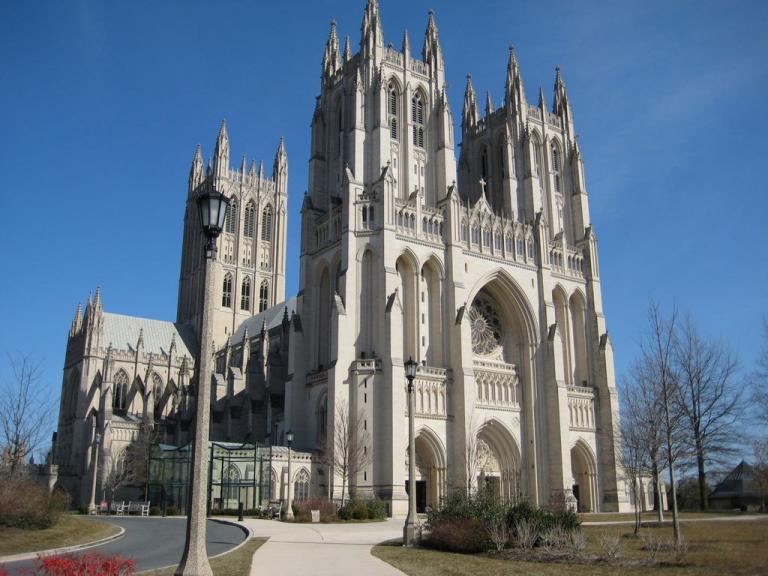
Washington National Cathedral – photo via Wikimedia Commons

The United States is an officially secular country. But President Franklin Roosevelt once said “this is a Protestant country, and the Catholics and Jews are here under sufferance.”
After World War II that changed. Protestants, Catholics, and Jews all fought to win the war. And when reports of the Nazi death camps came back and the country began to see just how far anti-Semitism could go if left unchecked, there was a general (though far from universal) sentiment that America’s civic religion needed to be broader.
That eventually became what Supreme Court Justice Sandra Day O’Connor called “ceremonial deism” – the vague and non-creedal invocation of the God of Abraham as “the father of us all.” It’s intended to be inclusive and non-offensive.
Of course, it explicitly excludes polytheists and non-theists, as we see in the occasional court fights about who can offer an invocation before city council meetings.
I support ceremonial deism in public affairs. It’s a much better compromise than having atheism be the default religious position. I just want ceremonial deism to be inclusive of Pagans, Hindus, Muslims, and everyone else, including non-theists.
A Descent into Nationalism
Civic religion is religion in the religare sense of the word – it’s what binds us together as a nation, or as a supranational union. But civic religion is by nature a shallow religion – it’s more about culture and values than about any deep exploration of the Big Questions of Life. That’s fine. No one ever expected Protestants, Catholics, and Jews to start worshipping together on a weekly basis.
But the boundaries between individual religions, civic religion, and politics are rather flimsy. Sometimes this is a good thing, as when the African-American churches in the 1960s provided both infrastructure and inspiration to the civils rights movement. And sometimes it’s not, as we see in our time with many Evangelical preachers and their churches selling their souls to Donald Trump.
Trump is arguably the most un-Christian (or at least, non-Christian) President of all time. But he is not irreligious. Donald Trump’s religion is American nationalism – the belief that the United States is special and sacred. His campaign slogan “make America great again” calls back to an earlier, mythical era when straight white men ran the country and everybody else knew their place.
This is why Trump makes such a big deal about (mostly black) football players kneeling for the national anthem – it’s a rejection of his religious nationalism.
I applaud the attempts by many to make Protestant-Catholic-Jewish civic religion more inclusive. But Ross Douthat and others are right – we’re living in a post-Christian culture.
It’s time for a new civic religion – and Paganism can be its foundation.
Reverence for Nature as an alternative
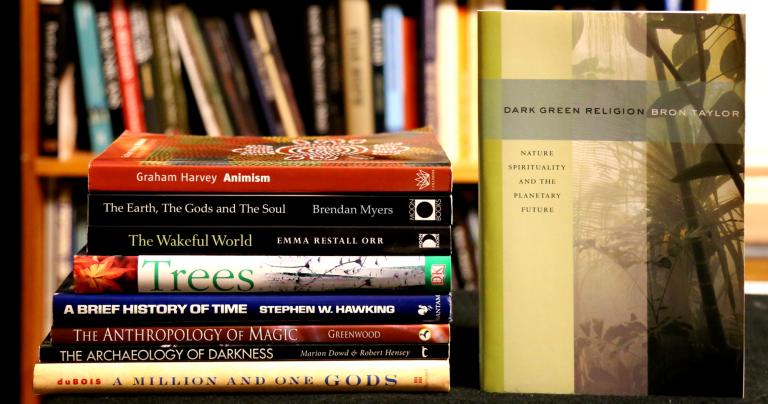
In Dark Green Religion (2010) Bron Taylor explored the trend of viewing the Earth as sacred and acting accordingly. He defined dark green religion as “one where nature is sacred, has intrinsic value, and is therefore due reverent care.”
Dark green religion is essentially Nature-centered Paganism. It can be theistic or non-theistic, animistic or materialistic.
In 2013 I said “if your religion does not include reverence for Nature then I propose your religion is at best inadequate and may be detrimental to your life and to all life on this planet.”
I took a lot of flak for that post. I was accused of “telling people what to do.” It began a journey that would end with the loss of a very meaningful friendship. I’ve come to understand that tone affects how a message is received. My own religion has become more Deity-centered. But I still believe everything I said in that post is true.
Taylor said:
Even though I am a naturalist … I can think of no better term than ‘miracle’ to describe all I perceive. Even the bizarre fact that I am here to perceive it, reflect on it, and share my musing strikes me as nothing less than miraculous … What I have been long looking for is a sensible religion, one that is rationally defensible as well as socially powerful enough to save us from our least-sensible selves.
We need not all sing hymns to the Earth Mother and replace Christmas celebrations with observances of the Winter Solstice. But reverence for Nature in our civic religion would go a long way toward insuring the Earth remains hospitable for humans in the centuries to come.
The Polytheist Restoration
At their core, Western civic religions are monotheist. They appeal to unity by claiming we are all children of the same one God… even though conservative members of their religions insist otherwise, and even though many citizens do not worship their God in any form.
There is another way. Polytheism understands that different Gods call different people to worship Them in different ways. It does not expect your God to be the same as my God. It only expects you to respect my beliefs and practices, as it also expects me to respect yours.
Polytheism is a bridge too far for many otherwise-tolerant Christians. Yet the very concept of Trinitarian Christianity is polytheist in nature, and that’s before we get to angels and saints, or to demons and that very complicated figure called the devil. Or to the other Gods that are mentioned in the Bible.
When you look at the way people actually practice their religions, it is clear that polytheism is humanity’s default religious position.
We need not take over the churches and divide them up between Zeus, Odin, and the Morrigan. Henotheism (a position which recognizes many Gods while worshipping only one) is a perfectly valid religious approach. I have numerous Christian friends who acknowledge the validity of my polytheistic Paganism even though they only worship Jesus themselves.
At the end of the day, what people believe about the Gods is far less important than how they live their lives. I don’t care if you believe my Gods aren’t real or if you think They’re aspects of your one God. All I care about is if you respect my inherent right to believe and worship as I see fit – and that I do the same for you.
A new Civic Religion
A Pagan-based civic religion requires no creeds or doctrines. It is a religare that binds us together through shared culture and values.
It begins with reverence for Nature and a realization that while we are not the children of the same God, we are all the Children of the Earth, and that includes non-human persons too. Our fate and the fate of all our children is a common fate. If we understand at a religious level that we are part of Nature, we are far more likely to elect leaders who reflect Nature-supporting values and who will enact Nature-supporting policies.
Our theological diversity will be reflected as civic oaths are sworn to individual deities. The many Gods will be invoked by function and by relationship for blessings on affairs of state. It will take a while for people to get used to making offerings before important functions, but throwing barley and pouring whiskey (the waters of life) into a ceremonial fire are easy enough to understand.
It won’t take much effort to begin formal ancestor veneration – most of us do it now intuitively.
And what of the place of magic in a Pagan-based civic religion? Done well, it will add a layer of meaning to ceremonies we already perform that few understand. And since – from my observation, anyway – magic works based on action and not belief, doing the public rituals properly will have beneficial effects, even if the materialists among us still insist it’s all coincidence and confirmation bias.
We need not abandon our old civic holidays (except Columbus Day – that one needs to go, no matter what our civic religion is), but we can add the solar holidays and the fire festivals, and perhaps other days that are holy to a fair number of people.
Pagan civic religion will be an organic religion – who knows what else will arise?

A pinch of incense for the Emperor
The Roman Empire was the most religiously diverse society in the history of the world, until now. They had no theological issues with Christianity. They had serious issues with people they thought were trying to undermine the authority of the state (which is what led to the Druid massacre on Anglesey in 61 CE).
There are multiple accounts of Roman governors offering to free Christians if they would only offer a pinch of incense to the spirit of the Emperor – if they would show their loyalty to the state with a religious act. There’s a historical record of a Roman prefect named Probus who begged a Christian nine times to make sacrifice and avoid execution, finally crying “at least offer sacrifice for the sake of your children.”1
But a coerced religion is a false religion, even for a civic religion. “Stand for the national anthem or be blackballed out of football” is wrong. Forcing school children to recite the pledge of allegiance is wrong.
Pagans must do better than Christians and Nationalists. We must never, ever require a pinch of incense for the Emperor.
I’m not running for Archdruid
One of the more disturbing images in Ross Douthat’s essay was his idea of “Jeff Bezos [founder of Amazon.com] playing pontifex maximus for a post-Christian civic cult.” The United States has gotten by for 242 years without an national Archbishop – it can get by just fine without a national Archdruid. And even if there was such a position, I wouldn’t want it… nor would the deities I serve allow me to take it.
Civic religion is a generic, 30,000 feet level religion. It’s broad, not deep – because that’s what’s necessary to bind a diverse nation together.
Everybody needs a civic religion, but a civic religion alone isn’t enough. Wiccans still need to be Wiccans. Kemetics still need to be Kemetics. I’m an ancestral, devotional, ecstatic, oracular, magical, public, Pagan polytheist. My calling is in devotion to the Gods I serve, in experiencing Their presence first-hand, in relaying Their messages, and in doing Their work in this world. That is my first priority in life.
But a better civic religion will make for a better country, and a better world. And according to at least one newspaper columnist who’s none too happy about it, we’re on our way to it.
1 The Darkening Age: The Christian Destruction of the Classical World by Catherine Nixey (2017), page 74. A brief review is here.
Previous Post

January 1, 2019
Divination For 2019: The Wheel and The Tower
Next Post

January 6, 2019 Leading Public Rituals For Mixed Pagan Groups
Browse Our Archives
Select a Category Books Community CUUPS Druidry Foundations and Context Gods and Goddesses Magic Myth Nature Ritual Spiritual Practice Theology Travel Uncategorized Videos
Select a Month November 2026 October 2026 September 2026 August 2026 July 2026 June 2026 May 2026 April 2026 March 2026 February 2026 January 2026 December 2025 November 2025 October 2025 September 2025 August 2025 July 2025 June 2025 May 2025 April 2025 March 2025 February 2025 January 2025 December 2024 November 2024 October 2024 September 2024 August 2024 July 2024 June 2024 May 2024 April 2024 March 2024 February 2024 January 2024 December 2023 November 2023 October 2023 September 2023 August 2023 July 2023 June 2023 May 2023 April 2023 March 2023 February 2023 January 2023 December 2022 November 2022 October 2022 September 2022 August 2022 July 2022 June 2022 May 2022 April 2022 March 2022 February 2022 January 2022 December 2021 November 2021 October 2021 September 2021 August 2021 July 2021 June 2021 May 2021 April 2021 March 2021 February 2021 January 2021 December 2020 November 2020 October 2020 September 2020 August 2020 July 2020 June 2020 May 2020 April 2020 March 2020 February 2020 January 2020 December 2019 November 2019 October 2019 September 2019 August 2019 July 2019 June 2019 May 2019 April 2019 March 2019 February 2019 January 2019 December 2018 November 2018 October 2018 September 2018 August 2018 July 2018 June 2018 May 2018 April 2018 March 2018 February 2018 January 2018 December 2017 November 2017 October 2017 September 2017 August 2017 July 2017 June 2017 May 2017 April 2017 March 2017 February 2017 January 2017 December 2016 November 2016 October 2016 September 2016 August 2016 July 2016 June 2016 May 2016 April 2016 March 2016 February 2016 January 2016 December 2015 November 2015 October 2015 September 2015 August 2015 July 2015 June 2015 May 2015 April 2015 March 2015 February 2015 January 2015 December 2014 November 2014 October 2014 September 2014 August 2014 July 2014 June 2014 May 2014 April 2014 March 2014 February 2014 January 2014 December 2013 November 2013 October 2013 September 2013 August 2013 July 2013 June 2013 May 2013 April 2013 March 2013 February 2013 January 2013 December 2012 November 2012 October 2012 September 2012 August 2012 July 2012 June 2012 May 2012 April 2012 March 2012 February 2012 January 2012 December 2011 November 2011 October 2011 September 2011 August 2011 July 2011 June 2011 May 2011 April 2011 March 2011 February 2011 January 2011 December 2010 November 2010 October 2010 September 2010 August 2010 July 2010 June 2010 May 2010 April 2010 March 2010 February 2010 January 2010 December 2009 November 2009 October 2009 September 2009 August 2009 July 2009 June 2009 May 2009 April 2009 March 2009 February 2009 January 2009 December 2008 November 2008 October 2008 September 2008 August 2008 July 2008 June 2008
Follow Us!
TAKE THE
Religious Wisdom Quiz
What color is the first horse in Revelation 6?
Select your answer to see how you score.
Pale White Red Black
Related posts from John Beckett

Pagans And The Rise Of The Religious Left

Why Halloween Is So Popular – And So...
The Pillar of the Boatmen: the Ancient Monument...
TRENDING AT PATHEOS Pagan

The Wasp And I: Meditations on Repentance
How can we enter the power and joy of the repentant self...

Reflections on the Evangelical Theological Society
As I mentioned before, this year, for the first time since 2005,...

Demmed if it do and demmed if it...
"First Presidency Announces Salt Lake Temple Rededication Date" Apropos of that,...

Stop Making Thanksgiving Problematic And Just Give Thanks
“What if, today, we were grateful for everything?” –Charlie Brown I...

Sunday Readings: Stay Awake and Hope
The First Sunday of Advent begins a new liturgical year, and the...

Are You a Scrooge or an Ebenezer?
A Call to Remember As the Christmas season begins, will we remember...
view all Pagan blogs
Ad-Free & Subscriber Log-In Subscription Support
- About Us
- 2026 Calendar
- Videos
- Podcasts
- Library of World Religions
- Faith In Media Tracker
- Advertise With Us
- Write for Us
- Privacy Policy
- Terms of Service
- Do Not Sell My Data
- Contact Us
- Radiant Digital
- Manage Newsletter Subscriptions
- Unsubscribe From Notifications
- Sitemap
Copyright 2008-2026, Patheos, part of the Radiant Digital network of media brands. All rights reserved.
Subscription Support Ad-Free & Subscriber Log-In
Follow Patheos