
BuddhistCatholicContemplativeEvangelicalGeneral ChristianHinduJewishLatter-day SaintMuslimNew VisionsProgressive Christian
Beliefs
- Buddhist
- Catholic
- Contemplative
- Evangelical
- General Christian
- Hindu
- Jewish
- Latter-day Saint
- More Voices
- Muslim
- New Visions
- Pagan
- Progressive Christian
Topics
- Religion News
- Food and Religion
- Sports and Religion
- Religious Art
- Religious Music and Entertainment
- Religious Events
- History and Religion
- Style and Religion
- Politics and Religion
- Women in Religion
- Recreation Outdoors and Religion
- Business Finance and Religion
- Careers Workplace and Religion
- Education and Religion
- Family Parenting and Religion
- Health Fitness and Religion
- Home and Religion
- Relationships and Religion
- Technology and Religion
- Travel and Religion
Columnists
- Buddhist Columnists
- Business Finance and Religion Columnists
- Careers Workplace and Religion Columnists
- Catholic Columnists
- Contemplative Columnists
- Education and Religion Columnists
- Evangelists Columnists
- Family Parenting and Religion Columnists
- General Christian Columnists
- Health Fitness and Religion Columnists
- Hindu Columnists
- History and Religion Columnists
- Home and Religion Columnists
- Jewish Columnists
- More Voices Columnists
- Latter Day Columnists
- Muslim Columnists
- New Visions Columnists
- Nonreligious Columnists
- Pagan Columnists
- Politics and Religion Columnists
- Progressive Columnists
- Recreation Outdoors and Religion Columnists
- Relationships and Religion Columnists
- Religion News Columnists
- Religious Art Columnists
- Religious Events Columnists
- Religious Music and Entertainment Columnists
- Sports and Religion Columnists
- Style and Religion Columnists
- Technology and Religion Columnists
- Travel and Religion Columnists
- Women in Religion Columnists
Resource Library
- 2026 Calendar
- Library of World Religions
- The 100 Most Holy Places on Earth
- Patheos Answers
- Podcasts
- Videos
- Faith Leaders Database
- Anglican Episcopalian
- Bahai
- Baptist
- Buddhism
- Christianity
- Confucianism
- Eastern Orthodoxy
- Hinduism
- Holiness and Pentecostal
- ISKCON
- Islam
- Judaism
- Lutheran
- Methodist
- The Church of Jesus Christ of Latter-day Saints
- New Age
- Paganism
- Presbytarian and Reformed
- Protestantism
- Religion Behind the Scenes
- Roman Catholic
- Scientology
- Shia Islam
- Sikhism
- Sufism
- Sunni Islam
- Taoism
- Zen
- See all religions
Research Tools
 Ad-Free & Subscriber Log-In Subscription Support
Follow Patheos 

- Trending:
- Advent
- |
- Forgiveness
- |
- Thanksgiving
- |
- Election
- |
- Seasonal Holidays
- |
- Marriage

- Home
- Pagan
- 13 Questions For Pagan Leaders
13 Questions For Pagan Leaders
Last updated on: November 20, 2018 at 4:00 am by John Beckett
13 Questions For Pagan Leaders 2018-11-10T21:09:21-06:00 John Beckett
Patheos Explore the world's faith through different perspectives on religion and spirituality! Patheos has the views of the prevalent religions and spiritualities of the world.
I’ve written on Pagan leadership occasionally over the years. One of my early posts that’s held up very well is Pagan Leadership – Roles from 2010. It explains how you don’t have to be a High Priestess or a Chief Druid to be a leader. I told my own story of Pagan leadership in Stepping Aside, last year’s post where I announced that my 12th term as Coordinating Officer of Denton CUUPS would be my last.
Heron Michelle of the Witch on Fire blog has a brilliant post titled How to Avoid Being Burned at the Stake: A Guide for Pagan Leadership. It’s funny and deadly serious at the same time, and I highly encourage you to read it. Although it’s written to Pagan leaders and would-be leaders, it’s really directed at the rest of us who have expectations for our leaders that are unreasonable, unfair, and unworkable.
You can’t control other people’s expectations for your leadership. But you can control how you lead. Here are 13 questions to help you become an effective Pagan leader.
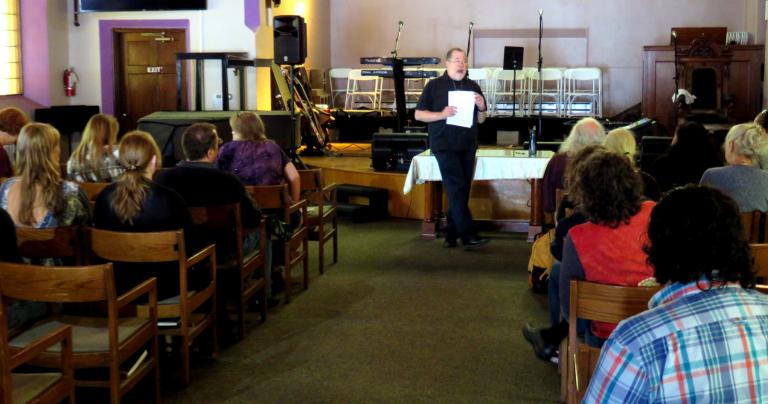
1. Who do you serve?
First and foremost, leadership is about service. It’s what you do to make things better for your group and its members, for your allied Gods and spirits, for the world at large, and in support of your collective values and virtues.
If you have personal obligations and obligations to a group, you must do both. Occasionally that can be done simultaneously, but not always. I led two rituals for Cernunnos at Denton CUUPS, but being an officer in a CUUPS group meant that I also led and participated in rituals for many different Gods and traditions. Those “other” rituals didn’t excuse the commitments I made to Cernunnos and other deities – I had to satisfy Them on my own.
Who are the persons – human and other than human – you serve?
2. What is your mission?
Once you figure out who you serve, the next question is how you go about serving them. Do you hold public rituals on the eight high days? Do you focus on public service and political action? Teach classes? Teach one-on-one? Conduct elaborate magical workings?
Just being a Wiccan coven or a Druid grove or a polytheist religious order is only the beginning. What is it that you do? You cannot be an effective leader unless you understand the mission of the group you lead.
3. What’s on the calendar?
Now we move down to specific actions. What will you do to accomplish your mission?
You need a calendar. Not just a collection of things you’re going to do, but an actual 12-month, SMTWTFS calendar. If you’re a small group that may be a spreadsheet or even a text file. If you’re a larger group you may want a Google calendar or something like it. Regardless of the technology you use, there needs to be one central calendar where all the group’s events and activities are scheduled. Otherwise people will schedule things over your events, or they’ll just forget about them.
The bigger and more active the group, the harder it gets to find times when you can get together. Schedule early, and make keeping your schedule a priority.

4. Can you do it all?
Another advantage of an actual calendar is that it shows you just how much you’re trying to do. And that raises the question of whether or not you can actually do it all.
I cannot tell you how many events and activities you should schedule. Large churches have multiple events going on every day – but no one person is expected to be at all of them. For a coven-sized group, simply gathering at every full moon may be a challenge. We all have lives: work and/or school, family obligations, other interests and commitments. If you try to schedule too much you’ll burn yourself out. If you schedule too little people will lose interest.
Do what you need and want to do to fulfill your mission, but remember that it’s better to do a few things well than to do many things poorly.
5. Who does the work?
Once you figure out what you’re going to do, it’s time to figure out who’s going to do it. A leader will be busy – probably the busiest person in the group. But if you’re doing all the work, you’re setting yourself and your group up for failure.
It’s not your responsibility to do all the work – it’s your responsibility to make sure all the work gets done.
Who’s writing the rituals? Who’s taking part in them? Who’s maintaining the website and Facebook page? Who’s showing up for the roadside trash pickup?
Now ask yourself who’s overloaded and needs help? Who’s ready for more, and needs to be given more opportunities? And who needs nurturing, so they can handle more in the future?
Getting as many people involved (to the extent they want to be involved) without overloading anyone is key to a healthy group.

The Anglesey Druid Order at their 2018 Spring Equinox ritual. The weather was even worse than it looks. People who will turn out in conditions like this are people you can trust to get stuff done, no matter what.
6. Who do you trust?
I’m not talking about who you think is decent and honest – that’s assumed. If you’ve got someone who’s not decent and honest, that’s a problem you need to deal with, but that’s not what we’re talking about here.
Rather, whose counsel do you trust? Who can you bounce ideas off before presenting them to the entire group? Who will tell you “I think that’s great, but you’ll have to convince Jane or it won’t fly”? Who will tell you “I think that’s the worst idea you’ve ever come up with” – and still be your friend and co-religionist afterwards?
Sometimes this is an experienced elder. Sometimes it’s a new person who doesn’t know all the dirty laundry from the past. Most times it’s someone who’s intelligent, observant, and who’s completely dedicated to the group and its mission.
7. How will you make decisions?
Some Pagans still fetishize consensus. That can be a good way to make sure everyone is heard, but in large groups it can be unwieldy, and it allows any one person to hold up a decision, even though they may not be heavily invested in the decision or even in the group.
If your group has by-laws (and if it doesn’t, it should) they will specify how major decisions are made. But leaders have to make impromptu decisions all the time. Who will you consult? Who will you allow to veto your decisions?
There are many ways to run a group, from highly democratic to highly autocratic. No one way is the best way in all circumstances. You can’t know what decisions you’ll make before you have to make them, but you can understand the process you’ll use to decide.
8. How will you communicate decisions?
Whether a leader makes a command decision or a group makes a democratic decision, that decision has to be communicated to the rest of the group.
Change the date of a ritual? Decide to use group funds to buy a new statue? Invite non-members to what was supposed to be a closed event? Everyone who wasn’t there when the decision was made needs to be informed.
This is partly a technical question: are you going to use e-mail, phone calls, Facebook, or something else? But mainly it’s a reminder that all decisions have to be communicated so the group remains on the same page.
9. What’s your vision?
A good leader is more than a bus driver who can read a map. A good leader has an idea of where the group should go when they get on the bus – and sometimes that’s places that aren’t on the map.
What are you doing now that you need to do better? What should you stop doing? What should you start doing? What are your long-term goals?
Growth is good, but just getting bigger doesn’t necessarily make things better. Does getting bigger allow you do serve more people? Or does it just strain the handful of people who are doing all the work?
Does your group need to broaden its focus? Do you need to stop being so Celtic-focused and do something Norse or Hellenic for a change? Or do you need to narrow your focus and just be a Gardnerian coven? There is no one right answer. Consider the needs, desires, and skills of your group, its mission, its members, and the wider community.
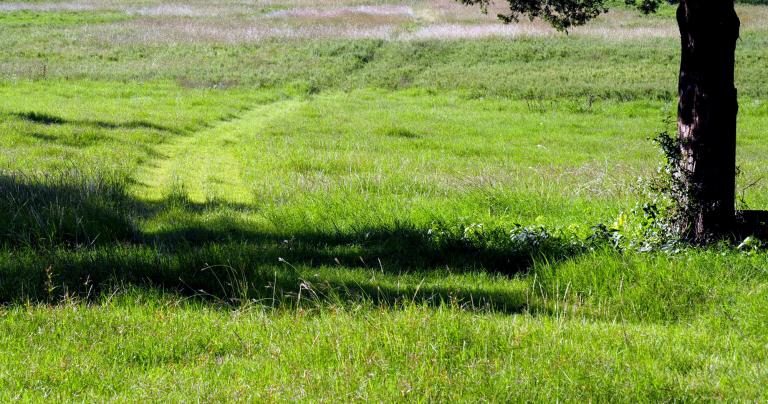
10. How will you promote your vision?
This is similar to communicating decisions, but it’s more complicated. That usually just requires relaying facts, and perhaps some reasons why. Promoting a vision means you’re painting a picture for people, usually with words but sometime with actual pictures and other visual aids.
Where do you think the group should go? How will you get there? What will the journey be like? What obstacles will you face, and how will you overcome them? And most importantly, what will it be like when you get there?
If you can get people excited about your vision, they’ll join you for the trip. If you can’t, they’ll drag their feet, or oppose you outright.
11. Are you embodying the virtues and values you promote?
What a leader does is important. How they do it is just as critical.
Are you walking your talk? Are you leading by example? Are you actually doing everything you’re telling others they need to be doing?
People will listen to what you say. But they’ll watch what you do even more closely. And if they think you’re a fake or a hypocrite (whether you are or not) they’ll tune you out in a heartbeat.
12. Are you training your successor?
This is one of the hardest things to do in a small group. You’ve barely got enough people to get all the work done, much less enough to apprentice to an active leader. And if your group is really small, you may not have anyone else who has the skills and motivation to do the things you do.
Still, people move, they burn out, and eventually we all die. The group must continue.
At the very least, make sure someone knows how to do everything that you can do. Maybe they can’t do it as well as you, but at least they’ll have some idea of what needs to be done if you suddenly aren’t available for whatever reason.
13. Is it time to step aside?
I learned so much in my 12 years as Coordinating Officer of Denton CUUPS because I kept encountering things that needed to be done and I had to figure out how to do them. Eventually you need to step aside so someone else can have those opportunities for learning and growth.
Groups go through stages: start up, initial growth, stabilization, and transformation. A leadership style that’s effective at one stage may not be so effective at another. My leadership style worked well (and was probably necessary) when Denton CUUPS had 20 members. At 50 members the group needed a different kind of leader.
You probably won’t know until it’s time, but if you don’t continually ask the question, you’ll be too late.
Answering these 13 questions won’t guarantee no one will try to burn you at the stake. Too many Pagans have unrealistic expectations for our leaders. But working through them will help you be a more effective leader. And when you show people what good, effective leadership looks like, they’re less likely to start gathering firewood. And more importantly, your group is more likely to fulfill its mission.

Next Post

November 22, 2018 Are There Downsides to Living in a Magical Universe?
Browse Our Archives
Select a Category Books Community CUUPS Druidry Foundations and Context Gods and Goddesses Magic Myth Nature Ritual Spiritual Practice Theology Travel Uncategorized Videos
Select a Month November 2026 October 2026 September 2026 August 2026 July 2026 June 2026 May 2026 April 2026 March 2026 February 2026 January 2026 December 2025 November 2025 October 2025 September 2025 August 2025 July 2025 June 2025 May 2025 April 2025 March 2025 February 2025 January 2025 December 2024 November 2024 October 2024 September 2024 August 2024 July 2024 June 2024 May 2024 April 2024 March 2024 February 2024 January 2024 December 2023 November 2023 October 2023 September 2023 August 2023 July 2023 June 2023 May 2023 April 2023 March 2023 February 2023 January 2023 December 2022 November 2022 October 2022 September 2022 August 2022 July 2022 June 2022 May 2022 April 2022 March 2022 February 2022 January 2022 December 2021 November 2021 October 2021 September 2021 August 2021 July 2021 June 2021 May 2021 April 2021 March 2021 February 2021 January 2021 December 2020 November 2020 October 2020 September 2020 August 2020 July 2020 June 2020 May 2020 April 2020 March 2020 February 2020 January 2020 December 2019 November 2019 October 2019 September 2019 August 2019 July 2019 June 2019 May 2019 April 2019 March 2019 February 2019 January 2019 December 2018 November 2018 October 2018 September 2018 August 2018 July 2018 June 2018 May 2018 April 2018 March 2018 February 2018 January 2018 December 2017 November 2017 October 2017 September 2017 August 2017 July 2017 June 2017 May 2017 April 2017 March 2017 February 2017 January 2017 December 2016 November 2016 October 2016 September 2016 August 2016 July 2016 June 2016 May 2016 April 2016 March 2016 February 2016 January 2016 December 2015 November 2015 October 2015 September 2015 August 2015 July 2015 June 2015 May 2015 April 2015 March 2015 February 2015 January 2015 December 2014 November 2014 October 2014 September 2014 August 2014 July 2014 June 2014 May 2014 April 2014 March 2014 February 2014 January 2014 December 2013 November 2013 October 2013 September 2013 August 2013 July 2013 June 2013 May 2013 April 2013 March 2013 February 2013 January 2013 December 2012 November 2012 October 2012 September 2012 August 2012 July 2012 June 2012 May 2012 April 2012 March 2012 February 2012 January 2012 December 2011 November 2011 October 2011 September 2011 August 2011 July 2011 June 2011 May 2011 April 2011 March 2011 February 2011 January 2011 December 2010 November 2010 October 2010 September 2010 August 2010 July 2010 June 2010 May 2010 April 2010 March 2010 February 2010 January 2010 December 2009 November 2009 October 2009 September 2009 August 2009 July 2009 June 2009 May 2009 April 2009 March 2009 February 2009 January 2009 December 2008 November 2008 October 2008 September 2008 August 2008 July 2008 June 2008
Follow Us!
TAKE THE
Religious Wisdom Quiz
Which prophet confronted David about his sin with Bathsheba?
Select your answer to see how you score.
Gad Samuel Nathan Abiathar
Related posts from John Beckett

Pope Francis and The Devil – A Pagan...

Pagans And The Rise Of The Religious Left

Why Halloween Is So Popular – And So...

The Pillar of the Boatmen: the Ancient Monument...
TRENDING AT PATHEOS Pagan

Prioritizing Jesus This Advent
Miller’s Station UMC| 29 November 2026| Mathew 19:16-27 When we prioritize Jesus,...

A Subtle Indicator of Legalism
Legalism was invented by pastors who don’t want to be woken up...
The Two Advents of the Babe and the...
We just celebrated the great family holiday of Thanksgiving and after going...

What are your dreams trying to tell you?...
Dreams can seem crazy. You’re suddenly with a person you haven’t seen...

Advent Begins in the Waiting: Preparing for Jesus
The Christmas season seems to arrive earlier every year. Before Halloween decorations...

As was predicted many years ago, the Interpreter Foundation's website is...
view all Pagan blogs
Ad-Free & Subscriber Log-In Subscription Support
- About Us
- 2026 Calendar
- Videos
- Podcasts
- Library of World Religions
- Faith In Media Tracker
- Advertise With Us
- Write for Us
- Privacy Policy
- Terms of Service
- Do Not Sell My Data
- Contact Us
- Radiant Digital
- Manage Newsletter Subscriptions
- Unsubscribe From Notifications
- Sitemap
Copyright 2008-2026, Patheos, part of the Radiant Digital network of media brands. All rights reserved.
Subscription Support Ad-Free & Subscriber Log-In
Follow Patheos