
BuddhistCatholicContemplativeEvangelicalGeneral ChristianHinduJewishLatter-day SaintMuslimNew VisionsProgressive Christian
Beliefs
- Buddhist
- Catholic
- Contemplative
- Evangelical
- General Christian
- Hindu
- Jewish
- Latter-day Saint
- More Voices
- Muslim
- New Visions
- Pagan
- Progressive Christian
Topics
- Religion News
- Food and Religion
- Sports and Religion
- Religious Art
- Religious Music and Entertainment
- Religious Events
- History and Religion
- Style and Religion
- Politics and Religion
- Women in Religion
- Recreation Outdoors and Religion
- Business Finance and Religion
- Careers Workplace and Religion
- Education and Religion
- Family Parenting and Religion
- Health Fitness and Religion
- Home and Religion
- Relationships and Religion
- Technology and Religion
- Travel and Religion
Columnists
- Buddhist Columnists
- Business Finance and Religion Columnists
- Careers Workplace and Religion Columnists
- Catholic Columnists
- Contemplative Columnists
- Education and Religion Columnists
- Evangelists Columnists
- Family Parenting and Religion Columnists
- General Christian Columnists
- Health Fitness and Religion Columnists
- Hindu Columnists
- History and Religion Columnists
- Home and Religion Columnists
- Jewish Columnists
- More Voices Columnists
- Latter Day Columnists
- Muslim Columnists
- New Visions Columnists
- Nonreligious Columnists
- Pagan Columnists
- Politics and Religion Columnists
- Progressive Columnists
- Recreation Outdoors and Religion Columnists
- Relationships and Religion Columnists
- Religion News Columnists
- Religious Art Columnists
- Religious Events Columnists
- Religious Music and Entertainment Columnists
- Sports and Religion Columnists
- Style and Religion Columnists
- Technology and Religion Columnists
- Travel and Religion Columnists
- Women in Religion Columnists
Resource Library
- 2026 Calendar
- Library of World Religions
- The 100 Most Holy Places on Earth
- Patheos Answers
- Podcasts
- Videos
- Faith Leaders Database
- Anglican Episcopalian
- Bahai
- Baptist
- Buddhism
- Christianity
- Confucianism
- Eastern Orthodoxy
- Hinduism
- Holiness and Pentecostal
- ISKCON
- Islam
- Judaism
- Lutheran
- Methodist
- The Church of Jesus Christ of Latter-day Saints
- New Age
- Paganism
- Presbytarian and Reformed
- Protestantism
- Religion Behind the Scenes
- Roman Catholic
- Scientology
- Shia Islam
- Sikhism
- Sufism
- Sunni Islam
- Taoism
- Zen
- See all religions
Research Tools
 Ad-Free & Subscriber Log-In Subscription Support
Ad-Free & Subscriber Log-In Subscription Support
Follow Patheos 

- Trending:
- Forgiveness
- |
- Marriage
- |
- Consciousness
- |
- Death Penalty
- |
- Election
- |
- Halloween

- Home
- Pagan
- Rethinking the Big Tent of Paganism
Rethinking the Big Tent of Paganism
Last updated on: October 25, 2018 at 3:00 am by John Beckett
Rethinking the Big Tent of Paganism 2018-10-19T18:29:07-06:00 John Beckett
Patheos Explore the world's faith through different perspectives on religion and spirituality! Patheos has the views of the prevalent religions and spiritualities of the world.
Blog for long enough and you’ll end up revisiting pretty much every topic you’ve ever written about. Sometimes you change your opinion, while other times you restate it even more strongly than before. And then there are times when you still agree with what you wrote years earlier, but you realize it needs to be tweaked a bit.
This is one of those times.
In early 2015 I wrote about the Big Tent of Paganism. I said
There may be nothing that is common to 100% of Pagans, but we have plenty of similar interests.
and also
The Big Tent provides a visible, easy-to-find entry point for ordinary people who are looking for something their current religion isn’t providing. And it makes it much easier for us to find others inside the tent who are doing the same things for the same reasons.
Those things were true in 2015 and they’re still true today. But last week I heard from two people who convinced me that I need to revisit the Big Tent of Paganism.
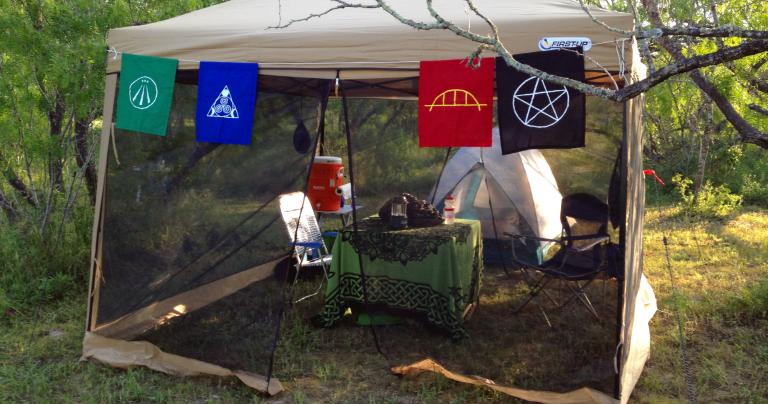
Is modern Paganism all about Northwestern European spirituality?
In the post on the Wheel of the Year I said “Modern Paganism has many roots, but among the deepest of those roots is the attempt to rediscover and restore the ancestral religions of Northwestern Europe.”
To which Kelley Harrell responded
Do we still largely define “modern Paganism” as Western European? I meet so many people from different traditions who identify with Paganism, though not of Western European origin. That’s something that the Wheel not being one-size-fits-all is also challenging. Climate change is forcing us to think more dynamically when it comes to our cultural groupings and how we qualify spirituality, therein. It’s impacting our psyches in bigger ways than just timekeeping.
Maybe we shouldn’t, but most of us do still think of Paganism in Western European terms. Wicca is still the largest form of Paganism, and while nobody’s written about “Wiccan privilege” recently (thank all the Gods!) many people – including some who should know better – still talk about Wiccan beliefs and practices as though they are normative of all of Paganism. If they don’t bring up Wicca they bring up Druidry (from Britain and Ireland) or possibly Heathenry (from Northern Europe).
And that ignores Hellenic polytheism and Kemeticism and Canaanite polytheism and countless other traditions. These traditions are (for the most part) fully inside the Big Tent of Paganism and they look nothing like Wicca. In order for our Big Tent to be anything other than an entry point, it needs to affirmatively include all the traditions that live inside it.
Trying to build a unified Pagan culture (too soon)
Also last week, Dayan Martinez finished his three-part (plus two interludes) series on Finding Pagan Culture. He asked for my feedback – this was what I had to say:
You have a noble goal – the establishment of a unified Pagan culture; an Articles of Confederation for a collection of Wiccans, Druids, Heathens, Kemetics, nontheistic tree-huggers, and a hundred other sub-sects. You tell us why we should unite, and for what it’s worth I agree with your reasons.
But the culture you propose has no “hooks” – nothing to keep us together when things get unpleasant, much less when they get difficult. You cited Jews in one part – there is much modern Pagans can learn from Jewish culture and the way they’ve survived for centuries as an oppressed minority. They haven’t done it by keeping a loose confederation. They’ve done it by creating and enforcing orthodoxy.
And that is anathema to modern Pagans.
I’ve seen a few attempts at building a unified Pagan culture. I’ve advocated for it myself once or twice. None of them were done very well. “Because climate change / peak oil / Trump / mass extinction / Tower Time / etc” are all good reasons, but they aren’t reasons most people are going to accept until it affects them personally – and by then it’s too late.
Universal religions, local religions
Our polytheist ancestors intuitively understood that different Gods call different people to worship and work with them in different ways. The God of the Desert is not the God of the Forest. The Gods of Thebes are not the Gods of Athens.
As people migrated and empires grew, people carried the worship of their Gods with them – the Romans adopted Isis from the Egyptians and took Her worship as far as Britain. But it took Christianity (and later Islam) to claim that there was only one God whose worship should be universal.
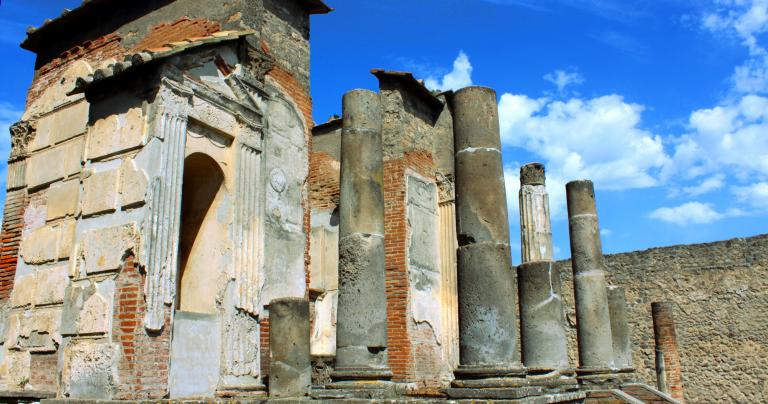
Temple of Isis – Pompeii – Italy
It didn’t work very well. Not only are there still many religions, Christianity has hundreds of denominations, and each of them has countless local variations.
Religion and culture are inseparably intertwined, and culture is always local.
Build strong local traditions
Calls of “we must unite!” always include something we’re supposed to unite around: a principle or a cause or a goal. But many times exactly what that is isn’t spelled out, and what it really means is “whatever the person with the soapbox wants.” That rarely goes well, even if what the person wants is good and necessary.
Building a meaningful culture requires passion – you’ve got to care about it or you won’t do it. You can’t be sold on it or guilted into it – how well did that work when your parents tried to convince you to stay in their Christian church? You’ve got to want to be a part of it for your own reasons, whatever those reasons are – even if they aren’t “proper” and “socially acceptable” reasons.
The good news is that we live in the most religiously diverse society in the history of humanity. If your passion is for witchcraft or the Gods of ancient Greece or the giant redwoods of California, you can build a religious tradition around it. And the odds are good someone is already doing it.
In our time, “local” doesn’t have to refer to geography. Groups and traditions can form around Welsh lore or the worship of the Morrigan or dealing with the impact of climate change, even if their members are separated by thousands of miles. If you’re passionate about it, other people will be passionate about it too – find them.
It always helps to have co-religionists you can touch and talk to without the aid of technology. If you can’t find or build a community around your passion, you can find a community of convenience: a CUUPS group or an ADF grove or a Wiccan coven that fills your need for physical community even if it doesn’t completely support your spiritual passions.
Whether they are in-person or virtual, our local traditions will succeed because we build around values, virtues, and goals we’re passionate about. They will not succeed as Pagans. They will succeed as Gardnerian Wiccans or OBOD Druids or Canaanite polytheists… or as ancestral, devotional, ecstatic, oracular, magical, public, Pagan polytheists.
Rethinking the Big Tent of Paganism
No ancients ever called themselves Pagans. The Iceni were the Iceni. The Hellenes were the Hellenes. Religion wasn’t a set of beliefs to be affirmed or denied, it was part of who you are and especially whose you are. That kind of deep devotion to shared values and shared cultural identity is what will make our local traditions strong, vibrant, and self-sustaining.
But the modern Pagan movement has its own history and heritage, a series of “currents” that make Paganism Pagan. It doesn’t include enough commonality to generate passion for a shared identity, but there is enough commonality to encourage cooperation centered around common interests: religious freedom, environmental action, and events where we can celebrate our traditions and make our presence known to the wider world.
I originally thought the value of the Big Tent metaphor was its bigness – one tent with room enough for millions of Pagans and hundreds of Pagan traditions. But now I think we’re not ready for that, and we may never be ready for it. Our continued striving for a commonality that isn’t there distracts us and discourages us from doing the work necessary to build the strong local traditions we need.
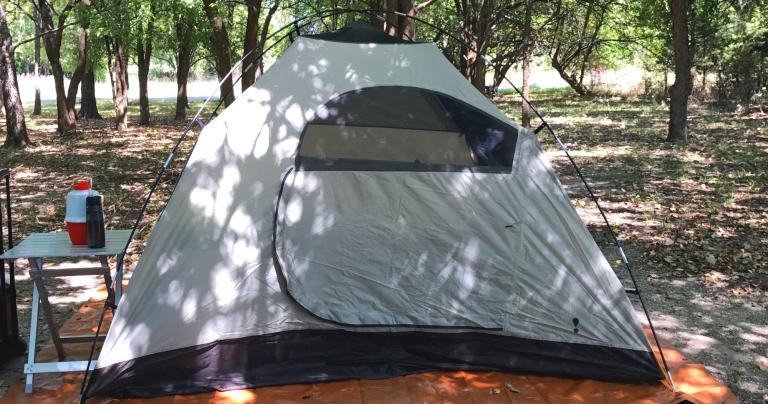
Instead, I think the value of the Big Tent of Paganism is its tentness (is that a word? it is now). A tent is not a permanent structure – it’s a poor substitute for a house. But unlike a house, a tent is portable. We can set it up where ever we need it: at Pagan Pride Day, at an anti-pipeline rally, at a fundraiser for the homeless, at an archaeological dig. We gather under the tent, do what we came there to do, make some new friends and connections, and then take the tent down. We go back to our Wiccan or Druid or polytheist houses and go back to work on the things we’re really passionate about, working with the other people who are passionate about them too.
Local first
Our Christian-influenced mainstream culture assumes all religions are supposed to be universal religions. It hasn’t worked for them and it won’t work for us.
Instead, let’s listen as our Gods and spirits call us onto different paths. Let’s find the others walking those paths and work with them. Let’s build strong individual traditions and local groups that encourage exploration and mutual support.
And then when there are issues and events where we have common cause with other Pagans on other paths, we can set up our Big Tent, gather together, and do what we need to do to make the world a better place for all of us.
Previous Post

October 23, 2018
Trickster Gods, How Magic Works, Magic For Yourself, and More
Next Post

October 28, 2018 Vote!
Browse Our Archives
Select a Category Books Community CUUPS Druidry Foundations and Context Gods and Goddesses Magic Myth Nature Ritual Spiritual Practice Theology Travel Uncategorized Videos
Select a Month October 2026 September 2026 August 2026 July 2026 June 2026 May 2026 April 2026 March 2026 February 2026 January 2026 December 2025 November 2025 October 2025 September 2025 August 2025 July 2025 June 2025 May 2025 April 2025 March 2025 February 2025 January 2025 December 2024 November 2024 October 2024 September 2024 August 2024 July 2024 June 2024 May 2024 April 2024 March 2024 February 2024 January 2024 December 2023 November 2023 October 2023 September 2023 August 2023 July 2023 June 2023 May 2023 April 2023 March 2023 February 2023 January 2023 December 2022 November 2022 October 2022 September 2022 August 2022 July 2022 June 2022 May 2022 April 2022 March 2022 February 2022 January 2022 December 2021 November 2021 October 2021 September 2021 August 2021 July 2021 June 2021 May 2021 April 2021 March 2021 February 2021 January 2021 December 2020 November 2020 October 2020 September 2020 August 2020 July 2020 June 2020 May 2020 April 2020 March 2020 February 2020 January 2020 December 2019 November 2019 October 2019 September 2019 August 2019 July 2019 June 2019 May 2019 April 2019 March 2019 February 2019 January 2019 December 2018 November 2018 October 2018 September 2018 August 2018 July 2018 June 2018 May 2018 April 2018 March 2018 February 2018 January 2018 December 2017 November 2017 October 2017 September 2017 August 2017 July 2017 June 2017 May 2017 April 2017 March 2017 February 2017 January 2017 December 2016 November 2016 October 2016 September 2016 August 2016 July 2016 June 2016 May 2016 April 2016 March 2016 February 2016 January 2016 December 2015 November 2015 October 2015 September 2015 August 2015 July 2015 June 2015 May 2015 April 2015 March 2015 February 2015 January 2015 December 2014 November 2014 October 2014 September 2014 August 2014 July 2014 June 2014 May 2014 April 2014 March 2014 February 2014 January 2014 December 2013 November 2013 October 2013 September 2013 August 2013 July 2013 June 2013 May 2013 April 2013 March 2013 February 2013 January 2013 December 2012 November 2012 October 2012 September 2012 August 2012 July 2012 June 2012 May 2012 April 2012 March 2012 February 2012 January 2012 December 2011 November 2011 October 2011 September 2011 August 2011 July 2011 June 2011 May 2011 April 2011 March 2011 February 2011 January 2011 December 2010 November 2010 October 2010 September 2010 August 2010 July 2010 June 2010 May 2010 April 2010 March 2010 February 2010 January 2010 December 2009 November 2009 October 2009 September 2009 August 2009 July 2009 June 2009 May 2009 April 2009 March 2009 February 2009 January 2009 December 2008 November 2008 October 2008 September 2008 August 2008 July 2008 June 2008
Follow Us!
TAKE THE
Religious Wisdom Quiz
What does Jesus say about storing up treasures on earth?
Select your answer to see how you score.
Treasure is godliness Store as much as possible Only store in banks Do not, because they are temporary
Related posts from John Beckett


The Vampire Films of Jean Rollin


Bo French Doesn’t Understand Texas
TRENDING AT PATHEOS Pagan

The Iron Gates and the Lion of the...
Yesterday, I didn't finish my report about, well, yesterday. So I'll...

Dolly Parton’s Last Song Wins Dove Award with...
Bluegrass band The Grascals, speaking on the red carpet at the 57th...

The Image: On the Horror of Capitalism and...
The Image Then went the Pharisees, and took counsel how they might...

We are approaching the date of our new American national holiday: October...

Letters on Living the Faith by C.S. Lewis
Most of us met C.S. Lewis as a public intellectual. Mere Christianity....

When Halloween Unmasks Married Hearts
Written by Dr. David K. Ewen from Eternal Truth Bible College Behind...
view all Pagan blogs
Ad-Free & Subscriber Log-In Subscription Support
- About Us
- 2026 Calendar
- Videos
- Podcasts
- Library of World Religions
- Faith In Media Tracker
- Advertise With Us
- Write for Us
- Privacy Policy
- Terms of Service
- Do Not Sell My Data
- Contact Us
- Radiant Digital
- Manage Newsletter Subscriptions
- Unsubscribe From Notifications
- Sitemap
Copyright 2008-2026, Patheos. All rights reserved.
Subscription Support Ad-Free & Subscriber Log-In
Follow Patheos