
BuddhistCatholicContemplativeEvangelicalGeneral ChristianHinduJewishLatter-day SaintMuslimNew VisionsProgressive Christian
Beliefs
- Buddhist
- Catholic
- Contemplative
- Evangelical
- General Christian
- Hindu
- Jewish
- Latter-day Saint
- More Voices
- Muslim
- New Visions
- Pagan
- Progressive Christian
Topics
- Religion News
- Food and Religion
- Sports and Religion
- Religious Art
- Religious Music and Entertainment
- Religious Events
- History and Religion
- Style and Religion
- Politics and Religion
- Women in Religion
- Recreation Outdoors and Religion
- Business Finance and Religion
- Careers Workplace and Religion
- Education and Religion
- Family Parenting and Religion
- Health Fitness and Religion
- Home and Religion
- Relationships and Religion
- Technology and Religion
- Travel and Religion
Columnists
- Buddhist Columnists
- Business Finance and Religion Columnists
- Careers Workplace and Religion Columnists
- Catholic Columnists
- Contemplative Columnists
- Education and Religion Columnists
- Evangelists Columnists
- Family Parenting and Religion Columnists
- General Christian Columnists
- Health Fitness and Religion Columnists
- Hindu Columnists
- History and Religion Columnists
- Home and Religion Columnists
- Jewish Columnists
- More Voices Columnists
- Latter Day Columnists
- Muslim Columnists
- New Visions Columnists
- Nonreligious Columnists
- Pagan Columnists
- Politics and Religion Columnists
- Progressive Columnists
- Recreation Outdoors and Religion Columnists
- Relationships and Religion Columnists
- Religion News Columnists
- Religious Art Columnists
- Religious Events Columnists
- Religious Music and Entertainment Columnists
- Sports and Religion Columnists
- Style and Religion Columnists
- Technology and Religion Columnists
- Travel and Religion Columnists
- Women in Religion Columnists
Resource Library
- 2026 Calendar
- Library of World Religions
- The 100 Most Holy Places on Earth
- Patheos Answers
- Podcasts
- Videos
- Faith Leaders Database
- Anglican Episcopalian
- Bahai
- Baptist
- Buddhism
- Christianity
- Confucianism
- Eastern Orthodoxy
- Hinduism
- Holiness and Pentecostal
- ISKCON
- Islam
- Judaism
- Lutheran
- Methodist
- The Church of Jesus Christ of Latter-day Saints
- New Age
- Paganism
- Presbytarian and Reformed
- Protestantism
- Religion Behind the Scenes
- Roman Catholic
- Scientology
- Shia Islam
- Sikhism
- Sufism
- Sunni Islam
- Taoism
- Zen
- See all religions
Research Tools
 Ad-Free & Subscriber Log-In Subscription Support
Follow Patheos 

- Trending:
- Advent
- |
- Forgiveness
- |
- Thanksgiving
- |
- Election
- |
- Seasonal Holidays
- |
- Marriage

- Home
- Pagan
- A Conclave of Cats: Debating the Nature of the Gods
A Conclave of Cats: Debating the Nature of the Gods
Last updated on: October 2, 2018 at 3:00 am by John Beckett
A Conclave of Cats: Debating the Nature of the Gods 2018-09-28T18:19:46-06:00 John Beckett
Patheos Explore the world's faith through different perspectives on religion and spirituality! Patheos has the views of the prevalent religions and spiritualities of the world.
Imagine, if you will, a conclave of cats gathered to discuss and debate the true nature of humans.
It wouldn’t be a useless gathering – not like say, a conclave of ants. Cats know a thing or two about humans. Some of this comes from their powers of observation, but most of it is because many cats live in relationship with humans. At the end of the day, though, the conclave proceedings would tell us more about how the cats see themselves than about the true nature of humans.
It is much the same when we humans discuss and debate the true nature of the Gods.
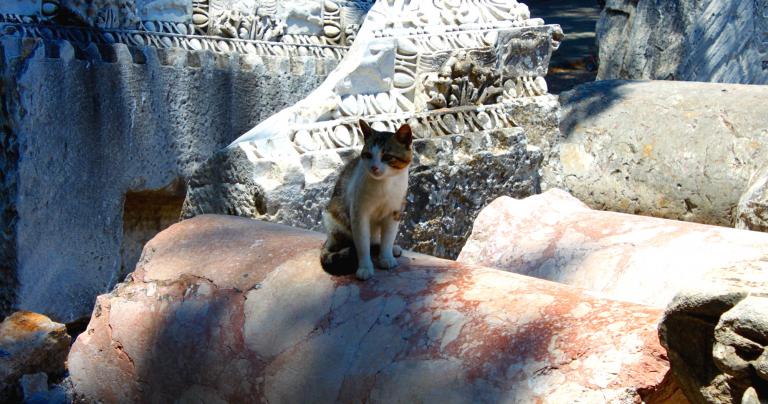
cat at Ephesus – 2012
Last week fellow Patheos Pagan blogger Mat Auryn had a Facebook post where he listed 13 different deities from 13 different cultures who are all “the Goddess and consciousness of the Earth itself” – Gaia from the Greeks, Terra from the Romans, Pachamama from the Andeans, and so on. Then he summarized some of the complaints he’s received:
Staunch Hard Polytheists: No two gods are the same. They’re each individuals. There is no synchronization. You can’t compare or conflate deities of different cultures. None of them are the same on any level. They aren’t the same beings through different cultural lenses.
The “staunch hard polytheists” Mat has encountered are mistaken. If there is one deity who is clearly universal, it is the Earth Mother. All life comes from Her.
Beyond Her, though, we often find similar deities performing similar functions in different cultures. Sometimes they’re different aspects of the same God. Other times they’re separate beings.
Last year someone asked me if the Hindu deity Pashupati is the same God as Cernunnos. That post is worth re-reading – its main argument is that we can never be completely sure, and we’re usually better off understanding and relating to deities in the context of their root culture, rather than trying to combine and conflate them to make them more familiar to us.
At the same time, Gods can be multiple: Athena Parthenos, Athena Nike, and Athena Polias were and are understood differently, but all are Athena. And Serapis is the syncretism of Osiris and Apis. His syncretism may have been politically motivated, but He was actively worshipped for 700 years.
Like the conclave of cats, the reactions of contemporary Pagans to multiplicity and syncretism says more about us than it does about the Gods.
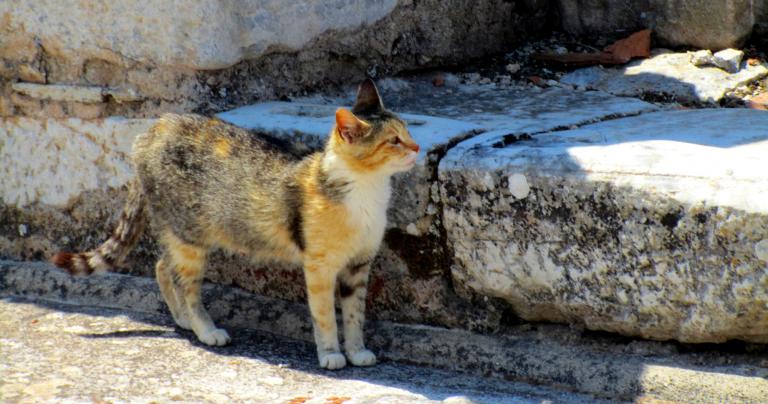
cat at Ephesus – 2012
The problems of soft polytheism
Soft polytheism is the idea that all Gods are aspects of one God. Sometimes this is expressed as “all Gods are one God and all Goddesses are one Goddess.” Whether this means there are ultimately one deity or two is rarely discussed.
Some argue that soft polytheism isn’t really polytheism at all – it’s either monotheism or duotheism.
I’m a hard polytheist in part because the literary and historical records make it clear that’s how our ancient ancestors saw the Gods, but mainly because that’s how I’ve experienced Them. If I encounter beings who appear distinct and individual to me, it follows that I should conceive of Them and relate to Them as though They are individuals, even if I can never be completely sure.
While an argument can be made for soft polytheism, many people who advocate for it do so because they have yet to challenge the foundational assumptions of the Christian-dominated mainstream society, which insists there is only one God. And so they bring monotheist assumptions into a polytheist religion.
The other problem with soft polytheism is that it is often a Joseph Campbell-ish attempt at universalizing everything. Like Julius Caesar assuming that the Celts who worshipped Lugh were really worshipping Mercury, soft polytheists interpret different Gods and different religions through the lens of their own religion. In doing so, they remove them from their cultural context and they strip away what makes them unique and sacred.
Soft polytheism tells us more about how we think than it tells us about the nature of the Gods.

witch cats, or rather, cats who live with a witch
Our problems with multiplicity and syncretism
Not all of the cats at this conclave are soft polytheists. Some are hard polytheists.
I freely admit that multiplicity is complicated. I think I understand it better than I did three years ago when I wrote this, because I’ve been working with the combination of deities and places. I’m now 99% sure Cernunnos Denton is a real epithet of Cernunnos. Modern Paganism is a living religion(s).
Syncretism is less complicated, but also less common. The best example I have is Herne, who began as a possibly-historical English royal gamekeeper, and was later syncretized with Cernunnos, Pan, and Woden.
We often reject (or simply ignore) multiplicity and syncretism in part because they’re difficult to comprehend. But we also reject them because they conflict with the mainstream society’s emphasis on the primacy of the individual.
If the Gods can syncretize, then perhaps so can we. And if we can syncretize, then we might lose some of our individuality. More relevantly, we might discover that families and tribes and communities and nations aren’t just collections of independent individuals, they’re living entities with their own identity and sovereignty.
And if these group are living entities, then we have real obligations to persons other than ourselves.
For a culture that worships individualism and the absolute autonomy of the individual, that’s a very scary thing.
The cats who reject multiplicity and syncretism are telling us a lot more about themselves than they’re telling us about the Gods.

cat and shadow
The true nature of the Gods remains a mystery
I believe what I believe about the Gods because it’s the best explanation I’ve found for the evidence I have. That includes the beliefs and practices of our ancestors, my own experiences, the experiences of my co-religionists, and a careful application of logic and reason.
And just as cats who live in relationship with humans know more about us than cats who live apart from humans, I live in relationship with several deities. Those relationships give me – and the Pagans and polytheists who do likewise – a perspective on the Gods that non-theists, monotheists, and those who ignore Them will never have.
My Pagan, polytheist religion brings me meaning and fulfillment. It is the foundation for some of the deepest friendships I’ve ever known. It also brings work, hardship, and risk – Their ways are not our ways. I serve the Gods because I believe in the Gods and in their virtues and values.
But when it’s all said and done, I remain a cat contemplating the nature of humans.
Previous Post

September 30, 2018
Escaping Our Hells By Fighting
Next Post

October 4, 2018 6 Ways to Talk to the Gods (and How to Listen for an Answer)
Browse Our Archives
Select a Category Books Community CUUPS Druidry Foundations and Context Gods and Goddesses Magic Myth Nature Ritual Spiritual Practice Theology Travel Uncategorized Videos
Select a Month November 2026 October 2026 September 2026 August 2026 July 2026 June 2026 May 2026 April 2026 March 2026 February 2026 January 2026 December 2025 November 2025 October 2025 September 2025 August 2025 July 2025 June 2025 May 2025 April 2025 March 2025 February 2025 January 2025 December 2024 November 2024 October 2024 September 2024 August 2024 July 2024 June 2024 May 2024 April 2024 March 2024 February 2024 January 2024 December 2023 November 2023 October 2023 September 2023 August 2023 July 2023 June 2023 May 2023 April 2023 March 2023 February 2023 January 2023 December 2022 November 2022 October 2022 September 2022 August 2022 July 2022 June 2022 May 2022 April 2022 March 2022 February 2022 January 2022 December 2021 November 2021 October 2021 September 2021 August 2021 July 2021 June 2021 May 2021 April 2021 March 2021 February 2021 January 2021 December 2020 November 2020 October 2020 September 2020 August 2020 July 2020 June 2020 May 2020 April 2020 March 2020 February 2020 January 2020 December 2019 November 2019 October 2019 September 2019 August 2019 July 2019 June 2019 May 2019 April 2019 March 2019 February 2019 January 2019 December 2018 November 2018 October 2018 September 2018 August 2018 July 2018 June 2018 May 2018 April 2018 March 2018 February 2018 January 2018 December 2017 November 2017 October 2017 September 2017 August 2017 July 2017 June 2017 May 2017 April 2017 March 2017 February 2017 January 2017 December 2016 November 2016 October 2016 September 2016 August 2016 July 2016 June 2016 May 2016 April 2016 March 2016 February 2016 January 2016 December 2015 November 2015 October 2015 September 2015 August 2015 July 2015 June 2015 May 2015 April 2015 March 2015 February 2015 January 2015 December 2014 November 2014 October 2014 September 2014 August 2014 July 2014 June 2014 May 2014 April 2014 March 2014 February 2014 January 2014 December 2013 November 2013 October 2013 September 2013 August 2013 July 2013 June 2013 May 2013 April 2013 March 2013 February 2013 January 2013 December 2012 November 2012 October 2012 September 2012 August 2012 July 2012 June 2012 May 2012 April 2012 March 2012 February 2012 January 2012 December 2011 November 2011 October 2011 September 2011 August 2011 July 2011 June 2011 May 2011 April 2011 March 2011 February 2011 January 2011 December 2010 November 2010 October 2010 September 2010 August 2010 July 2010 June 2010 May 2010 April 2010 March 2010 February 2010 January 2010 December 2009 November 2009 October 2009 September 2009 August 2009 July 2009 June 2009 May 2009 April 2009 March 2009 February 2009 January 2009 December 2008 November 2008 October 2008 September 2008 August 2008 July 2008 June 2008
Follow Us!
TAKE THE
Religious Wisdom Quiz
Who led a rebellion called "the men of Belial" against David near his end?
Select your answer to see how you score.
Amasa Sheba son of Bichri Absalom Adonijah
Related posts from John Beckett

Pagans And The Rise Of The Religious Left

Why Halloween Is So Popular – And So...

The Pillar of the Boatmen: the Ancient Monument...

TRENDING AT PATHEOS Pagan

Are You a Scrooge or an Ebenezer?
A Call to Remember As the Christmas season rings in, will we...

Noah’s Ark Archaeologists: Gopher Wood or Should We...
Ancient wood, a boat-shaped formation and dates that invite a second look:...

Smart people saying smart things (11.24.26)
Please take time to listen to Perry Bacon, Sarah Posner, Adam Serwer,...

The Contingency of Our Technology
Last week we were hit with a raft of massive technology outages....

In 1939, President Franklin D. Roosevelt moved Thanksgiving from November 30 to...

Reasons for Restraint: Ricardo Gonzalez, Florida and Dec...
The Morning of January 3 I begin with the dead. On the...
view all Pagan blogs
Ad-Free & Subscriber Log-In Subscription Support
- About Us
- 2026 Calendar
- Videos
- Podcasts
- Library of World Religions
- Faith In Media Tracker
- Advertise With Us
- Write for Us
- Privacy Policy
- Terms of Service
- Do Not Sell My Data
- Contact Us
- Radiant Digital
- Manage Newsletter Subscriptions
- Unsubscribe From Notifications
- Sitemap
Copyright 2008-2026, Patheos, part of the Radiant Digital network of media brands. All rights reserved.
Subscription Support Ad-Free & Subscriber Log-In
Follow Patheos