
BuddhistCatholicContemplativeEvangelicalGeneral ChristianHinduJewishLatter-day SaintMuslimNew VisionsProgressive Christian
Beliefs
- Buddhist
- Catholic
- Contemplative
- Evangelical
- General Christian
- Hindu
- Jewish
- Latter-day Saint
- More Voices
- Muslim
- New Visions
- Pagan
- Progressive Christian
Topics
- Religion News
- Food and Religion
- Sports and Religion
- Religious Art
- Religious Music and Entertainment
- Religious Events
- History and Religion
- Style and Religion
- Politics and Religion
- Women in Religion
- Recreation Outdoors and Religion
- Business Finance and Religion
- Careers Workplace and Religion
- Education and Religion
- Family Parenting and Religion
- Health Fitness and Religion
- Home and Religion
- Relationships and Religion
- Technology and Religion
- Travel and Religion
Columnists
- Buddhist Columnists
- Business Finance and Religion Columnists
- Careers Workplace and Religion Columnists
- Catholic Columnists
- Contemplative Columnists
- Education and Religion Columnists
- Evangelists Columnists
- Family Parenting and Religion Columnists
- General Christian Columnists
- Health Fitness and Religion Columnists
- Hindu Columnists
- History and Religion Columnists
- Home and Religion Columnists
- Jewish Columnists
- More Voices Columnists
- Latter Day Columnists
- Muslim Columnists
- New Visions Columnists
- Nonreligious Columnists
- Pagan Columnists
- Politics and Religion Columnists
- Progressive Columnists
- Recreation Outdoors and Religion Columnists
- Relationships and Religion Columnists
- Religion News Columnists
- Religious Art Columnists
- Religious Events Columnists
- Religious Music and Entertainment Columnists
- Sports and Religion Columnists
- Style and Religion Columnists
- Technology and Religion Columnists
- Travel and Religion Columnists
- Women in Religion Columnists
Resource Library
- 2026 Calendar
- Library of World Religions
- The 100 Most Holy Places on Earth
- Patheos Answers
- Podcasts
- Videos
- Faith Leaders Database
- Anglican Episcopalian
- Bahai
- Baptist
- Buddhism
- Christianity
- Confucianism
- Eastern Orthodoxy
- Hinduism
- Holiness and Pentecostal
- ISKCON
- Islam
- Judaism
- Lutheran
- Methodist
- The Church of Jesus Christ of Latter-day Saints
- New Age
- Paganism
- Presbytarian and Reformed
- Protestantism
- Religion Behind the Scenes
- Roman Catholic
- Scientology
- Shia Islam
- Sikhism
- Sufism
- Sunni Islam
- Taoism
- Zen
- See all religions
Research Tools
 Ad-Free & Subscriber Log-In Subscription Support
Ad-Free & Subscriber Log-In Subscription Support
Follow Patheos 

- Trending:
- Forgiveness
- |
- Marriage
- |
- Consciousness
- |
- Death Penalty
- |
- Election
- |
- Halloween

- Home
- Pagan
- Knowing Through Practice, Experience, and Results
Knowing Through Practice, Experience, and Results
Last updated on: August 19, 2018 at 3:00 am by John Beckett
Knowing Through Practice, Experience, and Results 2018-08-14T18:05:51-06:00 John Beckett
Patheos Explore the world's faith through different perspectives on religion and spirituality! Patheos has the views of the prevalent religions and spiritualities of the world.
Last weekend an atheist left a very good comment where he took issue with my use of the word “to know.” The conversation went like this.
John: “I’ve always known the Divine has a feminine side”
MNb: “Unfortunately I only can guess what you mean with the word ‘to know’ here. But I’m pretty sure it’s not the same as what I mean with it.”
John: “I use ‘to know’ somewhat hesitantly here, likely for the same reasons behind your comment. There is a qualitative difference between ‘to believe intensely’ and ‘to be able to prove objectively.’ But I have no other word for the kind of deep, intuitive, experiential understanding that something is true even though I can’t prove it objectively.
Then the next day, I led the Sunday Service at Denton UU where I spoke on Becoming Invincible: Overcoming Fear Through Reason and Experience. Here’s a key excerpt:
Becoming invincible begins with reason … but reason alone is not enough … This knowledge does not come from reading books or even from diligent study. It comes from years and years of dedicated and consistent spiritual practice: meditation, prayer, and devotion.
Or, it comes from a one-time first-hand ecstatic religious experience so powerful it rewires your consciousness, changes your foundational assumptions about what is and isn’t possible, and basically turns your life upside down.
I didn’t go into details. A UU Sunday Service is not the place to discuss entheogens and the Headless Rite – particularly not in August when lots of people are church shopping.
Is it a contradiction – or even an outright error – to say we “know” in a religious context? I don’t think so or I wouldn’t use it. But it is a hard question that likely rises to the level of a mystery.
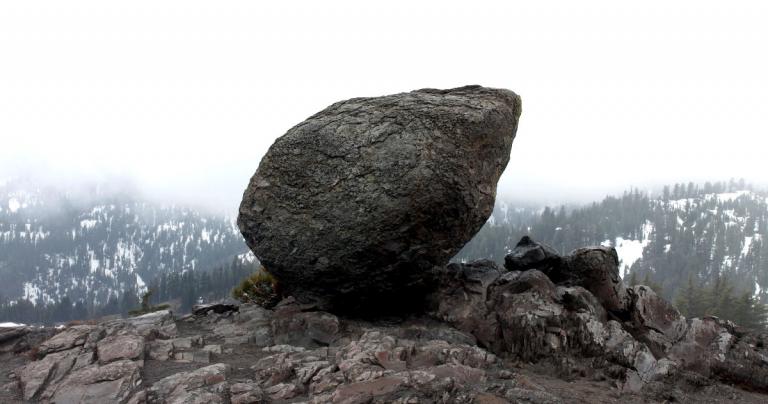
Believing is not the same as knowing
I grew up in a fundamentalist church where I constantly heard the preacher saying “I know this is true!” and “you can know this is true!” Meanwhile, I was biting my tongue and screaming inside my head “no, you believe it’s true!” Sacred texts and church doctrines may be deeply meaningful to followers of that religion, but that doesn’t make them factually true.
A quote of dubious origins often attributed to Mark Twain says “It ain’t what you don’t know that gets you into trouble. It’s what you know for sure that just ain’t so.” In an era of fake news and of the dismissal of inconvenient facts as fake, it’s important to know the difference between facts, theories, opinions, and lies.
We can never know the true nature of the Gods in the same way we know truth of the Pythagorean Theorem. But that doesn’t mean we can know nothing about Them.
Hold loosely but practice deeply
There is no certainty in matters of religion. If you must have religious certainty, your only honest option is to become an agnostic. But many of us – myself included – find agnosticism unfulfilling.
The solution is to hold our beliefs loosely. Never assume we know it all, never forget that we might be wrong, and most importantly, always remain open to new evidence and new lines of thinking. Our polarized political debates have shown that when most people are confronted with clear evidence that their beliefs are wrong, they deny the evidence and dig in defensively. Their fear of change (and their fear of admitting that they were wrong) is greater than their desire to actually be right. We must do better – hold loosely.
But while we hold a belief, we act as though it is absolutely true. Do you believe the Gods are real, distinct, individual beings? Then act as though They are. Speak to Them individually, pour offerings to Them individually, and think of Them as individuals, not as “aspects” or “faces” or some other metaphor that assumes or implies that They’re really all part of one God.
Do you believe in magic? Then stop trying to come up with a “rational” explanation for it, accept that it’s real, and start practicing magic as deeply as you can.
If you later find enough evidence to refute your beliefs, then change them. But while you hold them, act as though they’re true. You may be surprised how deep that approach can take you.
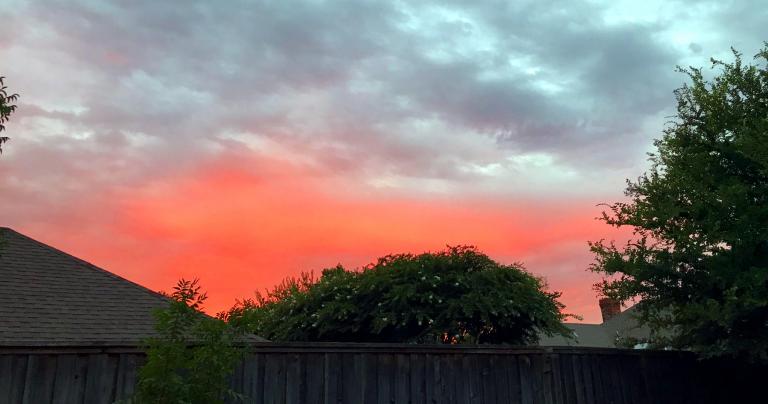
Mundane knowledge is still required
Like the problematic Mark Twain quote, the problem with those Baptist preachers was that much of what they “knew” was demonstrably false. The Earth is a lot more than 6000 years old. Noah’s flood is the cultural memory of localized devastations at the end of the last ice age, not a worldwide event.
Pagans aren’t exempt from this. It’s only been in the past 30 years or so that the majority of Pagans have understood that nine million witches weren’t burned in the “burning times” (it was under 100,000, and the vast majority of them weren’t witches). I still occasionally run into people who claim to be a “hereditary Druid” with roots in antiquity. We have to know our own history.
If you want to read omens and auguries in Nature, you have to know what’s normal animal and plant behavior. Yes, sometimes a crow is the Morrigan, but most times it’s a crow doing its own things for its own reasons.
Ground yourself in ordinary science and history and don’t pretend you “know” something that isn’t really true.
Foundational assumptions control your conclusions…
When materialists scream “you have no evidence!” what they mean is “you have no evidence that aligns with my assumptions that nothing exists except for matter and the interactions of matter.” Evidence that doesn’t fit those assumptions is ignored or rationalized away. If you assume that the Gods are abstractions and metaphors then Odin could appear bodily before you and all you’d do is wonder why that odd old man doesn’t have a glass eye instead of a patch.
Our experiences are undeniably real. Our foundational assumptions control which interpretations we will consider and which ones we will reject out of hand.
Holding loosely but practicing deeply allows us to “bracket” our foundational assumptions and suspend them temporarily. We don’t have to suddenly change our thinking about the nature of reality, we just have to be open to the possibility that reality may be bigger than we’ve always been told.
And then go experiment.
…But results add up
James Bond creator Ian Fleming had one of his characters say “Once is happenstance. Twice is coincidence. The third time it’s enemy action.” Fleming served in World War II – he knew what he was talking about. If you jump at every noise you’ll never get anything done. But eventually, it becomes clear that something’s there and you’d better deal with it.
Do you have a need where magic would be helpful? Something you just can’t get through ordinary effort? Or something that’s so important you want all the help you can get? Then work magic. If you don’t know any other method, use sigil magic – it’s very simple and it’s very effective. Don’t think magic is real? Doesn’t matter – magic works on action, not on faith.
The first time your spell brings results, you’re likely to dismiss it as a coincidence. The second time you’ll dismiss it as confirmation bias. Throw in a time or two when it doesn’t work (likely because you chose the wrong target – more in that in the coming days) and your materialistic assumptions are still firmly in place.
But after the ninth or tenth or fiftieth time, those assumptions start to shift. The results add up. Now it’s easier to assume that magic is real than to assume it’s not.
After years of devotion, including multiple ecstatic experiences, it’s easier to assume the Gods and spirits and ancestors are real than to assume they’re not. If you follow your own experiences, the way you see the world will change.
Knowing through intuition
I told the commenter “I’ve always known the Divine has a feminine side.” This wasn’t an experimentally verified result. It wasn’t a logical inference. It was intuition – something I knew was true in the depth of my soul.
Sometimes intuition is your subconscious spotting cause and effect at a level your conscious mind ignores. Sometimes it’s the whispers of Gods and spirits. Sometimes it’s something we can’t explain even to ourselves, but there it is.
We have to be careful relying on intuition. Sometimes it tells us what we wish was true. Sometimes it tells us what we fear might be true. Many times it simply repeats what we’ve always been told is true.
But when we know ourselves, and when we practice good discernment, our intuition points us toward truths we would otherwise never see.
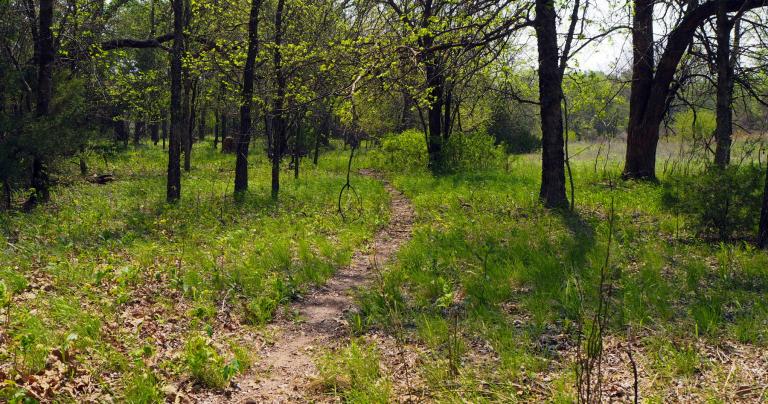
OLYMPUS DIGITAL CAMERA
But do we really know?
Here’s what I know, by any standard of knowing there is:
When I work magic, I get favorable results far more often than I don’t.
The more I honor the Gods the more experiences I have of Them, and the deeper those experiences get.
My life is more meaningful, more connected, less fearful, and happier – though to be honest, not any easier – than before I started this Pagan journey.
That’s enough evidence to convince me that I’m doing something right. So I’m going to keep doing it.
What does it mean to know? Is it to be certain, in the way we can be certain the Pythagorean Theorem is true? Is it to be able to win arguments with atheists and fundamentalists? If that’s the standard then we can know nothing in the realm of religion. But experience shows that certainty is not necessary.
And at this point, I’m convinced it’s all true.
No, I can’t convert atheists or fundamentalists. I don’t need to – that’s not part of my religion.
This isn’t “my truth” – this is “truth as I understand it.” Those aren’t the same things, and that’s important. When people say truth is relative and this is “their” truth, 99% of the time they’re trying to deflect criticism – they’re not being open to new evidence and new experiences. “Truth as I understand it” says “this is where I am right now, but that may change.”
I know magic works. I know the Gods are real. I’m open to someone proving me wrong, but I don’t see how that can happen.
And that’s a very good place to be.
Previous Post
August 16, 2018
The Necessity of Witchcraft
Next Post

August 21, 2018 Finding Your Spiritual Path Later In Life
Browse Our Archives
Select a Category Books Community CUUPS Druidry Foundations and Context Gods and Goddesses Magic Myth Nature Ritual Spiritual Practice Theology Travel Uncategorized Videos
Select a Month October 2026 September 2026 August 2026 July 2026 June 2026 May 2026 April 2026 March 2026 February 2026 January 2026 December 2025 November 2025 October 2025 September 2025 August 2025 July 2025 June 2025 May 2025 April 2025 March 2025 February 2025 January 2025 December 2024 November 2024 October 2024 September 2024 August 2024 July 2024 June 2024 May 2024 April 2024 March 2024 February 2024 January 2024 December 2023 November 2023 October 2023 September 2023 August 2023 July 2023 June 2023 May 2023 April 2023 March 2023 February 2023 January 2023 December 2022 November 2022 October 2022 September 2022 August 2022 July 2022 June 2022 May 2022 April 2022 March 2022 February 2022 January 2022 December 2021 November 2021 October 2021 September 2021 August 2021 July 2021 June 2021 May 2021 April 2021 March 2021 February 2021 January 2021 December 2020 November 2020 October 2020 September 2020 August 2020 July 2020 June 2020 May 2020 April 2020 March 2020 February 2020 January 2020 December 2019 November 2019 October 2019 September 2019 August 2019 July 2019 June 2019 May 2019 April 2019 March 2019 February 2019 January 2019 December 2018 November 2018 October 2018 September 2018 August 2018 July 2018 June 2018 May 2018 April 2018 March 2018 February 2018 January 2018 December 2017 November 2017 October 2017 September 2017 August 2017 July 2017 June 2017 May 2017 April 2017 March 2017 February 2017 January 2017 December 2016 November 2016 October 2016 September 2016 August 2016 July 2016 June 2016 May 2016 April 2016 March 2016 February 2016 January 2016 December 2015 November 2015 October 2015 September 2015 August 2015 July 2015 June 2015 May 2015 April 2015 March 2015 February 2015 January 2015 December 2014 November 2014 October 2014 September 2014 August 2014 July 2014 June 2014 May 2014 April 2014 March 2014 February 2014 January 2014 December 2013 November 2013 October 2013 September 2013 August 2013 July 2013 June 2013 May 2013 April 2013 March 2013 February 2013 January 2013 December 2012 November 2012 October 2012 September 2012 August 2012 July 2012 June 2012 May 2012 April 2012 March 2012 February 2012 January 2012 December 2011 November 2011 October 2011 September 2011 August 2011 July 2011 June 2011 May 2011 April 2011 March 2011 February 2011 January 2011 December 2010 November 2010 October 2010 September 2010 August 2010 July 2010 June 2010 May 2010 April 2010 March 2010 February 2010 January 2010 December 2009 November 2009 October 2009 September 2009 August 2009 July 2009 June 2009 May 2009 April 2009 March 2009 February 2009 January 2009 December 2008 November 2008 October 2008 September 2008 August 2008 July 2008 June 2008
Follow Us!
TAKE THE
Religious Wisdom Quiz
How old was Abraham when Sarah died?
Select your answer to see how you score.
147 years 127 years 137 years 117 years
Related posts from John Beckett




What We Lose When “Ask AI” Becomes A...
TRENDING AT PATHEOS Pagan

Methodist Central Hall and Westminster Abbey
Situated on the same square is Methodist Central Hall and Westminster Abbey. ...

57th Dove Awards Honor Dolly Parton, Crown New...
On gospel music’s biggest night, the 57th annual GMA Dove Awards honored...

The First Eucharistic Controversy: Christ’s Real Presence
For Catholics, the Eucharist is the source and summit of the Christian...

What a Stop Sign Can Teach Us About...
How to Make a Decision When You Can't Hear God Main point:...

Archdiocese Hosts Military Marriage Retreat in Germany
RASTATT, Germany — The transient military lifestyle, with its frequent deployments and...

Nearly every morning, I make the drive to Detroit with my high-school-age...
view all Pagan blogs
Ad-Free & Subscriber Log-In Subscription Support
- About Us
- 2026 Calendar
- Videos
- Podcasts
- Library of World Religions
- Faith In Media Tracker
- Advertise With Us
- Write for Us
- Privacy Policy
- Terms of Service
- Do Not Sell My Data
- Contact Us
- Radiant Digital
- Manage Newsletter Subscriptions
- Unsubscribe From Notifications
- Sitemap
Copyright 2008-2026, Patheos. All rights reserved.
Subscription Support Ad-Free & Subscriber Log-In
Follow Patheos