
BuddhistCatholicContemplativeEvangelicalGeneral ChristianHinduJewishLatter-day SaintMuslimNew VisionsProgressive Christian
Beliefs
- Buddhist
- Catholic
- Contemplative
- Evangelical
- General Christian
- Hindu
- Jewish
- Latter-day Saint
- More Voices
- Muslim
- New Visions
- Pagan
- Progressive Christian
Topics
- Religion News
- Food and Religion
- Sports and Religion
- Religious Art
- Religious Music and Entertainment
- Religious Events
- History and Religion
- Style and Religion
- Politics and Religion
- Women in Religion
- Recreation Outdoors and Religion
- Business Finance and Religion
- Careers Workplace and Religion
- Education and Religion
- Family Parenting and Religion
- Health Fitness and Religion
- Home and Religion
- Relationships and Religion
- Technology and Religion
- Travel and Religion
Columnists
- Buddhist Columnists
- Business Finance and Religion Columnists
- Careers Workplace and Religion Columnists
- Catholic Columnists
- Contemplative Columnists
- Education and Religion Columnists
- Evangelists Columnists
- Family Parenting and Religion Columnists
- General Christian Columnists
- Health Fitness and Religion Columnists
- Hindu Columnists
- History and Religion Columnists
- Home and Religion Columnists
- Jewish Columnists
- More Voices Columnists
- Latter Day Columnists
- Muslim Columnists
- New Visions Columnists
- Nonreligious Columnists
- Pagan Columnists
- Politics and Religion Columnists
- Progressive Columnists
- Recreation Outdoors and Religion Columnists
- Relationships and Religion Columnists
- Religion News Columnists
- Religious Art Columnists
- Religious Events Columnists
- Religious Music and Entertainment Columnists
- Sports and Religion Columnists
- Style and Religion Columnists
- Technology and Religion Columnists
- Travel and Religion Columnists
- Women in Religion Columnists
Resource Library
- 2026 Calendar
- Library of World Religions
- The 100 Most Holy Places on Earth
- Patheos Answers
- Podcasts
- Videos
- Faith Leaders Database
- Anglican Episcopalian
- Bahai
- Baptist
- Buddhism
- Christianity
- Confucianism
- Eastern Orthodoxy
- Hinduism
- Holiness and Pentecostal
- ISKCON
- Islam
- Judaism
- Lutheran
- Methodist
- The Church of Jesus Christ of Latter-day Saints
- New Age
- Paganism
- Presbytarian and Reformed
- Protestantism
- Religion Behind the Scenes
- Roman Catholic
- Scientology
- Shia Islam
- Sikhism
- Sufism
- Sunni Islam
- Taoism
- Zen
- See all religions
Research Tools
 Ad-Free & Subscriber Log-In Subscription Support
Follow Patheos 

- Trending:
- Advent
- |
- Forgiveness
- |
- Thanksgiving
- |
- Election
- |
- Seasonal Holidays
- |
- Marriage

- Home
- Pagan
- The Value of Chaos
The Value of Chaos
Last updated on: May 8, 2018 at 3:00 am by John Beckett
The Value of Chaos 2018-05-04T18:41:55-06:00 John Beckett
Patheos Explore the world's faith through different perspectives on religion and spirituality! Patheos has the views of the prevalent religions and spiritualities of the world.
The Kingdom of Egypt lasted for over 3000 years. Longer than that, if you follow the evidence outlined by Gordon White in Star.Ships (and I do). The daily rituals performed by the temple priests helped maintain Ma’at – both the principles of order and justice, and the Goddess who personifies them.
Occasionally, though, chaos would overtake order and the kingdom would divide, or a foreign power would conquer the land. And when Octavian and his Roman army invaded in 30 BCE, the Kingdom of Egypt was no more. The empire that “teetered on the edge of chaos” for three millennia toppled for good.
Like ancient Egypt, our world is also teetering on the edge of chaos. Also like ancient Egypt, some day it will topple over. Chaos cannot be prevented forever.
I don’t like chaos. I want order and predictability in my life. I don’t like taking risks. Taking risks may make things better, but it may also make things very much worse.
But what I want doesn’t matter much in the grand scheme of things. Chaos is real and it can be delayed, but it cannot be eliminated
And in the right situations, it can be a good thing.
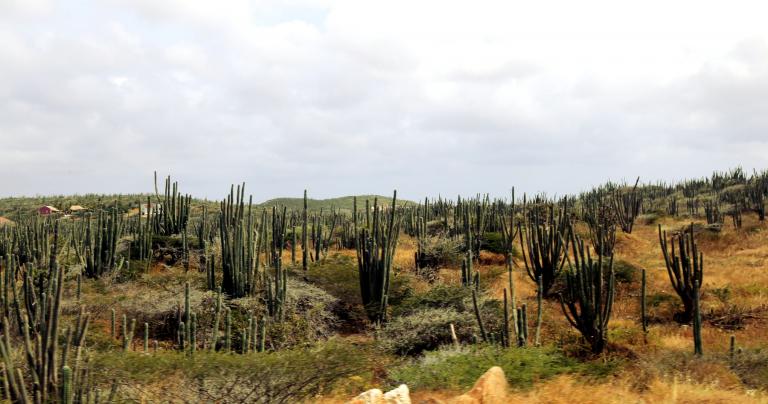
Maintaining order requires constant vigilance
Anyone who’s ever tried to maintain a lawn (surely one of the most ridiculous fashion trends of the Western world) understands that maintaining order requires constant work. Shortfalls in rain have to be made up with irrigation. Wild plants better suited to the local environment try to take over. Some spots don’t get enough sun. And things that grow well grow into places where they aren’t wanted, like concrete cracks and flower beds.
The same is true with human systems of order. Communities, cultures, religions – they require constant maintenance or they’ll fall into disrepair. The more complicated the system is, the more maintenance it requires, and the more likely it is to succumb to chaos.

Order can turn into stagnation
Predictability and reliability are good things. But even good things can stagnate. Eat your favorite foods often enough and they become bland and boring. More relevantly, systems that are designed for one particular time and place can become fossilized and no longer support the people who rely on them.
Fundamentalist Christians and Muslims are trying to cling to an order based in centuries-old Middle Eastern culture that no longer fits our world, if it ever did. The stagnation of Christianity opened the door for the resurgence of Paganism in the 19th and 20th centuries.
Pick your system – religious, political, economic, or anything else. If it’s not mindfully maintained it can become stagnant and ineffective… and dangerous.
Chaos disrupts stagnation
“Disruption” is the current buzzword in the business world. It refers to innovations that render the current order irrelevant and forces it to either adapt or go out of business. Uber is the most commonly cited example – it disrupted a taxi industry that had grown stagnant.
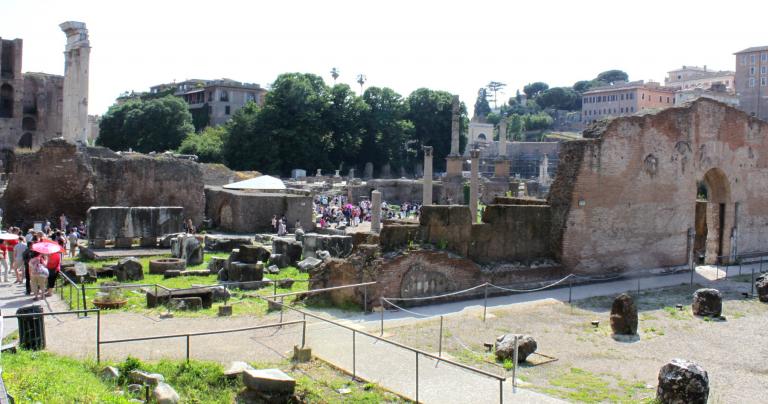
Uber isn’t really chaos, though – it’s a different kind of order. Instead, think of the barbarians sacking Rome, or better yet, the forest reclaiming an abandoned building.
Things that haven’t been valued enough to be constantly maintained are easy pickings for chaos. If you don’t want a manicured lawn badly enough to work on it all the time (or pay someone to do it for you) then crabgrass and vines and clover are going to take it back to its natural state. Governments that don’t tend to the needs of their citizens can find themselves overthrown, either at the ballot box or in the streets.
Chaos can be co-opted
Human-driven chaos rarely goes for long before someone decides they can manipulate it. The American Tea Party (“Taxed Enough Already”) began as a conservative populist movement against perceived government overreach. But it wasn’t long until established politicians – who helped create the very systems the Tea Party was protesting – began co-opting and appropriating the movement for their own re-election campaigns.
Uber may have disrupted a taxi industry that had grown arrogant and deserved to be upended, but it’s turning full time jobs into part time jobs in the hopes of funneling the difference to investors. It may not be sustainable once it burns through its supply of venture capital.
When my anarchist friends advocate chaos on a large scale, I always ask “what are you going to build in place of what you tear down?” Because left to their own devices, the same people (or their children) who co-opted the current system will find a way to co-opt the new system to their own advantage. Meet the new boss, same as the old boss.
Chaos harms those dependent on the current order
For some of us, preferring order over chaos is a matter of taste. For others, though, it’s a matter of life or death.
Want to blow up civilization and have everyone go back to living off the grid? People dependent on insulin and other maintenance drugs will die. Want to do away with Social Security because you don’t like “big government”? Millions of elderly people who currently just get by will spend their final years in poverty. Want to eliminate private insurance and have everyone under a single payer program? A half million people in the health insurance industry (most of whom are not highly paid executives) will be thrown out of work.
Sometimes we’re all better off if chaos disrupts a current system, even if it means that innocent people are displaced. It’s our job to look at the unintended consequences and make sure those who are dependent on the current order have a way forward.

Chaos creates opportunities
If you take nothing else from this post, remember this: chaos creates opportunities. Order builds walls, locks gates, and posts gatekeepers. Mostly these walls keep out things we’d rather not deal with. But they also keep out those who are just looking for a chance.
Whether chaos is economic, political, cultural, or spiritual, it will tear down walls and gates. It will destroy existing centers of power and create a vacuum waiting to be filled. It will create opportunities to make money, to change laws, to influence others, and to work magic.
Opportunities are never evenly distributed – you will have to go to where the opportunity is. They are rarely handed out (except to the children of the rich, and those are not the opportunities created by chaos) – they have to be seized. They do not guarantee success – risk is involved.
Chaos-created opportunities favor the bold, the energetic, and the skilled. All that work and study you put in over the years, not knowing what it was for? This is what it was for.
Didn’t put in the work and study? Start now. Maybe you missed this chaos-driven opportunity, but there will be others. And you have no idea when they’ll be here. Maybe next week, maybe next year, maybe next decade. Be ready to seize them when they appear.
Chaos happens – deal with it
I do what I can to keep chaos at bay, particularly the kind of spiritual chaos I’ve been writing about lately. I do my best to avoid mundane chaos, and to insulate myself from its effects. But the same Egyptian tradition that teaches us to honor and cultivate Ma’at has another saying:
“The desert is always waiting and Set is never sated.”
Chaos is always there, ready to move in if we are less than vigilant… and sometimes, even if we are.
I do not know what form chaos will take in the days to come. I do know that my distaste for it is irrelevant – it’s coming anyway. Be ready.
Keep up your daily spiritual practice – this is your foundation. Pay attention to the world around you – watch out for dangers, and for opportunities. Make friends and allies, both in this world and in the Otherworld. Learn useful skills – including some magical skills. Learn to fly.
Remember that we are the children of those who survived every chaotic disruption in the history of the world. Ice ages, floods, and famines. Wars and plagues. The fall of temples and the invasions of missionaries. They survived every chaotic event known to humanity – or we wouldn’t be here. And we are.
Our ancestors survived and succeeded, in spite of – and in some cases, because of – chaos.
So can we.
Previous Post

May 6, 2018
The Gods Are Like Water
Next Post

May 10, 2018 Conversations Under the Oaks: May Q&A
Browse Our Archives
Select a Category Books Community CUUPS Druidry Foundations and Context Gods and Goddesses Magic Myth Nature Ritual Spiritual Practice Theology Travel Uncategorized Videos
Select a Month November 2026 October 2026 September 2026 August 2026 July 2026 June 2026 May 2026 April 2026 March 2026 February 2026 January 2026 December 2025 November 2025 October 2025 September 2025 August 2025 July 2025 June 2025 May 2025 April 2025 March 2025 February 2025 January 2025 December 2024 November 2024 October 2024 September 2024 August 2024 July 2024 June 2024 May 2024 April 2024 March 2024 February 2024 January 2024 December 2023 November 2023 October 2023 September 2023 August 2023 July 2023 June 2023 May 2023 April 2023 March 2023 February 2023 January 2023 December 2022 November 2022 October 2022 September 2022 August 2022 July 2022 June 2022 May 2022 April 2022 March 2022 February 2022 January 2022 December 2021 November 2021 October 2021 September 2021 August 2021 July 2021 June 2021 May 2021 April 2021 March 2021 February 2021 January 2021 December 2020 November 2020 October 2020 September 2020 August 2020 July 2020 June 2020 May 2020 April 2020 March 2020 February 2020 January 2020 December 2019 November 2019 October 2019 September 2019 August 2019 July 2019 June 2019 May 2019 April 2019 March 2019 February 2019 January 2019 December 2018 November 2018 October 2018 September 2018 August 2018 July 2018 June 2018 May 2018 April 2018 March 2018 February 2018 January 2018 December 2017 November 2017 October 2017 September 2017 August 2017 July 2017 June 2017 May 2017 April 2017 March 2017 February 2017 January 2017 December 2016 November 2016 October 2016 September 2016 August 2016 July 2016 June 2016 May 2016 April 2016 March 2016 February 2016 January 2016 December 2015 November 2015 October 2015 September 2015 August 2015 July 2015 June 2015 May 2015 April 2015 March 2015 February 2015 January 2015 December 2014 November 2014 October 2014 September 2014 August 2014 July 2014 June 2014 May 2014 April 2014 March 2014 February 2014 January 2014 December 2013 November 2013 October 2013 September 2013 August 2013 July 2013 June 2013 May 2013 April 2013 March 2013 February 2013 January 2013 December 2012 November 2012 October 2012 September 2012 August 2012 July 2012 June 2012 May 2012 April 2012 March 2012 February 2012 January 2012 December 2011 November 2011 October 2011 September 2011 August 2011 July 2011 June 2011 May 2011 April 2011 March 2011 February 2011 January 2011 December 2010 November 2010 October 2010 September 2010 August 2010 July 2010 June 2010 May 2010 April 2010 March 2010 February 2010 January 2010 December 2009 November 2009 October 2009 September 2009 August 2009 July 2009 June 2009 May 2009 April 2009 March 2009 February 2009 January 2009 December 2008 November 2008 October 2008 September 2008 August 2008 July 2008 June 2008
Follow Us!
TAKE THE
Religious Wisdom Quiz
Which Psalm is an ancient call to worship: "Make a joyful noise to the Lord"?
Select your answer to see how you score.
Psalm 117 Psalm 90 Psalm 23 Psalm 100
Related posts from John Beckett

Pagans And The Rise Of The Religious Left

Why Halloween Is So Popular – And So...

The Pillar of the Boatmen: the Ancient Monument...

TRENDING AT PATHEOS Pagan

Chapter 5, Sarah: The Quest for Safety in...
Open and Relational Theology & Social Psychology About this series: This series...

When Worry Gets You Nowhere, How Can Faith...
Sometimes, we think that by worrying, we can somehow predict the future....

The Wasp And I: Meditations on Repentance
How can we enter the power and joy of the repentant self...

Reflections on the Evangelical Theological Society
As I mentioned before, this year, for the first time since 2005,...

Demmed if it do and demmed if it...
"First Presidency Announces Salt Lake Temple Rededication Date" Apropos of that,...

Stop Making Thanksgiving Problematic And Just Give Thanks
“What if, today, we were grateful for everything?” –Charlie Brown I...
view all Pagan blogs
Ad-Free & Subscriber Log-In Subscription Support
- About Us
- 2026 Calendar
- Videos
- Podcasts
- Library of World Religions
- Faith In Media Tracker
- Advertise With Us
- Write for Us
- Privacy Policy
- Terms of Service
- Do Not Sell My Data
- Contact Us
- Radiant Digital
- Manage Newsletter Subscriptions
- Unsubscribe From Notifications
- Sitemap
Copyright 2008-2026, Patheos, part of the Radiant Digital network of media brands. All rights reserved.
Subscription Support Ad-Free & Subscriber Log-In
Follow Patheos