
BuddhistCatholicContemplativeEvangelicalGeneral ChristianHinduJewishLatter-day SaintMuslimNew VisionsProgressive Christian
Beliefs
- Buddhist
- Catholic
- Contemplative
- Evangelical
- General Christian
- Hindu
- Jewish
- Latter-day Saint
- More Voices
- Muslim
- New Visions
- Pagan
- Progressive Christian
Topics
- Religion News
- Food and Religion
- Sports and Religion
- Religious Art
- Religious Music and Entertainment
- Religious Events
- History and Religion
- Style and Religion
- Politics and Religion
- Women in Religion
- Recreation Outdoors and Religion
- Business Finance and Religion
- Careers Workplace and Religion
- Education and Religion
- Family Parenting and Religion
- Health Fitness and Religion
- Home and Religion
- Relationships and Religion
- Technology and Religion
- Travel and Religion
Columnists
- Buddhist Columnists
- Business Finance and Religion Columnists
- Careers Workplace and Religion Columnists
- Catholic Columnists
- Contemplative Columnists
- Education and Religion Columnists
- Evangelists Columnists
- Family Parenting and Religion Columnists
- General Christian Columnists
- Health Fitness and Religion Columnists
- Hindu Columnists
- History and Religion Columnists
- Home and Religion Columnists
- Jewish Columnists
- More Voices Columnists
- Latter Day Columnists
- Muslim Columnists
- New Visions Columnists
- Nonreligious Columnists
- Pagan Columnists
- Politics and Religion Columnists
- Progressive Columnists
- Recreation Outdoors and Religion Columnists
- Relationships and Religion Columnists
- Religion News Columnists
- Religious Art Columnists
- Religious Events Columnists
- Religious Music and Entertainment Columnists
- Sports and Religion Columnists
- Style and Religion Columnists
- Technology and Religion Columnists
- Travel and Religion Columnists
- Women in Religion Columnists
Resource Library
- 2026 Calendar
- Library of World Religions
- The 100 Most Holy Places on Earth
- Patheos Answers
- Podcasts
- Videos
- Faith Leaders Database
- Anglican Episcopalian
- Bahai
- Baptist
- Buddhism
- Christianity
- Confucianism
- Eastern Orthodoxy
- Hinduism
- Holiness and Pentecostal
- ISKCON
- Islam
- Judaism
- Lutheran
- Methodist
- The Church of Jesus Christ of Latter-day Saints
- New Age
- Paganism
- Presbytarian and Reformed
- Protestantism
- Religion Behind the Scenes
- Roman Catholic
- Scientology
- Shia Islam
- Sikhism
- Sufism
- Sunni Islam
- Taoism
- Zen
- See all religions
Research Tools
 Ad-Free & Subscriber Log-In Subscription Support
Ad-Free & Subscriber Log-In Subscription Support
Follow Patheos 

- Trending:
- Forgiveness
- |
- Marriage
- |
- Consciousness
- |
- Death Penalty
- |
- Election
- |
- Halloween

- Home
- Pagan
- The Gods Are Like Water
The Gods Are Like Water
Last updated on: May 6, 2018 at 1:06 pm by John Beckett
The Gods Are Like Water 2018-05-06T13:06:32-06:00 John Beckett
Patheos Explore the world's faith through different perspectives on religion and spirituality! Patheos has the views of the prevalent religions and spiritualities of the world.
The nature of the Gods is a mystery. We know some things about Them from the stories of our ancestors. We can learn some things through observation, logic, and reason. We can learn other things through our first-hand experiences of Them. But much remains beyond our knowledge, and most likely, beyond our ability to know.
Some of Their attributes are easy enough to understand: They are mighty, They are virtuous, and if They aren’t immortal They might as well be by human standards. Other things, though, are harder to understand.
I struggle with the concept of the multiplicity of the Gods. That They are many and not one is simple enough. But how do we wrap our minds around the idea that while Athena is an individual being, Athena Parthenos is not the same as Athena Polias, and neither is the same as Our Lady of Nashville? In 2015 I compared this to the differences between the Chattanooga version of John Beckett and the Texas version of me. I find that line of thinking helpful.
But last week I came upon another comparison that I really like.
The Gods are like water
Last week Lonnie Scott of the Weird Web Radio podcast interviewed talismanic jeweler Aidan Wachter. In their conversation, Lonnie said:
Our water supplies that come into our homes comes from a river. I honor that river spirit regularly … I sometimes wonder, when I make my offering of gratitude to the water spirits as they run through my house through cleansing rituals and ending in honoring the water spirits … that water comes from that same river that I’ve already been honoring.
So are the water spirits that make their way to my home aspects of that major river spirit? Or are they their own separate entities?
And my immediate thought was “the Gods are like water.”
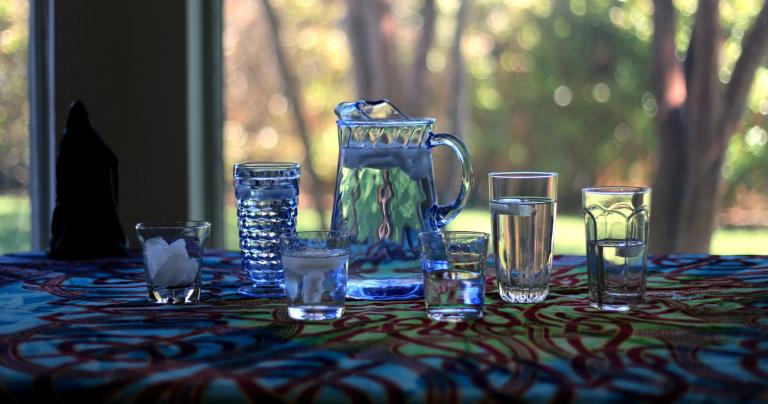
This is a metaphor – a linguistic device that helps us understand something new by drawing attention to its similarities with something known. The Gods are not actually water (though perhaps Sea Gods and River Gods are, to one extent or another) and all properties of water do not apply to the Gods. But some of them do, and I find the comparisons very helpful.
The essence of water never changes
In chemistry we learned that water is a compound. Two hydrogen atoms combine with one oxygen atom to produce one water molecule: H2O. Short of breaking molecules through electrolysis (which is beyond the scope of this metaphor) a water molecule will never not be a water molecule. At sea level it will always freeze at 0⁰C and boil at 100⁰C. Unlike most substances, it expands when it freezes, rather than contracting. And it always does this – its essence never changes.
Likewise, the essence of a God never changes. They are always the personification of Their virtues. They are always committed to Their areas of responsibility. They may learn and change and adapt to changing times and circumstances – as does every other living being – but Their essential character never varies.

The River Liffey – Dublin – 2018
But water as we experience it changes from place to place
Water treatment processes have made local variances far less than they used to be, but I can still taste the difference between the water in North Texas and the water in Chattanooga. I can certainly tell the difference when I take a shower. The water here is harder – it has more calcium in it. And there are places in the world where Americans are warned not to drink the water. Locals are used to the impurities in their tap water – we aren’t. And let’s not forget – there are places in this country where the water isn’t safe for anyone to drink.
Our experiences of the Gods change from place to place. Pouring offerings to the Morrigan in Ireland is different from offering to Her in my back yard. This goes beyond the mediating effects of place – the “stained glass effect” where different people see the same light in different ways. Just as different elements in the water beyond H2O molecules give it a different taste, so do the different experiences of Gods beyond Their essential virtues give Them different characteristics.
Water is (almost) infinitely divisible
According to people who remember the basic chemistry I’ve long forgotten, there are 3.34×1025 water molecules in a liter. Which means while you could drink the whole liter yourself, if you had a dropper small enough you could spend billions of years dividing that one liter into smaller portions. Each portion would still be the same water.
Likewise, there can be Zeus Olympios and Zeus Chthonios and Zeus Aetnaeus and there is still enough Zeus left to create even more versions and variants. Because unlike water (reaching the limits of our metaphor) the multiplicities do not diminish the original (assuming there is an “original” version or variant of a God, which I’m not sure there is).

Bushkill Falls – Pennsylvania – 2015
But once water is divided, it begins to differentiate
Open a bottle of water (a reusable bottle you filled yourself, of course) and pour it into two glasses. Each glass is identical. Now, put one in the refrigerator and leave one sitting out. Immediately they begin to differentiate, first by temperature and later by the microscopic substances that fall into them. Take one of them outside and it begins to change even more. While the essence of water remains H2O, tap water is different from pond water is different from ocean water.
For me this is the most helpful aspect of this metaphor. When a God is worshipped or otherwise experienced in a place or by a particular group of people, that interaction affects the God just as it affects the people. Those who encounter that God in that place or through that tradition will have a different experience – perhaps slightly different, perhaps very different – from those who do so otherwise.
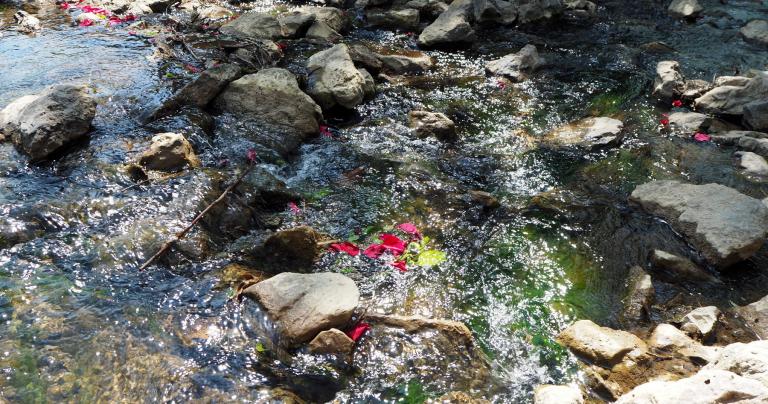
Waters are easily combined
Each year many Unitarian Universalist congregations hold a Water Communion service. People bring waters from their travels, from sites and events sacred to them, or just from their homes. The many waters are combined in a large bowl and they become one water.
The idea of different Gods combining into one has always troubled me – it sounds too much like soft polytheism. Yet syncretism exists. Serapis is a syncretism of Osiris and Apis. There is ample evidence Serapis was “created” by Ptolemy I in an effort to unify Greeks and Egyptians and to legitimize his rulership. But however Serapis came to be, He was actively worshipped for 700 years – He was and is a God.
Syncretism is real – water helps us understand it.
Water can exist in multiple states
Water can be liquid, or solid (ice), or gas (steam). Its properties and especially the ways in which we interact with it differ based on its state, but it is still water… and it is still the particular differentiation of water it was when it was liquid.
Likewise, we can interact with a God in an ecstatic encounter, or in a natural phenomenon, or in a human-made object. All of them are the God in question. And I suspect this particular form of the metaphor can be stretched even further than my imagination is carrying it right now.
Water has no source
A well-known Pagan chant lists the ocean as a metaphor for the source from which we emerge and to which we shall return. Yet the water cycle we learn in elementary school tells us that while the ocean is the largest repository of water, it is simply one stage in a greater cycle. It is no more correct (or incorrect) to call the ocean “the source” than clouds, lakes, ground water, or for that matter, the faucet in your house. They are all places where water is.
Where do the Gods come from? From the natural features They’re associated with? From the people who first worshipped Them? From the stories that teach Their values and virtues? This question is as unanswerable as where water comes from.
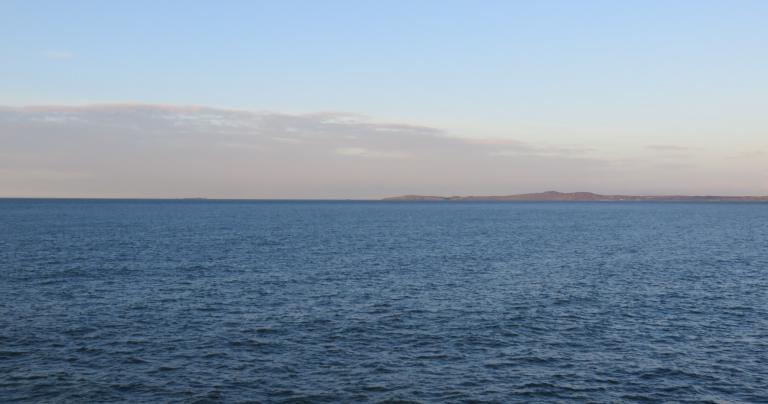
The Irish Sea – 2018
The limits of the metaphor
Like all metaphors, “the Gods are like water” has limits – it doesn’t completely answer the question of what They are. It doesn’t address the Gods’ ability to either be multiple places at once or to move so fast it seems that way to us. It doesn’t address what happens when you get below the molecular level. It hints at the extent of Their power (see the Grand Canyon) but ignores the many ways in which that power can manifest. We’re Pagans and polytheists, not biblical literalists – the ways in which the Gods are not like water does not invalidate the usefulness of these comparisons.
The true nature of the Gods remains a mystery, and I do not think that will ever change. But through experience, reason, and study – and occasionally, through metaphors – we can better know these mighty beings who bring meaning and depth to our lives.
Previous Post

May 3, 2018
Teetering on the Edge of Chaos
Next Post

May 8, 2018 The Value of Chaos
Browse Our Archives
Select a Category Books Community CUUPS Druidry Foundations and Context Gods and Goddesses Magic Myth Nature Ritual Spiritual Practice Theology Travel Uncategorized Videos
Select a Month October 2026 September 2026 August 2026 July 2026 June 2026 May 2026 April 2026 March 2026 February 2026 January 2026 December 2025 November 2025 October 2025 September 2025 August 2025 July 2025 June 2025 May 2025 April 2025 March 2025 February 2025 January 2025 December 2024 November 2024 October 2024 September 2024 August 2024 July 2024 June 2024 May 2024 April 2024 March 2024 February 2024 January 2024 December 2023 November 2023 October 2023 September 2023 August 2023 July 2023 June 2023 May 2023 April 2023 March 2023 February 2023 January 2023 December 2022 November 2022 October 2022 September 2022 August 2022 July 2022 June 2022 May 2022 April 2022 March 2022 February 2022 January 2022 December 2021 November 2021 October 2021 September 2021 August 2021 July 2021 June 2021 May 2021 April 2021 March 2021 February 2021 January 2021 December 2020 November 2020 October 2020 September 2020 August 2020 July 2020 June 2020 May 2020 April 2020 March 2020 February 2020 January 2020 December 2019 November 2019 October 2019 September 2019 August 2019 July 2019 June 2019 May 2019 April 2019 March 2019 February 2019 January 2019 December 2018 November 2018 October 2018 September 2018 August 2018 July 2018 June 2018 May 2018 April 2018 March 2018 February 2018 January 2018 December 2017 November 2017 October 2017 September 2017 August 2017 July 2017 June 2017 May 2017 April 2017 March 2017 February 2017 January 2017 December 2016 November 2016 October 2016 September 2016 August 2016 July 2016 June 2016 May 2016 April 2016 March 2016 February 2016 January 2016 December 2015 November 2015 October 2015 September 2015 August 2015 July 2015 June 2015 May 2015 April 2015 March 2015 February 2015 January 2015 December 2014 November 2014 October 2014 September 2014 August 2014 July 2014 June 2014 May 2014 April 2014 March 2014 February 2014 January 2014 December 2013 November 2013 October 2013 September 2013 August 2013 July 2013 June 2013 May 2013 April 2013 March 2013 February 2013 January 2013 December 2012 November 2012 October 2012 September 2012 August 2012 July 2012 June 2012 May 2012 April 2012 March 2012 February 2012 January 2012 December 2011 November 2011 October 2011 September 2011 August 2011 July 2011 June 2011 May 2011 April 2011 March 2011 February 2011 January 2011 December 2010 November 2010 October 2010 September 2010 August 2010 July 2010 June 2010 May 2010 April 2010 March 2010 February 2010 January 2010 December 2009 November 2009 October 2009 September 2009 August 2009 July 2009 June 2009 May 2009 April 2009 March 2009 February 2009 January 2009 December 2008 November 2008 October 2008 September 2008 August 2008 July 2008 June 2008
Follow Us!
TAKE THE
Religious Wisdom Quiz
What does "Tabernacle" mean?
Select your answer to see how you score.
Sacrifice Holy altar Cupboard Dwelling place
Related posts from John Beckett




What We Lose When “Ask AI” Becomes A...
TRENDING AT PATHEOS Pagan

When Halloween Unmasks Married Hearts
Written by Dr. David K. Ewen from Eternal Truth Bible College Behind...

Aristotle. He’s been called the father of logic, the father of the...

Methodist Central Hall and Westminster Abbey
Situated on the same square is Methodist Central Hall and Westminster Abbey. ...

57th Dove Awards Honor Dolly Parton, Crown New...
On gospel music’s biggest night, the 57th annual GMA Dove Awards honored...

The First Eucharistic Controversy: Christ’s Real Presence
For Catholics, the Eucharist is the source and summit of the Christian...

What a Stop Sign Can Teach Us About...
How to Make a Decision When You Can't Hear God Main point:...
view all Pagan blogs
Ad-Free & Subscriber Log-In Subscription Support
- About Us
- 2026 Calendar
- Videos
- Podcasts
- Library of World Religions
- Faith In Media Tracker
- Advertise With Us
- Write for Us
- Privacy Policy
- Terms of Service
- Do Not Sell My Data
- Contact Us
- Radiant Digital
- Manage Newsletter Subscriptions
- Unsubscribe From Notifications
- Sitemap
Copyright 2008-2026, Patheos. All rights reserved.
Subscription Support Ad-Free & Subscriber Log-In
Follow Patheos