
BuddhistCatholicContemplativeEvangelicalGeneral ChristianHinduJewishLatter-day SaintMuslimNew VisionsProgressive Christian
Beliefs
- Buddhist
- Catholic
- Contemplative
- Evangelical
- General Christian
- Hindu
- Jewish
- Latter-day Saint
- More Voices
- Muslim
- New Visions
- Pagan
- Progressive Christian
Topics
- Religion News
- Food and Religion
- Sports and Religion
- Religious Art
- Religious Music and Entertainment
- Religious Events
- History and Religion
- Style and Religion
- Politics and Religion
- Women in Religion
- Recreation Outdoors and Religion
- Business Finance and Religion
- Careers Workplace and Religion
- Education and Religion
- Family Parenting and Religion
- Health Fitness and Religion
- Home and Religion
- Relationships and Religion
- Technology and Religion
- Travel and Religion
Columnists
- Buddhist Columnists
- Business Finance and Religion Columnists
- Careers Workplace and Religion Columnists
- Catholic Columnists
- Contemplative Columnists
- Education and Religion Columnists
- Evangelists Columnists
- Family Parenting and Religion Columnists
- General Christian Columnists
- Health Fitness and Religion Columnists
- Hindu Columnists
- History and Religion Columnists
- Home and Religion Columnists
- Jewish Columnists
- More Voices Columnists
- Latter Day Columnists
- Muslim Columnists
- New Visions Columnists
- Nonreligious Columnists
- Pagan Columnists
- Politics and Religion Columnists
- Progressive Columnists
- Recreation Outdoors and Religion Columnists
- Relationships and Religion Columnists
- Religion News Columnists
- Religious Art Columnists
- Religious Events Columnists
- Religious Music and Entertainment Columnists
- Sports and Religion Columnists
- Style and Religion Columnists
- Technology and Religion Columnists
- Travel and Religion Columnists
- Women in Religion Columnists
Resource Library
- 2026 Calendar
- Library of World Religions
- The 100 Most Holy Places on Earth
- Patheos Answers
- Podcasts
- Videos
- Faith Leaders Database
- Anglican Episcopalian
- Bahai
- Baptist
- Buddhism
- Christianity
- Confucianism
- Eastern Orthodoxy
- Hinduism
- Holiness and Pentecostal
- ISKCON
- Islam
- Judaism
- Lutheran
- Methodist
- The Church of Jesus Christ of Latter-day Saints
- New Age
- Paganism
- Presbytarian and Reformed
- Protestantism
- Religion Behind the Scenes
- Roman Catholic
- Scientology
- Shia Islam
- Sikhism
- Sufism
- Sunni Islam
- Taoism
- Zen
- See all religions
Research Tools
 Ad-Free & Subscriber Log-In Subscription Support
Ad-Free & Subscriber Log-In Subscription Support
Follow Patheos 

- Trending:
- Forgiveness
- |
- Marriage
- |
- Consciousness
- |
- Death Penalty
- |
- Election
- |
- Halloween

- Home
- Pagan
- Conversations Under the Oaks: May Q&A
Conversations Under the Oaks: May Q&A
Last updated on: May 10, 2018 at 3:00 am by John Beckett
Conversations Under the Oaks: May Q&A 2018-05-08T19:37:54-06:00 John Beckett
Patheos Explore the world's faith through different perspectives on religion and spirituality! Patheos has the views of the prevalent religions and spiritualities of the world.
Welcome to the fifth Conversations Under the Oaks, a monthly Q&A feature. This is your chance to ask me anything.
We have lots of questions this month. This post is pushing 4000 words, so I’ve broken it up into two pages for faster loading. That’s important to Google rankings, which is important for people being able to find this post.
Questions have been edited for brevity – names are used where I have explicit permission.

Former Patheos Pagan blogger Aine Llewellyn asks “How do we handle, in a positive fashion, when a polytheist has a theological disagreement with another polytheist? To specify, I am thinking of when someone doesn’t consider the Gods I worship to be Gods. Do we just live and let live? Do we hash it out?”
It all depends on context and forum.
Any religion that cannot be questioned is a weak religion, whether that’s “these are our sacred texts and questioning them is blasphemy!” or “this is my truth and you can’t criticize it.” If someone disagrees with me thoughtfully and politely, I’ll do my best to respond thoughtfully and politely. Challenge and response is how we advance our religious thinking, both individually and as a movement.
If at the end of the day we still don’t agree, then at least we understand why we don’t agree, and that’s OK. Contemporary polytheism is a movement, not an institution – we don’t have to agree on everything.
Now, if someone is being rude or dismissive, I’m not likely to pay any attention to them. If they’re factually wrong (i.e. – claiming I said something I didn’t say or otherwise mischaracterizing my position) I may rebut that, just to have the record clear. But I have too much work to do to spend time responding to trolls and sea lions.
I’ve seen a lot on what to avoid when looking for a group or teaching circle. I’d love to see your thoughts on what to look for. How does one tell if a group is healthy?
The most important thing to look for is whether they do what they say they’re going to do. Do their events happen as scheduled? Do their members show up to their events? How often they hold events isn’t nearly as important as whether or not the events they plan happen as scheduled. Emergencies happen, but if “emergencies” happen on a regular basis, it’s probably not a healthy group. Healthy groups have their acts together.
Do the members get along? It’s not reasonable to expect everyone to be best friends, but if they seem to like each other – and especially if they can disagree without getting upset – it’s probably a good group.
Is there substance to their work? Different groups have levels of knowledge and expertise, but does what they say match up with what you’ve learned from reliable sources? Do they admit when they don’t know something? Do they spend their time doing Pagan stuff or do they waste time talking about how bad Christians are?
And do their areas of interest line up with yours? If you’re looking for Nature spirituality, the best Thelemic group in the world isn’t going work for you. Early on my Pagan journey I walked away from a very competent group of Kabbalists because I realized that Kabbala wasn’t my calling.
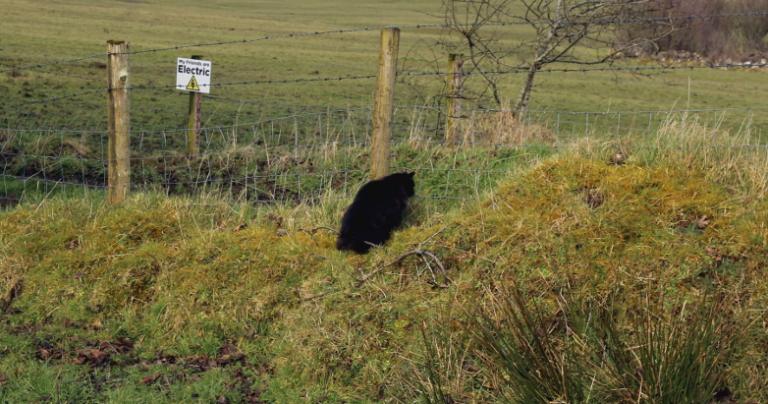
How can you be positively visible when you live in a smallish community that is overwhelmingly Christian. Trying to engage with my community in a positive way, while staying true to my faith, is proving problematic.
Small communities can be difficult for outsiders of any description. The only way around that is to not be an outsider, and that can be difficult if churches are the center of social activities. Can you get involved in civic groups? Sports groups, either for adults or for kids? Charitable organizations? Anything so people can get to know you as a person, rather than as “the Pagan” or “the Witch.”
How visible do you need to be? I don’t hide who and what I am at my paying job, but I don’t advertise it either. I work for a large corporation – loud expressions of religion (any religion) are discouraged. That makes for a more tolerant work environment.
I encourage you to think hard about what your religion requires you to do. Remember that being a Pagan and doing Pagan things is more important than advertising for Paganism. Be true to your Gods, your path, and most of all, to yourself. But don’t feel like you have to change people’s hearts and minds.
In my experience, most non-fundamentalists can understand things like ancestor veneration and Nature spirituality. Magic is a useful skill, but you never know who’s going to show up on your door asking for favors. But polytheism is hard for people to accept. I covered some of this in a Letter To My Christian Friends. Be careful and deliberate with what you make visible.
I’m sure some readers are saying “screw them – be Pagan and make them deal with it.” Some people have the temperament for conflict. I don’t. I’m going to do my best to get along, particularly with matters of style rather than substance. I can deal with being the outsider a lot easier than I can deal with confrontation.
But at the end of the day, we have to be true to our Gods, our ancestors, and our traditions, even if that’s difficult and unpleasant. The cost of conformity is your soul.
Can there be people who are polytheist and not Pagan? And is it true that every Pagan is a pantheist?
Polytheism has a simple definition: the religious regard for many real Gods. Paganism is a movement, and movements don’t have definitions. They have centers. You’re not in or out of a movement – you’re closer to or further away from the center(s).
I know several polytheists who say “my tradition doesn’t come out of the Pagan movement – don’t call me a Pagan.” I don’t see the need to make that distinction, but I support the right of self-identification, so I won’t call them Pagans. On the other hand, the African Traditional Religions are polytheist, but they are from an entirely different line than contemporary Western Paganism. It would be inaccurate to lump them together.
But my own polytheism is Pagan.
Pantheism is a different religious idea. It’s usually defined as the belief that “God is all and all is God” (though that uses monotheist language to express a pantheist idea). Many Pagans are pantheists, and the pantheist idea that “everything is connected” and “all is one” are popular with many Pagans.
But not with all. There was a time when I considered myself a pantheist, in addition to a Pagan and a polytheist. Now, if I am a pantheist, it’s at a level so high it has little day to day impact on my world. My focus is on the many Gods.
Mainly, remember that any time you start by saying “all Pagans…” whatever comes next is probably going to be wrong.

I would like to hear a Pagan author talk about the trauma that past faith can have on those who convert to Paganism, how that influences their perceptions of Paganism and religion in general, and what if anything can we as Pagans in leadership positions do to help alleviate that pain.
I’ve written about this at length – it’s one of the major themes of The Path of Paganism. But my writing has always been directed at individuals who want to recover and move on. How to help others do this is a related but different question.
Most people who leave a religion do so because something drives them out. Religious ties tend to be strong, even if they’re more cultural than spiritual. It takes something to break them, and that something is often traumatic. Sometimes the trauma is recognized and sometimes it’s hidden, but either way it’s usually deep.
We who are in Pagan leadership positions are priests, magicians, ritualists, and such. We are not psychologists. If someone needs mental health care, refer to them to a mental health professional.
The first and most important thing we can do is to provide a deep, viable, Pagan alternative to whatever religion they left. We can’t offer the physical resources of a large, well-funded church, but we can offer something more important – a strong Pagan religious experience. In my experience – both with others and with myself – bad religion can’t be washed away. It has to be crowded out. Good experiences replace the bad experiences. Show people something deep, meaningful, magical, and real. And don’t just show it to them – let them touch it for themselves.
Help them make a clean break with their old religion. Don’t use Christian terms for Pagan concepts. Don’t use Christian myths and metaphors. Our Pagan traditions have our own stories and traditions. Draw on them. Don’t focus on the bad things other religions are doing – focus on the good things Pagans are doing.
I can’t do anything with those who are so damaged they want nothing to do with organized religion. I can love and support them as friends, and I can show that there’s a good, healthy alternative, but if they’re not willing to get involved, I can’t make them. At the same time, I’m not going to let them stop me from building the strong Pagan groups and traditions I’m called to build.
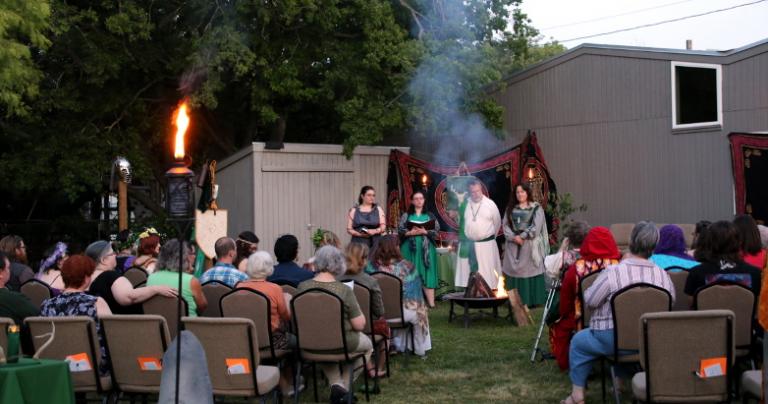
Denton CUUPS Beltane 2017
If one offends a God or spirit (e.g. one of the fair folk), what are your thoughts on what can be done to make amends and re-establish peace between the offender and spirit?
This is a good question that has no easy answers and no universal answers. What works fine in some cases will make things worse in others. Every situation must be approached mindfully and carefully, with negotiations, consultations, and divinations. Oftentimes what is done cannot be undone and the consequences cannot be avoided.
But with that monster truck sized caveat, here are some general suggestions.
In my experience, Gods tend to be rather lenient with beginners. They understand that we don’t grow up in a polytheist environment where proper religious behavior is both taught and modeled. Mistakes made from ignorance are usually not a big deal – at least the first time. As you learn and grow, more is expected and negligence is tolerated less and less. And regardless of how long you’ve been doing this, offenses made from arrogance and entitlement are almost never overlooked.
The Fair Folk, on the other hand, tend to stick to the letter of the law regardless of age, experience, knowledge, or extenuating circumstances. Offend them and they will settle the score.
If you realize you offended a God or spirit, first do some research. “I’m sorry, I won’t do it again” may be a good start, but it is rarely all that is needed. Whatever you did wrong, make it right.
Figure out exactly what you did wrong and why it’s wrong. Remember the Gods are individuals: what Dionysus finds amusing, Apollo may find offensive, and vice versa. See if there are any references in the relevant lore – what did our ancestors do in similar situations?
You may need divination to get to the bottom of things. If you can find a priest of the deity in question, they can likely help. They probably can’t make it go away, but they can help you figure out how to make it right. That likely will mean sacrifices, in any and all senses of the term.
Don’t look to Christianity for guidance. Confession isn’t enough. Begging for forgiveness isn’t likely to accomplish much. Figure out what you did wrong, figure out what you need to do to make it right, then go do it.
That approach works pretty well with humans too.
Previous Post

May 8, 2018
The Value of Chaos
Next Post

May 13, 2018 Animism, Personhood, and Killing to Eat
Browse Our Archives
Select a Category Books Community CUUPS Druidry Foundations and Context Gods and Goddesses Magic Myth Nature Ritual Spiritual Practice Theology Travel Uncategorized Videos
Select a Month October 2026 September 2026 August 2026 July 2026 June 2026 May 2026 April 2026 March 2026 February 2026 January 2026 December 2025 November 2025 October 2025 September 2025 August 2025 July 2025 June 2025 May 2025 April 2025 March 2025 February 2025 January 2025 December 2024 November 2024 October 2024 September 2024 August 2024 July 2024 June 2024 May 2024 April 2024 March 2024 February 2024 January 2024 December 2023 November 2023 October 2023 September 2023 August 2023 July 2023 June 2023 May 2023 April 2023 March 2023 February 2023 January 2023 December 2022 November 2022 October 2022 September 2022 August 2022 July 2022 June 2022 May 2022 April 2022 March 2022 February 2022 January 2022 December 2021 November 2021 October 2021 September 2021 August 2021 July 2021 June 2021 May 2021 April 2021 March 2021 February 2021 January 2021 December 2020 November 2020 October 2020 September 2020 August 2020 July 2020 June 2020 May 2020 April 2020 March 2020 February 2020 January 2020 December 2019 November 2019 October 2019 September 2019 August 2019 July 2019 June 2019 May 2019 April 2019 March 2019 February 2019 January 2019 December 2018 November 2018 October 2018 September 2018 August 2018 July 2018 June 2018 May 2018 April 2018 March 2018 February 2018 January 2018 December 2017 November 2017 October 2017 September 2017 August 2017 July 2017 June 2017 May 2017 April 2017 March 2017 February 2017 January 2017 December 2016 November 2016 October 2016 September 2016 August 2016 July 2016 June 2016 May 2016 April 2016 March 2016 February 2016 January 2016 December 2015 November 2015 October 2015 September 2015 August 2015 July 2015 June 2015 May 2015 April 2015 March 2015 February 2015 January 2015 December 2014 November 2014 October 2014 September 2014 August 2014 July 2014 June 2014 May 2014 April 2014 March 2014 February 2014 January 2014 December 2013 November 2013 October 2013 September 2013 August 2013 July 2013 June 2013 May 2013 April 2013 March 2013 February 2013 January 2013 December 2012 November 2012 October 2012 September 2012 August 2012 July 2012 June 2012 May 2012 April 2012 March 2012 February 2012 January 2012 December 2011 November 2011 October 2011 September 2011 August 2011 July 2011 June 2011 May 2011 April 2011 March 2011 February 2011 January 2011 December 2010 November 2010 October 2010 September 2010 August 2010 July 2010 June 2010 May 2010 April 2010 March 2010 February 2010 January 2010 December 2009 November 2009 October 2009 September 2009 August 2009 July 2009 June 2009 May 2009 April 2009 March 2009 February 2009 January 2009 December 2008 November 2008 October 2008 September 2008 August 2008 July 2008 June 2008
Follow Us!
TAKE THE
Religious Wisdom Quiz
How many years between David's reign and the Babylonian exile?
Select your answer to see how you score.
500 years 450 years 400 years 300 years
Related posts from John Beckett




What We Lose When “Ask AI” Becomes A...
TRENDING AT PATHEOS Pagan

The Sermon on the Mount, Part I: Matthew...
The Sermon on the Mount, Part I (Matthew 4:12-5:12) St. Matthew moves...

What's up from Crossway: Reviewing some of their latest A few weeks...

Janie Learns the Way of the Cross: A...
Teaching children about Jesus' Passion can be challenging. Many parents and educators...

Looking For Good Catholic Writing - October 2026
He alone extends the heavens, and he walks upon the waves of...

In "Irreplaceable," our book on vocation and technology, Trevor Sutton and I...

I was strolling through the top floor of the brand new Parthenon...
view all Pagan blogs
Ad-Free & Subscriber Log-In Subscription Support
- About Us
- 2026 Calendar
- Videos
- Podcasts
- Library of World Religions
- Faith In Media Tracker
- Advertise With Us
- Write for Us
- Privacy Policy
- Terms of Service
- Do Not Sell My Data
- Contact Us
- Radiant Digital
- Manage Newsletter Subscriptions
- Unsubscribe From Notifications
- Sitemap
Copyright 2008-2026, Patheos. All rights reserved.
Subscription Support Ad-Free & Subscriber Log-In
Follow Patheos