
BuddhistCatholicContemplativeEvangelicalGeneral ChristianHinduJewishLatter-day SaintMuslimNew VisionsProgressive Christian
Beliefs
- Buddhist
- Catholic
- Contemplative
- Evangelical
- General Christian
- Hindu
- Jewish
- Latter-day Saint
- More Voices
- Muslim
- New Visions
- Pagan
- Progressive Christian
Topics
- Religion News
- Food and Religion
- Sports and Religion
- Religious Art
- Religious Music and Entertainment
- Religious Events
- History and Religion
- Style and Religion
- Politics and Religion
- Women in Religion
- Recreation Outdoors and Religion
- Business Finance and Religion
- Careers Workplace and Religion
- Education and Religion
- Family Parenting and Religion
- Health Fitness and Religion
- Home and Religion
- Relationships and Religion
- Technology and Religion
- Travel and Religion
Columnists
- Buddhist Columnists
- Business Finance and Religion Columnists
- Careers Workplace and Religion Columnists
- Catholic Columnists
- Contemplative Columnists
- Education and Religion Columnists
- Evangelists Columnists
- Family Parenting and Religion Columnists
- General Christian Columnists
- Health Fitness and Religion Columnists
- Hindu Columnists
- History and Religion Columnists
- Home and Religion Columnists
- Jewish Columnists
- More Voices Columnists
- Latter Day Columnists
- Muslim Columnists
- New Visions Columnists
- Nonreligious Columnists
- Pagan Columnists
- Politics and Religion Columnists
- Progressive Columnists
- Recreation Outdoors and Religion Columnists
- Relationships and Religion Columnists
- Religion News Columnists
- Religious Art Columnists
- Religious Events Columnists
- Religious Music and Entertainment Columnists
- Sports and Religion Columnists
- Style and Religion Columnists
- Technology and Religion Columnists
- Travel and Religion Columnists
- Women in Religion Columnists
Resource Library
- 2026 Calendar
- Library of World Religions
- The 100 Most Holy Places on Earth
- Patheos Answers
- Podcasts
- Videos
- Faith Leaders Database
- Anglican Episcopalian
- Bahai
- Baptist
- Buddhism
- Christianity
- Confucianism
- Eastern Orthodoxy
- Hinduism
- Holiness and Pentecostal
- ISKCON
- Islam
- Judaism
- Lutheran
- Methodist
- The Church of Jesus Christ of Latter-day Saints
- New Age
- Paganism
- Presbytarian and Reformed
- Protestantism
- Religion Behind the Scenes
- Roman Catholic
- Scientology
- Shia Islam
- Sikhism
- Sufism
- Sunni Islam
- Taoism
- Zen
- See all religions
Research Tools
 Ad-Free & Subscriber Log-In Subscription Support
Ad-Free & Subscriber Log-In Subscription Support
Follow Patheos 

- Trending:
- Forgiveness
- |
- Marriage
- |
- Consciousness
- |
- Death Penalty
- |
- Election
- |
- Halloween

- Home
- Pagan
- Animism, Personhood, and Killing to Eat
Animism, Personhood, and Killing to Eat
Last updated on: May 13, 2018 at 3:00 am by John Beckett
Animism, Personhood, and Killing to Eat 2018-05-11T18:20:21-06:00 John Beckett
Patheos Explore the world's faith through different perspectives on religion and spirituality! Patheos has the views of the prevalent religions and spiritualities of the world.
A couple weeks ago the topic of animal sacrifice came up again on the Pagan internet. I reposted Sacrifice and the Fear of Real Gods from 2014. It says all I have to say on the matter. Mainly, it points out that the vast majority of opposition to animal sacrifice doesn’t come from vegetarians and vegans. It comes from omnivores expressing an unreflective gut-level “disgust and revulsion and superiority” over a practice that comes from cultures other than their own.
A few days later, I posted “They’re Confused” – Why Common Sense Is Often Wrong where I argued for personhood for chimpanzees. Someone on Facebook said (in so many words) “you said it was OK to kill animals and now you’re saying they’re persons – which is it?”
That comment and the thinking – or the lack thereof – behind it demonstrates just how thoroughly the philosophy of materialism and the doctrines of Christianity are imbedded in our culture. It sees personhood as “human,” sometimes accepting it for species we like but denying for the ones we don’t. It ignores the animistic principle that all living things (or at least, most living things) are not things but persons, with their own sovereignty and agency and with an inherent value that does not depend on their usefulness to humans.
And it ignores the fact that in order to live, we must consume the bodies of persons who were very recently alive.

Our needs as animals
For the record, animal sacrifice is not part of my religious practice. I’ve never been asked to do it. Given the deities I follow, I think it’s unlikely I will. If I ever am I’ll need a lot of training. It’s been many years since I was butchering animals and cleaning game on my father’s small farm. I don’t think I could do it right, and if you can’t do it right you shouldn’t even consider doing it.
My purpose here is not to promote or even to defend animal sacrifice. My purpose is to encourage people to think about our needs as animals. Think about how we’re related to every living thing on Earth and consider what that means in light of the fact that we must eat other living things, or die.
Animism: persons include more than animals
I consider chimps to be persons not because they’re our closest relatives but because they’re living beings that exercise agency. Dogs and cats are more distant from us biologically, but we treat our dogs and cats like persons. More importantly, we can see the personhood in the way they do what they want to do, even when we wish they’d do something else.
There is also personhood in natural phenomena. We give human names to storms, and although weather services do a much better job of predicting storms than they used to, ultimately they don’t know where the storms are going. Storms are as unpredictable as humans. Mountains don’t move, but anyone who has ever hiked or climbed in the mountains can attest that they do their own things for their own reasons – reasons that often put humans in jeopardy.
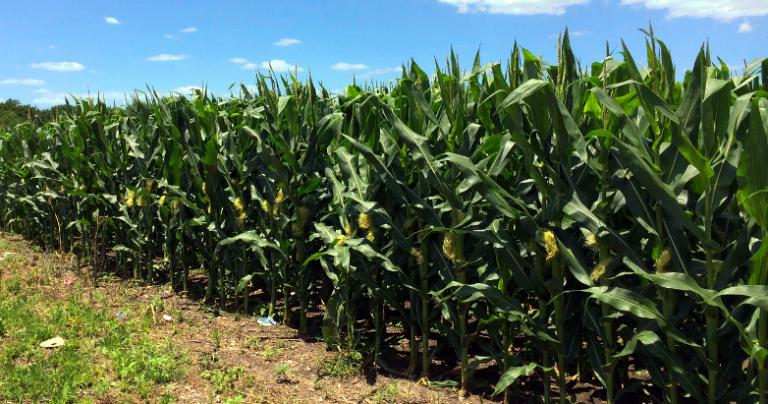
Plants are persons too. They’re alive. They grow where they want to grow. They spread their seeds around and reproduce. They do plant things for plant reasons. And they’re our relatives – we share about half our DNA with plants. Some people like to say “that’s just because that’s how DNA works.” But that only emphasizes the point that plants and animals share a common ancestor deep in our evolutionary past.
Which means that whether we are eating plants or animals or both, we are eating other persons.
Life feeds on life
This is a hard truth of Nature: we must kill to eat. And so does every other animal on the planet. Whether we eat animal persons or plant persons, either we eat something that was very recently alive, or we die. I suppose you could subsist on nothing but fruit and milk (though vegans claim dairy product are immoral – they’re not wrong, though that has more to do with methods than source), but I know of no one who actually does that. Plants feed on sunlight, but they require nutrients in the soil that come from the decaying bodies of other recently-living plants and animals.
Life feeds on life. Modern fiction about guilt-ridden vampires has a certain truth to it.
Anthropologist Walter Burkert called our species homo necans – man the killer. His theory was that our guilt was easy enough to deny when we were mostly gatherers and scavengers, like our primate cousins. But when we became hunters – much less when we began animal husbandry – the guilt over killing to eat became too strong to ignore. He proposed that early religious rituals were designed to purify ourselves from this guilt.
Christianity has another idea: Imago Dei, the idea that humans alone are “made in the image of God.” So we can do whatever we want to other creatures and it’s OK, because we’re special. How convenient. Except following that same logic, their God can do whatever he wants with lesser creatures like us. That line of thinking is one of the reasons I’m no longer a Christian and never was a Calvinist.
Where do we draw the line? How do we draw the line?
Pagan or Christian, animist or materialist, we still have to figure out where to draw the line. Which species will we eat and which ones do we decide are “too close”?
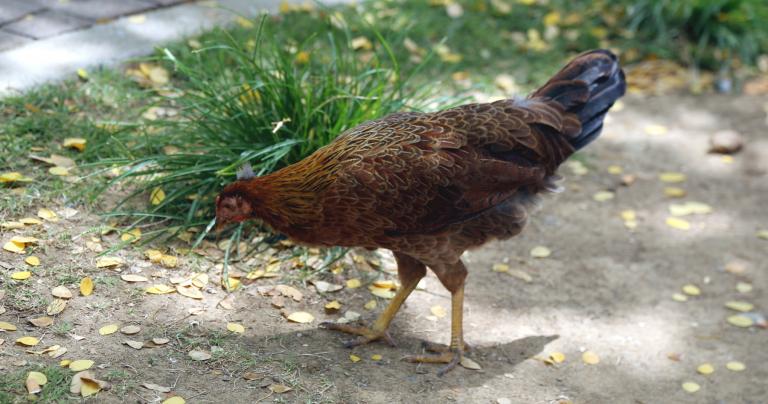
Different people and different cultures draw the line in different places. I’m not going to eat cats or dogs or monkeys – it wouldn’t feel right. But cows and chickens and pigs? Definitely. Some people won’t eat mammals but will eat fish and birds. Others won’t eat any animals. Jains have perhaps the strictest requirements of all.
I’m less concerned with where you draw the line than how you draw the line, particularly in a culture where the vast majority of us have no connection to where our food comes from. Do you mindlessly eat what you’ve always been told to eat and mindlessly ridicule those who do otherwise? Or do you consider your place in Nature and make a conscious decision based on your needs and desires?
Most importantly, do you acknowledge the sacrifices required to keep you alive? Do you honor those sacrifices, in both ritual and through sustainable practices? Is your eating sacramental eating?
But whuddabout cannibalism?
I hate to dignify this with a response, but if I don’t, someone will bring it up. Someone whose goal is either derailing the conversation or simply reinforcing Imago Dei is going to ask “if I can draw the line where ever I want, what’s to stop me from drawing it only around me and eating other people?”
Do you really need a reason to abstain from cannibalism? Is there just nothing else that will pair well with fava beans and a nice chianti?
Understand that this question is rooted in racist, colonialist propaganda intended to portray indigenous people as “savages” to justify enslaving them and stealing their land.
Humans have never used other humans as a regular food source. The documented instances of cannibalism are from rituals, where people would eat small portions of a dead relative to do insure that they lived on not just in their memories, but also in their bodies. Other instances were eating conquered enemies, either to consume their strength, or to demonstrate – especially to would-be attackers – that they were utterly defeated.
And of course, desperate people do desperate things.
If you must have a reason to abstain from cannibalism, start with avoiding brain diseases. Continue with the usual reasons for avoiding murder – namely, that someone (either the law or an angry relative) will come after you if you do. Most importantly, unless you’re a psychopath of Hollywood proportions, the guilt will be tremendous.
Cannibalism is an irrelevant distraction in discussions of the necessity of killing to eat.
Food is complicated
Animism (“everything has is spirit, or is a spirit”) is a more accurate and more beneficial way of viewing the world than materialism (“the universe is mostly composed of dead matter”). But the complicated nature of food is a hindrance to changing people’s foundational assumptions. If we accept that all living things are persons, we have no “others” that can be eaten guilt-free.
And sooner or later, we’re going to get hungry.
I cannot tell you what you should or should not eat. I cannot absolve you of your guilt for eating other persons, and I will not rationalize away the personhood of non-human species (be they animals or plants) to enable mindless eating. As with so many things in life, our desire for easy answers leads us to jump to untrue and unhelpful conclusions.
Instead, I encourage you to learn where your food comes from. I encourage you to honor it as a sacrifice, and to support the sustainability of all the species and ecosystems involved. Guilt is best assuaged by accepting reality and dealing with it head-on.
And then enjoy your dinner.
Previous Post

May 10, 2018
Conversations Under the Oaks: May Q&A

Browse Our Archives
Select a Category Books Community CUUPS Druidry Foundations and Context Gods and Goddesses Magic Myth Nature Ritual Spiritual Practice Theology Travel Uncategorized Videos
Select a Month October 2026 September 2026 August 2026 July 2026 June 2026 May 2026 April 2026 March 2026 February 2026 January 2026 December 2025 November 2025 October 2025 September 2025 August 2025 July 2025 June 2025 May 2025 April 2025 March 2025 February 2025 January 2025 December 2024 November 2024 October 2024 September 2024 August 2024 July 2024 June 2024 May 2024 April 2024 March 2024 February 2024 January 2024 December 2023 November 2023 October 2023 September 2023 August 2023 July 2023 June 2023 May 2023 April 2023 March 2023 February 2023 January 2023 December 2022 November 2022 October 2022 September 2022 August 2022 July 2022 June 2022 May 2022 April 2022 March 2022 February 2022 January 2022 December 2021 November 2021 October 2021 September 2021 August 2021 July 2021 June 2021 May 2021 April 2021 March 2021 February 2021 January 2021 December 2020 November 2020 October 2020 September 2020 August 2020 July 2020 June 2020 May 2020 April 2020 March 2020 February 2020 January 2020 December 2019 November 2019 October 2019 September 2019 August 2019 July 2019 June 2019 May 2019 April 2019 March 2019 February 2019 January 2019 December 2018 November 2018 October 2018 September 2018 August 2018 July 2018 June 2018 May 2018 April 2018 March 2018 February 2018 January 2018 December 2017 November 2017 October 2017 September 2017 August 2017 July 2017 June 2017 May 2017 April 2017 March 2017 February 2017 January 2017 December 2016 November 2016 October 2016 September 2016 August 2016 July 2016 June 2016 May 2016 April 2016 March 2016 February 2016 January 2016 December 2015 November 2015 October 2015 September 2015 August 2015 July 2015 June 2015 May 2015 April 2015 March 2015 February 2015 January 2015 December 2014 November 2014 October 2014 September 2014 August 2014 July 2014 June 2014 May 2014 April 2014 March 2014 February 2014 January 2014 December 2013 November 2013 October 2013 September 2013 August 2013 July 2013 June 2013 May 2013 April 2013 March 2013 February 2013 January 2013 December 2012 November 2012 October 2012 September 2012 August 2012 July 2012 June 2012 May 2012 April 2012 March 2012 February 2012 January 2012 December 2011 November 2011 October 2011 September 2011 August 2011 July 2011 June 2011 May 2011 April 2011 March 2011 February 2011 January 2011 December 2010 November 2010 October 2010 September 2010 August 2010 July 2010 June 2010 May 2010 April 2010 March 2010 February 2010 January 2010 December 2009 November 2009 October 2009 September 2009 August 2009 July 2009 June 2009 May 2009 April 2009 March 2009 February 2009 January 2009 December 2008 November 2008 October 2008 September 2008 August 2008 July 2008 June 2008
Follow Us!
TAKE THE
Religious Wisdom Quiz
Which king's name appears as an author in Proverbs, apart from Solomon?
Select your answer to see how you score.
Hezekiah Saul Lemuel David
Related posts from John Beckett




What We Lose When “Ask AI” Becomes A...
TRENDING AT PATHEOS Pagan

The Sermon on the Mount, Part I: Matthew...
The Sermon on the Mount, Part I (Matthew 4:12-5:12) St. Matthew moves...

What's up from Crossway: Reviewing some of their latest A few weeks...

Janie Learns the Way of the Cross: A...
Teaching children about Jesus' Passion can be challenging. Many parents and educators...

Looking For Good Catholic Writing - October 2026
He alone extends the heavens, and he walks upon the waves of...

In "Irreplaceable," our book on vocation and technology, Trevor Sutton and I...

I was strolling through the top floor of the brand new Parthenon...
view all Pagan blogs
Ad-Free & Subscriber Log-In Subscription Support
- About Us
- 2026 Calendar
- Videos
- Podcasts
- Library of World Religions
- Faith In Media Tracker
- Advertise With Us
- Write for Us
- Privacy Policy
- Terms of Service
- Do Not Sell My Data
- Contact Us
- Radiant Digital
- Manage Newsletter Subscriptions
- Unsubscribe From Notifications
- Sitemap
Copyright 2008-2026, Patheos. All rights reserved.
Subscription Support Ad-Free & Subscriber Log-In
Follow Patheos