
BuddhistCatholicContemplativeEvangelicalGeneral ChristianHinduJewishLatter-day SaintMuslimNew VisionsProgressive Christian
Beliefs
- Buddhist
- Catholic
- Contemplative
- Evangelical
- General Christian
- Hindu
- Jewish
- Latter-day Saint
- More Voices
- Muslim
- New Visions
- Pagan
- Progressive Christian
Topics
- Religion News
- Food and Religion
- Sports and Religion
- Religious Art
- Religious Music and Entertainment
- Religious Events
- History and Religion
- Style and Religion
- Politics and Religion
- Women in Religion
- Recreation Outdoors and Religion
- Business Finance and Religion
- Careers Workplace and Religion
- Education and Religion
- Family Parenting and Religion
- Health Fitness and Religion
- Home and Religion
- Relationships and Religion
- Technology and Religion
- Travel and Religion
Columnists
- Buddhist Columnists
- Business Finance and Religion Columnists
- Careers Workplace and Religion Columnists
- Catholic Columnists
- Contemplative Columnists
- Education and Religion Columnists
- Evangelists Columnists
- Family Parenting and Religion Columnists
- General Christian Columnists
- Health Fitness and Religion Columnists
- Hindu Columnists
- History and Religion Columnists
- Home and Religion Columnists
- Jewish Columnists
- More Voices Columnists
- Latter Day Columnists
- Muslim Columnists
- New Visions Columnists
- Nonreligious Columnists
- Pagan Columnists
- Politics and Religion Columnists
- Progressive Columnists
- Recreation Outdoors and Religion Columnists
- Relationships and Religion Columnists
- Religion News Columnists
- Religious Art Columnists
- Religious Events Columnists
- Religious Music and Entertainment Columnists
- Sports and Religion Columnists
- Style and Religion Columnists
- Technology and Religion Columnists
- Travel and Religion Columnists
- Women in Religion Columnists
Resource Library
- 2026 Calendar
- Library of World Religions
- The 100 Most Holy Places on Earth
- Patheos Answers
- Podcasts
- Videos
- Faith Leaders Database
- Anglican Episcopalian
- Bahai
- Baptist
- Buddhism
- Christianity
- Confucianism
- Eastern Orthodoxy
- Hinduism
- Holiness and Pentecostal
- ISKCON
- Islam
- Judaism
- Lutheran
- Methodist
- The Church of Jesus Christ of Latter-day Saints
- New Age
- Paganism
- Presbytarian and Reformed
- Protestantism
- Religion Behind the Scenes
- Roman Catholic
- Scientology
- Shia Islam
- Sikhism
- Sufism
- Sunni Islam
- Taoism
- Zen
- See all religions
Research Tools
 Ad-Free & Subscriber Log-In Subscription Support
Ad-Free & Subscriber Log-In Subscription Support
Follow Patheos 

- Trending:
- Forgiveness
- |
- Marriage
- |
- Consciousness
- |
- Death Penalty
- |
- Election
- |
- Halloween

- Home
- Pagan
- Conversations Under the Oaks: February Q&A
Conversations Under the Oaks: February Q&A
Last updated on: February 25, 2018 at 4:00 am by John Beckett
Conversations Under the Oaks: February Q&A 2018-02-21T16:18:58-06:00 John Beckett
Patheos Explore the world's faith through different perspectives on religion and spirituality! Patheos has the views of the prevalent religions and spiritualities of the world.
Welcome to the third Conversations Under the Oaks, a monthly Q&A feature. This is your chance to ask me anything.
Questions have been edited for brevity – names are used where I have explicit permission.
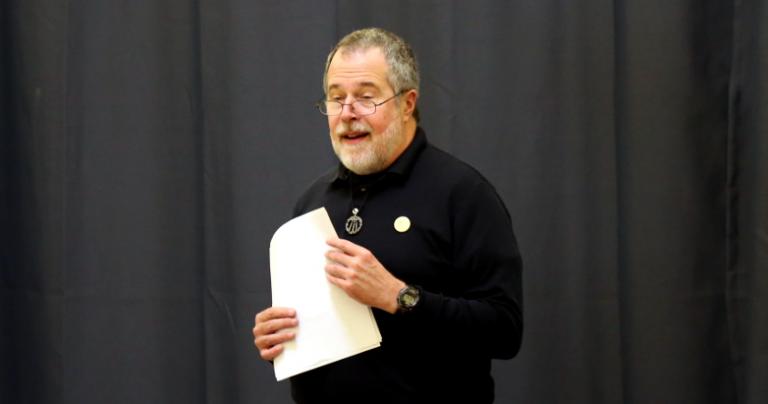
Jason Mankey has questions on UPG – unverified personal gnosis.
What are your feelings on personal gnosis? Can it be trusted? Is trust gained when a collection of people report the same experience, results, or type of interaction? If it can’t be trusted, what is required to make “new myths?”
Personal gnosis is one of the primary ways our Gods, ancestors, and other spiritual beings communicate with us. It not only can be trusted, it must be trusted if our practices and traditions are to be living, breathing entities and not frozen in sacred texts or in some vision of a golden age that never was.
That said, no experience should be accepted without reflection and discernment. Is it in alignment with what we know about the character of the being in question? Is it in alignment with what we know to be true about the world and how it works? Is it ethical?
Absolutely the trust is increased when multiple people report the same or similar experiences and messages. I’ve been doing this kind of work for a long time – I’m pretty good at separating my own thoughts from the impressions I get from Others. But I’m not perfect, so there’s always uncertainty around them. But when other people hear / see / experience the same thing, that helps confirm my own interpretations. More data points is always a good thing.
At some point, when enough people have the same gnosis about the same thing, it becomes generally accepted as fact. This is how we get new lore, new myths, and new wisdom.

How do you find and keep a balance of staying open to experiences with Gods, magick, and the supernatural or spiritual, especially when there’s continual cognitive self-pushback from 1) trying to seem as a functional adult within a technical profession and 2) from the consideration that the current US society’s overall denial of science and its gaslighting of what is real is playing such a huge role in the country’s instabilities. How is self-insistence of experiences any different?
This is a very deep question that touches on matters of worldview, culture, and our desire for validation and acceptance.
I make my living as an engineer. It’s a technical profession that requires a strong knowledge of math and science. Mainly, it requires strong analytical skills – the ability to determine cause and effect. There is the idea in our mainstream society (especially among those who consider themselves educated and sophisticated) that every effect must have a naturalistic, materialist cause. But that idea is an assumption, not a conclusion. Some effects point toward Otherworldly causes. Some effects are so complicated we can’t determine a cause, and while we cannot believe things that are demonstrably false (like the Young Earth Creationists do), we are free to explore many possible causes.
The cause or conclusion or interpretation we select need not be the one that most closely adheres to a materialist worldview. Better to choose the one we find most helpful and useful while still remaining logically plausible. And then we dive deeply into these beliefs and interpretations, but we hold them loosely, always willing to update them or even abandon them if new evidence points in another direction.
Most of us have a strong desire to not be associated with science-deniers. But it is not denying science to recognize that science has limits, both in terms of what is known and what can be known.
Where we get into trouble is when we assume our interpretation is the only possible interpretation and that everyone else must agree with us. Hold your beliefs loosely and always be open to new evidence, but explore your experiences as deeply as you can.
When you get a message, and you think you know what the message means, but aren’t sure what the next action items are, how do you move forward?
The short answer is that we need meditation, to listen for the message and to contemplate its nuances. We need divination, to ask questions and get answers that can clarify the situation. We need consultation, to talk to other practitioners to see what we can learn from their experiences. And we need to check in frequently, to see how things are progressing.
The longer answer is that sometimes we do all those things and we still aren’t sure what to do. There are three basic approaches to moving forward when you aren’t certain.
Maintain optionality. If you aren’t sure what to do, wait till you know. For big life-altering decisions that can’t be easily undone, this makes good sense. Being a little late is better than being wrong. Oftentimes, though – and particularly if you’re dealing with a God – we don’t have the luxury of time.
Careful and slow. If you know the general direction you need to go, you can start moving. Take it slow, calculate each choice, and make sure it’s the right one. Do it well, then move to the next one. You may make a mistake here or there, but you should never have to backtrack more than one step.
Fail fast. I don’t know about you, the message I get from the deities I follow is often “why isn’t this done yet?” They aren’t going to wait for us to be sure, or to take things bit by bit by bit. So we make the best guess we can, dive in, and hope for the best. And if it fails, at least it fails fast and now we know what not to do. And many times, we can figure things out before it fails.
How did you first know you were being called to a life of priesthood? I feel like there are so many layers to this question that I have yet to find words for, but this is just the beginning.
You are correct that there are many layers to this question.
I always wanted to be a priest. I grew up Baptist, but once I saw a Catholic priest I realized he had something the Baptist preachers didn’t. Still, I never considered becoming a Catholic, and I did consider becoming a minister on at least two occasions. My calling is has been a life-long thing.
I see three aspects to priesthood. Priests serve their Gods, they mediate for their Gods, and they serve their communities. As a Pagan I was first called to serve my community. I had no intention of becoming a leader, but after less than a year at Denton CUUPS I was an officer. I started doing the service aspects of priesthood. That led me to join OBOD for their training program, so I could learn to be a more effective priest.
Then I was introduced (or more properly, re-introduced) to Cernunnos. I think He had me slotted for His priesthood for a very long time, and when I was ready he said “be my priest.” It wasn’t an offer so much as an order – an order I very much wanted to follow. The process was similar with Danu, though that was much softer.
I wanted to be a priest of the Morrigan, but that was not to be. I am Her sworn Druid. Sometimes the difference is hard for an outside observer to see, but it’s a very clear distinction with me.
So, for me it’s a lifelong desire to be a priest, and being thrust into a position of service, and being called into a position of devotion. Others have gone through other processes – this one is mine.
How do you square the fact that historical Paganism was not only deeply involved in political life but would probably have laughed at the idea of a religion separated from the political life and institutions of the period?
The snarky answer is that I don’t. My Paganism is inspired by the ancients, but it is not beholden to them. It’s a contemporary religion for this place and this time.
But I think this question is worth exploring in more detail.

Many of the ancient Pagan religions were state religions: Greece, Rome, and especially Egypt. Temples and priests were supported by the government and in return, the priests performed the necessary rites to insure the favor of the Gods. We see a similar structure in Asia with Taoism and Shinto. We know less about the less urban societies (the Celts and the Germanic tribes), but we know the Druids were advisors to kings and they supported their communities in battle.
The ancient Pagan religions supported the state, and they were inherently conservative, in the traditional meaning of the term (“to conserve” – they try to keep things the way they are). I’m old enough to remember when it was said that the Episcopal Church was “the Republican Party at prayer.” If you want the contemporary equivalent of ancient Pagan religions – at least in America – become a mainline Protestant.
But there’s another thread involved. The ancient Mediterranean religions had their state temples, but they also had their mystery cults. The Eleusinian Mysteries were performed for a thousand years – they dealt not with state religion but with personal religion. The PGM (Greek Magical Papyri) is full of down-to-earth operative magic: spells to call a lover, to find lost objects, to bring wealth. There’s nothing political about them. Most of modern Paganism follows the personal thread, rather than the state thread.
Religion and politics are ultimately inseparable – each one informs and influences the other. Religion without politics reinforces the status quo. But politics without religion reinforces a materialist worldview.
A good religion needs an Otherworldly component and a this-world component. It needs devotion and it needs activism.
Also, on a related note, how does a modern Pagan of any stripe contend with the concept of a divinely-ordained societal order (i.e., monarchy supported by warrior aristocrats and/or priestly bureaucrats) that doesn’t match well with our own?
I don’t, and this time there’s no snark intended. I’m inspired by the ancients, but I’m not chained to their customs.
If anybody says their Gods are telling them we have to have a certain social order (whether it’s monarchy or anarchy or anything in between) I tell them their Gods need to convince me. And so far they – and They – haven’t.
Previous Post

February 21, 2018
A Pagan Reflects on Billy Graham
Next Post
February 27, 2018 The Morrigan Calls More Than Warriors
Browse Our Archives
Select a Category Books Community CUUPS Druidry Foundations and Context Gods and Goddesses Magic Myth Nature Ritual Spiritual Practice Theology Travel Uncategorized Videos
Select a Month October 2026 September 2026 August 2026 July 2026 June 2026 May 2026 April 2026 March 2026 February 2026 January 2026 December 2025 November 2025 October 2025 September 2025 August 2025 July 2025 June 2025 May 2025 April 2025 March 2025 February 2025 January 2025 December 2024 November 2024 October 2024 September 2024 August 2024 July 2024 June 2024 May 2024 April 2024 March 2024 February 2024 January 2024 December 2023 November 2023 October 2023 September 2023 August 2023 July 2023 June 2023 May 2023 April 2023 March 2023 February 2023 January 2023 December 2022 November 2022 October 2022 September 2022 August 2022 July 2022 June 2022 May 2022 April 2022 March 2022 February 2022 January 2022 December 2021 November 2021 October 2021 September 2021 August 2021 July 2021 June 2021 May 2021 April 2021 March 2021 February 2021 January 2021 December 2020 November 2020 October 2020 September 2020 August 2020 July 2020 June 2020 May 2020 April 2020 March 2020 February 2020 January 2020 December 2019 November 2019 October 2019 September 2019 August 2019 July 2019 June 2019 May 2019 April 2019 March 2019 February 2019 January 2019 December 2018 November 2018 October 2018 September 2018 August 2018 July 2018 June 2018 May 2018 April 2018 March 2018 February 2018 January 2018 December 2017 November 2017 October 2017 September 2017 August 2017 July 2017 June 2017 May 2017 April 2017 March 2017 February 2017 January 2017 December 2016 November 2016 October 2016 September 2016 August 2016 July 2016 June 2016 May 2016 April 2016 March 2016 February 2016 January 2016 December 2015 November 2015 October 2015 September 2015 August 2015 July 2015 June 2015 May 2015 April 2015 March 2015 February 2015 January 2015 December 2014 November 2014 October 2014 September 2014 August 2014 July 2014 June 2014 May 2014 April 2014 March 2014 February 2014 January 2014 December 2013 November 2013 October 2013 September 2013 August 2013 July 2013 June 2013 May 2013 April 2013 March 2013 February 2013 January 2013 December 2012 November 2012 October 2012 September 2012 August 2012 July 2012 June 2012 May 2012 April 2012 March 2012 February 2012 January 2012 December 2011 November 2011 October 2011 September 2011 August 2011 July 2011 June 2011 May 2011 April 2011 March 2011 February 2011 January 2011 December 2010 November 2010 October 2010 September 2010 August 2010 July 2010 June 2010 May 2010 April 2010 March 2010 February 2010 January 2010 December 2009 November 2009 October 2009 September 2009 August 2009 July 2009 June 2009 May 2009 April 2009 March 2009 February 2009 January 2009 December 2008 November 2008 October 2008 September 2008 August 2008 July 2008 June 2008
Follow Us!
TAKE THE
Religious Wisdom Quiz
How many plagues did God send upon Egypt?
Select your answer to see how you score.
Twenty Ten Twelve Seven
Related posts from John Beckett


The Vampire Films of Jean Rollin


Bo French Doesn’t Understand Texas
TRENDING AT PATHEOS Pagan

Methodist Central Hall and Westminster Abbey
Situated on the same square is Methodist Central Hall and Westminster Abbey. ...

57th Dove Awards Honor Dolly Parton, Crown New...
On gospel music’s biggest night, the 57th annual GMA Dove Awards honored...

The First Eucharistic Controversy: Christ’s Real Presence
For Catholics, the Eucharist is the source and summit of the Christian...

What a Stop Sign Can Teach Us About...
How to Make a Decision When You Can't Hear God Main point:...

Archdiocese Hosts Military Marriage Retreat in Germany
RASTATT, Germany — The transient military lifestyle, with its frequent deployments and...

Nearly every morning, I make the drive to Detroit with my high-school-age...
view all Pagan blogs
Ad-Free & Subscriber Log-In Subscription Support
- About Us
- 2026 Calendar
- Videos
- Podcasts
- Library of World Religions
- Faith In Media Tracker
- Advertise With Us
- Write for Us
- Privacy Policy
- Terms of Service
- Do Not Sell My Data
- Contact Us
- Radiant Digital
- Manage Newsletter Subscriptions
- Unsubscribe From Notifications
- Sitemap
Copyright 2008-2026, Patheos. All rights reserved.
Subscription Support Ad-Free & Subscriber Log-In
Follow Patheos