
BuddhistCatholicContemplativeEvangelicalGeneral ChristianHinduJewishLatter-day SaintMuslimNew VisionsProgressive Christian
Beliefs
- Buddhist
- Catholic
- Contemplative
- Evangelical
- General Christian
- Hindu
- Jewish
- Latter-day Saint
- More Voices
- Muslim
- New Visions
- Pagan
- Progressive Christian
Topics
- Religion News
- Food and Religion
- Sports and Religion
- Religious Art
- Religious Music and Entertainment
- Religious Events
- History and Religion
- Style and Religion
- Politics and Religion
- Women in Religion
- Recreation Outdoors and Religion
- Business Finance and Religion
- Careers Workplace and Religion
- Education and Religion
- Family Parenting and Religion
- Health Fitness and Religion
- Home and Religion
- Relationships and Religion
- Technology and Religion
- Travel and Religion
Columnists
- Buddhist Columnists
- Business Finance and Religion Columnists
- Careers Workplace and Religion Columnists
- Catholic Columnists
- Contemplative Columnists
- Education and Religion Columnists
- Evangelists Columnists
- Family Parenting and Religion Columnists
- General Christian Columnists
- Health Fitness and Religion Columnists
- Hindu Columnists
- History and Religion Columnists
- Home and Religion Columnists
- Jewish Columnists
- More Voices Columnists
- Latter Day Columnists
- Muslim Columnists
- New Visions Columnists
- Nonreligious Columnists
- Pagan Columnists
- Politics and Religion Columnists
- Progressive Columnists
- Recreation Outdoors and Religion Columnists
- Relationships and Religion Columnists
- Religion News Columnists
- Religious Art Columnists
- Religious Events Columnists
- Religious Music and Entertainment Columnists
- Sports and Religion Columnists
- Style and Religion Columnists
- Technology and Religion Columnists
- Travel and Religion Columnists
- Women in Religion Columnists
Resource Library
- 2026 Calendar
- Library of World Religions
- The 100 Most Holy Places on Earth
- Patheos Answers
- Podcasts
- Videos
- Faith Leaders Database
- Anglican Episcopalian
- Bahai
- Baptist
- Buddhism
- Christianity
- Confucianism
- Eastern Orthodoxy
- Hinduism
- Holiness and Pentecostal
- ISKCON
- Islam
- Judaism
- Lutheran
- Methodist
- The Church of Jesus Christ of Latter-day Saints
- New Age
- Paganism
- Presbytarian and Reformed
- Protestantism
- Religion Behind the Scenes
- Roman Catholic
- Scientology
- Shia Islam
- Sikhism
- Sufism
- Sunni Islam
- Taoism
- Zen
- See all religions
Research Tools
 Ad-Free & Subscriber Log-In Subscription Support
Ad-Free & Subscriber Log-In Subscription Support
Follow Patheos 

- Trending:
- Forgiveness
- |
- Marriage
- |
- Consciousness
- |
- Death Penalty
- |
- Election
- |
- Halloween

- Home
- Pagan
- No More Crayon Drawings on the Refrigerators of Mount Olympus
No More Crayon Drawings on the Refrigerators of Mount Olympus
Last updated on: January 16, 2018 at 4:00 am by John Beckett
No More Crayon Drawings on the Refrigerators of Mount Olympus 2018-01-13T16:54:43-06:00 John Beckett
Patheos Explore the world's faith through different perspectives on religion and spirituality! Patheos has the views of the prevalent religions and spiritualities of the world.
Paganism is open to everyone. Anyone can perform religious devotion, and almost anyone can work magic or have an ecstatic experience. Excellence in any of those areas, however, requires a combination of ability, opportunity, and dedicated practice.

A devotion 8 minutes late
I have on-going relationships with several deities, and Cernunnos is first among equals in my devotion. But it is mostly the Morrigan who has been driving me into deeper practice over the past few years. Much of this is covered in last July’s post An Oath to the Morrigan. She was the first to require weekly devotions dedicated specifically to Her.
After my oath She required that I come to these devotions in a state of cleanliness. Now, I have said that purity is overrated and I still believe that. But it has a necessary purpose, in this case, presenting my best to the Gods.
A couple months ago the requirements were tightened again. Simply offering devotion on Sunday evenings is no longer acceptable. She’s tired of working around my whims and receiving offerings whenever I feel ready. Now I’m required to begin the devotions at 7:00 PM. Exceptions can be made if I’m traveling, but if I’m home I need to begin the devotion promptly at 7:00 o’clock.
Last Sunday afternoon I was very busy with some other sacred work. I finished it, put everything away, and looked at the clock: it was right at 7:00. I cleaned up, grabbed a bottle of wine for offerings, and went outside to begin. It was 7:08.
I began the devotion, nervous about Her reaction to my lateness. What I heard was both reassuring and challenging. On one hand, I was caught up in honorable work and once I realized the time, I stopped what I was doing and performed the devotion, instead of waiting till after dinner or whatever time would have been convenient for me. That’s progress, and She’s happy with it.
But progress isn’t enough.
You will never be the priest you can be until the requirements of devotion and service are fixed in your soul, until you can no more begin a private devotion eight minutes late than you would start a public ritual eight minutes late.
This is my particular obligation and I am not suggesting you or anyone else needs to keep a precise schedule of devotions… though I will say yet again that “Pagan Standard Time” is an abomination and a breach of hospitality.
But this incident illustrates the point I’m trying to make in this post: excellence in spiritual matters requires a combination of ability, opportunity, and dedicated practice.
The inherent worth and dignity of every person
Do not misunderstand the point of this post. For all my emphasis on Paganism and polytheism, I remain a dedicated UU committed to the first principle of Unitarian Universalism: the inherent worth and dignity of every person. Being a more devoted priest, a more powerful magician, or a more mystical mystic doesn’t make you a better person.
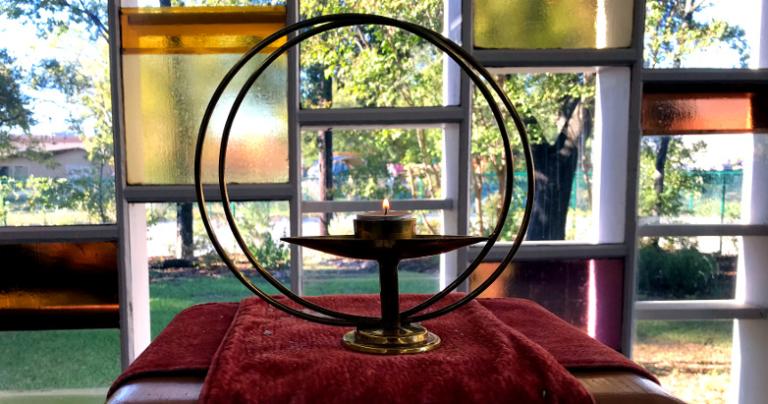
A healthy religious movement has people in many roles. We don’t need everyone to be a priest. We need scholars, seers, artists, musicians, fund raisers, and administrators. Given our low numbers, priests tend to do all these things. Someday I hope we’ll be big enough to allow for more specialization, and to allow people to serve our community in the ways best suited to them without having to fill four or five other roles that don’t fit them very well.
Let’s value everyone as persons of inherent dignity and worth, and let’s appreciate them for what they do and do well, regardless of what that is.
Excellence is a worthy goal
But some Pagans have the idea that respecting the worth and dignity of every person means that no one should stand out, and that any role should be open to any person at any time. While rotating high-visibility responsibilities (like ritual leadership) within a group is a good practice, the goal should be to promote and facilitate learning and growth while maintaining high standards, not mere participation.
Excellence is a worthy goal in our personal practices as well as in our public presentations. This is our connection to our Gods, our ancestors, and our highest values – it deserves our best efforts and our high priority.

Crayon drawings on the refrigerators of Mount Olympus
Wednesday morning I woke up to this post from Laura Tempest Zakroff titled Critiquing Witch Folk (A Lesson From The Art World). It’s Tempest’s story of critiquing the work of aspiring artists at her alma mater, the exclusive Rhode Island School of Design. She summarizes the process like this:
“hey, you’re doing this thing well here, but to make it work better, you should try doing X to build your skills. But keep up doing this thing!” This approach is called the critique sandwich, balancing the “good” with the “bad” in a single serving. But the bad isn’t really bad. It’s just marks room for potential.
When we’re small children our parents proudly post our “artwork” on the refrigerator door and tell us how great it is – as well they should. No one is born with master-level skills at drawing or painting – or ritual. These skills take time and effort to develop and refine, and the last thing we need is to discourage fragile beginners before they get started. A few will find a calling, while most will simply discover the joy of expressing themselves with something other than speech.
I have issues with the idea of the Gods as parents, but in some cases the metaphor is apt. For most of us (though not all), early on the Gods seem happy that we’re acknowledging Them and reaching out to Them. If we don’t fully understand Their stories or if we don’t always show proper reverence it’s no big deal – our crayon drawings are still there on the refrigerators of Mount Olympus.
From parenting to teaching
As we learn and grow, more is expected of us: in reverence and devotion, in study and knowledge, and in service to the Gods and Their communities. Errors and shortcomings are no longer glossed over. Now they’re pointed out, not to be harsh or pedantic, but so they can be corrected and we can get better at what we do. Our parents love us unconditionally (or at least, they’re supposed to – some parents should never have had children) but our teachers just want us to learn the lessons they’re trying to teach.
The best teachers I’ve had – in academia, in religion, and in life – have had a thorough knowledge of their material and the ability to present it clearly and completely. But they’ve also had high standards. They didn’t accept mediocre work – and they certainly didn’t accept it from students they knew could do better.
The best of the best also knew that most of their students didn’t share their passion for their subject. They knew 25 of the 30 students in their chemistry class were there because someone told them they should be there. If those 25 left with a foundation of knowledge that would help them understand the world and their place in it, that was good enough – for them.
But those other five would become doctors, researchers, and engineers. They needed a deep understanding of chemistry, and they were going to learn it one way or another.
The students Tempest critiqued aren’t trying to make pretty pictures and they aren’t trying to develop a basic appreciation of art. They’re trying to become professional artists. They have the natural ability, they have the opportunity, and they’re practicing diligently trying to get better. And they need honest, informed feedback to help them get there.
We need the same in our religious and spiritual practices.
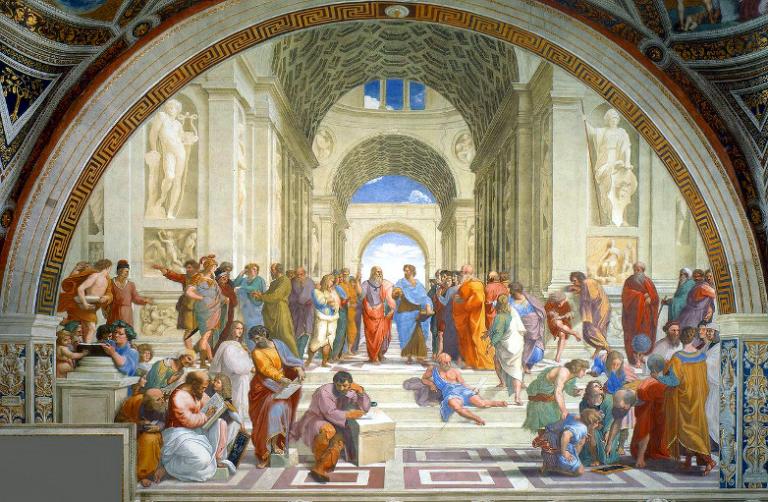
“School of Athens” by Raphael – 1511. More than a pretty picture.

The levels never end
Our education system has grades, from kindergarten to Ph.D. Video games have increasing levels of difficulty. Athletes talk about going to “the next level” when they move from college to pro, or sometimes just when their skills improve dramatically.
Spiritual practice and religious devotion have levels too. They aren’t well defined, but just as we can tell the difference between a crayon drawing on a refrigerator and a masterpiece in a gallery, we can also tell the difference between the practices of a beginner and those of an experienced and committed devotee.
I’m not interested in comparing my spiritual “levels” to yours or to some famous Pagan author’s or to anyone else’s – though I’ll gladly learn from anyone. I want to be as good as I can be. I want my devotions to be as deep as they can be, I want my experiences of the Gods and spirits to be as strong as they can be, and I want my magic to be as powerful as it can be.
Last Sunday a Goddess to whom I am oathed told me I had made some progress, but that I still have far to go.
Critique accepted. Back to work.
Previous Post

January 14, 2018
Cults of Personality Must Die
Next Post
January 18, 2018 Conversations Under the Oaks: January Q&A
Browse Our Archives
Select a Category Books Community CUUPS Druidry Foundations and Context Gods and Goddesses Magic Myth Nature Ritual Spiritual Practice Theology Travel Uncategorized Videos
Select a Month October 2026 September 2026 August 2026 July 2026 June 2026 May 2026 April 2026 March 2026 February 2026 January 2026 December 2025 November 2025 October 2025 September 2025 August 2025 July 2025 June 2025 May 2025 April 2025 March 2025 February 2025 January 2025 December 2024 November 2024 October 2024 September 2024 August 2024 July 2024 June 2024 May 2024 April 2024 March 2024 February 2024 January 2024 December 2023 November 2023 October 2023 September 2023 August 2023 July 2023 June 2023 May 2023 April 2023 March 2023 February 2023 January 2023 December 2022 November 2022 October 2022 September 2022 August 2022 July 2022 June 2022 May 2022 April 2022 March 2022 February 2022 January 2022 December 2021 November 2021 October 2021 September 2021 August 2021 July 2021 June 2021 May 2021 April 2021 March 2021 February 2021 January 2021 December 2020 November 2020 October 2020 September 2020 August 2020 July 2020 June 2020 May 2020 April 2020 March 2020 February 2020 January 2020 December 2019 November 2019 October 2019 September 2019 August 2019 July 2019 June 2019 May 2019 April 2019 March 2019 February 2019 January 2019 December 2018 November 2018 October 2018 September 2018 August 2018 July 2018 June 2018 May 2018 April 2018 March 2018 February 2018 January 2018 December 2017 November 2017 October 2017 September 2017 August 2017 July 2017 June 2017 May 2017 April 2017 March 2017 February 2017 January 2017 December 2016 November 2016 October 2016 September 2016 August 2016 July 2016 June 2016 May 2016 April 2016 March 2016 February 2016 January 2016 December 2015 November 2015 October 2015 September 2015 August 2015 July 2015 June 2015 May 2015 April 2015 March 2015 February 2015 January 2015 December 2014 November 2014 October 2014 September 2014 August 2014 July 2014 June 2014 May 2014 April 2014 March 2014 February 2014 January 2014 December 2013 November 2013 October 2013 September 2013 August 2013 July 2013 June 2013 May 2013 April 2013 March 2013 February 2013 January 2013 December 2012 November 2012 October 2012 September 2012 August 2012 July 2012 June 2012 May 2012 April 2012 March 2012 February 2012 January 2012 December 2011 November 2011 October 2011 September 2011 August 2011 July 2011 June 2011 May 2011 April 2011 March 2011 February 2011 January 2011 December 2010 November 2010 October 2010 September 2010 August 2010 July 2010 June 2010 May 2010 April 2010 March 2010 February 2010 January 2010 December 2009 November 2009 October 2009 September 2009 August 2009 July 2009 June 2009 May 2009 April 2009 March 2009 February 2009 January 2009 December 2008 November 2008 October 2008 September 2008 August 2008 July 2008 June 2008
Follow Us!
TAKE THE
Religious Wisdom Quiz
Who was the high priest during the boyhood of Samuel?
Select your answer to see how you score.
Eli Phinehas Hophni Ahijah
Related posts from John Beckett




What We Lose When “Ask AI” Becomes A...
TRENDING AT PATHEOS Pagan

Janie Learns the Way of the Cross: A...
Teaching children about Jesus' Passion can be challenging. Many parents and educators...

Looking For Good Catholic Writing - October 2026
He alone extends the heavens, and he walks upon the waves of...

In "Irreplaceable," our book on vocation and technology, Trevor Sutton and I...

I was strolling through the top floor of the brand new Parthenon...

What Does Gêvâh Mean For Kimberley Guifoyle &...
This week, a lot of the news is focused on Kimberly Guilfoyle....

INNER CIRCLE: Profound Mystery (Of Christ In All...
Ephesians 5:31-32 “For this reason, a man will leave his father and...
view all Pagan blogs
Ad-Free & Subscriber Log-In Subscription Support
- About Us
- 2026 Calendar
- Videos
- Podcasts
- Library of World Religions
- Faith In Media Tracker
- Advertise With Us
- Write for Us
- Privacy Policy
- Terms of Service
- Do Not Sell My Data
- Contact Us
- Radiant Digital
- Manage Newsletter Subscriptions
- Unsubscribe From Notifications
- Sitemap
Copyright 2008-2026, Patheos. All rights reserved.
Subscription Support Ad-Free & Subscriber Log-In
Follow Patheos