
BuddhistCatholicContemplativeEvangelicalGeneral ChristianHinduJewishLatter-day SaintMuslimNew VisionsProgressive Christian
Beliefs
- Buddhist
- Catholic
- Contemplative
- Evangelical
- General Christian
- Hindu
- Jewish
- Latter-day Saint
- More Voices
- Muslim
- New Visions
- Pagan
- Progressive Christian
Topics
- Religion News
- Food and Religion
- Sports and Religion
- Religious Art
- Religious Music and Entertainment
- Religious Events
- History and Religion
- Style and Religion
- Politics and Religion
- Women in Religion
- Recreation Outdoors and Religion
- Business Finance and Religion
- Careers Workplace and Religion
- Education and Religion
- Family Parenting and Religion
- Health Fitness and Religion
- Home and Religion
- Relationships and Religion
- Technology and Religion
- Travel and Religion
Columnists
- Buddhist Columnists
- Business Finance and Religion Columnists
- Careers Workplace and Religion Columnists
- Catholic Columnists
- Contemplative Columnists
- Education and Religion Columnists
- Evangelists Columnists
- Family Parenting and Religion Columnists
- General Christian Columnists
- Health Fitness and Religion Columnists
- Hindu Columnists
- History and Religion Columnists
- Home and Religion Columnists
- Jewish Columnists
- More Voices Columnists
- Latter Day Columnists
- Muslim Columnists
- New Visions Columnists
- Nonreligious Columnists
- Pagan Columnists
- Politics and Religion Columnists
- Progressive Columnists
- Recreation Outdoors and Religion Columnists
- Relationships and Religion Columnists
- Religion News Columnists
- Religious Art Columnists
- Religious Events Columnists
- Religious Music and Entertainment Columnists
- Sports and Religion Columnists
- Style and Religion Columnists
- Technology and Religion Columnists
- Travel and Religion Columnists
- Women in Religion Columnists
Resource Library
- 2026 Calendar
- Library of World Religions
- The 100 Most Holy Places on Earth
- Patheos Answers
- Podcasts
- Videos
- Faith Leaders Database
- Anglican Episcopalian
- Bahai
- Baptist
- Buddhism
- Christianity
- Confucianism
- Eastern Orthodoxy
- Hinduism
- Holiness and Pentecostal
- ISKCON
- Islam
- Judaism
- Lutheran
- Methodist
- The Church of Jesus Christ of Latter-day Saints
- New Age
- Paganism
- Presbytarian and Reformed
- Protestantism
- Religion Behind the Scenes
- Roman Catholic
- Scientology
- Shia Islam
- Sikhism
- Sufism
- Sunni Islam
- Taoism
- Zen
- See all religions
Research Tools
 Ad-Free & Subscriber Log-In Subscription Support
Follow Patheos 

- Trending:
- Advent
- |
- Forgiveness
- |
- Thanksgiving
- |
- Election
- |
- Seasonal Holidays
- |
- Marriage

- Home
- Pagan
- Conversations Under the Oaks: January Q&A
Conversations Under the Oaks: January Q&A
Last updated on: January 18, 2018 at 4:00 am by John Beckett
Conversations Under the Oaks: January Q&A 2018-01-13T18:08:31-06:00 John Beckett
Patheos Explore the world's faith through different perspectives on religion and spirituality! Patheos has the views of the prevalent religions and spiritualities of the world.
Welcome to the second Conversations Under the Oaks, a monthly Q&A feature. This is your chance to ask me anything.
I’ve already responded to some questions. A few were brief enough for immediate answers. Some I’ve already answered in previous blog posts. One I’m going to turn into its own full post next week.
Questions have been edited for brevity – names are used where I have explicit permission.
Sometimes people ask me to perform divination for them. The majority of those for whom I divined were disturbed or upset by my responses to their questions. As a result, I stopped doing divination for them, and for myself. I now feel the need to begin the practice again. I don’t wish to cause any harm, but not knowing the potential impact of my response, I can’t know if I will cause harm or not. Now, if it were me on the receiving end, I would say that any emotional response I had to a reading was my own problem, but… I don’t wish to cause harm. So, is there an ethical concern here, or not?
There is always an ethical concern when divining for others. I wrote about this in 2013. The link to the American Tarot Association’s Code of Ethics is still live and I recommend it.
A divination is a complex thing. There is the message (what the spirits have to say; the situation as it actually is, the future as it will be), the medium (cards, runes, tea leaves, etc.), the messenger (the diviner), the delivery (how the diviner communicates the message to the client), and the reception (how the client hears the message). In a good divination all these elements are in alignment. If any of them are off, the message may not be accurately communicated.
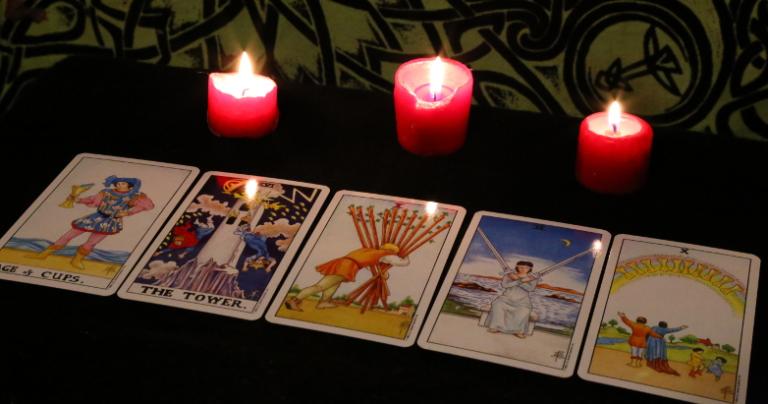
Take a look at what you control in this process. The core message and the reception are out of your hands. How’s your skill with your chosen divination tool? Do you go into a divination in the proper frame of mind? At the least, that means grounding and centering, and a prayer for guidance.
How’s your delivery? Is your tone calm and reassuring, or is it strident, or anxious? Do you balance the clarity of what you see with the inherent uncertainty of divination? Does it leave room for the client to change the future by taking action in the present?
When we are divining for another person, we have a fiduciary responsibility to act in the client’s best interest. That means telling them the truth as we see it, but in a way they can handle. That’s hard to do with strangers, but it can be even harder with friends.
You don’t have to divine for others… unless you do. I’ve been given messages and told to relay them to others – most of them weren’t pleasant. So far nobody’s shot the messenger.
Blessings to you as you discern the role of divination in your public life.
What is the best way to offer service to others without too much risk of freaking them out? I speak with the dead, and have helped many people to connect with friends and relatives who have crossed over. There is, however, so much rampant flakery associated with mediumship that it’s difficult to negotiate the line between “I can help” and “I need a Thorazine drip.”
When we have a talent that can help people at difficult times, we want to use it. But as with all assistance, people have to be willing to accept it.
Many people don’t believe communication with the dead is possible and they aren’t going to listen to you no matter what. Others accept it in theory, but when it comes down to actually doing it, skepticism takes over. Or fear may interfere – if after death communication is possible, then a lot of other things may also be possible and not all of them are pleasant. If they aren’t prepared to deal with all that – particularly at a stressful time like the death of a loved one – then there’s nothing you can do to help them.
With the spiritual services I offer, I’ve found the best approach is simply to let it be known what I do, within a community that acknowledges such things. People who need and want what I do will find me. On rare occasion I’ll tell a friend “I can help you with that if you want” (that usually being divination or a magical working), but I don’t push at all. If they call, I’ll do what I can. If they don’t, that tells me they aren’t ready for it, and I respect their choices.
I wish to start a daily practice of prayer to further my spirituality, based on The Pagan Practice of Prayer. Somebody in a local coven said I could pray to deity every day, thanking them for this day of life. Is that appropriate? Without a relationship, it doesn’t seem that a pagan god/dess would be that hands-on with “giving” me a day of life?
That sounds like praying to individual Gods in the same way monotheists pray to the (supposedly) One God. I prefer to thank the deities with whom I have a relationship for the things they give me, without such gross generalities.
If you feel the need to give thanks for each day of life (and that’s not a bad thing) you could simply say “I am thankful for…” without naming anyone in particular. My noon prayers include giving thanks for my families, for my health, for safety, and for my spiritual vocation. None of these address a deity in particular. I simply say “I give thanks for…”.
When particular deities are gracious, then I thank Them by name for their specific gifts.
In addition to beginning a practice of prayer, you may find this post on Beginning a Devotional Practice to be helpful, as well as this one on Pursuing the Gods.
What is your position on religious syncretism among pagan pantheons? For example, do Artemis and Diana or Zeus and Jupiter represent distinct entities, or are they different aspects of the same deity? What about less-similar deities that still got lumped together by Greek or Roman observers such as Hermes with Thoth? Finally, what is your position on these matters with regard to Serapis, the Ptolemaic-era merger of multiple Greek and Egyptian gods use to cement Ptolemaic rule in Egypt?
That question is both very good and very difficult. I explored it last July in Is This The Same God?
It’s intuitive that the Gods are many. It’s easy to see that the Sun God and the Rain God are not the same persons, nor are Apollo and Aphrodite. It’s far less intuitive that the Gods are multiple. In ancient Greece, Zeus Olympios was understood and worshipped differently from Zeus Chthonios and Zeus Aetnaeus. Of course, in Hindu tradition, Pashupati [who the initial questioner compared to Cernunnos] is considered to be an avatar of Shiva. I’ll leave the exact meaning of that to someone with a greater knowledge of Hindu theology than me, except to say it’s another example of the multiplicity of the Gods.
Part of the attractiveness of the Many Gods is that They are approachable and relatable. Read Their stories from antiquity – They share many qualities with humans. But we must never forget They are Gods – they are more than humans. We just can’t be sure how much more. It is possible (and likely, I think) that They can exist both as distinct individuals and as syncretisms.
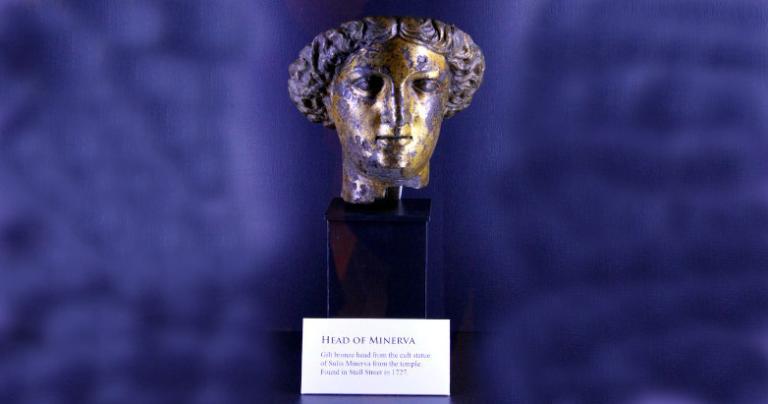
Sulis Minerva – a Romano-British syncretism
The history of Serapis is very problematic, for the reasons you list. But He was worshipped for at least 700 years. If He wasn’t a God when Ptolemy I first erected a statue to Him, He certainly was by the time Christians outlawed all pagan worship.
I’m a Druid and a priest, not a theologian – I spend far more time serving the Gods and communing with the Gods than I do thinking about the nature of the Gods. Where I have different names or different epithets, I operate on the assumption I’m dealing with different Gods.
Tommy Elf has a series of questions around ritual.
What drew you to ritual? You post many posts about aspects of ritual work, and I have had the chance to witness more than one of the gorgeous rites that you have had a hand in creating. What brought you to the perspective of being so passionate about it?
I have always loved ritual. Always.
I think part of it goes back growing up Baptist. I got “preachin’, prayin’ and singin’” in a plain white meeting house, while my Catholic cousins got the vestments and liturgy of the mass in a beautiful church. It seemed so much deeper and more spiritual.
And then there were all the books and movies that included ritual magic. Even if they were schlock horror movies where the rituals were a tabloid version of Satanism, they were still magical. If they had any authenticity to them at all, they were that much more powerful.
The scientist in me is attracted to the idea that if you do X, Y, and Z under the proper conditions you’ll get results A, B, and C. Real ritual isn’t that straightforward, but I’ve had enough success with ritual magic over the years to know it works. Good ritual isn’t just a formula – it’s embodied myth that involves and speaks to all the senses.
I have always loved ritual. And when you love something, you want to learn as much as you can about it, and figure out how to do it as well can you can. I thank you for your kind words. I take great pride in my ritual skills, and I am always trying to figure out how to make them even better.
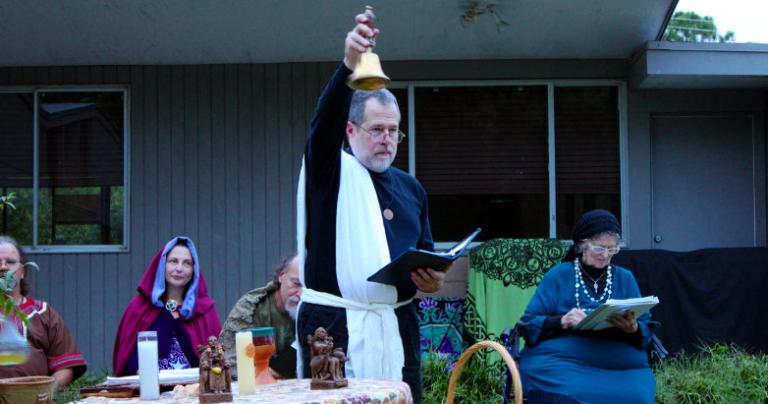
Do you see many of the patterns of ritual in the secular, mundane world that bring status to particular events or persons, such as the example of the judge wearing black robes that Campbell mention in The Power of Myth?
Yes. Rituals don’t just make things happen, the also reinforce the way things are “supposed to be.” They ground us in our heritage and its values – for good or for ill.
Why do we sing the national anthem before sporting events or say the pledge of allegiance before school? They’re rituals that reinforce certain concepts and behaviors. Your favorite sport (baseball, for those who don’t know Tommy that well) is full of rituals, from the formal rituals of throwing out the first pitch and the seventh inning stretch to all the informal rituals that are generally considered superstition.
If anyone says they have no rituals in their life, let me propose an experiment. When planning your family’s Christmas dinner, suggest that fish and chips would be a good main course. Suggest that perhaps December 26th would be a better day to open presents. Ask a teenage girl to carve the turkey. And if all that fails, just rearrange the chairs. I guarantee you’ll find that ritual is alive and well in your family!
If you had a chance to bring ritual into a more forward position, even within our ritual-centric environment within the various Pagan Paths, where would you start?
I’d like to see more blessings, invocations, and acts of mindful contemplation. Being forced to pray before meals as a child turned me off of that practice. Now I never do it except on very special occasions, but that’s my problem – the practice is still valid and helpful. I usually begin my workshops and seminars with a brief prayer.
I’d like to see taking of omens before beginning important projects and journeys – and paying attention to them.
Mostly, though, I’d like to see more ritual acts of devotion, especially simple things like saluting the sun in the morning and/or evening, and the moon when it’s visible at night – little things that done consistently remind us of our connections to Nature, the Gods, and our ancestors.
And finally, is there a particular ritual that you look back at with fond memories of it being “just right” – and this does not have to be one that you had a hand in creating, it could be one that you were a part of. What made it that special?
I’ve never created or participated in a ritual that was “just right.” There’s always something that could be better. That said, two rituals stand out as especially memorable and pretty close to perfect.
The first was the Lughnasadh ritual at the 2010 House of Danu Gorsedd. Thorn Coyle led a workshop on ecstatic ritual, which turned into a planning session / rehearsal for the main ritual. This was not my first ecstatic experience of a deity, but it was the first time it happened within the context of a planned ritual. This was a great learning experience for me. My public rituals were already good by 2010 – this showed me how to make them even better.
The second was the Cernunnos Ritual at the 2013 OBOD East Coast Gathering. We did this ritual three times: for Denton CUUPS Lughnasadh, at the ECG, and then for the DFW Pagan Pride Day at White Rock Lake. We did an updated version for last year’s Beltane and a shorter version at the Beyond the Gates festival.
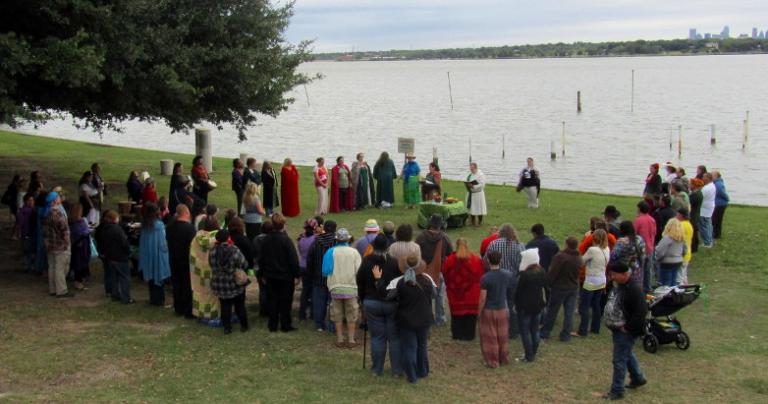
the Cernunnos Ritual at the 2013 DFW Pagan Pride Day
They were all good, but the ECG version stands out. It was a perfect setting: a long torch-lit procession, into the woods, moving to the call of some of the most powerful drumming I’ve ever experienced. And then the main part of the ritual began.
Cynthia and I finished our call and response and the drummers picked up the beat. As I walked around the circle everyone was still sitting, as if they weren’t quite sure what they were supposed to do.
And then the presence of Cernunnos began to grow, and grow, and grow. One person got up, and then another, and then another, and before long the inner circle was full of Druids dancing, singing and shouting around the fire.
Afterwards, someone said “this was something primal.” The call of the Forest God is strong in this era of environmental disconnection and desecration and he is best met through the heart and the gut and the loins, not through the intellect.
I sometimes wonder what ritual was like for the ancient Druids. I have some ideas – some of them may be past life memories, while others are almost certainly the product of my imagination. Regardless of where those ideas and imagery come from, that ritual is as close to them as I’ve ever been.
Thanks again for the questions – we’ll do this again next month.
Previous Post

January 16, 2018
No More Crayon Drawings on the Refrigerators of Mount Olympus
Next Post

January 21, 2018 Integrity is Complicated: Breaking a Promise From Your Old Religion
Browse Our Archives
Select a Category Books Community CUUPS Druidry Foundations and Context Gods and Goddesses Magic Myth Nature Ritual Spiritual Practice Theology Travel Uncategorized Videos
Select a Month November 2026 October 2026 September 2026 August 2026 July 2026 June 2026 May 2026 April 2026 March 2026 February 2026 January 2026 December 2025 November 2025 October 2025 September 2025 August 2025 July 2025 June 2025 May 2025 April 2025 March 2025 February 2025 January 2025 December 2024 November 2024 October 2024 September 2024 August 2024 July 2024 June 2024 May 2024 April 2024 March 2024 February 2024 January 2024 December 2023 November 2023 October 2023 September 2023 August 2023 July 2023 June 2023 May 2023 April 2023 March 2023 February 2023 January 2023 December 2022 November 2022 October 2022 September 2022 August 2022 July 2022 June 2022 May 2022 April 2022 March 2022 February 2022 January 2022 December 2021 November 2021 October 2021 September 2021 August 2021 July 2021 June 2021 May 2021 April 2021 March 2021 February 2021 January 2021 December 2020 November 2020 October 2020 September 2020 August 2020 July 2020 June 2020 May 2020 April 2020 March 2020 February 2020 January 2020 December 2019 November 2019 October 2019 September 2019 August 2019 July 2019 June 2019 May 2019 April 2019 March 2019 February 2019 January 2019 December 2018 November 2018 October 2018 September 2018 August 2018 July 2018 June 2018 May 2018 April 2018 March 2018 February 2018 January 2018 December 2017 November 2017 October 2017 September 2017 August 2017 July 2017 June 2017 May 2017 April 2017 March 2017 February 2017 January 2017 December 2016 November 2016 October 2016 September 2016 August 2016 July 2016 June 2016 May 2016 April 2016 March 2016 February 2016 January 2016 December 2015 November 2015 October 2015 September 2015 August 2015 July 2015 June 2015 May 2015 April 2015 March 2015 February 2015 January 2015 December 2014 November 2014 October 2014 September 2014 August 2014 July 2014 June 2014 May 2014 April 2014 March 2014 February 2014 January 2014 December 2013 November 2013 October 2013 September 2013 August 2013 July 2013 June 2013 May 2013 April 2013 March 2013 February 2013 January 2013 December 2012 November 2012 October 2012 September 2012 August 2012 July 2012 June 2012 May 2012 April 2012 March 2012 February 2012 January 2012 December 2011 November 2011 October 2011 September 2011 August 2011 July 2011 June 2011 May 2011 April 2011 March 2011 February 2011 January 2011 December 2010 November 2010 October 2010 September 2010 August 2010 July 2010 June 2010 May 2010 April 2010 March 2010 February 2010 January 2010 December 2009 November 2009 October 2009 September 2009 August 2009 July 2009 June 2009 May 2009 April 2009 March 2009 February 2009 January 2009 December 2008 November 2008 October 2008 September 2008 August 2008 July 2008 June 2008
Follow Us!
TAKE THE
Religious Wisdom Quiz
What is the Christian principle about speaking words?
Select your answer to see how you score.
Speak harshly Always be silent Speak with love and grace Never speak
Related posts from John Beckett

Pagans And The Rise Of The Religious Left

Why Halloween Is So Popular – And So...
The Pillar of the Boatmen: the Ancient Monument...
TRENDING AT PATHEOS Pagan

Chapter 5, Sarah: The Quest for Safety in...
Open and Relational Theology & Social Psychology About this series: This series...

When Worry Gets You Nowhere, How Can Faith...
Sometimes, we think that by worrying, we can somehow predict the future....

The Wasp And I: Meditations on Repentance
How can we enter the power and joy of the repentant self...

Reflections on the Evangelical Theological Society
As I mentioned before, this year, for the first time since 2005,...

Demmed if it do and demmed if it...
"First Presidency Announces Salt Lake Temple Rededication Date" Apropos of that,...

Stop Making Thanksgiving Problematic And Just Give Thanks
“What if, today, we were grateful for everything?” –Charlie Brown I...
view all Pagan blogs
Ad-Free & Subscriber Log-In Subscription Support
- About Us
- 2026 Calendar
- Videos
- Podcasts
- Library of World Religions
- Faith In Media Tracker
- Advertise With Us
- Write for Us
- Privacy Policy
- Terms of Service
- Do Not Sell My Data
- Contact Us
- Radiant Digital
- Manage Newsletter Subscriptions
- Unsubscribe From Notifications
- Sitemap
Copyright 2008-2026, Patheos, part of the Radiant Digital network of media brands. All rights reserved.
Subscription Support Ad-Free & Subscriber Log-In
Follow Patheos