
BuddhistCatholicContemplativeEvangelicalGeneral ChristianHinduJewishLatter-day SaintMuslimNew VisionsProgressive Christian
Beliefs
- Buddhist
- Catholic
- Contemplative
- Evangelical
- General Christian
- Hindu
- Jewish
- Latter-day Saint
- More Voices
- Muslim
- New Visions
- Pagan
- Progressive Christian
Topics
- Religion News
- Food and Religion
- Sports and Religion
- Religious Art
- Religious Music and Entertainment
- Religious Events
- History and Religion
- Style and Religion
- Politics and Religion
- Women in Religion
- Recreation Outdoors and Religion
- Business Finance and Religion
- Careers Workplace and Religion
- Education and Religion
- Family Parenting and Religion
- Health Fitness and Religion
- Home and Religion
- Relationships and Religion
- Technology and Religion
- Travel and Religion
Columnists
- Buddhist Columnists
- Business Finance and Religion Columnists
- Careers Workplace and Religion Columnists
- Catholic Columnists
- Contemplative Columnists
- Education and Religion Columnists
- Evangelists Columnists
- Family Parenting and Religion Columnists
- General Christian Columnists
- Health Fitness and Religion Columnists
- Hindu Columnists
- History and Religion Columnists
- Home and Religion Columnists
- Jewish Columnists
- More Voices Columnists
- Latter Day Columnists
- Muslim Columnists
- New Visions Columnists
- Nonreligious Columnists
- Pagan Columnists
- Politics and Religion Columnists
- Progressive Columnists
- Recreation Outdoors and Religion Columnists
- Relationships and Religion Columnists
- Religion News Columnists
- Religious Art Columnists
- Religious Events Columnists
- Religious Music and Entertainment Columnists
- Sports and Religion Columnists
- Style and Religion Columnists
- Technology and Religion Columnists
- Travel and Religion Columnists
- Women in Religion Columnists
Resource Library
- 2026 Calendar
- Library of World Religions
- The 100 Most Holy Places on Earth
- Patheos Answers
- Podcasts
- Videos
- Faith Leaders Database
- Anglican Episcopalian
- Bahai
- Baptist
- Buddhism
- Christianity
- Confucianism
- Eastern Orthodoxy
- Hinduism
- Holiness and Pentecostal
- ISKCON
- Islam
- Judaism
- Lutheran
- Methodist
- The Church of Jesus Christ of Latter-day Saints
- New Age
- Paganism
- Presbytarian and Reformed
- Protestantism
- Religion Behind the Scenes
- Roman Catholic
- Scientology
- Shia Islam
- Sikhism
- Sufism
- Sunni Islam
- Taoism
- Zen
- See all religions
Research Tools
 Ad-Free & Subscriber Log-In Subscription Support
Ad-Free & Subscriber Log-In Subscription Support
Follow Patheos 

- Trending:
- Forgiveness
- |
- Marriage
- |
- Consciousness
- |
- Death Penalty
- |
- Election
- |
- Halloween

- Home
- Pagan
- Conversations Under the Oaks: A Pagan Q&A
Conversations Under the Oaks: A Pagan Q&A
Last updated on: December 14, 2017 at 4:00 am by John Beckett
Conversations Under the Oaks: A Pagan Q&A 2017-12-09T16:19:01-06:00 John Beckett
Patheos Explore the world's faith through different perspectives on religion and spirituality! Patheos has the views of the prevalent religions and spiritualities of the world.
Welcome to the first Conversations Under the Oaks, a new monthly Q&A feature. I’ve been responding to questions for as long as I’ve been blogging, but this is the first time I’ve actively solicited questions. This is your chance to ask me anything.
I’ve already responded to some questions. A few were brief enough for immediate answers. Some I’ve already answered and could just post a link to an old blog post or two. One (on prayer) I’m going to turn into its own full post next week. The rest are here.
Questions have been edited for brevity – names are used where I have explicit permission.
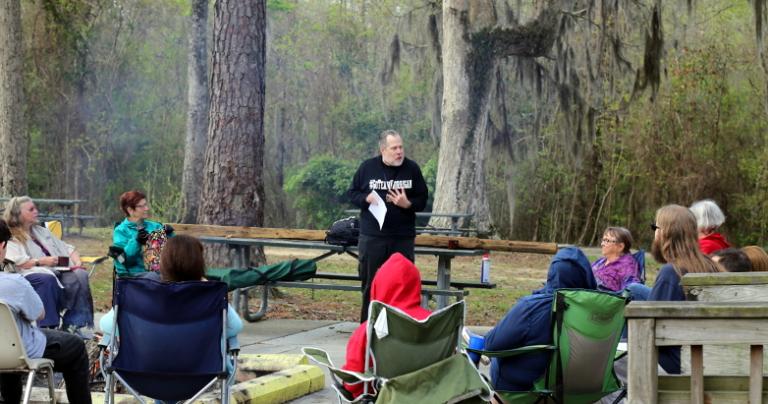
speaking at the 2016 OBOD Gulf Coast Gathering
I would like to hear about how you cleansed and warded your new office. What did that entail?
After 16 years in the same office, I moved to the other end of the building a couple weeks ago. I started by cleaning out the old office – I threw out a lot of old papers and junk I had accumulated. Before moving into the new office, I cleaned all the surfaces and cabinets. Never underestimate the power of good mundane cleaning!
I did a brief sweep of the office, using my hand in place of a wand, moving the old energy around and out the door. I drew a pentagram over the door and charged it to protect me from any and all ill intent. Then I concluded with a prayer to the deities I’m closest to, asking Their blessings and protection on this space.
So far so good.
You occasionally mention on your blog that you are a priest of Danu and Cernunnos, which I assume, means that you have made vows to them, binding you to certain obligations. 1) How did these relationships start? Did they ask you to be their priest first, or were you the one offering your services to them? 2) What kind of direct impact did this have on your life? Did anything change beyond that you are now bound to duty?
I’ve written about the beginnings of my relationships with Cernunnos and Danu before. They asked me to be Their priest, Cernunnos first (after many years of relationship building) and Danu later (that one came quickly).
After accepting the obligations and making the vows (I made vows to both of Them at the same time), Their presence became constant and noticeable – They’re never not there. The same is true of my relationship with the Morrigan. Although I am not Her priest, after I made vows to serve Her, She’s never not there. I don’t know how common that is among polytheists, so I wouldn’t assume that would be the case with every person. But that’s what it’s been for me.
The exact wording of my oaths and the content of the promises I made is sacred and not for publication. But you asked what changed – my answer is that Their presence went from occasional to constant.
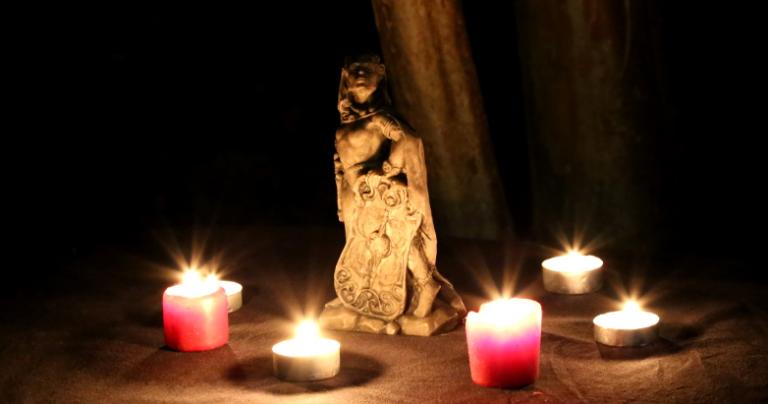
What is your view of reincarnation? Does anything we do now have any effect later? Is there a process to reincarnation? At what point is it decided that we come back? Or are we just energy and eventually we remain as part of the whole?
Back in August I wrote One Pagan’s Thoughts on What Comes After Death. That may address your question more fully than I can answer it here.
I’m inclined to believe in reincarnation, but it’s a belief I hold very loosely. If I get to the Otherworld and I’m told “that was it – you only get one life” I’ll be surprised but not shocked. So while I have some vague ideas about how reincarnation might work, I have nothing definitive I can tell you, and certainly nothing authoritative.
The one question I will address directly is “does anything we do now have any effect later?” Every action has consequences. Rarely are those consequences formal, such as receiving a prize for winning a contest, or a judge handing down a sentence after someone is convicted of a crime. Rather, you touch a hot stove and you get burned. You smoke cigarettes and you get lung cancer (or maybe you don’t – consequences aren’t always predictable). You spend years practicing meditation and prayer and you find your life is more manageable – not easier, just easier to deal with.
If reincarnation exists, we should expect that what we do in this life will carry over into our next life. Not as a reward or punishment, and not because of some great curriculum of “lessons” we must learn, but because the future is always the consequence of the past.
Does reincarnation continue eternally, or will we someday merge into one great Unity? I’ve had radically different thoughts on that at different times in my life. Right now I’m not very concerned with it, so I have no opinion to offer.
Danna: I’ve realized that all the Deities I thought I worshipped really aren’t “there” anymore, if they ever were. Obviously, I wasn’t that serious in my devotion of them. So my question is what do I do with their stuff: statues and the like? My thoughts are to donate them. I realize the Deities in question are probably not nearly as invested in this question since I never had a connection with them, honestly I never did the work to have a connection.
The context of your question makes it clear that when you say deities aren’t “there” you mean They’re not present in your life, not that They don’t exist.
I think you’re on the right track. Still, these are sacred items, and they should be disposed of reverently and respectfully. Donating them to someone for whom they would be inspirational or an aid to devotion would be ideal.
If they were ever more than just statues (if they were truly dwelling places for Gods) you would need to find someone who would care for them on an on-going basis. That doesn’t sound like it’s the case here, though.
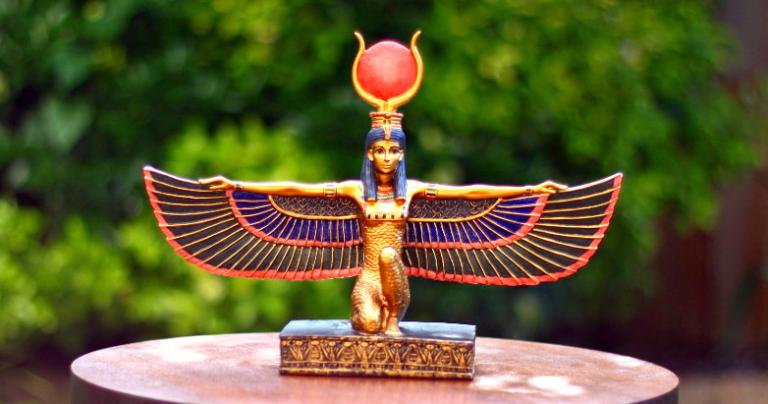
How do you handle people who have the ambition to be community leaders, but who are poison? Maybe they have mental health issues, maybe they are just too narcissistic. It is hard to exclude people when your basic desire is to be inclusive, but some people will tear your community apart.
This is hard.
The short answer is to set high, clear standards, and then enforce them. If someone is toxic, they cannot be allowed into leadership positions. Sometimes they can be ignored or outvoted. The problem is that most Pagan organizations are perpetually short of leaders, so it’s hard to say no to someone who’s willing to do the work.
A community without standards isn’t a community, it’s just a collection of individuals. And the first standard has to be that the community is more important than any one person. That means removing toxic individuals – gently if possible, forcefully if necessary – rather than allowing them to poison the community. It also means the healthy leaders have to be willing to have a confrontation when necessary. Which is also hard.
It helps to have established leaders demonstrating healthy behaviors. Most toxic people aren’t completely clueless – if they see they aren’t going to get what they want, they’ll keep moving.
There is no silver bullet here. Just lots of hard and unpleasant work. Good luck.
Lorie: I am being pulled in two directions. One ancestor whispers of Romani knowledge through my Czechoslovakian grandmother and the other ancestors cry of my Welsh ancestry through my grandfather. I have studied half a year of OBOD materials from England and about 12 years of witchcraft through various sources. I need to land somewhere but I don’t know where I belong yet. How do I reconcile this?
One thing I find that I cannot be nudged on and that is my desire to practice alone. I feel much freer to give of myself in ritual if I am alone and I share constantly with my ancestors while I am alone.
I think you need to take a deeper look at your questions.
Romani and Welsh aren’t paths or traditions like OBOD or ADF or any of the witchcraft traditions. They’re living, breathing cultures with their own languages, customs, and most importantly, people. They’re communities. And that’s at dire odds with your desire to practice alone.
The handful of Welsh people I know have been very welcoming to those who want to come to Wales, learn the language, and participate in the culture. But they look rather unfavorably on those call themselves Welsh without doing any of those things.
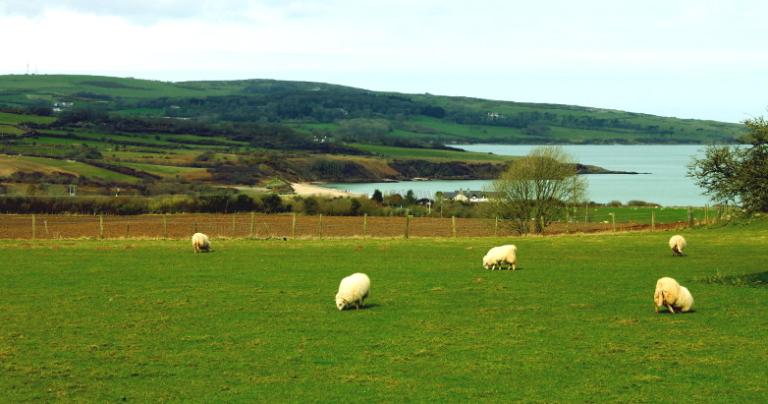
Anglesey, Wales – 2014
I do not know any Romani people, but my understanding is that they are very guarded with their culture, and with good reason. They have been harassed and oppressed every place they’ve ever lived and are justifiably untrusting of strangers.
You say “I don’t know where I belong.” This is a common feeling among those of us in North America. Our ancestors were cut off from their indigenous religions hundreds of years ago, but at least they had their land and cultures. We have neither. We have to form our own relationships with the land where we are, and with the people who are or who will become our families.
I can’t help you with the Romani, except to warn that if a book or other resource is written by someone who isn’t Romani themselves, it’s highly suspect.
There’s plenty of Welsh material available. Start with a good history – I read A Concise History of Wales by Geraint H. Jenkins. Read the Mabinogi. Read From the Cauldron Born by Kristoffer Hughes. If Wales calls to you, explore it further.
And if it doesn’t, if what you’re looking for is a magical tradition and not a culture, that’s OK. OBOD is a very good tradition. So is ADF. So are dozens of other Pagan groups and traditions and orders. But they’re not living, breathing cultures.
Being Pagan is all about the experience, but when one is not going to get along with the concept of a tradition, how does one further one’s growth? I just don’t get the whole oath bound concept and have struggled my whole life trying to understand the need for any “mile marker” ceremonies be they mundane or spiritual.
Although experience is a very important part of my Paganism (which is why it’s in the subtitle of my book), I wouldn’t say Paganism is all about the experience. Paganism is about many things, and I’d put relationships at the top of that list. Some of our relationships are with Nature, some are with Gods and spirits, and some are with other people.
Not all Pagan traditions are oath-bound. Some of those that are oath-bound have material that needs to be learned sequentially: you need to master the first degree before you try to tackle the second degree. Others involve experiences where vulnerability is required. Knowing that what happens in the circle will stay in the circle allows people to relax and participate fully.
Our mainstream society does a very poor job with rites of passage, and thus we don’t realize what we’re missing. “Mile marker” ceremonies reinforce the idea that our status has changed, and thus our rights and responsibilities have also changed. Many of these status changes happen gradually – we may not realize how much we’ve changed. The ceremonies help draw a clear bright line between “child” and “adult” or between “devotee” and “priest,” to name just two.
One of the advantages of working within a tradition is being able to use that tradition’s roadmap for growth. In OBOD you move from a non-member to Bard, from Bard to Ovate, from Ovate to Druid, and from Druid to Druid graduate (OBOD has no formal term for those who’ve completed the Druid grade – I’ve heard some use “Druid graduate” and I like it).
If you aren’t in a tradition, then you have to chart your own course. The upside is that you can design your own program from start to finish, emphasizing what you like and skipping what you don’t. The downside is that you have to do the work to design your own program from start to finish. That also means you don’t have the benefit of elders who’ve already walked the same path. If you get stuck, you have to get yourself unstuck… and many don’t.
Some people are called to be solitary practitioners. Some are called to blaze their own trail. It can be done. But it’s very hard.
Thanks for all the questions. We’ll do this again in January!
Previous Post

December 12, 2017
The Winter Solstice: What Needs To Be Born?
Next Post
December 17, 2017 Under the Ancient Oaks: Honoring Our Ancestors
Browse Our Archives
Select a Category Books Community CUUPS Druidry Foundations and Context Gods and Goddesses Magic Myth Nature Ritual Spiritual Practice Theology Travel Uncategorized Videos
Select a Month October 2026 September 2026 August 2026 July 2026 June 2026 May 2026 April 2026 March 2026 February 2026 January 2026 December 2025 November 2025 October 2025 September 2025 August 2025 July 2025 June 2025 May 2025 April 2025 March 2025 February 2025 January 2025 December 2024 November 2024 October 2024 September 2024 August 2024 July 2024 June 2024 May 2024 April 2024 March 2024 February 2024 January 2024 December 2023 November 2023 October 2023 September 2023 August 2023 July 2023 June 2023 May 2023 April 2023 March 2023 February 2023 January 2023 December 2022 November 2022 October 2022 September 2022 August 2022 July 2022 June 2022 May 2022 April 2022 March 2022 February 2022 January 2022 December 2021 November 2021 October 2021 September 2021 August 2021 July 2021 June 2021 May 2021 April 2021 March 2021 February 2021 January 2021 December 2020 November 2020 October 2020 September 2020 August 2020 July 2020 June 2020 May 2020 April 2020 March 2020 February 2020 January 2020 December 2019 November 2019 October 2019 September 2019 August 2019 July 2019 June 2019 May 2019 April 2019 March 2019 February 2019 January 2019 December 2018 November 2018 October 2018 September 2018 August 2018 July 2018 June 2018 May 2018 April 2018 March 2018 February 2018 January 2018 December 2017 November 2017 October 2017 September 2017 August 2017 July 2017 June 2017 May 2017 April 2017 March 2017 February 2017 January 2017 December 2016 November 2016 October 2016 September 2016 August 2016 July 2016 June 2016 May 2016 April 2016 March 2016 February 2016 January 2016 December 2015 November 2015 October 2015 September 2015 August 2015 July 2015 June 2015 May 2015 April 2015 March 2015 February 2015 January 2015 December 2014 November 2014 October 2014 September 2014 August 2014 July 2014 June 2014 May 2014 April 2014 March 2014 February 2014 January 2014 December 2013 November 2013 October 2013 September 2013 August 2013 July 2013 June 2013 May 2013 April 2013 March 2013 February 2013 January 2013 December 2012 November 2012 October 2012 September 2012 August 2012 July 2012 June 2012 May 2012 April 2012 March 2012 February 2012 January 2012 December 2011 November 2011 October 2011 September 2011 August 2011 July 2011 June 2011 May 2011 April 2011 March 2011 February 2011 January 2011 December 2010 November 2010 October 2010 September 2010 August 2010 July 2010 June 2010 May 2010 April 2010 March 2010 February 2010 January 2010 December 2009 November 2009 October 2009 September 2009 August 2009 July 2009 June 2009 May 2009 April 2009 March 2009 February 2009 January 2009 December 2008 November 2008 October 2008 September 2008 August 2008 July 2008 June 2008
Follow Us!
TAKE THE
Religious Wisdom Quiz
Who was Jonathan's son, crippled as a child, whom David showed kindness?
Select your answer to see how you score.
Mephibosheth Jedidiah Abinadab Siba
Related posts from John Beckett




What We Lose When “Ask AI” Becomes A...
TRENDING AT PATHEOS Pagan

The Sermon on the Mount, Part I: Matthew...
The Sermon on the Mount, Part I (Matthew 4:12-5:12) St. Matthew moves...

What's up from Crossway: Reviewing some of their latest A few weeks...

Janie Learns the Way of the Cross: A...
Teaching children about Jesus' Passion can be challenging. Many parents and educators...

Looking For Good Catholic Writing - October 2026
He alone extends the heavens, and he walks upon the waves of...

In "Irreplaceable," our book on vocation and technology, Trevor Sutton and I...

I was strolling through the top floor of the brand new Parthenon...
view all Pagan blogs
Ad-Free & Subscriber Log-In Subscription Support
- About Us
- 2026 Calendar
- Videos
- Podcasts
- Library of World Religions
- Faith In Media Tracker
- Advertise With Us
- Write for Us
- Privacy Policy
- Terms of Service
- Do Not Sell My Data
- Contact Us
- Radiant Digital
- Manage Newsletter Subscriptions
- Unsubscribe From Notifications
- Sitemap
Copyright 2008-2026, Patheos. All rights reserved.
Subscription Support Ad-Free & Subscriber Log-In
Follow Patheos