
BuddhistCatholicContemplativeEvangelicalGeneral ChristianHinduJewishLatter-day SaintMuslimNew VisionsProgressive Christian
Beliefs
- Buddhist
- Catholic
- Contemplative
- Evangelical
- General Christian
- Hindu
- Jewish
- Latter-day Saint
- More Voices
- Muslim
- New Visions
- Pagan
- Progressive Christian
Topics
- Religion News
- Food and Religion
- Sports and Religion
- Religious Art
- Religious Music and Entertainment
- Religious Events
- History and Religion
- Style and Religion
- Politics and Religion
- Women in Religion
- Recreation Outdoors and Religion
- Business Finance and Religion
- Careers Workplace and Religion
- Education and Religion
- Family Parenting and Religion
- Health Fitness and Religion
- Home and Religion
- Relationships and Religion
- Technology and Religion
- Travel and Religion
Columnists
- Buddhist Columnists
- Business Finance and Religion Columnists
- Careers Workplace and Religion Columnists
- Catholic Columnists
- Contemplative Columnists
- Education and Religion Columnists
- Evangelists Columnists
- Family Parenting and Religion Columnists
- General Christian Columnists
- Health Fitness and Religion Columnists
- Hindu Columnists
- History and Religion Columnists
- Home and Religion Columnists
- Jewish Columnists
- More Voices Columnists
- Latter Day Columnists
- Muslim Columnists
- New Visions Columnists
- Nonreligious Columnists
- Pagan Columnists
- Politics and Religion Columnists
- Progressive Columnists
- Recreation Outdoors and Religion Columnists
- Relationships and Religion Columnists
- Religion News Columnists
- Religious Art Columnists
- Religious Events Columnists
- Religious Music and Entertainment Columnists
- Sports and Religion Columnists
- Style and Religion Columnists
- Technology and Religion Columnists
- Travel and Religion Columnists
- Women in Religion Columnists
Resource Library
- 2026 Calendar
- Library of World Religions
- The 100 Most Holy Places on Earth
- Patheos Answers
- Podcasts
- Videos
- Faith Leaders Database
- Anglican Episcopalian
- Bahai
- Baptist
- Buddhism
- Christianity
- Confucianism
- Eastern Orthodoxy
- Hinduism
- Holiness and Pentecostal
- ISKCON
- Islam
- Judaism
- Lutheran
- Methodist
- The Church of Jesus Christ of Latter-day Saints
- New Age
- Paganism
- Presbytarian and Reformed
- Protestantism
- Religion Behind the Scenes
- Roman Catholic
- Scientology
- Shia Islam
- Sikhism
- Sufism
- Sunni Islam
- Taoism
- Zen
- See all religions
Research Tools
 Ad-Free & Subscriber Log-In Subscription Support
Ad-Free & Subscriber Log-In Subscription Support
Follow Patheos 

- Trending:
- Forgiveness
- |
- Marriage
- |
- Consciousness
- |
- Death Penalty
- |
- Election
- |
- Halloween

- Home
- Pagan
- The Big Questions of Life – A Pagan Approach
The Big Questions of Life – A Pagan Approach
Last updated on: November 14, 2017 at 10:01 am by John Beckett
The Big Questions of Life – A Pagan Approach 2017-11-14T10:01:24-06:00 John Beckett
Patheos Explore the world's faith through different perspectives on religion and spirituality! Patheos has the views of the prevalent religions and spiritualities of the world.
In writing the last post on The Aesthetic of Witchcraft, I realized that while I’ve made frequent reference to “The Big Questions of Life” over the years I’ve never devoted a post specifically to these questions. I’ve listed some of them from time to time, but mostly I’ve just assumed everyone knows what I’m talking about, in general if not in particular.
Assumptions are often wrong. And even if many readers have a general understanding of the Big Questions of Life (I think most of you do) the fact that I keep mentioning them means they’re something I need to discuss in more detail.
The usual disclaimers apply: this is my list of questions and my responses to them. There is no Pagan orthodoxy in this matter, as there is no Pagan orthodoxy anywhere. But I’m a Pagan and a polytheist, so this is a Pagan and polytheist approach. A Christian approach or an atheist approach or a Buddhist approach would be different, perhaps subtly and perhaps radically.

What is a Big Question of Life?
The capitalization is a hint – it’s something important. Really important. And it’s something universal to humanity, matters we all encounter whether we are young or old, rich or poor, sick or healthy.
The Big Questions of Life call us to step beyond the immediacy of our day to day lives and to think about deeper matters. They ask us to live our lives consciously and intentionally. They help us understand the difference between surviving and living.
And sooner or later they inject themselves into our lives and demand that we deal with them whether we want to or not.
Why should we try to answer them?
For me, this question is harder than any of the actual Big Questions of Life. I can’t imagine why anyone would not want to try to answer them. I’m eternally curious – if there’s a question, I want to find the answer. Or at least, an answer.
I understand: some people are so caught up in day to day life they don’t have time for philosophical contemplation… though I would suggest that many of them would be less caught up if they spent a little more time asking themselves why they’re doing what they’re doing and if there might be a better way to live. And busyness aside, some people just aren’t interested in thinking deeply.
But this we know: all that is born will some day die. Even if you refuse to deal with everything else, you must deal with the matter of death. The time to do that is not when death is upon you (either your own death or the death of someone you love) but on a beautiful Sunday afternoon when the sun is shining and all is right with your world.
Think about the Big Questions of Life now, so that when they intrude into your life, you have answers (or at least, approaches) that are helpful and satisfying to you.
Partial answers and provisional answers are better than no answers
Philosophers, theologians, and ordinary people have contemplated the Big Questions of Life for at least as long as we’ve been human. They have many ideas, but no definitive, black and white answers.
We have a name for people who claim to have certain answers where no certainty is possible: fundamentalist. We have a name for people who claim to have simple and easy answers to deep and complex questions: wrong.
Given the inherent uncertainty around the Big Question of Life, some people decline to engage them. Or they claim that since we can’t know for sure, any answer is as good as any other.
But some answers are clearly wrong, while others are less wrong. Some answers provide comfort and inspire us to keep going in difficult times. We can accept a partial or provisional answer and enjoy its benefits, and then continue working with the questions. If we later find a better answer, we can adjust our beliefs accordingly. Hold loosely but practice deeply.
More than that, there is value in the process of contemplation. Asking the questions, considering their implications, examining the various theories and philosophies and evaluating their effectiveness helps us understand the questions better, even if we are ultimately unable to come to any definitive conclusions.
Now let’s look at some of the specific Big Questions of Life.

Where do we come from?
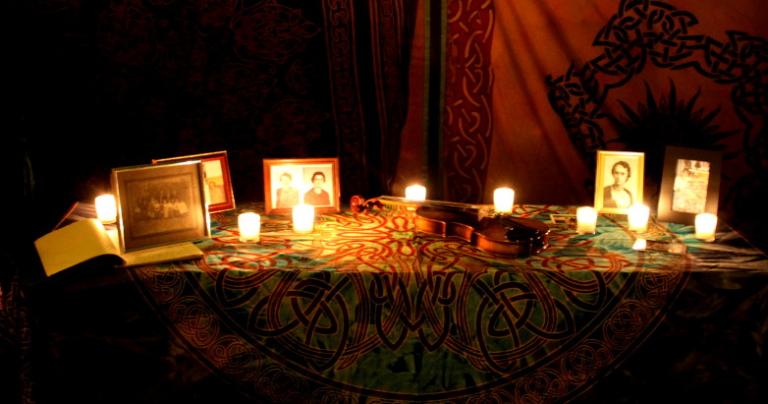
The straightforward answer is that we come from our parents. This is simple to the point of pedantry, but it points in a helpful direction: we came from our ancestors. We are here because of those who came before us. If it wasn’t for them, we would not have life, much less all the things that for better or for worse make up our human society.
Honoring our ancestors is a foundational component of my Pagan and polytheist religion.
We can easily contemplate our many-great human grandparents. It’s harder, but we can also contemplate our pre-human ancestors, going all the way back to the first single-cell life on Earth.
But where did that ancestor come from? Even if we accept the hypothesis that the origins of life are purely chemical, we are still left with the matter of the origin of the universe.
Mainstream science can trace those origins back to a fraction of a second after the Big Bang. But at the instant of the Big Bang – much less before – the laws of physics break down. String theory and other ideas to explain this are so far untestable and as much speculation as science. Which is not to say we should dismiss them outright, only that we should be careful how much weight we give them in our religious and philosophical endeavors… particularly considering their materialist assumptions.
Fundamentalist Christian creationists claim their God created the universe. When asked “where did your God come from?” they claim he always existed. If a God can exist eternally, then there’s no reason why the universe can’t exist eternally.
More than any of the other Big Questions of Life, “where do we come from?” is ultimately unanswerable. I prefer to focus on my ancestors and leave the rest to others.
Why are we here?
Where ever we came from, we are here, living on the Earth. Why? What is our purpose in life?
There is an unstated assumption in this question: that humans actually have a purpose, either collectively or as individuals or both. And there’s a further assumption: that humans have a purpose and other species do not. Or if they do, it’s in support of a greater human purpose.
But evolution and the genetic information that support it show that we are more like our fellow animals (and possibly, plants) than we are different. Animism – another foundational component of my Paganism – says that all beings are persons worthy of dignity and respect.
Before we can answer the question of our purpose, we must understand that life isn’t all about us. Humans are one species out of many. An inordinately powerful species, to be sure, but might does not make right – quite often the opposite.
Observation tells us that life has one purpose: to continue. Clearly life continues collectively. Whether or not it continues individually is its own Big Question.
Our purpose as individuals is what we make it. I believe strongly in free will. Destiny is the cumulative effect of our choices, including those choices we don’t recognize as choices, and including the choices that were made for us by parents, teachers, and society at large.
Which leads to the next Big Question…
How should we live?
If you want a good survey of how various philosophers have answered this question over a couple dozen centuries, read Brendan Myers’ book The Earth, The Gods and The Soul. If you want my answers, read on.
Live in relationships. Humans are not solitary animals – we are social creatures. Life is best lived in relationships with other humans, with other species, and with our Gods and ancestors. These relationships should be based in mutual respect, in hospitality, and in reciprocity: “I give, so that you may give, so that I may give again.”
Build a better life for yourself. Destiny is the cumulative effect of our choices. Where are the choices you’re making today leading you? If you don’t like the road you’re on, make some changes. We have strong evolutionary urges to think short-term. Sacrificing today for a better tomorrow requires conscious intention. Think about it, make plans, and then act.
Build a better world. Remember that destiny is also the cumulative effect of the choices others make for us. Those of us who have the intellectual, financial, and other resources to make the world a more just, more fair, and more compassionate place for all have an obligation to do so.
But enjoy life today. Eat good food. Drink good wine. Enjoy art and entertainment. Travel – if you do nothing else, travel. Life is short and hard and we are not guaranteed tomorrow, much less a life after this life. Enjoy what you can while you can.
At the heart of Paganism is the belief that despite all the very real pain and suffering, life is good. These are the things that make it all worthwhile. They require compromises and tradeoffs – how much do we live for today, how much for tomorrow, and how much for others? Different people will strike different balances, and that’s OK. But these are the four keys to a happy and virtuous life.

Good and evil
Most Pagans reject the dualism of good and evil. Much of this is due to Christians who define good as “what we think our God wants” and evil as “what we think our God hates”… and of course, their God just so happens to hate the very same people and things they hate.
Good is fairly easy to recognize, even if we realize there’s more than a bit of relativism in it. What’s good for the cheetah is not good for the gazelle, and vice versa. In whole, dynamic balance is good because it is sustainable and minimizes suffering, while both stasis and extremism are bad because they lead to greater suffering.
Evil defies definition. Yet when we see things like the Las Vegas mass shooting and last Sunday’s church shooting here in Texas, there is no other word that fits. We try to explain these horrendous acts in terms of mental illness, but that ignores that fact that the overwhelming majority of people with mental illness are not violent, much less commit mass murder.
I do not deny the existence of Satan, but I do not believe he is a God of Evil. The phrase “forces of evil” belongs in a cheap horror movie. “The devil made me do it” is a weak excuse for human failings and poor choices.
In his 1978 book The Road Less Traveled M. Scott Peck described evil as the combination of narcissism and laziness – when someone is willing to harm and even kill others rather than face the suffering that is necessary to learn and grow. This makes more sense than anything else I’ve read. Evil exists – it is a murderous selfishness.
Note: The Road Less Traveled was very helpful in the early days of my Pagan journey. Peck’s later books are explicitly Evangelical and are far less useful to Pagans and other non-Christians.
The matter of the Gods
In The Path of Paganism I wrote:
There is perhaps no bigger (and no more dangerous) question than that of the Gods. What are they? Who are they? What do they offer us, and what do they want in return? There are many possible answers.
In Reclaiming Civilization Brendan Myers wrote:
The worship of the gods is not what matters.
I think both of these statements are true. Later in that same paragraph, Myers wrote:
The gods, if they exist, are not laws to obey; they are presences to be experienced.
I’m a polytheist. I see the Gods as real, distinct, individual beings – as presences to be experienced. I believe it is good and right to worship Them, and I believe it is helpful for humans to worship Them. Worship is the best way to experience the Gods, to form relationships with Them, and to begin to embody Their virtues and values.
Polytheism teaches that different Gods call different people to serve Them in different ways. Worship seems to be a requirement for those of us who are called to deeper service, not a universal obligation. If I were to stop my worship of Cernunnos, Danu, the Morrigan, and others, I am certain the consequences would be severe. Others have not made the promises I have made, and are under no such obligation.
There is reason to doubt the historicity of the Marcus Aurelius quote I see on Facebook from time to time, but it’s still true:
Live a good life. If there are Gods and they are just, then they will not care how devout you have been, but will welcome you based on the virtues you have lived by. If there are Gods, but unjust, then you should not want to worship them. If there are no Gods, then you will be gone, but will have lived a noble life that will live on in the memories of your loved ones.
What happens when we die?
This is perhaps the biggest of the Big Questions and it deserves its own post. As it happens, I wrote just such a post back in August. I encourage you to read it at your convenience – here’s a brief summary.
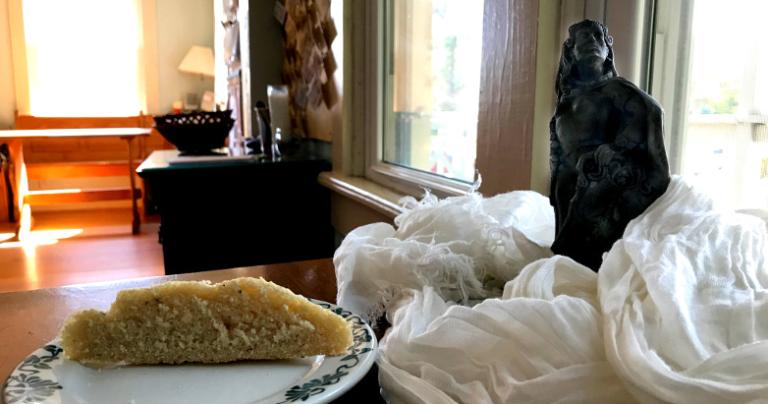
I expect that as I die I will be met by an ancestor or other spiritual ally who will guide me into the Otherworld for the final time. I expect to experience a time of rest and review. I expect to spend some time working on various things on the other side. And then I expect to be reborn into this world to start the process all over again.
And I also expect that I’m wrong about at least part of that. Death is a mystery, and my beliefs are a subjective combination of tradition, experience, intuition, and logic. The uncertainty is great – the odds on me or anyone else getting it exactly right are impossibly long.
Who am I?
Most cultures throughout most of history have rooted identity in the family, the tribe, and the religion. Modern Western culture grounds identity and autonomy firmly in the individual. This gives us tremendous freedom, but it also overwhelms us with more options and alternatives than we can manage.
When we contemplate the Big Questions of Life, we start to form answers – our own answers. The deeper we go, the better we understand the world and the way it works, and the better we understand ourselves.
Some ideas are clearly true, some are clearly false, and many are hard to tell. Some are helpful while others are harmful, thought it always helps to recognize if you’re a cheetah or if you’re a gazelle.
These questions are too big for simple answers, and anyone who promises a simple answer is trying to sell you something… or trying to get you to sell your soul to them. Ignore those who are selling a black and white world, and explore your own answers in the brilliant spectrum of the Big Questions of Life.
Previous Post

November 7, 2017
The Aesthetic of Witchcraft and the Return of Real Magic
Next Post

November 12, 2017 Under the Ancient Oaks: Devotion to Night
Browse Our Archives
Select a Category Books Community CUUPS Druidry Foundations and Context Gods and Goddesses Magic Myth Nature Ritual Spiritual Practice Theology Travel Uncategorized Videos
Select a Month October 2026 September 2026 August 2026 July 2026 June 2026 May 2026 April 2026 March 2026 February 2026 January 2026 December 2025 November 2025 October 2025 September 2025 August 2025 July 2025 June 2025 May 2025 April 2025 March 2025 February 2025 January 2025 December 2024 November 2024 October 2024 September 2024 August 2024 July 2024 June 2024 May 2024 April 2024 March 2024 February 2024 January 2024 December 2023 November 2023 October 2023 September 2023 August 2023 July 2023 June 2023 May 2023 April 2023 March 2023 February 2023 January 2023 December 2022 November 2022 October 2022 September 2022 August 2022 July 2022 June 2022 May 2022 April 2022 March 2022 February 2022 January 2022 December 2021 November 2021 October 2021 September 2021 August 2021 July 2021 June 2021 May 2021 April 2021 March 2021 February 2021 January 2021 December 2020 November 2020 October 2020 September 2020 August 2020 July 2020 June 2020 May 2020 April 2020 March 2020 February 2020 January 2020 December 2019 November 2019 October 2019 September 2019 August 2019 July 2019 June 2019 May 2019 April 2019 March 2019 February 2019 January 2019 December 2018 November 2018 October 2018 September 2018 August 2018 July 2018 June 2018 May 2018 April 2018 March 2018 February 2018 January 2018 December 2017 November 2017 October 2017 September 2017 August 2017 July 2017 June 2017 May 2017 April 2017 March 2017 February 2017 January 2017 December 2016 November 2016 October 2016 September 2016 August 2016 July 2016 June 2016 May 2016 April 2016 March 2016 February 2016 January 2016 December 2015 November 2015 October 2015 September 2015 August 2015 July 2015 June 2015 May 2015 April 2015 March 2015 February 2015 January 2015 December 2014 November 2014 October 2014 September 2014 August 2014 July 2014 June 2014 May 2014 April 2014 March 2014 February 2014 January 2014 December 2013 November 2013 October 2013 September 2013 August 2013 July 2013 June 2013 May 2013 April 2013 March 2013 February 2013 January 2013 December 2012 November 2012 October 2012 September 2012 August 2012 July 2012 June 2012 May 2012 April 2012 March 2012 February 2012 January 2012 December 2011 November 2011 October 2011 September 2011 August 2011 July 2011 June 2011 May 2011 April 2011 March 2011 February 2011 January 2011 December 2010 November 2010 October 2010 September 2010 August 2010 July 2010 June 2010 May 2010 April 2010 March 2010 February 2010 January 2010 December 2009 November 2009 October 2009 September 2009 August 2009 July 2009 June 2009 May 2009 April 2009 March 2009 February 2009 January 2009 December 2008 November 2008 October 2008 September 2008 August 2008 July 2008 June 2008
Follow Us!
TAKE THE
Religious Wisdom Quiz
Which Christian principle is shown by the story of the widow's mite?
Select your answer to see how you score.
Give only if rich Never give Give to be seen Generosity from the heart
Related posts from John Beckett




What We Lose When “Ask AI” Becomes A...
TRENDING AT PATHEOS Pagan

57th Dove Awards Honor Dolly Parton, Crown New...
On gospel music’s biggest night, the 57th annual GMA Dove Awards honored...

The First Eucharistic Controversy: Christ’s Real Presence
For Catholics, the Eucharist is the source and summit of the Christian...

What a Stop Sign Can Teach Us About...
How to Make a Decision When You Can't Hear God Main point:...

Archdiocese Hosts Military Marriage Retreat in Germany
RASTATT, Germany — The transient military lifestyle, with its frequent deployments and...

Nearly every morning, I make the drive to Detroit with my high-school-age...

The Real AI Story Is Adoption Without Trust
Artificial intelligence has crossed a political threshold. It is no longer a...
view all Pagan blogs
Ad-Free & Subscriber Log-In Subscription Support
- About Us
- 2026 Calendar
- Videos
- Podcasts
- Library of World Religions
- Faith In Media Tracker
- Advertise With Us
- Write for Us
- Privacy Policy
- Terms of Service
- Do Not Sell My Data
- Contact Us
- Radiant Digital
- Manage Newsletter Subscriptions
- Unsubscribe From Notifications
- Sitemap
Copyright 2008-2026, Patheos. All rights reserved.
Subscription Support Ad-Free & Subscriber Log-In
Follow Patheos