
BuddhistCatholicContemplativeEvangelicalGeneral ChristianHinduJewishLatter-day SaintMuslimNew VisionsProgressive Christian
Beliefs
- Buddhist
- Catholic
- Contemplative
- Evangelical
- General Christian
- Hindu
- Jewish
- Latter-day Saint
- More Voices
- Muslim
- New Visions
- Pagan
- Progressive Christian
Topics
- Religion News
- Food and Religion
- Sports and Religion
- Religious Art
- Religious Music and Entertainment
- Religious Events
- History and Religion
- Style and Religion
- Politics and Religion
- Women in Religion
- Recreation Outdoors and Religion
- Business Finance and Religion
- Careers Workplace and Religion
- Education and Religion
- Family Parenting and Religion
- Health Fitness and Religion
- Home and Religion
- Relationships and Religion
- Technology and Religion
- Travel and Religion
Columnists
- Buddhist Columnists
- Business Finance and Religion Columnists
- Careers Workplace and Religion Columnists
- Catholic Columnists
- Contemplative Columnists
- Education and Religion Columnists
- Evangelists Columnists
- Family Parenting and Religion Columnists
- General Christian Columnists
- Health Fitness and Religion Columnists
- Hindu Columnists
- History and Religion Columnists
- Home and Religion Columnists
- Jewish Columnists
- More Voices Columnists
- Latter Day Columnists
- Muslim Columnists
- New Visions Columnists
- Nonreligious Columnists
- Pagan Columnists
- Politics and Religion Columnists
- Progressive Columnists
- Recreation Outdoors and Religion Columnists
- Relationships and Religion Columnists
- Religion News Columnists
- Religious Art Columnists
- Religious Events Columnists
- Religious Music and Entertainment Columnists
- Sports and Religion Columnists
- Style and Religion Columnists
- Technology and Religion Columnists
- Travel and Religion Columnists
- Women in Religion Columnists
Resource Library
- 2026 Calendar
- Library of World Religions
- The 100 Most Holy Places on Earth
- Patheos Answers
- Podcasts
- Videos
- Faith Leaders Database
- Anglican Episcopalian
- Bahai
- Baptist
- Buddhism
- Christianity
- Confucianism
- Eastern Orthodoxy
- Hinduism
- Holiness and Pentecostal
- ISKCON
- Islam
- Judaism
- Lutheran
- Methodist
- The Church of Jesus Christ of Latter-day Saints
- New Age
- Paganism
- Presbytarian and Reformed
- Protestantism
- Religion Behind the Scenes
- Roman Catholic
- Scientology
- Shia Islam
- Sikhism
- Sufism
- Sunni Islam
- Taoism
- Zen
- See all religions
Research Tools
 Ad-Free & Subscriber Log-In Subscription Support
Ad-Free & Subscriber Log-In Subscription Support
Follow Patheos 

- Trending:
- Forgiveness
- |
- Marriage
- |
- Consciousness
- |
- Death Penalty
- |
- Election
- |
- Halloween

- Home
- Pagan
- The Aesthetic of Witchcraft and the Return of Real Magic
The Aesthetic of Witchcraft and the Return of Real Magic
Last updated on: November 9, 2017 at 5:44 pm by John Beckett
The Aesthetic of Witchcraft and the Return of Real Magic 2017-11-09T17:44:22-06:00 John Beckett
Patheos Explore the world's faith through different perspectives on religion and spirituality! Patheos has the views of the prevalent religions and spiritualities of the world.
Witches always draw the media’s attention around Halloween, but last week I saw a number of articles about the “aesthetic of witchcraft.” Some of them came from mainstream sources, such as this segment from NPR on Embracing the Word Witch and this post from Buzzfeed on How Witchcraft Became A Brand. Gordon White, Peter Grey, and Alkistis Dimech discussed it on last week’s Rune Soup podcast.
For the most part, these pieces aren’t about witches who cast circles, brew potions, and worship The Goddess. They’re not about witches who summon spirits or make pacts with the devil. They’re about young women who adopt the mythology and especially the fashion of witchcraft without any of its magical or religious elements.
Some witches aren’t sure what to think about this trend. Some are decrying it as another case of consumerism run amuck. Last month Laura Tempest Zakroff wrote this humorous-but-serious piece titled An Acid Witch in response to the fashion trend of “basic witch.”
My first thought was that this is an argument I need to avoid. I’m not a witch and I’m certainly not a young woman – other people are more invested in this than I am.
But I am a magician, and I am someone who pays attention to the wider world. And I think it’s worth taking a deeper look at the aesthetic of witchcraft and what it means for Pagans and polytheists.
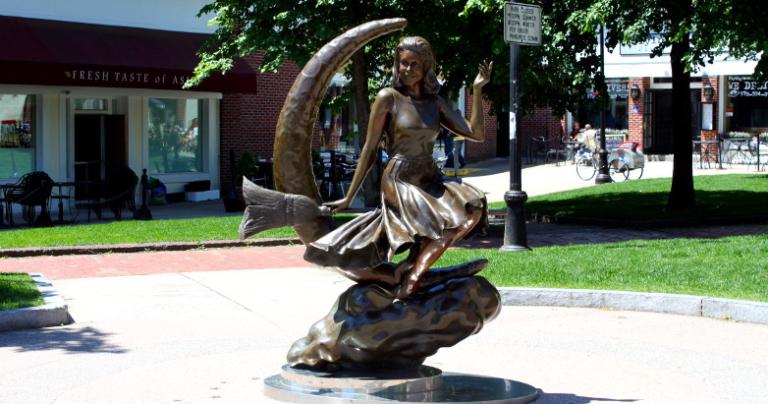
Nobody owns witchcraft
I get it. You put a ton of work into your Wiccan initiations and you guard your mysteries with care. You put years into studying herb lore and developing your own potions. The idea of some kid whose “basic witch” outfit costs more than your annual book budget claiming your title is annoying if not downright offensive. I imagine it’s similar to how I react when I get questions about Druids based on computer games.
But the witch is a universal myth. Or if it’s not universal, it’s so widespread it might as well be. In our culture we have the witches of Shakespeare’s Macbeth, the Wicked Witch of the West, Angelique, Samantha, Sabrina, Willow, and Hermione Granger. We have The Witches of Eastwick and the witches of American Horror Story: Coven. Whatever your desire, there’s a witch to match.
While witchcraft is not entirely a blank slate, it is a malleable form. It is and it can be many things. Some are deeply religious, some are ruthlessly pragmatic… and some are fashion choices.
In most places, a witch isn’t something you want to identify with
If people believe magic is real, then they’re likely to assume some people are using it for nefarious purposes… likely because that’s what they’d do if they could, even though they swear they wouldn’t. Witch burnings still happen in parts of Africa and Asia because people are afraid that their neighbors are using magic against them. And of course, the accused are always the others: old women, young children, and those who look and sound different from everyone else.
The United States is only a little over 300 years removed from our own witch trials and the resulting judicial murders. The last person convicted of witchcraft in Great Britain was Helen Duncan in 1944.
We look at these stories and say “those weren’t really witches.” In the vast majority of cases, that’s true.
But there have always been real witches – people who used magic for unauthorized purposes. Sick and can’t afford a doctor? Go see the local witch (who, up until 150 years or so ago, probably could do just as well). Got a spiritual problem the priest just won’t understand? Go see the witch. Can’t get justice from the law? Go see the witch.
None of these people would have called themselves witches. Those in power called them witches to discredit them. The name stuck, and the image of the witch is strong in our culture.
So it’s no surprise that those who feel threatened and excluded by those in power are attracted to the image of the witch and to the forms of witchcraft. And since there’s no risk of being burned at the stake, more and more people are not only willing to visit the witch, but to call themselves witches.
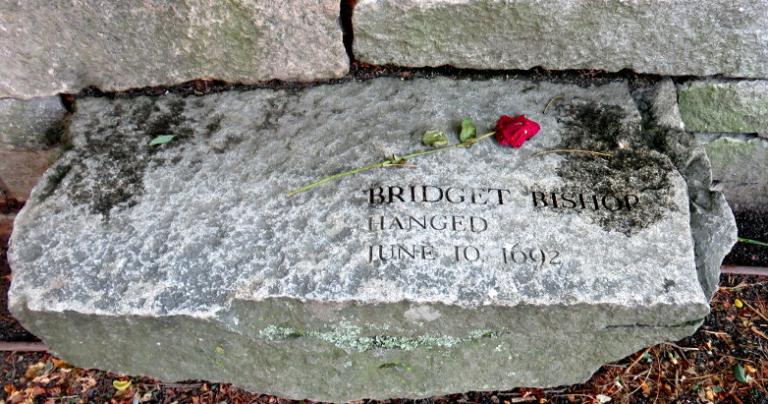
Witchcraft is the recourse of the dispossessed
In Apocalyptic Witchcraft, Peter Grey said:
Witchcraft is the recourse of the dispossessed, the powerless, the hungry and the abused.
I may be an old middle class white guy, but even I can see that a lot of young women feel dispossessed. And why wouldn’t they? Rising student debt and the disappearance of the jobs needed to pay it back. Attacks on women’s health care and on the mechanisms to pay for it. Rape culture and #metoo. And all the troubles we’re seeing that effect everyone regardless of age and gender.
Where can you go when the law won’t provide justice? Where can you go when our society insists you must have a college education but the only jobs are at Walmart? Where can you go when your health won’t allow you to work a regular job and our economic system tells you to do it anyway or be homeless… and then criminalizes homelessness?
You can go where people have gone for centuries – to see the local witch.
Or perhaps, you can become a witch yourself.
There’s no such thing as bad publicity
The Irish playwright Oscar Wilde – who, lest we forget, spent two years in a torturous prison for being gay, and who died at age 46 three years after his release – said: “the only thing worse than being talked about is not being talked about.”
Perhaps I’m becoming (even more) cynical in my old age, but I no longer think Paganism has the capacity to save the world. I still believe the world would be a far better place if an animistic nature religion with both theistic and non-theistic expressions replaced the monotheisms and atheisms of today. But I think that’s highly unlikely to happen in the next 200 years, much less in my lifetime.
I continue to promote and publicize Paganism because for those of us who are open to its call, it provides a spiritual and religious path that is deep and meaningful. It provides context for our experiences of the world and it helps us deal with the Big Questions of Life. Perhaps most importantly, it provides practices and tools that help us navigate the world and all its challenges.
My Paganism is a magical religion. I’m not a witch so I don’t call my magic witchcraft, but there’s a strong family resemblance.
So when someone else promotes witchcraft – even if they’re only propagating the aesthetic of witchcraft – they’re providing publicity for all of us under the Pagan umbrella.
That’s not going to convert the world to Paganism. But it will cause a few people stop and think, and to realize there’s something in that aesthetic that’s calling to them, something that goes beyond fictional characters, black clothes, and crystals.
Some of them are going to find their way into our traditions and our communities. That’s good for them and it’s good for the Pagan movement.
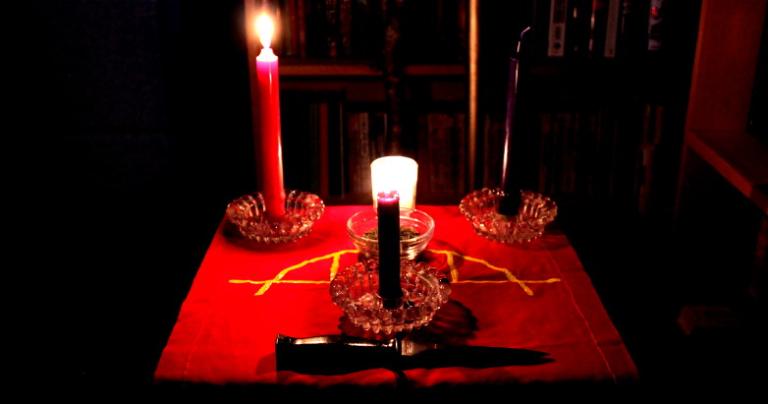
Witchcraft survived literal witch hunters – it will survive this too
While adopting the forms and language of witchcraft is a good thing, adopting the practice of witchcraft is better. Calling yourself a witch may make you feel strong, but knowing you have magical skills at your disposal is stronger. I really do wish the basic witches and brand witches were studying and practicing actual witchcraft.
But witchcraft and magic are stronger than any pop culture trend. They’ve been around for at least as long as we’ve been human – magic is part of our human legacy. Witchcraft has survived new religions, official prohibitions, witch hunts (actual witch hunts, not someone investigating your dirty politics), and materialistic debunkings. It’s survived because it’s strong and because it’s helpful to those who practice it.
Witchcraft is strong enough to survive being the shallow trend of the moment.
The aesthetic of witchcraft in the context of the shredded Veil
It would be the height of irony to criticize those who call themselves witches but who don’t practice witchcraft and not look at the magical forces in play in our contemporary world.
Yes, navigating the ordinary world is becoming more difficult in the decline of the American empire. And yes, people have always turned to magic and witchcraft (and religion) in difficult times. But the Veil Between the Worlds is shredded. The Otherworld is bleeding through into this world. The Fair Folk are returning to the ordinary world and setting up shop. People aren’t just experiencing a need for magic, magic itself is getting stronger.
Many of us for whom Gods, spirits, and magic are our life’s work are seeing this. Some are reluctant to make universal claims. That’s a fair approach, particularly considering that magic never really went away outside the Northern European – North American sphere of influence. But whether the phenomenon is global, regional, or personal, we are seeing and hearing and experiencing things that are unprecedented in the collective memory of anyone alive today.
I have my own ideas as to what’s behind this, although they’re mostly speculative at this point. But whatever it is, it’s affecting more than just the Pagan and magical communities.
Some people are feeling it, but so faintly that they can’t recognize it. Others are hearing it loud and clear, but they don’t have the context to respond properly – they’re completely convinced witchcraft is fictional and nothing more. And so some of this is coming through as entertainment and fashion instead of as actual witchcraft.
That won’t change until people have the necessary context – until people know as many real witches as they do fictional witches.

A Pagan response to a mainstream trend
There are good reasons why the aesthetic of witchcraft is a hot trend. People – mainly young women – are responding to a difficult and unjust world, and they’re responding to shifts in the currents of magic. Some have the knowledge and skills to find real witchcraft, and some don’t.
I want to make sure that those who have the aptitude and the desire to learn real magic and real Pagan religion can find the resources they need. I want to help restore historical context for magic and help create contemporary context. I want to help teach and train those who show up on my doorstep looking for guidance.
And that’s going to keep me so busy I can’t spend much time worrying about those who just want to look like a witch.
Previous Post

November 5, 2017
Give Your Magic Time To Work
Next Post

November 9, 2017 The Big Questions of Life – A Pagan Approach
Browse Our Archives
Select a Category Books Community CUUPS Druidry Foundations and Context Gods and Goddesses Magic Myth Nature Ritual Spiritual Practice Theology Travel Uncategorized Videos
Select a Month October 2026 September 2026 August 2026 July 2026 June 2026 May 2026 April 2026 March 2026 February 2026 January 2026 December 2025 November 2025 October 2025 September 2025 August 2025 July 2025 June 2025 May 2025 April 2025 March 2025 February 2025 January 2025 December 2024 November 2024 October 2024 September 2024 August 2024 July 2024 June 2024 May 2024 April 2024 March 2024 February 2024 January 2024 December 2023 November 2023 October 2023 September 2023 August 2023 July 2023 June 2023 May 2023 April 2023 March 2023 February 2023 January 2023 December 2022 November 2022 October 2022 September 2022 August 2022 July 2022 June 2022 May 2022 April 2022 March 2022 February 2022 January 2022 December 2021 November 2021 October 2021 September 2021 August 2021 July 2021 June 2021 May 2021 April 2021 March 2021 February 2021 January 2021 December 2020 November 2020 October 2020 September 2020 August 2020 July 2020 June 2020 May 2020 April 2020 March 2020 February 2020 January 2020 December 2019 November 2019 October 2019 September 2019 August 2019 July 2019 June 2019 May 2019 April 2019 March 2019 February 2019 January 2019 December 2018 November 2018 October 2018 September 2018 August 2018 July 2018 June 2018 May 2018 April 2018 March 2018 February 2018 January 2018 December 2017 November 2017 October 2017 September 2017 August 2017 July 2017 June 2017 May 2017 April 2017 March 2017 February 2017 January 2017 December 2016 November 2016 October 2016 September 2016 August 2016 July 2016 June 2016 May 2016 April 2016 March 2016 February 2016 January 2016 December 2015 November 2015 October 2015 September 2015 August 2015 July 2015 June 2015 May 2015 April 2015 March 2015 February 2015 January 2015 December 2014 November 2014 October 2014 September 2014 August 2014 July 2014 June 2014 May 2014 April 2014 March 2014 February 2014 January 2014 December 2013 November 2013 October 2013 September 2013 August 2013 July 2013 June 2013 May 2013 April 2013 March 2013 February 2013 January 2013 December 2012 November 2012 October 2012 September 2012 August 2012 July 2012 June 2012 May 2012 April 2012 March 2012 February 2012 January 2012 December 2011 November 2011 October 2011 September 2011 August 2011 July 2011 June 2011 May 2011 April 2011 March 2011 February 2011 January 2011 December 2010 November 2010 October 2010 September 2010 August 2010 July 2010 June 2010 May 2010 April 2010 March 2010 February 2010 January 2010 December 2009 November 2009 October 2009 September 2009 August 2009 July 2009 June 2009 May 2009 April 2009 March 2009 February 2009 January 2009 December 2008 November 2008 October 2008 September 2008 August 2008 July 2008 June 2008
Follow Us!
TAKE THE
Religious Wisdom Quiz
Who was the first disciple to be martyred?
Select your answer to see how you score.
Andrew Thomas James Peter
Related posts from John Beckett




What We Lose When “Ask AI” Becomes A...
TRENDING AT PATHEOS Pagan

The First Eucharistic Controversy: Christ’s Real Presence
For Catholics, the Eucharist is the source and summit of the Christian...

How to Make a Decision When You Can't...
Main point: It’s much more valuable to stay close to God so...

Archdiocese Hosts Military Marriage Retreat in Germany
RASTATT, Germany — The transient military lifestyle, with its frequent deployments and...

Nearly every morning, I make the drive to Detroit with my high-school-age...

The Real AI Story Is Adoption Without Trust
Artificial intelligence has crossed a political threshold. It is no longer a...

A new article, written by Jeff Lindsay and Gale L. Pooley,...
view all Pagan blogs
Ad-Free & Subscriber Log-In Subscription Support
- About Us
- 2026 Calendar
- Videos
- Podcasts
- Library of World Religions
- Faith In Media Tracker
- Advertise With Us
- Write for Us
- Privacy Policy
- Terms of Service
- Do Not Sell My Data
- Contact Us
- Radiant Digital
- Manage Newsletter Subscriptions
- Unsubscribe From Notifications
- Sitemap
Copyright 2008-2026, Patheos. All rights reserved.
Subscription Support Ad-Free & Subscriber Log-In
Follow Patheos