
BuddhistCatholicContemplativeEvangelicalGeneral ChristianHinduJewishLatter-day SaintMuslimNew VisionsProgressive Christian
Beliefs
- Buddhist
- Catholic
- Contemplative
- Evangelical
- General Christian
- Hindu
- Jewish
- Latter-day Saint
- More Voices
- Muslim
- New Visions
- Pagan
- Progressive Christian
Topics
- Religion News
- Food and Religion
- Sports and Religion
- Religious Art
- Religious Music and Entertainment
- Religious Events
- History and Religion
- Style and Religion
- Politics and Religion
- Women in Religion
- Recreation Outdoors and Religion
- Business Finance and Religion
- Careers Workplace and Religion
- Education and Religion
- Family Parenting and Religion
- Health Fitness and Religion
- Home and Religion
- Relationships and Religion
- Technology and Religion
- Travel and Religion
Columnists
- Buddhist Columnists
- Business Finance and Religion Columnists
- Careers Workplace and Religion Columnists
- Catholic Columnists
- Contemplative Columnists
- Education and Religion Columnists
- Evangelists Columnists
- Family Parenting and Religion Columnists
- General Christian Columnists
- Health Fitness and Religion Columnists
- Hindu Columnists
- History and Religion Columnists
- Home and Religion Columnists
- Jewish Columnists
- More Voices Columnists
- Latter Day Columnists
- Muslim Columnists
- New Visions Columnists
- Nonreligious Columnists
- Pagan Columnists
- Politics and Religion Columnists
- Progressive Columnists
- Recreation Outdoors and Religion Columnists
- Relationships and Religion Columnists
- Religion News Columnists
- Religious Art Columnists
- Religious Events Columnists
- Religious Music and Entertainment Columnists
- Sports and Religion Columnists
- Style and Religion Columnists
- Technology and Religion Columnists
- Travel and Religion Columnists
- Women in Religion Columnists
Resource Library
- 2026 Calendar
- Library of World Religions
- The 100 Most Holy Places on Earth
- Patheos Answers
- Podcasts
- Videos
- Faith Leaders Database
- Anglican Episcopalian
- Bahai
- Baptist
- Buddhism
- Christianity
- Confucianism
- Eastern Orthodoxy
- Hinduism
- Holiness and Pentecostal
- ISKCON
- Islam
- Judaism
- Lutheran
- Methodist
- The Church of Jesus Christ of Latter-day Saints
- New Age
- Paganism
- Presbytarian and Reformed
- Protestantism
- Religion Behind the Scenes
- Roman Catholic
- Scientology
- Shia Islam
- Sikhism
- Sufism
- Sunni Islam
- Taoism
- Zen
- See all religions
Research Tools
 Ad-Free & Subscriber Log-In Subscription Support
Ad-Free & Subscriber Log-In Subscription Support
Follow Patheos 

- Trending:
- Forgiveness
- |
- Marriage
- |
- Consciousness
- |
- Death Penalty
- |
- Election
- |
- Halloween

- Home
- Pagan
- Reclaiming Civilization: A Case For Optimism For The Future Of Humanity
Reclaiming Civilization: A Case For Optimism For The Future Of Humanity
Last updated on: October 26, 2017 at 3:00 am by John Beckett
Reclaiming Civilization: A Case For Optimism For The Future Of Humanity 2017-10-25T19:11:30-06:00 John Beckett
Patheos Explore the world's faith through different perspectives on religion and spirituality! Patheos has the views of the prevalent religions and spiritualities of the world.
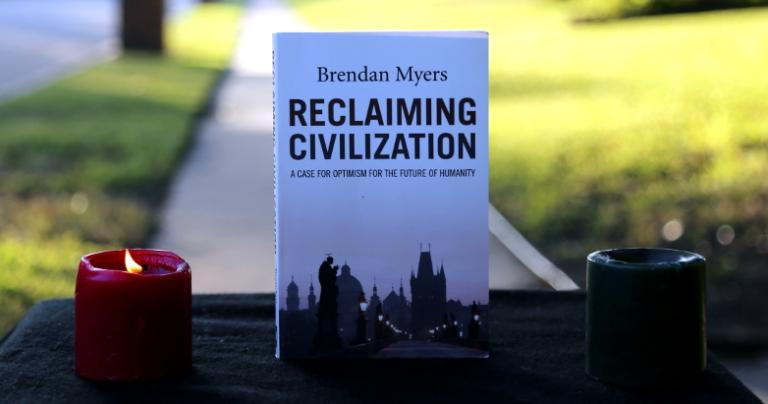
Reclaiming Civilization: A Case For Optimism For The Future Of Humanity
by Brendan Myers
published by Moon Books, August 2017
336 pages
trade paperback: $23.95, e-book: $9.99
What is civilization and how did it begin? What’s wrong with it? And what can we do to fix it?
These are the questions Druid and philosopher Brendan Myers contemplates in his new book Reclaiming Civilization. As with all of Brendan’s books (that I’ve read, anyway), Reclaiming Civilization explores deep topics in an accessible manner. There’s no philosophy jargon and references to famous philosophers include enough context for ordinary readers to understand why they’re being quoted.
I usually close book reviews by asking the question “who should read this book?” In this case, I think it’s best to start the review with that question. While Reclaiming Civilization is easy to read, it deals with complicated issues in an honest manner.
If you want to understand what civilization is and how it began, read this book. If you want to understand why civilization – like all human endeavors – requires tradeoffs and how some of those tradeoffs have been exploited, read this book. If you want a contemporary (and from my viewpoint, attractive) reflection on what it means to live a good life, read this book.
If you want a detailed plan to overcome political polarization and build a new and better world, you’re going to be disappointed. But you’ll be better informed when you make your own plans.
What is civilization?
In elementary school we’re taught that civilization means “living in cities.” But it’s really more complicated than that. Over the years various social scientists have come up with various checklists to determine if a particular society is “civilized” or not. These checklists have frequently been filled with cultural biases and inaccurate assumptions, particularly about what actually goes on in indigenous societies.
Myers says:
Civilization … is the capacity and the will to farm the land, to tame the animals, to shelter from the storm, and generally master the earth.
Civilization began around the hearth, a statement that will be familiar to many Pagans and polytheists. From there it was a short step to building houses, with whatever materials were readily available.
But that’s just a start. It’s another short step from building walls for houses to building what Myers calls the Ancient Great Wall. That may not be a physical wall, though frequently it was. Its purpose was and is to “separate the in-group from the out-group,” something we’ve been hearing about a lot over the past year or two…
Civilization is also about reason, order, and laws. Myers quotes the Code of Hammurabi:
The whole point of the code is: ‘to bring about the rule of righteousness in the land, to destroy the wicked and the evil-doers; so that the strong should not harm the weak…’ and also ‘to give the protection of right to the land’ and bring about ‘the well-being of the oppressed’.
This requires the tradeoff of civilization. Everyone gives up a bit of freedom (mainly “freedom” they would never use anyway, such as the freedom to kill and steal) in exchange for a more orderly and secure society. There has never been a truly “voluntary” society – every society (including those we would not call civilized) enforces conformity with laws and norms to one degree or another.
Over the centuries various cultures have had different ideas about what it means to be civilized, and what it means be a civilized man (rarely did they consider what it means to be a civilized woman). Plato, Confucius, Aristotle, and Buddha proposed their own models. Whichever model you choose, civilization is an on-going process by which the forces of society mold people, and people in turn mold society.
This is the most informative section of the book. It presents and critiques numerous ideas about civilization. It does not come to a definitive answer, but it leaves the reader with a much deeper understanding of how and why our societies are arranged the way they are.
What’s wrong with civilization?
We do not need to be told that civilization is failing many people. Whether your politics are liberal, conservative, or anything else, it is evident there are people living in poverty, killed in wars, oppressed by governments and criminals and the rich, and otherwise unable to live a good life.
To explore this question, Myers conducts a thought experiment. He takes a group of hypothetical people from a hunter-gatherer society through all the steps necessary to become civilized. There are assumptions, of course – they’re stated up front. The experiment isn’t perfect – it would be better if it was programmed into a supercomputer and run in simulation about a million times. But it’s reasonable, and it allows readers to follow the process and see where civilization has done well, and where it hasn’t.
The core driver for civilization and all the advancements it’s brought is cooperation.
The only successful strategy, the only response where more people meet more of their survival needs more of the time, is for everyone to become co-operative people.
Some people are naturally cooperative. Some are aggressive and prefer to take what they can from whoever they can. And some are what Myers call “cunning” – they pretend to cooperate but take more than they contribute – some are “freeloaders” and some are out and out thieves.
Time has shown that while aggressive people and cunning people can win in the short run, civilization advances through cooperation. It is cooperation that led to the most important invention in the history of humanity: agriculture. Generating reliable surpluses of food allowed people to specialize in activities other than hunting or gathering.
The problem of civilization, according to Myers, is that it also generates illusions. The most important illusion is the idea of “higher and lower” men and its corollary, the illusion of the virtuous prince. Some are born to rule, while others are born to be ruled. Civilization allows some to become powerful and to tell false but convincing stories about their superiority.
Other illusions include the devious enemy, the self-made man, humanity’s dominance over the earth, and the illusion of no alternative, which insists there is one and only one solution to any problem, no matter how many are harmed in the process.
The civilizing forces, as they shape our basic natures, also craft illusions to insulate us from nihilism and despair: but at the cost of the preservation of human suffering…
All these illusions … always eventually break. Reality always eventually reasserts itself. Civilizations tend to fall when their illusions can no longer hold back the facts of reality.
This is the most enlightening section of the book. I’m so used to politicians and commentators pushing their agendas as the one true way. Myers does an excellent job of explaining our problems not in political terms but in philosophical ones – how our thinking has led us to build civilizations that fail so many people.
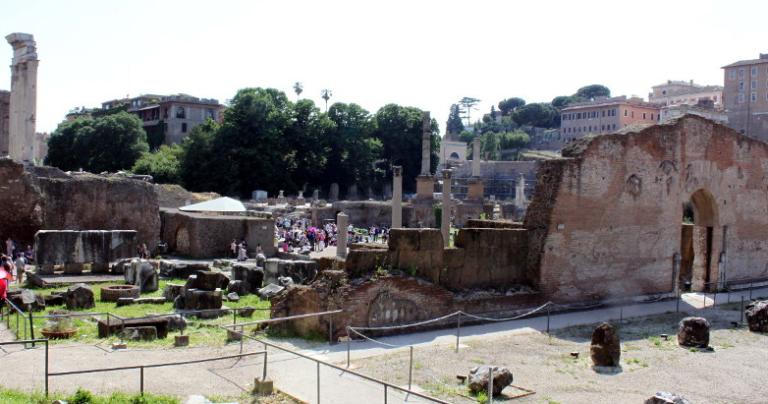
How can civilization be fixed?
This is the weakest section of the book. Which, I suppose, is to be expected. Figuring out what’s wrong is easy – fixing it is not.
Rather than listing Myers’ arguments in his words, I want to tell you how I heard them:
- Most people are good and things aren’t that bad.
- Civilization can never be perfect.
- Things are gradually getting better.
- They’d get better still if we’d all adopt democratic socialism.
I’m pretty much in agreement with all those points, but they don’t make me feel particularly optimistic. I might feel better if I was reading this book in 2015 instead of 2017: before Brexit, before Trump, and before the xenophobic nationalists that have been emboldened by Trump. And while I do not think Western civilization is anywhere near collapse, we are clearly at the beginning of a long decline.
In between the main sections of the book, Myers has “interludes” that discuss the process by which this book was written, much of which was done while he was house-sitting for friends in the Bohemia region of the Czech Republic. Here he explored the ages-old philosophical question of what makes a good life. According to Myers, that is:
the oldest human drama by which we human beings share friendship and love: music and jokes and stories performed; food cooked on a fire in the centre of the circle, and shared out to all; a dog running about; a child asleep on a chair nearby; the round dark hills looming in the middle distances; curtains of clouds coming and going, and the stars above them.
But the structures and institutions required to provide the level of security and services Myers recommends (a recommendation I support) are antithetical to the type of close-knit societies that facilitate these beautiful communal experiences. One requires centralization and bureaucracy, the other requires localization and face-to-face interdependence.
Ever and always, civilization requires tradeoffs.
I am greatly oversimplifying the situation: this is not a binary choice between socialism and libertarianism or between urban and rural living. Our situation is complicated and there are many possible solutions, some of which are better than others and none of which will be perfect.
But this section of the book has a disconnect between the desired end state and the recommended path to get there.
Read this book
I’ve already said who should read this book. Now I want to make a plea for you to read Reclaiming Civilization. Not because Brendan Myers is a friend and I want him to sell a zillion copies (although I do), but because this book does a better job of explaining how we got into this mess than anything I’ve come across so far. Focusing on the philosophy involved instead of the politics allows for a detachment from the passions of political ideology. It shows us the foundations of civilization, its strengths, its weaknesses, and especially its illusions.
With this understanding, we can better understand our political options, and we can better see through the lies told across the political spectrum.
And I think that’s pretty important.
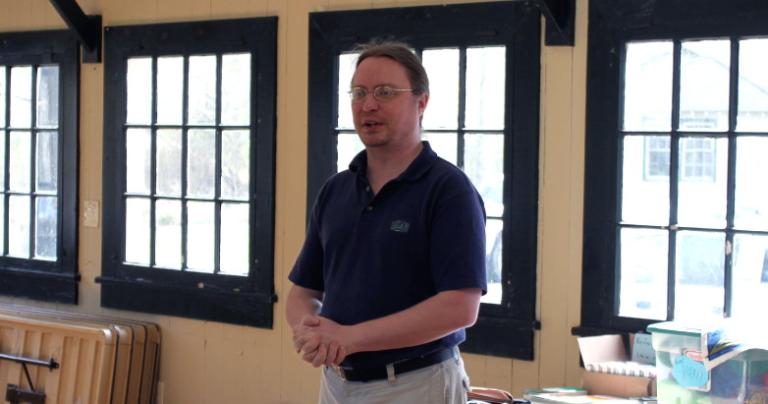
Brendan Myers at the 2015 OBOD Gulf Coast Gathering
For those who care about such things, I received a review copy of Reclaiming Civilization. And as I said above, Brendan Myers is a friend. But my first responsibility in a book review is to the reader, not the author. This book is not perfect and I have explained my concerns with its shortcomings. But if I thought it wasn’t worth your time and money, I’d conveniently forget to review it.

Next Post

October 29, 2017 This Isn’t the Kobayashi Maru: When You Have to Break a Geas
Browse Our Archives
Select a Category Books Community CUUPS Druidry Foundations and Context Gods and Goddesses Magic Myth Nature Ritual Spiritual Practice Theology Travel Uncategorized Videos
Select a Month October 2026 September 2026 August 2026 July 2026 June 2026 May 2026 April 2026 March 2026 February 2026 January 2026 December 2025 November 2025 October 2025 September 2025 August 2025 July 2025 June 2025 May 2025 April 2025 March 2025 February 2025 January 2025 December 2024 November 2024 October 2024 September 2024 August 2024 July 2024 June 2024 May 2024 April 2024 March 2024 February 2024 January 2024 December 2023 November 2023 October 2023 September 2023 August 2023 July 2023 June 2023 May 2023 April 2023 March 2023 February 2023 January 2023 December 2022 November 2022 October 2022 September 2022 August 2022 July 2022 June 2022 May 2022 April 2022 March 2022 February 2022 January 2022 December 2021 November 2021 October 2021 September 2021 August 2021 July 2021 June 2021 May 2021 April 2021 March 2021 February 2021 January 2021 December 2020 November 2020 October 2020 September 2020 August 2020 July 2020 June 2020 May 2020 April 2020 March 2020 February 2020 January 2020 December 2019 November 2019 October 2019 September 2019 August 2019 July 2019 June 2019 May 2019 April 2019 March 2019 February 2019 January 2019 December 2018 November 2018 October 2018 September 2018 August 2018 July 2018 June 2018 May 2018 April 2018 March 2018 February 2018 January 2018 December 2017 November 2017 October 2017 September 2017 August 2017 July 2017 June 2017 May 2017 April 2017 March 2017 February 2017 January 2017 December 2016 November 2016 October 2016 September 2016 August 2016 July 2016 June 2016 May 2016 April 2016 March 2016 February 2016 January 2016 December 2015 November 2015 October 2015 September 2015 August 2015 July 2015 June 2015 May 2015 April 2015 March 2015 February 2015 January 2015 December 2014 November 2014 October 2014 September 2014 August 2014 July 2014 June 2014 May 2014 April 2014 March 2014 February 2014 January 2014 December 2013 November 2013 October 2013 September 2013 August 2013 July 2013 June 2013 May 2013 April 2013 March 2013 February 2013 January 2013 December 2012 November 2012 October 2012 September 2012 August 2012 July 2012 June 2012 May 2012 April 2012 March 2012 February 2012 January 2012 December 2011 November 2011 October 2011 September 2011 August 2011 July 2011 June 2011 May 2011 April 2011 March 2011 February 2011 January 2011 December 2010 November 2010 October 2010 September 2010 August 2010 July 2010 June 2010 May 2010 April 2010 March 2010 February 2010 January 2010 December 2009 November 2009 October 2009 September 2009 August 2009 July 2009 June 2009 May 2009 April 2009 March 2009 February 2009 January 2009 December 2008 November 2008 October 2008 September 2008 August 2008 July 2008 June 2008
Follow Us!
TAKE THE
Religious Wisdom Quiz
Who predicted Babylon's fall?
Select your answer to see how you score.
Ezekiel Isaiah Daniel Jeremiah
Related posts from John Beckett


The Vampire Films of Jean Rollin


Bo French Doesn’t Understand Texas
TRENDING AT PATHEOS Pagan

When Halloween Unmasks Married Hearts
Written by Dr. David K. Ewen from Eternal Truth Bible College Behind...

Aristotle. He’s been called the father of logic, the father of the...

Methodist Central Hall and Westminster Abbey
Situated on the same square is Methodist Central Hall and Westminster Abbey. ...

57th Dove Awards Honor Dolly Parton, Crown New...
On gospel music’s biggest night, the 57th annual GMA Dove Awards honored...

The First Eucharistic Controversy: Christ’s Real Presence
For Catholics, the Eucharist is the source and summit of the Christian...

What a Stop Sign Can Teach Us About...
How to Make a Decision When You Can't Hear God Main point:...
view all Pagan blogs
Ad-Free & Subscriber Log-In Subscription Support
- About Us
- 2026 Calendar
- Videos
- Podcasts
- Library of World Religions
- Faith In Media Tracker
- Advertise With Us
- Write for Us
- Privacy Policy
- Terms of Service
- Do Not Sell My Data
- Contact Us
- Radiant Digital
- Manage Newsletter Subscriptions
- Unsubscribe From Notifications
- Sitemap
Copyright 2008-2026, Patheos. All rights reserved.
Subscription Support Ad-Free & Subscriber Log-In
Follow Patheos