
BuddhistCatholicContemplativeEvangelicalGeneral ChristianHinduJewishLatter-day SaintMuslimNew VisionsProgressive Christian
Beliefs
- Buddhist
- Catholic
- Contemplative
- Evangelical
- General Christian
- Hindu
- Jewish
- Latter-day Saint
- More Voices
- Muslim
- New Visions
- Pagan
- Progressive Christian
Topics
- Religion News
- Food and Religion
- Sports and Religion
- Religious Art
- Religious Music and Entertainment
- Religious Events
- History and Religion
- Style and Religion
- Politics and Religion
- Women in Religion
- Recreation Outdoors and Religion
- Business Finance and Religion
- Careers Workplace and Religion
- Education and Religion
- Family Parenting and Religion
- Health Fitness and Religion
- Home and Religion
- Relationships and Religion
- Technology and Religion
- Travel and Religion
Columnists
- Buddhist Columnists
- Business Finance and Religion Columnists
- Careers Workplace and Religion Columnists
- Catholic Columnists
- Contemplative Columnists
- Education and Religion Columnists
- Evangelists Columnists
- Family Parenting and Religion Columnists
- General Christian Columnists
- Health Fitness and Religion Columnists
- Hindu Columnists
- History and Religion Columnists
- Home and Religion Columnists
- Jewish Columnists
- More Voices Columnists
- Latter Day Columnists
- Muslim Columnists
- New Visions Columnists
- Nonreligious Columnists
- Pagan Columnists
- Politics and Religion Columnists
- Progressive Columnists
- Recreation Outdoors and Religion Columnists
- Relationships and Religion Columnists
- Religion News Columnists
- Religious Art Columnists
- Religious Events Columnists
- Religious Music and Entertainment Columnists
- Sports and Religion Columnists
- Style and Religion Columnists
- Technology and Religion Columnists
- Travel and Religion Columnists
- Women in Religion Columnists
Resource Library
- 2026 Calendar
- Library of World Religions
- The 100 Most Holy Places on Earth
- Patheos Answers
- Podcasts
- Videos
- Faith Leaders Database
- Anglican Episcopalian
- Bahai
- Baptist
- Buddhism
- Christianity
- Confucianism
- Eastern Orthodoxy
- Hinduism
- Holiness and Pentecostal
- ISKCON
- Islam
- Judaism
- Lutheran
- Methodist
- The Church of Jesus Christ of Latter-day Saints
- New Age
- Paganism
- Presbytarian and Reformed
- Protestantism
- Religion Behind the Scenes
- Roman Catholic
- Scientology
- Shia Islam
- Sikhism
- Sufism
- Sunni Islam
- Taoism
- Zen
- See all religions
Research Tools
 Ad-Free & Subscriber Log-In Subscription Support
Ad-Free & Subscriber Log-In Subscription Support
Follow Patheos 

- Trending:
- Forgiveness
- |
- Marriage
- |
- Consciousness
- |
- Death Penalty
- |
- Election
- |
- Halloween

- Home
- Pagan
- Pray For The Dead: The Blasphemy of “It’s Too Late”
Pray For The Dead: The Blasphemy of “It’s Too Late”
Last updated on: October 17, 2017 at 8:55 am by John Beckett
Pray For The Dead: The Blasphemy of “It’s Too Late” 2017-10-17T08:55:00-06:00 John Beckett
Patheos Explore the world's faith through different perspectives on religion and spirituality! Patheos has the views of the prevalent religions and spiritualities of the world.
My first response to the Las Vegas massacre was “Pray for the dead. The living won’t listen.” It was an expression of frustration at yet another mass shooting in a country that accepts them as inevitable. It was also a genuine concern for the 58 people who died a sudden and violent death.
Some traditions teach that your state of mind at death determines (or at least, strongly influences) your position in the afterlife and in the next life – or if you even get to the afterlife. Some of the most famous ghosts are connected to people who died tragically. Whether those ghosts are earthbound spirits or simply “energetic remains” is another question for another time (my best guess: sometimes it’s one, sometimes it’s the other).
In any case, dying in pain, fear, and anger is hardly conducive to peacefully moving on to whatever comes next. The dead deserve our prayers and offerings for a smooth transition.
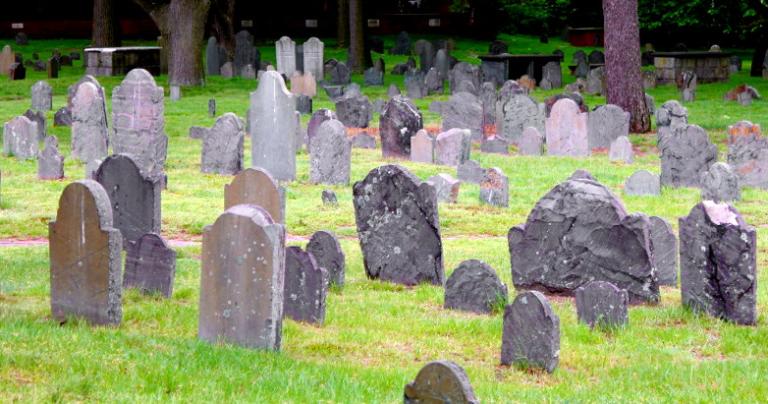
When I was growing up in a fundamentalist church, I was taught that prayers for the dead were useless – “it’s too late to pray for them.” According to fundamentalist doctrine, the dead were immediately either in heaven or in hell and nothing could be done to change their fate.
I do my best to avoid critiquing the doctrines of other religions. We have different foundational assumptions, different values, and different ways of interacting with the world. We have no common ground to debate the nature of the afterlife or the status of those who have died. But because of the prominence of Protestant Christianity in the United States, the idea that prayers for the dead are useless is widespread in our mainstream culture.
This is blasphemy.
The Blasphemy of “It’s Too Late”
Blasphemy: “the act or offense of speaking sacrilegiously about God or sacred things.”
Most of my complaints against fundamentalism deal with facts: the Bible is not the inerrant Word of God, the Earth is far more than 6000 years old, and apocalyptic prophecies have a 3500-year track record of being wrong every single time.
Some of my complaints deal with outcomes: teaching small children that failing to follow your religion will send them into eternal torment can cause anxiety to a degree that can properly be classified as child abuse.
Blasphemy is a religious charge, not a factual one. It is a charge that is ripe for exploitation (as with the fundamentalist Muslim governments who occasionally imprison people for blasphemy against Islam) and therefore should never carry a secular penalty. Yet it remains in our vocabulary because some things are so sacred that to profane them demands a response.
Few things are as sacred as the dead, though they are not things but persons. Saying “it’s too late” abandons them to deal with being dead on their own, needlessly severing a relationship that death has altered but has not ended.
We must do better for the dead.
Christian opposition to this blasphemy
I’m a Pagan and a polytheist who writes from a Pagan and polytheist viewpoint. But given the prevalence of Christianity in this society, it is necessary to point out that those who believe prayers for the dead are ineffective are hardly representative of all of Christendom.
The Catholic Church has a long tradition of purgatory, an intermediate state from which one can eventually reach heaven. Prayers by the living on behalf of the dead help expedite that transition. The Eastern Orthodox position is less well defined, but in general teaches that those “departed even with the slightest virtue” can be redeemed after death. Anglicans and most other Protestants generally reject the idea of purgatory, but many believe the dead will eventually be reconciled to God and thus prayers for them are beneficial.
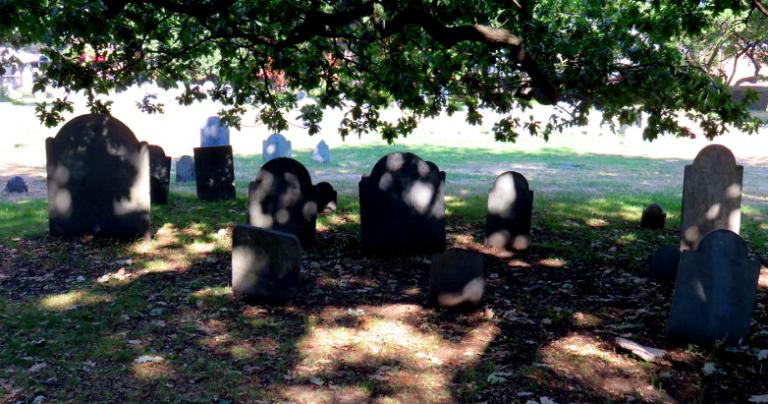
Even some Evangelicals are moving away from the idea of hell, most notably Rob Bell. Bell’s 2011 book Love Wins offered more questions than answers (and got Bell effectively excommunicated from many Evangelical churches and organizations), but made it clear that while evil-doers will not go directly to heaven, they will get there eventually. And if they can get there eventually, then it is good to pray for them.
Christian Universalists such as John Murray (a direct ancestor of my own Unitarian Universalism) taught the same thing 200 years earlier.
As a Pagan I have no interest in debating the details of these beliefs and doctrines. I list them to make it clear that those who preach “it’s too late” are of a minority opinion in their own religion.
Another blasphemy: “funerals are for the living”
Yes, funerals are a necessity for the living. They’re a rite of passage that allow people to process their grief and collectively understand that the deceased is no longer with them. The relationship has shifted from one of family member or friend to one of ancestor or beloved dead. Funerals tell the survivors that they’ve done what needed to be done for the dead and now it’s OK for regular life to resume.
Except many funerals do not do what needs to be done for the dead. The good ones celebrate the life of the recently deceased. The bad ones serve as an excuse for preaching threats of hellfire to the grieving and vulnerable. Precious few actually address the needs of the dead.
Many traditions teach that the dead do not immediately move on to the Otherworld, but hang around for a few days or weeks instead. Some have to figure out they’re dead (think Bruce Willis in The Sixth Sense). Some are reluctant to leave their loved ones. Some have unfinished business, particularly those who died sudden and violent deaths.
Good funerals tell the dead “we loved you, we still love you, we will miss you, but we will be OK.” They say “it’s OK to move on.” They call the person’s ancestors and deities to serve as psychopomps to assist them in the crossing. Though I would quibble with some of the details, this “farewell” from the funeral rite by The Druid Network is a good basic example:
So I call to the guide and guardian of the dead, you who ride the night with the wild hunt, gathering the souls of the departed, leading them along the hidden ways to Annwn, the place of no place, where they will rest after the struggles of this life, nourished and healed for their journey of rebirth.
Guide well the soul of (deceased) on that journey of the setting sun, through the darkness of night to the place of peace.
May those who have gone before prepare a joyous welcome among their company in that blessed land, far beyond the shores of this world. May understanding grow there with the stories told, may nourishment be found in the food of angels, with remembrance of love and the soul’s release into perfect freedom. So may it be.
Some cultures and traditions have specific requirements, such as preparing the body in a certain way or giving the dead coins to pay the ferryman. Our species has always buried our dead with grave goods – it is likely that other human species did so as well. Our most ancient ancestors were not that different from us – they would not have buried perfectly good tools, jewelry, and other items unless they thought it was necessary.

The world’s many funeral customs are far beyond the scope of this post – research the requirements of your tradition before you need to conduct a funeral. But whatever your tradition, there are things the living must do for the dead.
Pray for the dead
It is your responsibility to pray for your dead. Your prayers help your family member or other loved one to begin the process of transitioning from “recently deceased” to “beloved ancestor.” They have their hands full dealing with their new circumstances – the sooner they move on, the sooner they can become an ancestral ally who can help you here and now.
Failure to help the dead move on can have consequences for the living beyond the stereotypical hauntings and such. A few years ago I came across someone stuck living painfully in this world years after their time, because the long-dead ancestor who needed to help them cross was stuck themselves. That story is not mine to tell, except to say that after proper rites were performed all quickly became as it should be.

And that brings us back to the 58 victims of the Las Vegas massacre. Here’s a list of everyone who died, including photos and brief biographies. It is reasonable to assume their families will hold funerals for all of them. It is also reasonable to assume that many if not most of those funerals will be spiritually weak. Some of the dead, no doubt, are strong enough and close enough to their Gods and ancestors to make the crossing anyway, despite their traumatic deaths.
But almost certainly, some are not.
Will you pray for these dead?
Statistically speaking, most of these people were Christians, of one variety or another. A few were atheists. Some never gave religion much thought. Probably one or two followed a religion you wouldn’t expect to find at a country music concert.
Keep your prayers respectful of their traditions – do not ask the Morrigan to fetch the soul of someone expecting to see Jesus. Respect their families – say these prayers privately.
Call their names. Wish them peace and healing. Ask their ancestors to guide them. Ask their God or Gods, whoever They may be, to receive them.
If you cannot pray for all of them, then pray for some of them. Or pray for one of them.
Praying for the dead is sacred work. Abandoning the dead is blasphemy.
Previous Post

October 10, 2017
Why I Still Cast Circles and Call Quarters
Next Post

October 15, 2017 Under the Ancient Oaks: Cernunnos
Browse Our Archives
Select a Category Books Community CUUPS Druidry Foundations and Context Gods and Goddesses Magic Myth Nature Ritual Spiritual Practice Theology Travel Uncategorized Videos
Select a Month October 2026 September 2026 August 2026 July 2026 June 2026 May 2026 April 2026 March 2026 February 2026 January 2026 December 2025 November 2025 October 2025 September 2025 August 2025 July 2025 June 2025 May 2025 April 2025 March 2025 February 2025 January 2025 December 2024 November 2024 October 2024 September 2024 August 2024 July 2024 June 2024 May 2024 April 2024 March 2024 February 2024 January 2024 December 2023 November 2023 October 2023 September 2023 August 2023 July 2023 June 2023 May 2023 April 2023 March 2023 February 2023 January 2023 December 2022 November 2022 October 2022 September 2022 August 2022 July 2022 June 2022 May 2022 April 2022 March 2022 February 2022 January 2022 December 2021 November 2021 October 2021 September 2021 August 2021 July 2021 June 2021 May 2021 April 2021 March 2021 February 2021 January 2021 December 2020 November 2020 October 2020 September 2020 August 2020 July 2020 June 2020 May 2020 April 2020 March 2020 February 2020 January 2020 December 2019 November 2019 October 2019 September 2019 August 2019 July 2019 June 2019 May 2019 April 2019 March 2019 February 2019 January 2019 December 2018 November 2018 October 2018 September 2018 August 2018 July 2018 June 2018 May 2018 April 2018 March 2018 February 2018 January 2018 December 2017 November 2017 October 2017 September 2017 August 2017 July 2017 June 2017 May 2017 April 2017 March 2017 February 2017 January 2017 December 2016 November 2016 October 2016 September 2016 August 2016 July 2016 June 2016 May 2016 April 2016 March 2016 February 2016 January 2016 December 2015 November 2015 October 2015 September 2015 August 2015 July 2015 June 2015 May 2015 April 2015 March 2015 February 2015 January 2015 December 2014 November 2014 October 2014 September 2014 August 2014 July 2014 June 2014 May 2014 April 2014 March 2014 February 2014 January 2014 December 2013 November 2013 October 2013 September 2013 August 2013 July 2013 June 2013 May 2013 April 2013 March 2013 February 2013 January 2013 December 2012 November 2012 October 2012 September 2012 August 2012 July 2012 June 2012 May 2012 April 2012 March 2012 February 2012 January 2012 December 2011 November 2011 October 2011 September 2011 August 2011 July 2011 June 2011 May 2011 April 2011 March 2011 February 2011 January 2011 December 2010 November 2010 October 2010 September 2010 August 2010 July 2010 June 2010 May 2010 April 2010 March 2010 February 2010 January 2010 December 2009 November 2009 October 2009 September 2009 August 2009 July 2009 June 2009 May 2009 April 2009 March 2009 February 2009 January 2009 December 2008 November 2008 October 2008 September 2008 August 2008 July 2008 June 2008
Follow Us!
TAKE THE
Religious Wisdom Quiz
What was the capacity of a bath?
Select your answer to see how you score.
10 liters 22 liters 30 liters 15 liters
Related posts from John Beckett




What We Lose When “Ask AI” Becomes A...
TRENDING AT PATHEOS Pagan

57th Dove Awards Honor Dolly Parton, Crown New...
On gospel music’s biggest night, the 57th annual GMA Dove Awards honored...

The First Eucharistic Controversy: Christ’s Real Presence
For Catholics, the Eucharist is the source and summit of the Christian...

What a Stop Sign Can Teach Us About...
How to Make a Decision When You Can't Hear God Main point:...

Archdiocese Hosts Military Marriage Retreat in Germany
RASTATT, Germany — The transient military lifestyle, with its frequent deployments and...

Nearly every morning, I make the drive to Detroit with my high-school-age...

The Real AI Story Is Adoption Without Trust
Artificial intelligence has crossed a political threshold. It is no longer a...
view all Pagan blogs
Ad-Free & Subscriber Log-In Subscription Support
- About Us
- 2026 Calendar
- Videos
- Podcasts
- Library of World Religions
- Faith In Media Tracker
- Advertise With Us
- Write for Us
- Privacy Policy
- Terms of Service
- Do Not Sell My Data
- Contact Us
- Radiant Digital
- Manage Newsletter Subscriptions
- Unsubscribe From Notifications
- Sitemap
Copyright 2008-2026, Patheos. All rights reserved.
Subscription Support Ad-Free & Subscriber Log-In
Follow Patheos