
BuddhistCatholicContemplativeEvangelicalGeneral ChristianHinduJewishLatter-day SaintMuslimNew VisionsProgressive Christian
Beliefs
- Buddhist
- Catholic
- Contemplative
- Evangelical
- General Christian
- Hindu
- Jewish
- Latter-day Saint
- More Voices
- Muslim
- New Visions
- Pagan
- Progressive Christian
Topics
- Religion News
- Food and Religion
- Sports and Religion
- Religious Art
- Religious Music and Entertainment
- Religious Events
- History and Religion
- Style and Religion
- Politics and Religion
- Women in Religion
- Recreation Outdoors and Religion
- Business Finance and Religion
- Careers Workplace and Religion
- Education and Religion
- Family Parenting and Religion
- Health Fitness and Religion
- Home and Religion
- Relationships and Religion
- Technology and Religion
- Travel and Religion
Columnists
- Buddhist Columnists
- Business Finance and Religion Columnists
- Careers Workplace and Religion Columnists
- Catholic Columnists
- Contemplative Columnists
- Education and Religion Columnists
- Evangelists Columnists
- Family Parenting and Religion Columnists
- General Christian Columnists
- Health Fitness and Religion Columnists
- Hindu Columnists
- History and Religion Columnists
- Home and Religion Columnists
- Jewish Columnists
- More Voices Columnists
- Latter Day Columnists
- Muslim Columnists
- New Visions Columnists
- Nonreligious Columnists
- Pagan Columnists
- Politics and Religion Columnists
- Progressive Columnists
- Recreation Outdoors and Religion Columnists
- Relationships and Religion Columnists
- Religion News Columnists
- Religious Art Columnists
- Religious Events Columnists
- Religious Music and Entertainment Columnists
- Sports and Religion Columnists
- Style and Religion Columnists
- Technology and Religion Columnists
- Travel and Religion Columnists
- Women in Religion Columnists
Resource Library
- 2026 Calendar
- Library of World Religions
- The 100 Most Holy Places on Earth
- Patheos Answers
- Podcasts
- Videos
- Faith Leaders Database
- Anglican Episcopalian
- Bahai
- Baptist
- Buddhism
- Christianity
- Confucianism
- Eastern Orthodoxy
- Hinduism
- Holiness and Pentecostal
- ISKCON
- Islam
- Judaism
- Lutheran
- Methodist
- The Church of Jesus Christ of Latter-day Saints
- New Age
- Paganism
- Presbytarian and Reformed
- Protestantism
- Religion Behind the Scenes
- Roman Catholic
- Scientology
- Shia Islam
- Sikhism
- Sufism
- Sunni Islam
- Taoism
- Zen
- See all religions
Research Tools
 Ad-Free & Subscriber Log-In Subscription Support
Ad-Free & Subscriber Log-In Subscription Support
Follow Patheos 

- Trending:
- Forgiveness
- |
- Marriage
- |
- Consciousness
- |
- Death Penalty
- |
- Election
- |
- Halloween

- Home
- Pagan
- 6 Critical Situations, 6 Helpful Books
6 Critical Situations, 6 Helpful Books
Last updated on: September 27, 2017 at 6:14 pm by John Beckett
6 Critical Situations, 6 Helpful Books 2017-09-27T18:14:44-06:00 John Beckett
Patheos Explore the world's faith through different perspectives on religion and spirituality! Patheos has the views of the prevalent religions and spiritualities of the world.
Last week I listened to Down at the Crossroads most recent “minisode” podcast. Hosts Chris Orapello and Tara Maguire discussed books that were influential on their Pagan paths. Immediately I thought “I need to write a blog post on my own most influential books.” But I soon found out that was harder than I thought.
I’ve been influenced by a lot of books – how do I separate the top ones from the lesser ones? And influenced when? Throughout my life? When I first discovered Paganism? Most recently?
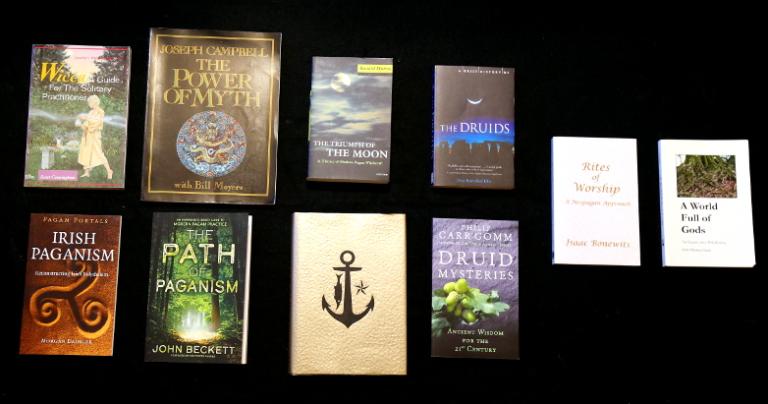
Instead of trying to pick a handful of influential books, I decided to pick six critical situations on my Pagan journey and the one book that was most helpful in getting me through it. And since my thinking has changed a fair amount since I began, and since there’ve been a lot of good books written over that period, I’m also listing what I’d recommend to someone in a similar situation today.
Getting Started
The Situation: It was 1993 and I was Jon Snow – I knew nothing. An early on-line friend introduced me to Wicca and I was thrilled. Here was the religion I had been looking for: one that recognized the Divine as female as well as male, that found the Divine in Nature, and that showed me how magic was real. I had a lot to learn and I needed to start reading.
The Book: Wicca: A Guide for the Solitary Practitioner by Scott Cunningham. Solitary Practitioner wasn’t the first Pagan book I read – that was The Power of the Witch by Laurie Cabot. But it was Solitary Practitioner that described Wicca and witchcraft in a way that was easy to follow and encouraged me to not just read and think about witchcraft, but to start doing witchcraft.
What I’d Recommend Today: Irish Paganism: Reconstructing Irish Polytheism by Morgan Daimler. Solitary Practitioner remains an excellent choice for beginners, but since I’m neither a Wiccan nor a witch, I prefer to recommend something more in line with my own polytheistic Paganism. Irish Paganism does just that. It’s one of Moon Books’ “Pagan Portals” series of very short introductions – it’s a quick and easy read that covers what we know of ancient Irish Paganism and contemporary attempts to reconstruct it. It can get you practicing in a hurry.
Escaping Fundamentalism
The Situation: I spent eight years dabbling with Wicca and going nowhere, in large part because I hadn’t dealt with the unstated assumptions of the fundamentalist religion of my childhood. On Thanksgiving Night 2001 I had an epiphany that said “get serious or move on!” I knew I had to build a solid religious foundation or I’d be stuck in religious no man’s land forever.
The Book: The Power of Myth by Joseph Campbell and Bill Moyers. For someone who grew up being taught that there is only “one true way” hearing someone of the stature of Joseph Campbell saying “all religions are true but none are literal” was incredibly liberating. I now have some serious issues with Campbell’s work (especially his idea of “monomyth”), but he was the right voice with the right message at the right time for me.
What I’d Recommend Today: The Path of Paganism: An Experience-Based Guide to Modern Pagan Practice by John Beckett. Plugging my own book? Damn right I am. This book is the result of a spiritual journey out of fundamentalism – I did it and so can you. While I don’t have the mainstream reputation of Joseph Campbell, Part I of The Path of Paganism provides a strong intellectual foundation for Pagan religion and instruction in how to practice it. No book can fully exorcise the tentacles of fundamentalism from your soul (that takes lots of work and positive religious experiences) but this one can show you how to do it.
Context for a Deeper Practice
The Situation: After a year of building a foundation for my Paganism, I was ready to start studying and practicing in earnest. I wanted to move beyond the Scott Cunningham books – I needed something to provide context for a serious Paganism.
The Book: The Triumph of the Moon: A History of Modern Pagan Witchcraft by Ronald Hutton. If the books I read in my early exploration of Paganism didn’t explicitly endorse the Margaret Murray fantasies of Wicca as a Pagan survival and of nine million witches killed during the “Burning Times,” they didn’t do much to refute them. I needed real history. Triumph of the Moon showed that while Wicca has ancient roots, it’s a modern invention – and that has no impact on its legitimacy as a religion.
What I’d Recommend Today: Star.Ships: A Prehistory of the Spirits by Gordon White. Triumph of the Moon provides about 150 years of context. Star.Ships provides 70,000 years. It traces the migration of humans, our cultures, and our stories eastward out of Africa, then as the sea began to rise, back to the west. It does not attempt to reconstruct the religion of our Paleolithic ancestors (Gordon specifically warns against it), but it does an excellent job of answering the eternal question “where do we come from?”
Finding Druidry
The Situation: I found Paganism through Wicca, but as much as I wanted to be a witch, Wicca never spoke to me. But when I first read about the ancient Druids, something deep inside screamed “that’s it – that’s me!”
The Book: A Brief History of the Druids by Peter Berresford Ellis. We know very little about the ancient Druids. Ellis examines the available evidence, but unlike Hutton he’s not afraid to extrapolate. Some of his ideas are more speculative than certain, but they strike me as likely – particularly for someone who’s primary interest is in establishing a modern Druid practice.
What I’d Recommend Today: Druid Mysteries by Philip Carr-Gomm. If you’re interested in Druids I strongly encourage you to read A Brief History of the Druids. But for a first book, I recommend one of the three introductory books by the leaders of three of the largest Druid orders: Druid Mysteries by Philip Carr-Gomm, The Druidry Handbook by John Michael Greer, and Bonewits’s Essential Guide to Druidism by Isaac Bonewits. Any of these will give you enough history to get started, but will spend more time on starting a Druid practice. I usually recommend Druid Mysteries first because it’s the shortest and most accessible, but any of the three would be good.
Leading Group Rituals
The Situation: After a year of dedicated solitary practice, I knew I needed a group to go farther. There were no Druid groves of any order near me, so I went to Denton CUUPS to check it out. I never left, and before long I found myself in a leadership position. I needed training. I joined OBOD for their program, but I also needed something that specifically dealt with facilitating public rituals.
The Book: Rites of Worship: A Neopagan Approach by Isaac Bonewits. This book starts with a theory of Pagan worship, then moves into the mechanics of how to do it and do it well. It provides an outline for planning rituals, points out the logistics that need to be taken into account (can everyone see and hear? what will you do if it rains?), and the performance aspects of ritual. Isaac was perhaps the best I’ve ever seen at leading public ritual – he had natural talents I’ll never have. But I learned a lot from him, and especially from this book.
What I’d Recommend Today: Neopagan Rites: A Guide to Creating Public Rituals that Work by Isaac Bonewits. This is a slightly updated version of Rites of Worship, published by Llewellyn instead of Earth Religions Press. There is still nothing like it. I cover some of this in The Path of Paganism, but not in this much depth.
Beginning Polytheism
The Situation: I had experienced the Gods as individual beings, but I was still clinging to the idea of one supreme being. Polytheism may be humanity’s default religious setting, but this is a monotheist-dominated culture. I needed something to make a rational case for polytheism.
The Book: A World Full of Gods: An Inquiry into Polytheism by John Michael Greer. The main theme of this book is that the world-wide diversity of religious experience is prima facie evidence of the diversity of the Divine. Greer explains classical polytheism, why arguments for monotheism fail, and emphasizes the importance of practice. And you don’t have to have a master’s degree in philosophy to understand it.
What I’d Recommend Today: A World Full of Gods: An Inquiry into Polytheism by John Michael Greer. There are several more recent books that do a good job of teaching you how to be a polytheist, but none that make a good, solid, accessible case for polytheism as a religious orientation. A couple have tried – they fall into the category of “if I couldn’t say good things about them I’d conveniently forget to review them.” I’d love to have something more, but A World Full of Gods is more than adequate to get you started.

Next Post
September 26, 2017 The Cauldron of the Dagda: Hospitality Technology
Browse Our Archives
Select a Category Books Community CUUPS Druidry Foundations and Context Gods and Goddesses Magic Myth Nature Ritual Spiritual Practice Theology Travel Uncategorized Videos
Select a Month October 2026 September 2026 August 2026 July 2026 June 2026 May 2026 April 2026 March 2026 February 2026 January 2026 December 2025 November 2025 October 2025 September 2025 August 2025 July 2025 June 2025 May 2025 April 2025 March 2025 February 2025 January 2025 December 2024 November 2024 October 2024 September 2024 August 2024 July 2024 June 2024 May 2024 April 2024 March 2024 February 2024 January 2024 December 2023 November 2023 October 2023 September 2023 August 2023 July 2023 June 2023 May 2023 April 2023 March 2023 February 2023 January 2023 December 2022 November 2022 October 2022 September 2022 August 2022 July 2022 June 2022 May 2022 April 2022 March 2022 February 2022 January 2022 December 2021 November 2021 October 2021 September 2021 August 2021 July 2021 June 2021 May 2021 April 2021 March 2021 February 2021 January 2021 December 2020 November 2020 October 2020 September 2020 August 2020 July 2020 June 2020 May 2020 April 2020 March 2020 February 2020 January 2020 December 2019 November 2019 October 2019 September 2019 August 2019 July 2019 June 2019 May 2019 April 2019 March 2019 February 2019 January 2019 December 2018 November 2018 October 2018 September 2018 August 2018 July 2018 June 2018 May 2018 April 2018 March 2018 February 2018 January 2018 December 2017 November 2017 October 2017 September 2017 August 2017 July 2017 June 2017 May 2017 April 2017 March 2017 February 2017 January 2017 December 2016 November 2016 October 2016 September 2016 August 2016 July 2016 June 2016 May 2016 April 2016 March 2016 February 2016 January 2016 December 2015 November 2015 October 2015 September 2015 August 2015 July 2015 June 2015 May 2015 April 2015 March 2015 February 2015 January 2015 December 2014 November 2014 October 2014 September 2014 August 2014 July 2014 June 2014 May 2014 April 2014 March 2014 February 2014 January 2014 December 2013 November 2013 October 2013 September 2013 August 2013 July 2013 June 2013 May 2013 April 2013 March 2013 February 2013 January 2013 December 2012 November 2012 October 2012 September 2012 August 2012 July 2012 June 2012 May 2012 April 2012 March 2012 February 2012 January 2012 December 2011 November 2011 October 2011 September 2011 August 2011 July 2011 June 2011 May 2011 April 2011 March 2011 February 2011 January 2011 December 2010 November 2010 October 2010 September 2010 August 2010 July 2010 June 2010 May 2010 April 2010 March 2010 February 2010 January 2010 December 2009 November 2009 October 2009 September 2009 August 2009 July 2009 June 2009 May 2009 April 2009 March 2009 February 2009 January 2009 December 2008 November 2008 October 2008 September 2008 August 2008 July 2008 June 2008
Follow Us!
TAKE THE
Religious Wisdom Quiz
Why were the plagues significant against Egyptian beliefs?
Select your answer to see how you score.
They were meant to test Pharaoh’s patience They were random acts of nature Pharaoh had offended the Hebrew people Each plague targeted an Egyptian god
Related posts from John Beckett




What We Lose When “Ask AI” Becomes A...
TRENDING AT PATHEOS Pagan

Janie Learns the Way of the Cross: A...
Teaching children about Jesus' Passion can be challenging. Many parents and educators...

Looking For Good Catholic Writing - October 2026
He alone extends the heavens, and he walks upon the waves of...

In "Irreplaceable," our book on vocation and technology, Trevor Sutton and I...

I was strolling through the top floor of the brand new Parthenon...

What Does Gêvâh Mean For Kimberley Guifoyle &...
This week, a lot of the news is focused on Kimberly Guilfoyle....

INNER CIRCLE: Profound Mystery (Of Christ In All...
Ephesians 5:31-32 “For this reason, a man will leave his father and...
view all Pagan blogs
Ad-Free & Subscriber Log-In Subscription Support
- About Us
- 2026 Calendar
- Videos
- Podcasts
- Library of World Religions
- Faith In Media Tracker
- Advertise With Us
- Write for Us
- Privacy Policy
- Terms of Service
- Do Not Sell My Data
- Contact Us
- Radiant Digital
- Manage Newsletter Subscriptions
- Unsubscribe From Notifications
- Sitemap
Copyright 2008-2026, Patheos. All rights reserved.
Subscription Support Ad-Free & Subscriber Log-In
Follow Patheos