
BuddhistCatholicContemplativeEvangelicalGeneral ChristianHinduJewishLatter-day SaintMuslimNew VisionsProgressive Christian
Beliefs
- Buddhist
- Catholic
- Contemplative
- Evangelical
- General Christian
- Hindu
- Jewish
- Latter-day Saint
- More Voices
- Muslim
- New Visions
- Pagan
- Progressive Christian
Topics
- Religion News
- Food and Religion
- Sports and Religion
- Religious Art
- Religious Music and Entertainment
- Religious Events
- History and Religion
- Style and Religion
- Politics and Religion
- Women in Religion
- Recreation Outdoors and Religion
- Business Finance and Religion
- Careers Workplace and Religion
- Education and Religion
- Family Parenting and Religion
- Health Fitness and Religion
- Home and Religion
- Relationships and Religion
- Technology and Religion
- Travel and Religion
Columnists
- Buddhist Columnists
- Business Finance and Religion Columnists
- Careers Workplace and Religion Columnists
- Catholic Columnists
- Contemplative Columnists
- Education and Religion Columnists
- Evangelists Columnists
- Family Parenting and Religion Columnists
- General Christian Columnists
- Health Fitness and Religion Columnists
- Hindu Columnists
- History and Religion Columnists
- Home and Religion Columnists
- Jewish Columnists
- More Voices Columnists
- Latter Day Columnists
- Muslim Columnists
- New Visions Columnists
- Nonreligious Columnists
- Pagan Columnists
- Politics and Religion Columnists
- Progressive Columnists
- Recreation Outdoors and Religion Columnists
- Relationships and Religion Columnists
- Religion News Columnists
- Religious Art Columnists
- Religious Events Columnists
- Religious Music and Entertainment Columnists
- Sports and Religion Columnists
- Style and Religion Columnists
- Technology and Religion Columnists
- Travel and Religion Columnists
- Women in Religion Columnists
Resource Library
- 2026 Calendar
- Library of World Religions
- The 100 Most Holy Places on Earth
- Patheos Answers
- Podcasts
- Videos
- Faith Leaders Database
- Anglican Episcopalian
- Bahai
- Baptist
- Buddhism
- Christianity
- Confucianism
- Eastern Orthodoxy
- Hinduism
- Holiness and Pentecostal
- ISKCON
- Islam
- Judaism
- Lutheran
- Methodist
- The Church of Jesus Christ of Latter-day Saints
- New Age
- Paganism
- Presbytarian and Reformed
- Protestantism
- Religion Behind the Scenes
- Roman Catholic
- Scientology
- Shia Islam
- Sikhism
- Sufism
- Sunni Islam
- Taoism
- Zen
- See all religions
Research Tools
 Ad-Free & Subscriber Log-In Subscription Support
Ad-Free & Subscriber Log-In Subscription Support
Follow Patheos 

- Trending:
- Forgiveness
- |
- Marriage
- |
- Consciousness
- |
- Death Penalty
- |
- Election
- |
- Halloween

- Home
- Pagan
- 3 Harmful Common Myths and 3 Better Alternatives
3 Harmful Common Myths and 3 Better Alternatives
Last updated on: September 5, 2017 at 3:00 am by John Beckett
3 Harmful Common Myths and 3 Better Alternatives 2017-09-04T13:29:26-06:00 John Beckett
Patheos Explore the world's faith through different perspectives on religion and spirituality! Patheos has the views of the prevalent religions and spiritualities of the world.
Alexis Blair Penney sent me this piece from Religion Dispatches titled Magic in the Air: How Intellectuals Invented the Myth of a Mythless Society. It’s an interview with Jason Josephson-Storm, author of the recently released book The Myth of Disenchantment: Magic, Modernity, and the Birth of the Human Sciences. The interview was enough to get me to order the book – I’ll have more to say on the topic once I have a chance to read it. In this post, I want to talk more about myths.
Myths are stories to live by. They tell us who we are, where we came from, and where we belong. They tell what’s important in life – they communicate values and virtues. The idea that we have no myths is itself a myth – a story that says while stories may be entertaining and even inspiring, they contain no truth. It tells us there is nothing beyond the material world. It tells us to put our faith in Science not just for the things that science is good at – something I strongly support – but for everything.
This myth exists primarily as a reaction to the weaknesses and excesses of another myth – the myth that the Christian church has all the answers, or at least, all the answers that matter. That myth led to the burning of heretics and supposed witches, and the forced or coerced conversion of indigenous peoples. It’s still in the news with last week’s “Nashville Statement” of cold-hearted and regressive views on sexuality. Compared to this, the myth-of-no-myths is a decided improvement.
But it is still a myth that fails to live up to its promise. And it’s not the only one.
Here are three other harmful myths in our wider society, and three better alternatives.
The Myth of Progress
The Myth of Progress says that things have been getting better and will continue to get better in the future. It says history is linear and only points up. It’s Star Trek – onward and upward, our future is in the stars.
It’s easy to see how this myth came about. For the West, the last 300 years have been more or less continual progress. Knowledge, technology, and medicine have seen great improvements and there’s still no end in sight. And while we’ve still got a long way to go, there is truth in the quote from Theodore Parker made famous by Martin Luther King, Jr.: “the arc of the moral universe is long, but it bends toward justice.”
But we’re finally starting to understand that “progress” carries costs: the fossil fuels that power our society are polluting the air and water and changing the climate – and they’re running out. The cheap consumer goods that fill our homes are made with sweatshop labor, and they do not satisfy our souls.
They Myth of Progress is disproved by history – every civilization and every empire that has ever existed has eventually fallen. Babylon, Egypt, Rome, Britain… now the United States is clearly in imperial decline, and no amount of red MAGA caps can stop the slide.
Instead: The Myth of Cycles
Nature teaches that life is not linear, it is cyclical. Pagans celebrate the Wheel of the Year, not the inclined plane of the year. The moon waxes and wanes and then waxes again. What goes up must come down… unless it reaches escape velocity, demonstrating that there’s an exception to every rule.
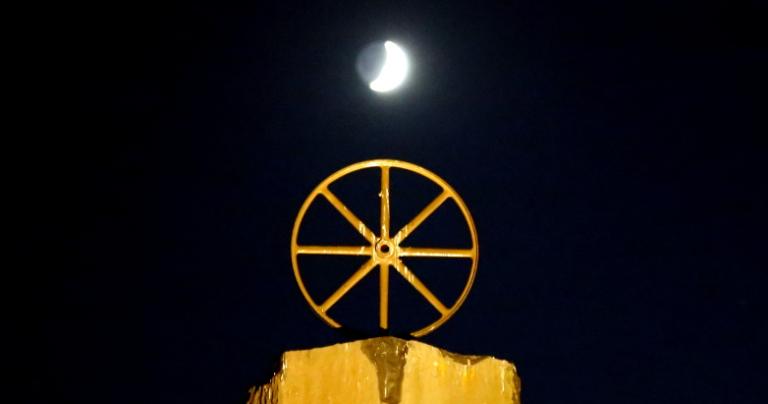
I think it’s likely there’s a floor under Western civilization – nothing short of global nuclear war would sent us back to medieval times. But except for the very rich, the current generation of Westerners has or will have a lower standard of living than their parents, and that trend is likely to continue for several generations – maybe several centuries.
Until it in turn bottoms out, and things start moving upwards again. Endless progress is not possible, much less inevitable. Neither is endless decline.
Learn to spot where you are on a given cycle – set your expectations and make your plans accordingly.
The Myth of Materialism
Materialism is the doctrine that nothing exists except matter and its movements and modifications. It says there is no such thing as a soul and the mind is merely the interactions of brain chemistry. If something cannot be explained by “rational” science then it cannot exist. But as Gordon White of Rune Soup likes to say, materialism is an assumption of science, not a finding. Evidence that does not fit into the prescribed boundaries is simply ignored.
As with the myth-of-no-myths, the Myth of Materialism exists because it has been helpful in countering harmful myths about religion and the bloody impact of religious prejudice. But it has thrown the baby of spiritual connections and experiences out with the dirty bathwater of fundamentalism.
Instead: The Myth of Experience
What do we do when we experience something materialism says isn’t possible? If we want to avoid ridicule from those who “know better,” we rationalize it away or we keep it to ourselves. And yet when I wrote about seeing something that materialism says cannot be, I got comment after comment from people who had similar experiences.
What are we to do with thousands of reports of near death experiences and past life memories? What are we to do with magic that works so many times we can’t not believe it’s real? What are we to do with first-hand experiences of Gods, ancestors, and other spirits?
The Myth of Experience says that if you experience it, it’s real. We can debate what causes these experiences and what they mean, but that they happen is undeniably true.
Materialists ask “who ya gonna believe, me or your lying eyes?” I suggest you believe yourself.
The Myth of the Golden Age
The Golden Age Myth is Eden or Atlantis. It’s the peaceful matriarchal hunter-gatherer society or the proud independent pre-Christian European tribe. It’s a time in the past when everything was right, and then Something Went Wrong. Now things are inferior, but if we could just get back to the way things used to be, if we were just pure and pious, all would be right with the world.
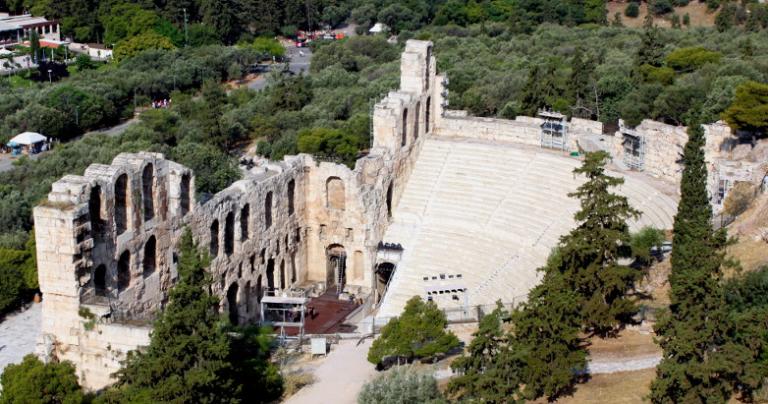
Except there never was a Golden Age. Oh, there were times when things were better than they are now – see the Myth of Cycles. But things were better for some people, in some ways – memories are selective. The folks wearing those red MAGA caps are yearning for a time when things were great for straight white men and not so great for everyone else.
Even if we could restore the best parts of a past age, it wouldn’t be golden because the context would be radically different. While I’m interested in learning as much as I can about the original Druids, I’m not interested in trying to recreate iron age Druidry. I don’t live in pre-Roman Britain, I live in 21st century America. Our religions – and the rest of our culture – need to speak to our circumstances and our needs here and now.
Instead: The Myth of Context and Adaptation
I started to call this the Myth of Evolution, but there are still those who deny the science of biological evolution, so Context and Adaptation seems like a better choice.
The Myth of Context and Adaptation says that while values and virtues are timeless, their expression is not. A practice that was helpful and maybe even essential in a tribal desert society may be irrelevant or even harmful in the interconnected world of today. So rather than mindlessly copying what our ancestors did, or what we think they probably did, or what some ancient text tells us they did, we examine the context of our society and circumstances and we adapt our cultural and religious practices for the world in which we actually live.
Reciprocity and hospitality, sovereignty and autonomy, truth and honor, compassion and love: these are timeless. How we embody them and express them must be tailored to the world we live in here and now.
Examine your myths
Unexamined myths lead to bad assumptions, and bad assumptions lead to weak and harmful religion. We all have myths – stories that we live by. What are your myths? Do they help you live the kind of life you want to live? Or have they set you up for failure?
The good news is that if you find yourself clinging to a harmful myth, there’s a better alternative available.
Previous Post

September 1, 2017
Religion Is Not Just Mythology
Next Post

September 7, 2017 The Benefits of Living in a Magical Universe
Browse Our Archives
Select a Category Books Community CUUPS Druidry Foundations and Context Gods and Goddesses Magic Myth Nature Ritual Spiritual Practice Theology Travel Uncategorized Videos
Select a Month October 2026 September 2026 August 2026 July 2026 June 2026 May 2026 April 2026 March 2026 February 2026 January 2026 December 2025 November 2025 October 2025 September 2025 August 2025 July 2025 June 2025 May 2025 April 2025 March 2025 February 2025 January 2025 December 2024 November 2024 October 2024 September 2024 August 2024 July 2024 June 2024 May 2024 April 2024 March 2024 February 2024 January 2024 December 2023 November 2023 October 2023 September 2023 August 2023 July 2023 June 2023 May 2023 April 2023 March 2023 February 2023 January 2023 December 2022 November 2022 October 2022 September 2022 August 2022 July 2022 June 2022 May 2022 April 2022 March 2022 February 2022 January 2022 December 2021 November 2021 October 2021 September 2021 August 2021 July 2021 June 2021 May 2021 April 2021 March 2021 February 2021 January 2021 December 2020 November 2020 October 2020 September 2020 August 2020 July 2020 June 2020 May 2020 April 2020 March 2020 February 2020 January 2020 December 2019 November 2019 October 2019 September 2019 August 2019 July 2019 June 2019 May 2019 April 2019 March 2019 February 2019 January 2019 December 2018 November 2018 October 2018 September 2018 August 2018 July 2018 June 2018 May 2018 April 2018 March 2018 February 2018 January 2018 December 2017 November 2017 October 2017 September 2017 August 2017 July 2017 June 2017 May 2017 April 2017 March 2017 February 2017 January 2017 December 2016 November 2016 October 2016 September 2016 August 2016 July 2016 June 2016 May 2016 April 2016 March 2016 February 2016 January 2016 December 2015 November 2015 October 2015 September 2015 August 2015 July 2015 June 2015 May 2015 April 2015 March 2015 February 2015 January 2015 December 2014 November 2014 October 2014 September 2014 August 2014 July 2014 June 2014 May 2014 April 2014 March 2014 February 2014 January 2014 December 2013 November 2013 October 2013 September 2013 August 2013 July 2013 June 2013 May 2013 April 2013 March 2013 February 2013 January 2013 December 2012 November 2012 October 2012 September 2012 August 2012 July 2012 June 2012 May 2012 April 2012 March 2012 February 2012 January 2012 December 2011 November 2011 October 2011 September 2011 August 2011 July 2011 June 2011 May 2011 April 2011 March 2011 February 2011 January 2011 December 2010 November 2010 October 2010 September 2010 August 2010 July 2010 June 2010 May 2010 April 2010 March 2010 February 2010 January 2010 December 2009 November 2009 October 2009 September 2009 August 2009 July 2009 June 2009 May 2009 April 2009 March 2009 February 2009 January 2009 December 2008 November 2008 October 2008 September 2008 August 2008 July 2008 June 2008
Follow Us!
TAKE THE
Religious Wisdom Quiz
My walls crumbled after seven days of marching, shouting, and trumpet blasts. What city am I?
Select your answer to see how you score.
Jerusalem Bethel Ai Jericho
Related posts from John Beckett




What We Lose When “Ask AI” Becomes A...
TRENDING AT PATHEOS Pagan

The Sermon on the Mount, Part I: Matthew...
The Sermon on the Mount, Part I (Matthew 4:12-5:12) St. Matthew moves...

What's up from Crossway: Reviewing some of their latest A few weeks...

Janie Learns the Way of the Cross: A...
Teaching children about Jesus' Passion can be challenging. Many parents and educators...

Looking For Good Catholic Writing - October 2026
He alone extends the heavens, and he walks upon the waves of...

In "Irreplaceable," our book on vocation and technology, Trevor Sutton and I...

I was strolling through the top floor of the brand new Parthenon...
view all Pagan blogs
Ad-Free & Subscriber Log-In Subscription Support
- About Us
- 2026 Calendar
- Videos
- Podcasts
- Library of World Religions
- Faith In Media Tracker
- Advertise With Us
- Write for Us
- Privacy Policy
- Terms of Service
- Do Not Sell My Data
- Contact Us
- Radiant Digital
- Manage Newsletter Subscriptions
- Unsubscribe From Notifications
- Sitemap
Copyright 2008-2026, Patheos. All rights reserved.
Subscription Support Ad-Free & Subscriber Log-In
Follow Patheos