
BuddhistCatholicContemplativeEvangelicalGeneral ChristianHinduJewishLatter-day SaintMuslimNew VisionsProgressive Christian
Beliefs
- Buddhist
- Catholic
- Contemplative
- Evangelical
- General Christian
- Hindu
- Jewish
- Latter-day Saint
- More Voices
- Muslim
- New Visions
- Pagan
- Progressive Christian
Topics
- Religion News
- Food and Religion
- Sports and Religion
- Religious Art
- Religious Music and Entertainment
- Religious Events
- History and Religion
- Style and Religion
- Politics and Religion
- Women in Religion
- Recreation Outdoors and Religion
- Business Finance and Religion
- Careers Workplace and Religion
- Education and Religion
- Family Parenting and Religion
- Health Fitness and Religion
- Home and Religion
- Relationships and Religion
- Technology and Religion
- Travel and Religion
Columnists
- Buddhist Columnists
- Business Finance and Religion Columnists
- Careers Workplace and Religion Columnists
- Catholic Columnists
- Contemplative Columnists
- Education and Religion Columnists
- Evangelists Columnists
- Family Parenting and Religion Columnists
- General Christian Columnists
- Health Fitness and Religion Columnists
- Hindu Columnists
- History and Religion Columnists
- Home and Religion Columnists
- Jewish Columnists
- More Voices Columnists
- Latter Day Columnists
- Muslim Columnists
- New Visions Columnists
- Nonreligious Columnists
- Pagan Columnists
- Politics and Religion Columnists
- Progressive Columnists
- Recreation Outdoors and Religion Columnists
- Relationships and Religion Columnists
- Religion News Columnists
- Religious Art Columnists
- Religious Events Columnists
- Religious Music and Entertainment Columnists
- Sports and Religion Columnists
- Style and Religion Columnists
- Technology and Religion Columnists
- Travel and Religion Columnists
- Women in Religion Columnists
Resource Library
- 2026 Calendar
- Library of World Religions
- The 100 Most Holy Places on Earth
- Patheos Answers
- Podcasts
- Videos
- Faith Leaders Database
- Anglican Episcopalian
- Bahai
- Baptist
- Buddhism
- Christianity
- Confucianism
- Eastern Orthodoxy
- Hinduism
- Holiness and Pentecostal
- ISKCON
- Islam
- Judaism
- Lutheran
- Methodist
- The Church of Jesus Christ of Latter-day Saints
- New Age
- Paganism
- Presbytarian and Reformed
- Protestantism
- Religion Behind the Scenes
- Roman Catholic
- Scientology
- Shia Islam
- Sikhism
- Sufism
- Sunni Islam
- Taoism
- Zen
- See all religions
Research Tools
 Ad-Free & Subscriber Log-In Subscription Support
Ad-Free & Subscriber Log-In Subscription Support
Follow Patheos 

- Trending:
- Forgiveness
- |
- Marriage
- |
- Consciousness
- |
- Death Penalty
- |
- Election
- |
- Halloween

- Home
- Pagan
- Religion and Bad Assumptions
Religion and Bad Assumptions
Last updated on: August 13, 2017 at 2:57 pm by John Beckett
Religion and Bad Assumptions 2017-08-13T14:57:19-06:00 John Beckett
Patheos Explore the world's faith through different perspectives on religion and spirituality! Patheos has the views of the prevalent religions and spiritualities of the world.
Religion and Bad Assumptions
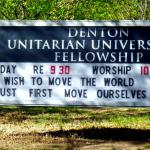
the Denton Unitarian Universalist Fellowship
August 13, 2017
We all have assumptions in our lives – things we’ve always been told are true that we don’t question. Many times we don’t recognize them as assumptions – they’re just the way things are.
In 2004, the Red River UU Church in Denison was founded, and like all churches, they filed papers with the Texas State Comptroller for tax exempt status. Their application was rejected. The Comptroller said they had no sacred text, no unifying belief, and no belief in a higher power – so obviously they weren’t a real religion. She said “we have to have rules or anybody can claim tax exempt status.” That may be true, but whose rules are we playing by?
A couple of phone calls from the UUA headquarters cleared that up, but it showed some of the assumptions people make about religion in our wider society.
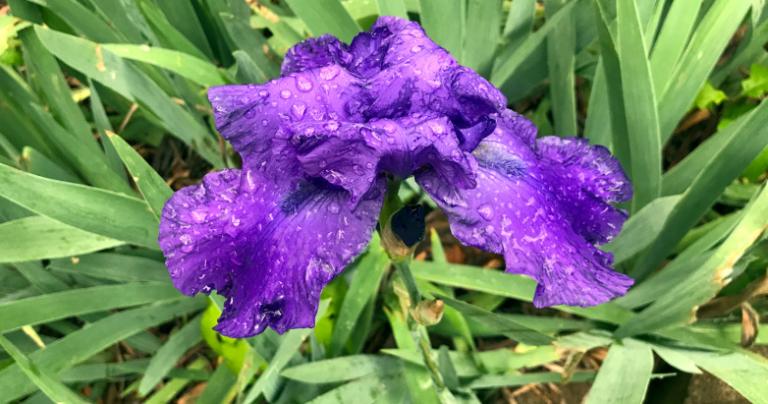
I’m a proud Unitarian Universalist, and I’m also a Pagan. A few years ago I was describing Paganism to someone who was completely unfamiliar with it. I talked about the Divine as both female and male, I talked about our ancient ancestors and their beliefs and practices, and I talked about forming a connection with the Earth and with her rhythms and cycles. When I was done, this person said “well, what I really want to know is, how does Paganism say you get to heaven?”
My answer was “that’s not a relevant question in Paganism.” As a Pagan, my religion is about honoring the Gods and ancestors, living in harmony with the Earth and all her creatures, and living in such a way that when I leave this world and join the ancestors, I will be worthy of the honor of those who come after me. The afterlife will take care of itself.
This is another assumption – the assumption that any religion must be about what happens after you die, and making sure you end up in the good place and not the bad place. But perhaps there is no good place or bad place, just an Otherworld much like this one. Perhaps we’ll be reincarnated back into this world. Perhaps there’s only this one life. Or perhaps there’s something else none of us have even thought of.
How many of you are familiar with Pascal’s Wager? 17th century mathematician and philosopher Blaise Pascal argued that a rational person should believe in God even if they aren’t sure God exists. Believe in God and if there is a God, you go to heaven, and if there isn’t you get nothing. But if you don’t believe, you get nothing if you’re right and you end up in hell if you’re wrong. Clearly, the rational choice is to believe in God.
There’s a cartoon I see on Facebook from time to time. A priest, a rabbi, and an imam are walking down the street debating religion and not paying attention to traffic. They wander into the street, get hit by a truck, and all three are killed. They begin to float upwards and one of them turns to the others and says “at least now we’ll finally find out who’s right.” They come not to pearly gates but to a great hall. And there they see an old man, wearing an eye patch, with two ravens sitting on his shoulder, and a sign that says “Odin.”
Pascal’s wager makes a bad assumption – that there are only two options: either the Christian God exists, or there are no Gods at all. It also assumes that if the Christian God exists, He will send non-believers to hell, a belief our Christian Universalist heritage strongly rejects.
Not all the assumptions in our wider culture are Christian. There is the idea that religion is all about what you believe, another idea our UU heritage rejects. For most people in most of the world throughout most of history, religion was and is about what you do, who you are, and whose you are. UUs like to say “deeds not creeds” – it’s how week after week, this church is filled with Pagans and Christians, Buddhists and atheists, and a lot of people who are hard to classify and damn proud of it. We don’t share common beliefs, we share common values, and we share a commitment to building a better world for all, right here right now.
The environment in which we work
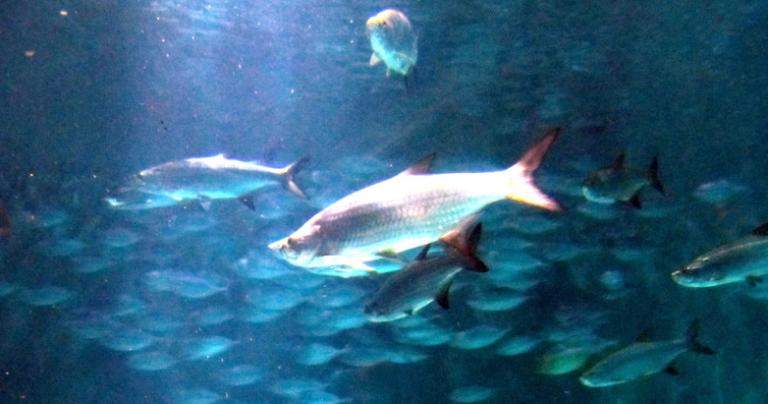
This is the environment in which we work. Like fish who aren’t aware of the water in which they swim, even the most mindful of us can’t see all the Christian and materialistic concepts that influence our thinking and our lives. Many of us come to Unitarian Universalism or Paganism or both from other religions. If we simply start in isolation, our new religion and new spirituality will be built on the foundation of our mainstream society. And that’s a recipe for failure.
Most people never examine their unstated and in some cases, unconscious assumptions. They retain the foundational assumptions, the philosophy, and the religious methods of the religion of their childhood, or the religion of the mainstream society.
I was thrilled to become a Pagan at age 31, but my practice floundered for eight years, because I wasn’t dealing with the foundational assumptions of my fundamentalist Christian upbringing and of the mainstream culture. It was only when I committed to examine these assumptions and to build a new foundation was I able to become the kind of Pagan and Unitarian Universalist I wanted to be.
There is something else, something better, something that works – we just have to do the work to adopt it.
This morning, I want to offer four alternative foundational assumptions. They work for me – they may work for you. Even if they don’t, exploring them can help you identify the assumptions in your own life so you can begin to deal with them in a conscious and deliberate manner.
Animism
Rather than beginning with assumptions about God or Gods, I prefer to begin with persons – some of whom are human and some of whom are not. Animism is the intuitive observation that whatever it is that animates you and me also animates animates cats and dogs and birds and squirrels. From there it isn’t hard to see that it also animate the wind and rain, the trees and even the rocks. Everything has a spirit, or perhaps, everything is a spirit. Most importantly, everything is not a thing but a person, and therefore has inherent dignity and worth that does not depend on their usefulness to humans. Everyone and everything has the right to rule their own lives, and the responsibility to rule them rightly.
How many of you talk to your dogs and cats? How many of them talk back? They talk back – not in English or even in human concepts, but they communicate. More importantly, we have relationships with them. Anyone who says “it’s just a cat” is assuming these beautiful beings are things and not persons. Non-human or other-than-human persons are persons too.
Though animism is a foundation of my religion and spirituality, it requires no theistic or supernatural beliefs. Animism is grounded in the agency of persons – in the ability of a bird to fly where birds want to fly; in the ability of a tree to grow in the way an oak or a pine or a birch wants to grow. And animism is grounded in our choice to relate to birds and trees respectfully, as persons and not as things. Whether your dog has a soul or not doesn’t affect how you relate to your dog.
Animism has a complication in practice. We start thinking of other beings as persons, and then we come face to face with the reality that we have to eat – life feeds on life. Every animal on this planet survives by eating other living things – other persons. Some eat plant persons, some eat animal persons, and some eat both. While plants feed on sunlight, they also require nutrients in the soil – nutrients that come from the decayed bodies of other plants and animals. Life feeds on life.
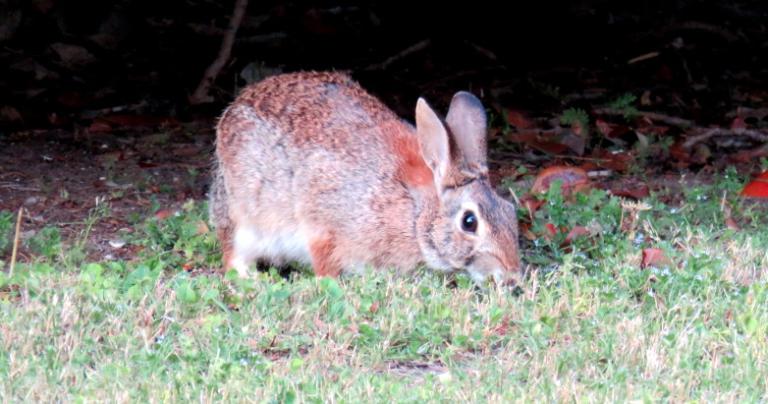
How do we eat – how do we live – without being consumed by guilt for killing other persons? Some religions say humans alone are made in the image of God – other living things aren’t really persons, so we don’t have to feel bad about eating them. That concept hasn’t worked so well – it’s led to environmental desecration and species loss. People who don’t treat non-human persons well tend to not treat other humans well either.
But either we eat other persons, or we die.
Can we treat the persons we eat – animals or plants or both – as a sacrifice, as something sacred? Can we insure the persons we eat live a decent life and not in some torturous factory farm? Individuals will die, but can we make sure their species survive, and that we don’t drive them into extinction with overfishing or habitat destruction? Can we give thanks, not just to Nature for her bounty, but to the persons who die so that we can live?
In our eating and in our other interactions, let us be mindful and respectful of other persons.
Ancestors
None of us got here by ourselves – the second alternative foundation is ancestors.
As with animism, the impulse to honor our ancestors is intuitive. Nobody has to tell us to do it – it just feels right. Even our fundamentalist neighbors have pictures of their grandfathers on the wall. We use our mothers’ recipes not just because they taste good, but because they’re a tangible connection to someone we knew and loved, and still love despite the fact they’re no longer in this world.
There are five types of ancestors: those we knew in this life, those we know by names and stories, and those whose names are lost to us forever. There are ancestors of spirit – those who influenced our lives even though we’re only tangentially related to them by blood. And there are ancestors most ancient, the early human and pre-human species who lived lives unrecognizable to us, but without whom we would not be. They are all worthy of our honor.
Death changes relationships, but it does not end them. We maintain our relationships with our ancestors when they are dead as well as when they are living. They are not physically with us, but we still experience them in memories, in dreams, and in visions.
Our ancestors live on in us, whether we carry their genes or their ideas. Some day we will live on in our descendants. May we live so as to be worthy of their honor.
Relationships
And that leads us to our third foundational assumption – relationships. There is a time and place for rugged individualism, but it only goes so far. Humans are social animals, and our communities are built on interactions, cooperation, and interdependence.
We have relationships with many persons: with humans, both living and dead; with Gods and spirits; and with other species and ecosystems.
Will our relationships with them be respectful and for our mutual benefit, or will they be exploitative? Good relationships are based on hospitality and the interaction between hosts and guests. And they’re based on reciprocity: I give, so that you may give, so that I may give again.
Let us honor and strengthen our relationships.
Religious experience
The fourth foundational assumption is the primacy of religious experience. Every sacred text you read is the result of someone else’s religious experience: Mohammed was visited by an angel, the Buddha sat under the Bodhi tree. There is much we can learn from other people’s religious experiences. But there is also much we can learn from our own.
Religious experiences happen all the time. Most are small and so we don’t notice them. We experience wonder and awe at the immensities of Nature: a sunset, a mountain, the ocean, a storm. There’s the miracle of birth and the transition of death.

We’re more likely to notice things that are out of the ordinary: animals behaving in unusual ways, knowing things we have no way of knowing, the overwhelming feeling that an ancestor or other spiritual being is nearby, coincidences that defy the laws of probability.
These experiences are undeniably real. The debate is over the interpretation. What exactly just happened? And most importantly, what does it mean?
We experience first. Listen, observe, see, feel. Don’t think, just experience. After it’s over, then it’s time to think about what happened – to interpret our experiences. We put them into the context of other experiences and of our beliefs about how the world works, we work out what it means, and then we decide to respond.
Be as skeptical as you like. If your analysis leads you to the conclusion that your experience was perfectly ordinary, so be it – the truth matters. But if your analysis leads you to conclude that something extraordinary happened, something that is especially meaningful – the truth matters here too.
May we give our own religious experiences the same consideration we give the reports of other people’s experiences from long ago.
A model of how the world works
From these four foundations of animism, ancestors, relationships, and religious experience, we build a model of how the world works, a framework for understanding life and our place in it.
Everyone has a model, but few understand it’s a model and not the way the world literally is. Most simply retain the model they were taught as children and never question it – they don’t know if their foundational assumptions are any good or not.
Our experiences lead to belief, as we try to interpret what happened to us. Our beliefs lead to practice, as we try to implement our understanding, and as we try to re-create our experiences. Practice leads to more experience. This becomes a virtuous circle, drawing us into deeper understanding, deeper practice, and stronger experiences.
We don’t build our models in a vacuum. We build from our own experiences. We build from the stories of our ancestors. We build from what history, archaeology, and anthropology tell us about our ancestors. We build from the experience of our co-religionists. And we build with input from science.
We build a model for the way the world works. Not a once-and-for-all Grand Theory of Everything, but a continuously updated living model that provides context for our experiences – a model that is always open to new input and new interpretation.
Is our model any good?
How do we evaluate new ideas and new elements of our model? We need a framework for discernment.
Our first question should be “does it work?” Remember that just because you can’t explain something in “rational” terms doesn’t mean it’s not true. I like to speculate and theorize as much as any engineer who want to know how it all works, but at some point you have to put down the scalpel and enjoy the golden eggs… and don’t forget to feed the goose. If it works, it’s good.
Does your model conform with known facts? We UUs have little patience with those who deny the science of evolution, the age of the Earth, and the reality of climate change, just because it doesn’t fit their religious texts. But let’s also be careful not to assume science tells us something it doesn’t – bad science makes bad religion.
Does your model make your life better? Does it help you wrestle with the big questions of life? If a belief in an afterlife make you not fear death, that’s a good thing. If it makes you fear ending up in the wrong place, it’s not.
Does your model help you understand how to live here and now? Does it motivate you to honor the past, to live in the present, and to build for the future? Does it promote strong connections and respectful reciprocal relationships?
If so, you’ve got a good model. If not, keep working.
Some things are not part of discernment. Is it easy? Doesn’t matter – good things are often hard. Is it black and white? Doesn’t matter – life is complicated, and trying to pretend things are simple when they’re not leads to trouble. Does it conform to your ideas about the way things ought to be? There are many things about the world I think are unfair. Denying their reality isn’t helpful – working to change them is.
Putting it all together
We all build our lives on foundational assumptions: things we’ve always been told are true, things we believe are true, and sometimes, things we wish were true. Many of them are not true, but if we don’t question them, they will be an invisible impediment to our spiritual growth.
Many of the mainstream culture’s assumptions come from a form of Christianity that is in conflict with our UU values. Others come from political biases that sound good (to some, anyway) but that are at odds with the evidence.
Examine your assumptions. They’re assumptions, not facts – we can’t be sure if they’re true or not. But what is likely, and what probably isn’t? More importantly, what is helpful, and what causes unnecessary pain and suffering in your life?
What do you want to reinforce? What do you want to change?
There are four assumptions that form the foundation of my own religion: animism, ancestors, relationships, and religious experience. I encourage you to explore them. Or explore others. But explore your assumptions.
Build a solid foundation for your religion and your spirituality. Build your own model of the universe and how it works.
And then go practice. Meditate, pray, study, and worship. Build strong communities around shared values. Make the world a better place, right here right now.
After all, we are Unitarian Universalists, and we preach deeds, not creeds.
Benediction
Many of us come to Unitarian Universalism from other religions. If we build our new religion on the foundational assumptions of our old religion, we will find that many of our religious problems come with us. Challenging what we’ve always been told is hard, and building a new foundation is harder. But we are up to the task, and we have each other to help along the way.
Go in peace and go with your eyes wide open, but first turn and greet those around you, in particular those you do not know.
Previous Post

August 10, 2017
5 Requirements of Will
Next Post
August 15, 2017 Talking to Kids About Charlottesville
Browse Our Archives
Select a Category Books Community CUUPS Druidry Foundations and Context Gods and Goddesses Magic Myth Nature Ritual Spiritual Practice Theology Travel Uncategorized Videos
Select a Month October 2026 September 2026 August 2026 July 2026 June 2026 May 2026 April 2026 March 2026 February 2026 January 2026 December 2025 November 2025 October 2025 September 2025 August 2025 July 2025 June 2025 May 2025 April 2025 March 2025 February 2025 January 2025 December 2024 November 2024 October 2024 September 2024 August 2024 July 2024 June 2024 May 2024 April 2024 March 2024 February 2024 January 2024 December 2023 November 2023 October 2023 September 2023 August 2023 July 2023 June 2023 May 2023 April 2023 March 2023 February 2023 January 2023 December 2022 November 2022 October 2022 September 2022 August 2022 July 2022 June 2022 May 2022 April 2022 March 2022 February 2022 January 2022 December 2021 November 2021 October 2021 September 2021 August 2021 July 2021 June 2021 May 2021 April 2021 March 2021 February 2021 January 2021 December 2020 November 2020 October 2020 September 2020 August 2020 July 2020 June 2020 May 2020 April 2020 March 2020 February 2020 January 2020 December 2019 November 2019 October 2019 September 2019 August 2019 July 2019 June 2019 May 2019 April 2019 March 2019 February 2019 January 2019 December 2018 November 2018 October 2018 September 2018 August 2018 July 2018 June 2018 May 2018 April 2018 March 2018 February 2018 January 2018 December 2017 November 2017 October 2017 September 2017 August 2017 July 2017 June 2017 May 2017 April 2017 March 2017 February 2017 January 2017 December 2016 November 2016 October 2016 September 2016 August 2016 July 2016 June 2016 May 2016 April 2016 March 2016 February 2016 January 2016 December 2015 November 2015 October 2015 September 2015 August 2015 July 2015 June 2015 May 2015 April 2015 March 2015 February 2015 January 2015 December 2014 November 2014 October 2014 September 2014 August 2014 July 2014 June 2014 May 2014 April 2014 March 2014 February 2014 January 2014 December 2013 November 2013 October 2013 September 2013 August 2013 July 2013 June 2013 May 2013 April 2013 March 2013 February 2013 January 2013 December 2012 November 2012 October 2012 September 2012 August 2012 July 2012 June 2012 May 2012 April 2012 March 2012 February 2012 January 2012 December 2011 November 2011 October 2011 September 2011 August 2011 July 2011 June 2011 May 2011 April 2011 March 2011 February 2011 January 2011 December 2010 November 2010 October 2010 September 2010 August 2010 July 2010 June 2010 May 2010 April 2010 March 2010 February 2010 January 2010 December 2009 November 2009 October 2009 September 2009 August 2009 July 2009 June 2009 May 2009 April 2009 March 2009 February 2009 January 2009 December 2008 November 2008 October 2008 September 2008 August 2008 July 2008 June 2008
Follow Us!
TAKE THE
Religious Wisdom Quiz
I will heal their waywardness and love them freely, making them blossom like this flower and fragrant like this tree. What plant and tree are mentioned?
Select your answer to see how you score.
Rose and olive Lebanon Cedar and Lilies Lotus and palm Iris and cypress
Related posts from John Beckett




What We Lose When “Ask AI” Becomes A...
TRENDING AT PATHEOS Pagan

The Sermon on the Mount, Part I: Matthew...
The Sermon on the Mount, Part I (Matthew 4:12-5:12) St. Matthew moves...

What's up from Crossway: Reviewing some of their latest A few weeks...

Janie Learns the Way of the Cross: A...
Teaching children about Jesus' Passion can be challenging. Many parents and educators...

Looking For Good Catholic Writing - October 2026
He alone extends the heavens, and he walks upon the waves of...

In "Irreplaceable," our book on vocation and technology, Trevor Sutton and I...

I was strolling through the top floor of the brand new Parthenon...
view all Pagan blogs
Ad-Free & Subscriber Log-In Subscription Support
- About Us
- 2026 Calendar
- Videos
- Podcasts
- Library of World Religions
- Faith In Media Tracker
- Advertise With Us
- Write for Us
- Privacy Policy
- Terms of Service
- Do Not Sell My Data
- Contact Us
- Radiant Digital
- Manage Newsletter Subscriptions
- Unsubscribe From Notifications
- Sitemap
Copyright 2008-2026, Patheos. All rights reserved.
Subscription Support Ad-Free & Subscriber Log-In
Follow Patheos