
BuddhistCatholicContemplativeEvangelicalGeneral ChristianHinduJewishLatter-day SaintMuslimNew VisionsProgressive Christian
Beliefs
- Buddhist
- Catholic
- Contemplative
- Evangelical
- General Christian
- Hindu
- Jewish
- Latter-day Saint
- More Voices
- Muslim
- New Visions
- Pagan
- Progressive Christian
Topics
- Religion News
- Food and Religion
- Sports and Religion
- Religious Art
- Religious Music and Entertainment
- Religious Events
- History and Religion
- Style and Religion
- Politics and Religion
- Women in Religion
- Recreation Outdoors and Religion
- Business Finance and Religion
- Careers Workplace and Religion
- Education and Religion
- Family Parenting and Religion
- Health Fitness and Religion
- Home and Religion
- Relationships and Religion
- Technology and Religion
- Travel and Religion
Columnists
- Buddhist Columnists
- Business Finance and Religion Columnists
- Careers Workplace and Religion Columnists
- Catholic Columnists
- Contemplative Columnists
- Education and Religion Columnists
- Evangelists Columnists
- Family Parenting and Religion Columnists
- General Christian Columnists
- Health Fitness and Religion Columnists
- Hindu Columnists
- History and Religion Columnists
- Home and Religion Columnists
- Jewish Columnists
- More Voices Columnists
- Latter Day Columnists
- Muslim Columnists
- New Visions Columnists
- Nonreligious Columnists
- Pagan Columnists
- Politics and Religion Columnists
- Progressive Columnists
- Recreation Outdoors and Religion Columnists
- Relationships and Religion Columnists
- Religion News Columnists
- Religious Art Columnists
- Religious Events Columnists
- Religious Music and Entertainment Columnists
- Sports and Religion Columnists
- Style and Religion Columnists
- Technology and Religion Columnists
- Travel and Religion Columnists
- Women in Religion Columnists
Resource Library
- 2026 Calendar
- Library of World Religions
- The 100 Most Holy Places on Earth
- Patheos Answers
- Podcasts
- Videos
- Faith Leaders Database
- Anglican Episcopalian
- Bahai
- Baptist
- Buddhism
- Christianity
- Confucianism
- Eastern Orthodoxy
- Hinduism
- Holiness and Pentecostal
- ISKCON
- Islam
- Judaism
- Lutheran
- Methodist
- The Church of Jesus Christ of Latter-day Saints
- New Age
- Paganism
- Presbytarian and Reformed
- Protestantism
- Religion Behind the Scenes
- Roman Catholic
- Scientology
- Shia Islam
- Sikhism
- Sufism
- Sunni Islam
- Taoism
- Zen
- See all religions
Research Tools
 Ad-Free & Subscriber Log-In Subscription Support
Ad-Free & Subscriber Log-In Subscription Support
Follow Patheos 

- Trending:
- Forgiveness
- |
- Marriage
- |
- Consciousness
- |
- Death Penalty
- |
- Election
- |
- Halloween

- Home
- Pagan
- A Druid Method
A Druid Method
Last updated on: May 23, 2017 at 4:17 pm by John Beckett
A Druid Method 2017-05-23T16:17:59-06:00 John Beckett
Patheos Explore the world's faith through different perspectives on religion and spirituality! Patheos has the views of the prevalent religions and spiritualities of the world.
I recently listened to an interview from last month with Emma Restall Orr on the Skeptiko podcast. Emma Restall Orr is a former Druid and author of several books, including The Wakeful World, an excellent exploration of animism. The interview was fascinating, though at times a bit uncomfortable – there were places where the host and the guest were clearly not on the same page and their very different speaking styles clashed.
What grabbed me was a statement fairly early in the podcast. In response to a question on the importance of place in an Druid practice, Emma Restall Orr said:
When I used to teach Druidry around the world — in the States, in South America, in Australia, all around, the sort of the Celtic or the British diaspora, the Druid diaspora — and I would be teaching people to explore the context, their ecology, the land that they’re living in, while at the same time understanding that the only way they can reach Druidry is through their ancestors, because Druidry is not the religion of that landscape, it’s the religion of, perhaps their ancestors. For me in Britain, I get Druidry through the landscape.
While I completely understand that her Druidry is rooted in the landscape of Britain, I don’t think the landscape of Britain is required to practice Druidry.
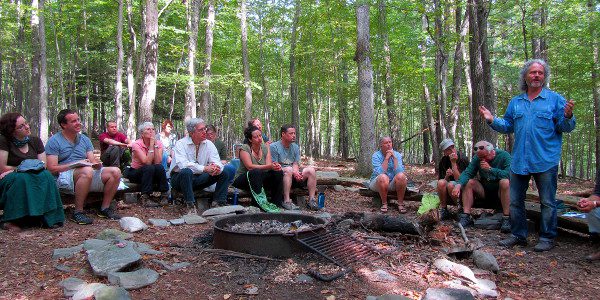
an English Druid (OBOD Chosen Chief Philip Carr-Gomm) speaks to American Druids in the woods of Pennsylvania – 2012
What is Druidry, anyway?
Druidry is the attempt to recreate, reimagine, and reconstruct the religion of the ancient Druids. The problem is that we know very little about what that religion actually was. As Ronald Hutton pointed out in The Druids, this has made them a blank slate on which many different people have projected many different ideas about what they thought they were or what they wanted them to be.
If you could walk up to someone in pre-Roman Britain and ask them about Druidry or about religion, it’s mostly likely they’d look at you funny. “Druids? Those are our priests, healers, and keepers of records and lore.” Druids were a class of people, not a belief system. “Religion? This is our land, these are our Gods and ancestors, here are the virtues by which we live.” The idea of religion as something separate from who you are and what you do is a very modern, Western, Protestant idea.
Modern Druidry has many different expressions. OBOD focuses on individual spirituality, AODA focuses on the Western Mystery Tradition and deep ecology, and ADF is a Pagan and polytheist church – to mention the three orders I’m familiar with.
Ancient Druidry wasn’t one thing either. We don’t know much, but we do know that things were at least slightly different in Britain, Wales, Ireland, and Gaul. The land was different, the languages were different, and at least some of the Gods were different. Some were probably the same God under a different name, but a few are present in one area but not in the others.
So while we cannot say what the religion of the ancient Druids was with any certainty, there are some things we do know, based on history, archaeology, and comparisons with their neighbors. We also have three hundred years of the Druid revival writing on that blank slate.
Authentic Druidry
Here’s where I disagree with Emma Restall Orr’s statement. Authentic Druidry requires a connection with the land. But it does not require a connection with the land of England. There were Irish Druids, Welsh Druids, and Gaulish Druids… and probably Druids from other areas as well. If a Druid traveled to Rome or Egypt or even further (I know of no historical accounts of such travels, but I’d be surprised if there weren’t at least a few) they didn’t stop being Druids or suddenly become lesser Druids because they were no longer in their homeland.
If ancient Druidry was mobile – and it was – then modern Druidry is mobile as well.
Each Druid order defines Druidry in their own way and I have no desire to challenge their structures. But I see a method for creating a Druidry that is both authentic and powerful.
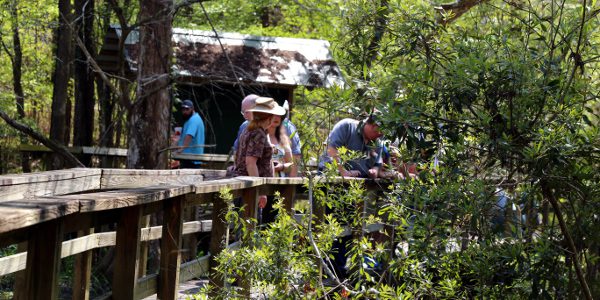
American Druids exploring a swamp in Louisiana – 2017
Start with the ancient Druids
We don’t know much about the ancient Druids, but we know they were religious specialists in an animist and polytheist society. While Ross Nichols may have forced them into a modern three degree system, OBOD’s classifications of Bards (musicians and storytellers), Ovates (healers and seers), and Druids (leaders and priests) has a reasonable basis in history.
Other interpretations and other structures can be just as valid, but if you’re not going to look back to the ancient Druids for inspiration, pick another name for what you do. These are the things Druidry – or if you prefer, a Druidry – is concerned with.
Connect with your ancestors
The ancient Druids are our spiritual ancestors – so are the revival Druids, even if they aren’t as sexy. It is likely some of them are also our physical ancestors, particularly those of us whose families came from Britain and Ireland.
We also have more recent ancestors. Much of what we enjoy in life is because of them and the foundations they laid – connecting to them and honoring them is a good and right thing to do. Listen to them. Pay attention to what they tell you. We live in a time where “new and improved” is everywhere, but the old ways often have great wisdom and value.
Connect with the land
There’s something special about wild places, but all land is sacred including the cities and suburbs. All land is alive. Connect with the land – take off your shoes and walk barefoot in the grass. Watch the squirrels, listen to the birds, hug a tree. Better yet, sit down and listen to a tree. Do not expect to hear it with your physical ears, but a tree can communicate with you, if you’ll slow down long enough to hear it.
Druidry may have begun in Britain and Ireland (or maybe it didn’t – we really don’t know) but it can be practiced anywhere. Connect to the land where you are.
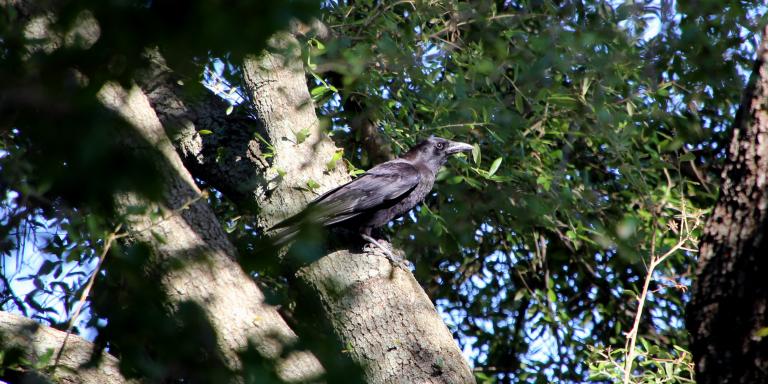
part of my Druidry in Texas
Connect with the Gods
We know very little about the Gods of the Druids. The Druids kept an oral tradition, and their stories were not written down until well into the Christian era. But we know a bit, and much of what we don’t know has been filled through practice, devotion, and UPG.
Does that seem wrong to you? How do you think the ancient Druids learned about their Gods?
Different people have different ideas about who and what the Gods are. There is no such thing as Druid orthodoxy. But ultimately, what you think about the Gods is less important than the fact that you connect with Them, however you conceive of Them.
Listen to the Gods. Pursue the Gods. Worship the Gods. Wrestle with the Gods. There are many ways to connect to the Gods – pick the one that works for you.
Practice your Druidry
Should we say Druidry or Druidism? I strongly prefer Druidry. It isn’t an –ism that we believe, it’s a –ry that we do.
Read and study – we all need to develop a solid foundation for our religious and spiritual practices, and we need enough context to be able to tell the crap from the not-crap. Spend time outside, whether in communion and devotion, in service to the Earth and all her creatures, or just being a part of it all. Honor your ancestors – call their names and tell their stories. Honor the Gods.
Serve your community. Perhaps your community is a grove of your fellow Druids. Perhaps it’s a collection of diverse Pagans and other like-minded folks. Maybe it’s your extended family, or your neighborhood. Ancient Druidry was not practiced in isolation – our contemporary Druidry needs a community as well.
Occasionally I’m asked how I can call myself a Druid when none of us have a direct lineage to the ancient Druids, and we can’t even be sure what they thought and what they did. My answer is that whatever or whoever first called those ancient Druids to their Druidry can also speak to us, if we will only listen, and respond.
If we practice Druidry we can become Druids, where ever we are.
Previous Post
May 14, 2017
Who Can Stand Against Us? An Invocation For Tower Time
Next Post

May 18, 2017 Texas Adoption Discrimination Bill – It’s Complicated
Browse Our Archives
Select a Category Books Community CUUPS Druidry Foundations and Context Gods and Goddesses Magic Myth Nature Ritual Spiritual Practice Theology Travel Uncategorized Videos
Select a Month October 2026 September 2026 August 2026 July 2026 June 2026 May 2026 April 2026 March 2026 February 2026 January 2026 December 2025 November 2025 October 2025 September 2025 August 2025 July 2025 June 2025 May 2025 April 2025 March 2025 February 2025 January 2025 December 2024 November 2024 October 2024 September 2024 August 2024 July 2024 June 2024 May 2024 April 2024 March 2024 February 2024 January 2024 December 2023 November 2023 October 2023 September 2023 August 2023 July 2023 June 2023 May 2023 April 2023 March 2023 February 2023 January 2023 December 2022 November 2022 October 2022 September 2022 August 2022 July 2022 June 2022 May 2022 April 2022 March 2022 February 2022 January 2022 December 2021 November 2021 October 2021 September 2021 August 2021 July 2021 June 2021 May 2021 April 2021 March 2021 February 2021 January 2021 December 2020 November 2020 October 2020 September 2020 August 2020 July 2020 June 2020 May 2020 April 2020 March 2020 February 2020 January 2020 December 2019 November 2019 October 2019 September 2019 August 2019 July 2019 June 2019 May 2019 April 2019 March 2019 February 2019 January 2019 December 2018 November 2018 October 2018 September 2018 August 2018 July 2018 June 2018 May 2018 April 2018 March 2018 February 2018 January 2018 December 2017 November 2017 October 2017 September 2017 August 2017 July 2017 June 2017 May 2017 April 2017 March 2017 February 2017 January 2017 December 2016 November 2016 October 2016 September 2016 August 2016 July 2016 June 2016 May 2016 April 2016 March 2016 February 2016 January 2016 December 2015 November 2015 October 2015 September 2015 August 2015 July 2015 June 2015 May 2015 April 2015 March 2015 February 2015 January 2015 December 2014 November 2014 October 2014 September 2014 August 2014 July 2014 June 2014 May 2014 April 2014 March 2014 February 2014 January 2014 December 2013 November 2013 October 2013 September 2013 August 2013 July 2013 June 2013 May 2013 April 2013 March 2013 February 2013 January 2013 December 2012 November 2012 October 2012 September 2012 August 2012 July 2012 June 2012 May 2012 April 2012 March 2012 February 2012 January 2012 December 2011 November 2011 October 2011 September 2011 August 2011 July 2011 June 2011 May 2011 April 2011 March 2011 February 2011 January 2011 December 2010 November 2010 October 2010 September 2010 August 2010 July 2010 June 2010 May 2010 April 2010 March 2010 February 2010 January 2010 December 2009 November 2009 October 2009 September 2009 August 2009 July 2009 June 2009 May 2009 April 2009 March 2009 February 2009 January 2009 December 2008 November 2008 October 2008 September 2008 August 2008 July 2008 June 2008
Follow Us!
TAKE THE
Religious Wisdom Quiz
What food did Jesus multiply to feed 5,000 people?
Select your answer to see how you score.
Bread and wine Loaves and fish Quail and manna Grapes and figs
Related posts from John Beckett




What We Lose When “Ask AI” Becomes A...
TRENDING AT PATHEOS Pagan

In "Irreplaceable," our book on vocation and technology, Trevor Sutton and I...

I was strolling through the top floor of the brand new Parthenon...

What Does Gêvâh Mean For Kimberley Guifoyle &...
This week, a lot of the news is focused on Kimberly Guilfoyle....

INNER CIRCLE: Profound Mystery (Of Christ In All...
Ephesians 5:31-32 “For this reason, a man will leave his father and...

Do Not Rejoice When Your Enemy Falls: The...
Turning an execution into a public spectacle is a disturbing expression of...

'The Chosen' S6 Trailer: The Passion Gets Very...
Not many watching 'The Chosen' worry about spoilers, but just because they...
view all Pagan blogs
Ad-Free & Subscriber Log-In Subscription Support
- About Us
- 2026 Calendar
- Videos
- Podcasts
- Library of World Religions
- Faith In Media Tracker
- Advertise With Us
- Write for Us
- Privacy Policy
- Terms of Service
- Do Not Sell My Data
- Contact Us
- Radiant Digital
- Manage Newsletter Subscriptions
- Unsubscribe From Notifications
- Sitemap
Copyright 2008-2026, Patheos. All rights reserved.
Subscription Support Ad-Free & Subscriber Log-In
Follow Patheos