
BuddhistCatholicContemplativeEvangelicalGeneral ChristianHinduJewishLatter-day SaintMuslimNew VisionsProgressive Christian
Beliefs
- Buddhist
- Catholic
- Contemplative
- Evangelical
- General Christian
- Hindu
- Jewish
- Latter-day Saint
- More Voices
- Muslim
- New Visions
- Pagan
- Progressive Christian
Topics
- Religion News
- Food and Religion
- Sports and Religion
- Religious Art
- Religious Music and Entertainment
- Religious Events
- History and Religion
- Style and Religion
- Politics and Religion
- Women in Religion
- Recreation Outdoors and Religion
- Business Finance and Religion
- Careers Workplace and Religion
- Education and Religion
- Family Parenting and Religion
- Health Fitness and Religion
- Home and Religion
- Relationships and Religion
- Technology and Religion
- Travel and Religion
Columnists
- Buddhist Columnists
- Business Finance and Religion Columnists
- Careers Workplace and Religion Columnists
- Catholic Columnists
- Contemplative Columnists
- Education and Religion Columnists
- Evangelists Columnists
- Family Parenting and Religion Columnists
- General Christian Columnists
- Health Fitness and Religion Columnists
- Hindu Columnists
- History and Religion Columnists
- Home and Religion Columnists
- Jewish Columnists
- More Voices Columnists
- Latter Day Columnists
- Muslim Columnists
- New Visions Columnists
- Nonreligious Columnists
- Pagan Columnists
- Politics and Religion Columnists
- Progressive Columnists
- Recreation Outdoors and Religion Columnists
- Relationships and Religion Columnists
- Religion News Columnists
- Religious Art Columnists
- Religious Events Columnists
- Religious Music and Entertainment Columnists
- Sports and Religion Columnists
- Style and Religion Columnists
- Technology and Religion Columnists
- Travel and Religion Columnists
- Women in Religion Columnists
Resource Library
- 2026 Calendar
- Library of World Religions
- The 100 Most Holy Places on Earth
- Patheos Answers
- Podcasts
- Videos
- Faith Leaders Database
- Anglican Episcopalian
- Bahai
- Baptist
- Buddhism
- Christianity
- Confucianism
- Eastern Orthodoxy
- Hinduism
- Holiness and Pentecostal
- ISKCON
- Islam
- Judaism
- Lutheran
- Methodist
- The Church of Jesus Christ of Latter-day Saints
- New Age
- Paganism
- Presbytarian and Reformed
- Protestantism
- Religion Behind the Scenes
- Roman Catholic
- Scientology
- Shia Islam
- Sikhism
- Sufism
- Sunni Islam
- Taoism
- Zen
- See all religions
Research Tools
 Ad-Free & Subscriber Log-In Subscription Support
Ad-Free & Subscriber Log-In Subscription Support
Follow Patheos 

- Trending:
- Forgiveness
- |
- Marriage
- |
- Consciousness
- |
- Death Penalty
- |
- Election
- |
- Halloween

- Home
- Pagan
- The Challenges of Oracular Leadership
The Challenges of Oracular Leadership
Last updated on: October 25, 2016 at 6:00 am by John Beckett
The Challenges of Oracular Leadership 2016-10-22T09:33:22-06:00 John Beckett
Patheos Explore the world's faith through different perspectives on religion and spirituality! Patheos has the views of the prevalent religions and spiritualities of the world.
Oracular leadership is leading – yourself, other individuals, and communities – based on revelation from Gods and spirits. If you haven’t heard the term before, neither have I. The closest term I know is “prophetic leadership” and I’ve used it before, but that term comes out of Jewish and Christian tradition (I don’t know if Muslims use it or not) and I’d rather use a term with polytheist roots.
This revelation can come through yourself. It can come through other oracles, mystics, and priests. It can come through collaboration with diviners. But ultimately, its source it Otherworldly.
When we receive messages from Gods and spirits, we tend to take them very seriously. Or at least I do… and I recommend you do as well, even if you choose to do something other than what you’re being asked or told to do. We have sovereignty before the Gods, but that sovereignty is best exercised mindfully and fully informed.
As Pagans and polytheists, we like to point out the irony of people whose God just so happens to hate all the same people they hate. Distinguishing Otherworldly messages from our own thoughts is very difficult, even when we’re trying hard to keep them separate. Some religions think they avoid this problem by grounding themselves in a holy book. But while there is value in the accumulated wisdom of a religious tradition (whether that accumulated wisdom is written down or kept in an oral tradition), that just moves the goal posts back. All sacred texts began as someone’s private revelation.
Those of us who receive this kind of communication soon learn that other people don’t always take these messages as seriously as we’d like. That’s understandable. Having a deity merge with your being provides a level of authenticity that hearing another person say “Danu told me to tell you this” can never duplicate.
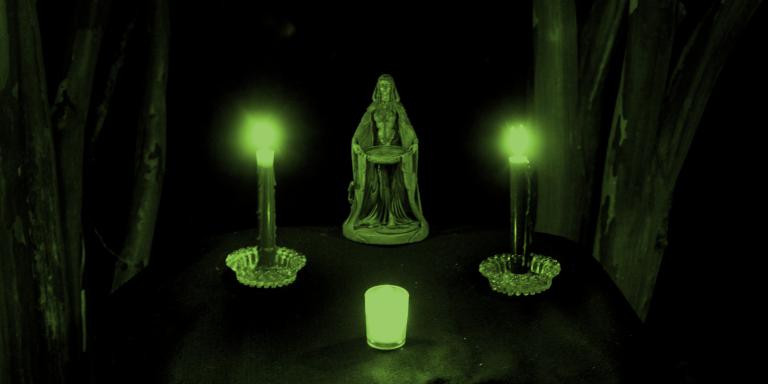
But the Gods do not always limit Their wisdom, Their requests, and Their demands to individuals. Sometimes They have something to say to a group or a community, and those of us who are Their oracles have the responsibility to lead based on that revelation. And that presents a whole new set of challenges.
This is particularly difficult when an oracular leader is also an administrative leader, as frequently happens in small Pagan groups. There is the risk that in the zeal to accomplish a divinely-mandated task, a leader will abuse their authority. They may ignore established processes, hog limited resources, and generally ignore the needs and desires of other members of the group.
But there’s also the risk of self-censorship. The oracular / administrative leader may decide that doing what they’ve been asked to do might upset some people, so in an effort to keep the peace they fail to deliver a message or lead the group in a direction it really needs to go.
I see five qualities an oracular leader must have in order to meet these challenges.
Discernment. Discernment is the ability and willingness to distinguish one thing from another. In this case, it means the ability and willingness to separate the voices of the Gods from your own voice. That’s the biggest challenge in any oracular work, whether you’re taking omens before leading a cattle raid or if you’re just reading Tarot at the local psychic fair.
Good discernment begins with knowing yourself. If you know what’s you, it’s a lot easier recognize what’s not you. What thoughts, what feelings, what ideas are yours? Not everything the Gods and spirits tell us is contrary to what we’d like it to be, but the closer our messages are to our own preferences, the more skeptical we need to be.
Recognizing the “Other” voice gets easier and more reliable with time and practice, but it’s never certain. Practicing good discernment is always necessary.
Diplomacy. An oracular leader must be a diplomat. Our Gods are not infallible, and while participating in Their work is usually both helpful and rewarding, sometimes Their requests aren’t compatible with our contemporary world (those of you who’ve had close dealings with a certain Irish Battle Goddess know what I’m talking about). In any case, unquestioning faith is not a Pagan virtue. Sometimes we need to negotiate with the Gods as to what we can do, what we will do, and what’s just not going to happen.
We also have to be diplomatic with the groups we lead. Announcing “the Dagda wants us to do this” isn’t likely to carry much weight with a group of eclectic NeoPagans. It may not carry much weight with a group of Celtic polytheists if they aren’t used to hearing such messages, or if they’ve got other ideas about what should be done. Translating the desires of the Gods into things people can do and will do requires serious thought and a careful choice of words.
Patience. This is hard for me, because I have no patience. The Gods are immortal – I’m not (at least not in this lifetime). But some things will either happen in their own time or not at all. It takes time for people to go from hearing something new to accepting something new. It takes time for organizations to change and grow. The grand temples of antiquity weren’t built in a day, or in a year, or in some cases, in a century.

Sometimes the people needed to accomplish what you’ve been asked to do aren’t there yet. All you can do is lay the groundwork – and try to provide good hospitality when they show up, so you don’t run them off before they ever get involved. Patience is not procrastination – don’t worry about what you can’t do yet, but work diligently on what you can do now.
Flexibility. One of the core principles of effective magic is to work for the desired end result, not the method of getting there. If you need a new job, you might find it on a job search site, you might find it through a friend, you might find it through a recruiter, or you might find a way to become self-employed. Limiting yourself to just one approach reduces the chances you’ll find something suitable.
Likewise, if you’re leading based on revelation from Gods and spirits, there are likely many ways to get to where you want to go. If some approaches are more doable than others, use them. If some are more appealing to your group, use them. Accomplishing what you’ve been told to accomplish is the main thing – how you accomplish it is just details.
Commitment. Good, authentic, oracular leadership requires a commitment to the messages the Gods send us. That means doing all the things listed above. But some things can’t be compromised. Sometimes one or two details really are that important. Sometimes a call to be patient is just someone stalling in hopes that you’ll give up.
At the same time, “the Gods told me to” is no excuse for violating the trust of others or for abandoning the obligations you accepted as an administrative leader. If you can’t do what you’ve been told to do without running over the rest of the group, then you have to find another way.
Sometimes this can be done with a sub-group: “I’m doing this – who wants to do it with me?” (while maintaining your obligations to the whole group). Sometimes it means finding a second group in addition to your primary group. Sometimes it means striking out on your own.

Ideally, administrative leadership and oracular leadership would be separate. The Christian corollary is a church where a lay Board of Trustees manages the operations and the pastor provides the spiritual leadership, as opposed to the megachurch model where the pastor is the CEO. Small Pagan groups may not have the resources for such “separation of powers” but where they can, the risk of conflict and of conflict of interest is reduced.
Some messages from the Gods are mysteries to be pondered. Others are orders that require a deep commitment to do what you’ve been asked to do, no matter what it costs. Oracular leadership is difficult, but if it’s what you’ve been called to do, do it as honestly and effectively as you can.
Previous Post

October 23, 2016
A Community is a Living Thing
Next Post

October 27, 2016 The Tactics and Strategy of Bad Choices
Browse Our Archives
Select a Category Books Community CUUPS Druidry Foundations and Context Gods and Goddesses Magic Myth Nature Ritual Spiritual Practice Theology Travel Uncategorized Videos
Select a Month October 2026 September 2026 August 2026 July 2026 June 2026 May 2026 April 2026 March 2026 February 2026 January 2026 December 2025 November 2025 October 2025 September 2025 August 2025 July 2025 June 2025 May 2025 April 2025 March 2025 February 2025 January 2025 December 2024 November 2024 October 2024 September 2024 August 2024 July 2024 June 2024 May 2024 April 2024 March 2024 February 2024 January 2024 December 2023 November 2023 October 2023 September 2023 August 2023 July 2023 June 2023 May 2023 April 2023 March 2023 February 2023 January 2023 December 2022 November 2022 October 2022 September 2022 August 2022 July 2022 June 2022 May 2022 April 2022 March 2022 February 2022 January 2022 December 2021 November 2021 October 2021 September 2021 August 2021 July 2021 June 2021 May 2021 April 2021 March 2021 February 2021 January 2021 December 2020 November 2020 October 2020 September 2020 August 2020 July 2020 June 2020 May 2020 April 2020 March 2020 February 2020 January 2020 December 2019 November 2019 October 2019 September 2019 August 2019 July 2019 June 2019 May 2019 April 2019 March 2019 February 2019 January 2019 December 2018 November 2018 October 2018 September 2018 August 2018 July 2018 June 2018 May 2018 April 2018 March 2018 February 2018 January 2018 December 2017 November 2017 October 2017 September 2017 August 2017 July 2017 June 2017 May 2017 April 2017 March 2017 February 2017 January 2017 December 2016 November 2016 October 2016 September 2016 August 2016 July 2016 June 2016 May 2016 April 2016 March 2016 February 2016 January 2016 December 2015 November 2015 October 2015 September 2015 August 2015 July 2015 June 2015 May 2015 April 2015 March 2015 February 2015 January 2015 December 2014 November 2014 October 2014 September 2014 August 2014 July 2014 June 2014 May 2014 April 2014 March 2014 February 2014 January 2014 December 2013 November 2013 October 2013 September 2013 August 2013 July 2013 June 2013 May 2013 April 2013 March 2013 February 2013 January 2013 December 2012 November 2012 October 2012 September 2012 August 2012 July 2012 June 2012 May 2012 April 2012 March 2012 February 2012 January 2012 December 2011 November 2011 October 2011 September 2011 August 2011 July 2011 June 2011 May 2011 April 2011 March 2011 February 2011 January 2011 December 2010 November 2010 October 2010 September 2010 August 2010 July 2010 June 2010 May 2010 April 2010 March 2010 February 2010 January 2010 December 2009 November 2009 October 2009 September 2009 August 2009 July 2009 June 2009 May 2009 April 2009 March 2009 February 2009 January 2009 December 2008 November 2008 October 2008 September 2008 August 2008 July 2008 June 2008
Follow Us!
TAKE THE
Religious Wisdom Quiz
Which king of Babylon saw the handwriting on the wall?
Select your answer to see how you score.
Cyrus Belshazzar Darius Nebuchadnezzar
Related posts from John Beckett


The Vampire Films of Jean Rollin


Bo French Doesn’t Understand Texas
TRENDING AT PATHEOS Pagan

Methodist Central Hall and Westminster Abbey
Situated on the same square is Methodist Central Hall and Westminster Abbey. ...

57th Dove Awards Honor Dolly Parton, Crown New...
On gospel music’s biggest night, the 57th annual GMA Dove Awards honored...

The First Eucharistic Controversy: Christ’s Real Presence
For Catholics, the Eucharist is the source and summit of the Christian...

What a Stop Sign Can Teach Us About...
How to Make a Decision When You Can't Hear God Main point:...

Archdiocese Hosts Military Marriage Retreat in Germany
RASTATT, Germany — The transient military lifestyle, with its frequent deployments and...

Nearly every morning, I make the drive to Detroit with my high-school-age...
view all Pagan blogs
Ad-Free & Subscriber Log-In Subscription Support
- About Us
- 2026 Calendar
- Videos
- Podcasts
- Library of World Religions
- Faith In Media Tracker
- Advertise With Us
- Write for Us
- Privacy Policy
- Terms of Service
- Do Not Sell My Data
- Contact Us
- Radiant Digital
- Manage Newsletter Subscriptions
- Unsubscribe From Notifications
- Sitemap
Copyright 2008-2026, Patheos. All rights reserved.
Subscription Support Ad-Free & Subscriber Log-In
Follow Patheos