
BuddhistCatholicContemplativeEvangelicalGeneral ChristianHinduJewishLatter-day SaintMuslimNew VisionsProgressive Christian
Beliefs
- Buddhist
- Catholic
- Contemplative
- Evangelical
- General Christian
- Hindu
- Jewish
- Latter-day Saint
- More Voices
- Muslim
- New Visions
- Pagan
- Progressive Christian
Topics
- Religion News
- Food and Religion
- Sports and Religion
- Religious Art
- Religious Music and Entertainment
- Religious Events
- History and Religion
- Style and Religion
- Politics and Religion
- Women in Religion
- Recreation Outdoors and Religion
- Business Finance and Religion
- Careers Workplace and Religion
- Education and Religion
- Family Parenting and Religion
- Health Fitness and Religion
- Home and Religion
- Relationships and Religion
- Technology and Religion
- Travel and Religion
Columnists
- Buddhist Columnists
- Business Finance and Religion Columnists
- Careers Workplace and Religion Columnists
- Catholic Columnists
- Contemplative Columnists
- Education and Religion Columnists
- Evangelists Columnists
- Family Parenting and Religion Columnists
- General Christian Columnists
- Health Fitness and Religion Columnists
- Hindu Columnists
- History and Religion Columnists
- Home and Religion Columnists
- Jewish Columnists
- More Voices Columnists
- Latter Day Columnists
- Muslim Columnists
- New Visions Columnists
- Nonreligious Columnists
- Pagan Columnists
- Politics and Religion Columnists
- Progressive Columnists
- Recreation Outdoors and Religion Columnists
- Relationships and Religion Columnists
- Religion News Columnists
- Religious Art Columnists
- Religious Events Columnists
- Religious Music and Entertainment Columnists
- Sports and Religion Columnists
- Style and Religion Columnists
- Technology and Religion Columnists
- Travel and Religion Columnists
- Women in Religion Columnists
Resource Library
- 2026 Calendar
- Library of World Religions
- The 100 Most Holy Places on Earth
- Patheos Answers
- Podcasts
- Videos
- Faith Leaders Database
- Anglican Episcopalian
- Bahai
- Baptist
- Buddhism
- Christianity
- Confucianism
- Eastern Orthodoxy
- Hinduism
- Holiness and Pentecostal
- ISKCON
- Islam
- Judaism
- Lutheran
- Methodist
- The Church of Jesus Christ of Latter-day Saints
- New Age
- Paganism
- Presbytarian and Reformed
- Protestantism
- Religion Behind the Scenes
- Roman Catholic
- Scientology
- Shia Islam
- Sikhism
- Sufism
- Sunni Islam
- Taoism
- Zen
- See all religions
Research Tools
 Ad-Free & Subscriber Log-In Subscription Support
Ad-Free & Subscriber Log-In Subscription Support
Follow Patheos 

- Trending:
- Forgiveness
- |
- Marriage
- |
- Consciousness
- |
- Death Penalty
- |
- Election
- |
- Halloween

- Home
- Pagan
- Building Polytheist Community – Put the Gods at the Center
Building Polytheist Community – Put the Gods at the Center
Last updated on: August 7, 2016 at 3:00 pm by John Beckett
Building Polytheist Community – Put the Gods at the Center 2016-08-02T18:45:44-06:00 John Beckett
Patheos Explore the world's faith through different perspectives on religion and spirituality! Patheos has the views of the prevalent religions and spiritualities of the world.
 From the panel discussion at Many Gods West, August 5, 2016
For all the advances that have been made in recent years by polytheists, Pagans, and even atheists, our mainstream society remains decidedly Christian. Christian norms and Christian assumptions carry over into non-Christian religions, including polytheism. Recognizing these norms and assumptions in our own minds is the first step in changing them.
If someone says “building polytheist community” most of us don’t know exactly what that means, because in total we haven’t done much of it yet – we’re just getting started. And so our minds go to what we know about how other religious groups build their religious communities. We think of Christian practices, and we assume building a religious community means proselytization or other aggressive recruiting. Or we think it means building megachurches so big they need trams to bring people in from the far reaches of the parking lots.
We know we don’t have the kind of money it takes to build a megachurch, and we wouldn’t build one if we did. Most of us have been on the wrong end of Christian proselytization efforts and we’ve vowed to never ever do it ourselves. And so we think – subconsciously if not explicitly – why would I want to build a religious community?
But there’s another way to build polytheist communities.
A community is a group of people with a common identity working together for a common purpose. There are four elements here: people, identity, purpose, and working together. Efforts to build community tend to focus on the people part and on the working together part. That’s why we see the Mormons and the Baptists and everyone else knocking on doors – they’re focusing on bringing people into their communities. When they get there, they’ll find classes and programs and all sorts of things designed to get them to work together.
Now, there’s nothing wrong with advertising. I like to say that Pagans don’t proselytize, but we damn well better publicize. You’ve got to let people know you’re here. But we’re not trying to save anybody’s soul. We’re polytheists – we recognize that different Gods call different people to worship Them in different ways. So when we think about building our communities, we can focus on the other two elements: identity and purpose.
If we’re building polytheist community, what is our identity? What do we have in common? What do all of us here have in common? The name of this conference answers that question: Many Gods. If we’re going to build polytheist community, let’s put the Gods at the center.
We don’t have to agree on everything about the Gods. We shouldn’t agree on everything. If we start agreeing on everything, we might start thinking we know all there is to know about the Gods, and that never ends well. One of the advantages of polytheist community is that it provides a forum for us to share our ideas about the Gods: who They are, what They are, how best to hear Them, how best to honor Them, and how best to embody Their values and virtues in our own lives. We can talk about our ideas, listen to other people’s ideas, and debate their strengths and weaknesses – in a rational, respectful manner. Kinda like what we’re doing here this weekend.
Sometimes we walk away from these conversations thinking “I wasn’t sure about this concept or that practice, but now I’m convinced I really am on the right track.” Other times we walk away thinking “the other person made a lot of sense – I need to reconsider my ideas.” And still other times we walk way with no clear conclusions but having learned something about a different point of view.
Let’s put the Gods at the center of our polytheist communities.
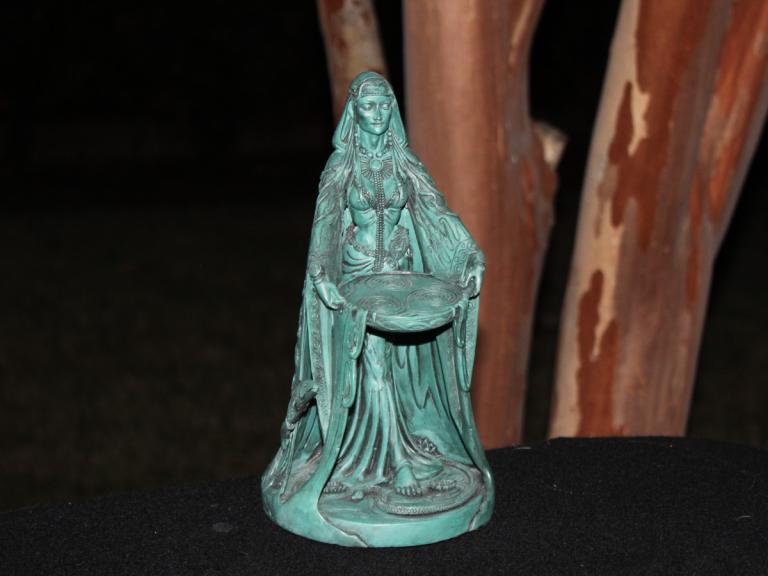
As we move outward from our identity in the many Gods, we come to the question of purpose: what are we going to do, and how are we going to do it? Is your local polytheist community going to gather for the private worship of various Gods? Are you going to offer public worship to the wider community? Are you going to teach, and if so, what are you going to teach? History? Lore? Theology? Spiritual practice? Are you going to do this-world community service, picking up trash or donating blood or volunteering at food banks? Are you going to try to build a public temple to constantly remind everyone that the Gods are more than characters in old stories?
There are many, many purposes and goals that a polytheist community can adopt. If you’re building such a community, it’s important to talk about these things up front. Otherwise, you’ll have some people thinking you’re all there to do rituals, others thinking you’re all there to build a temple, and others thinking you’re there to bring polytheist values and virtues to mainstream politics. That’s a recipe for failure. Come to an agreement on your purposes.
It’s also important to start small. Gordon White, a chaos magician who runs the Rune Soup blog and podcast, said:
start simple and let the system … complicate itself. … In natural systems (which would include the spirit world in an animist model), increasing complexity is a sign of health. Initial complexity is a collapse risk.
CUUPS is open to anyone who comes in good will, regardless of their beliefs about the Gods. Denton CUUPS is no exception. But we do have a large number of polytheists, and in 2014 our polytheist subgroup decided we wanted to work on deeper practice. So we talked about it and we made plans and we set up sub-sub-groups to study and commune with different deities. We had projects and rituals, we committed to reading books and keeping journals, we made offerings and sacrifices – all this, of course, while we were still keeping up with our primary mission of being a home for Paganism in Denton, Texas and presenting our usual public rituals and classes.
It didn’t work. There were numerous reasons why it didn’t work, but near the top of the list was that initial complexity Gordon White warned against.
In 2015 we decided, “you know, we’re just going to get together once a month and do a private devotional ritual. We’ll keep the same basic liturgy from month to month, and whoever hosts can pick the Deity of the Occasion.” It’s been an amazing success. The Gods have shown up, They’ve spoken to us, and our polytheist subgroup is closer and stronger than it’s ever been. A year and a half later, we were given some instructions to add a thing or two to our devotions, and we’re in the process of doing that now. We can do that because we started simple and now we’re growing.
So when someone says they want to build polytheist community, remember we don’t have to build our communities the way other religions build theirs. They can focus on getting people in the doors. Let’s focus our work on building a strong polytheist identity with the Gods at the center, and on a purpose of doing one or two things and doing them very well, until we’re ready to add the next thing. If we do, our communities will grow in numbers and in depth.
Previous Post

August 4, 2016
Pieces of Eight
Next Post

August 8, 2016 Many Gods West: Showing Up
Browse Our Archives
Select a Category Books Community CUUPS Druidry Foundations and Context Gods and Goddesses Magic Myth Nature Ritual Spiritual Practice Theology Travel Uncategorized Videos
Select a Month October 2026 September 2026 August 2026 July 2026 June 2026 May 2026 April 2026 March 2026 February 2026 January 2026 December 2025 November 2025 October 2025 September 2025 August 2025 July 2025 June 2025 May 2025 April 2025 March 2025 February 2025 January 2025 December 2024 November 2024 October 2024 September 2024 August 2024 July 2024 June 2024 May 2024 April 2024 March 2024 February 2024 January 2024 December 2023 November 2023 October 2023 September 2023 August 2023 July 2023 June 2023 May 2023 April 2023 March 2023 February 2023 January 2023 December 2022 November 2022 October 2022 September 2022 August 2022 July 2022 June 2022 May 2022 April 2022 March 2022 February 2022 January 2022 December 2021 November 2021 October 2021 September 2021 August 2021 July 2021 June 2021 May 2021 April 2021 March 2021 February 2021 January 2021 December 2020 November 2020 October 2020 September 2020 August 2020 July 2020 June 2020 May 2020 April 2020 March 2020 February 2020 January 2020 December 2019 November 2019 October 2019 September 2019 August 2019 July 2019 June 2019 May 2019 April 2019 March 2019 February 2019 January 2019 December 2018 November 2018 October 2018 September 2018 August 2018 July 2018 June 2018 May 2018 April 2018 March 2018 February 2018 January 2018 December 2017 November 2017 October 2017 September 2017 August 2017 July 2017 June 2017 May 2017 April 2017 March 2017 February 2017 January 2017 December 2016 November 2016 October 2016 September 2016 August 2016 July 2016 June 2016 May 2016 April 2016 March 2016 February 2016 January 2016 December 2015 November 2015 October 2015 September 2015 August 2015 July 2015 June 2015 May 2015 April 2015 March 2015 February 2015 January 2015 December 2014 November 2014 October 2014 September 2014 August 2014 July 2014 June 2014 May 2014 April 2014 March 2014 February 2014 January 2014 December 2013 November 2013 October 2013 September 2013 August 2013 July 2013 June 2013 May 2013 April 2013 March 2013 February 2013 January 2013 December 2012 November 2012 October 2012 September 2012 August 2012 July 2012 June 2012 May 2012 April 2012 March 2012 February 2012 January 2012 December 2011 November 2011 October 2011 September 2011 August 2011 July 2011 June 2011 May 2011 April 2011 March 2011 February 2011 January 2011 December 2010 November 2010 October 2010 September 2010 August 2010 July 2010 June 2010 May 2010 April 2010 March 2010 February 2010 January 2010 December 2009 November 2009 October 2009 September 2009 August 2009 July 2009 June 2009 May 2009 April 2009 March 2009 February 2009 January 2009 December 2008 November 2008 October 2008 September 2008 August 2008 July 2008 June 2008
Follow Us!
TAKE THE
Religious Wisdom Quiz
Which Christian denomination is most associated with the Reformation led by Martin Luther?
Select your answer to see how you score.
Anglican Catholic Lutheran Orthodox
Related posts from John Beckett


The Vampire Films of Jean Rollin


Bo French Doesn’t Understand Texas
TRENDING AT PATHEOS Pagan

Nearly every morning, I make the drive to Detroit with my high-school-age...

The Real AI Story Is Adoption Without Trust
Artificial intelligence has crossed a political threshold. It is no longer a...

A new article, written by Jeff Lindsay and Gale L. Pooley,...

Swimfan: Forgotten Aughts Pleasures
This is a recovery effort. In 2002, My Big Fat Greek Wedding...

Top Three Anti-Catholic Lies About Catholicism
This is my initial transcript for the video, "THE 3 WORST...

Pope Leo Celebrates Mass for Nurses & Docs...
I don't have any idea how he did it, but Pope Leo...
view all Pagan blogs
Ad-Free & Subscriber Log-In Subscription Support
- About Us
- 2026 Calendar
- Videos
- Podcasts
- Library of World Religions
- Faith In Media Tracker
- Advertise With Us
- Write for Us
- Privacy Policy
- Terms of Service
- Do Not Sell My Data
- Contact Us
- Radiant Digital
- Manage Newsletter Subscriptions
- Unsubscribe From Notifications
- Sitemap
Copyright 2008-2026, Patheos. All rights reserved.
Subscription Support Ad-Free & Subscriber Log-In
Follow Patheos