
BuddhistCatholicContemplativeEvangelicalGeneral ChristianHinduJewishLatter-day SaintMuslimNew VisionsProgressive Christian
Beliefs
- Buddhist
- Catholic
- Contemplative
- Evangelical
- General Christian
- Hindu
- Jewish
- Latter-day Saint
- More Voices
- Muslim
- New Visions
- Pagan
- Progressive Christian
Topics
- Religion News
- Food and Religion
- Sports and Religion
- Religious Art
- Religious Music and Entertainment
- Religious Events
- History and Religion
- Style and Religion
- Politics and Religion
- Women in Religion
- Recreation Outdoors and Religion
- Business Finance and Religion
- Careers Workplace and Religion
- Education and Religion
- Family Parenting and Religion
- Health Fitness and Religion
- Home and Religion
- Relationships and Religion
- Technology and Religion
- Travel and Religion
Columnists
- Buddhist Columnists
- Business Finance and Religion Columnists
- Careers Workplace and Religion Columnists
- Catholic Columnists
- Contemplative Columnists
- Education and Religion Columnists
- Evangelists Columnists
- Family Parenting and Religion Columnists
- General Christian Columnists
- Health Fitness and Religion Columnists
- Hindu Columnists
- History and Religion Columnists
- Home and Religion Columnists
- Jewish Columnists
- More Voices Columnists
- Latter Day Columnists
- Muslim Columnists
- New Visions Columnists
- Nonreligious Columnists
- Pagan Columnists
- Politics and Religion Columnists
- Progressive Columnists
- Recreation Outdoors and Religion Columnists
- Relationships and Religion Columnists
- Religion News Columnists
- Religious Art Columnists
- Religious Events Columnists
- Religious Music and Entertainment Columnists
- Sports and Religion Columnists
- Style and Religion Columnists
- Technology and Religion Columnists
- Travel and Religion Columnists
- Women in Religion Columnists
Resource Library
- 2026 Calendar
- Library of World Religions
- The 100 Most Holy Places on Earth
- Patheos Answers
- Podcasts
- Videos
- Faith Leaders Database
- Anglican Episcopalian
- Bahai
- Baptist
- Buddhism
- Christianity
- Confucianism
- Eastern Orthodoxy
- Hinduism
- Holiness and Pentecostal
- ISKCON
- Islam
- Judaism
- Lutheran
- Methodist
- The Church of Jesus Christ of Latter-day Saints
- New Age
- Paganism
- Presbytarian and Reformed
- Protestantism
- Religion Behind the Scenes
- Roman Catholic
- Scientology
- Shia Islam
- Sikhism
- Sufism
- Sunni Islam
- Taoism
- Zen
- See all religions
Research Tools
 Ad-Free & Subscriber Log-In Subscription Support
Ad-Free & Subscriber Log-In Subscription Support
Follow Patheos 

- Trending:
- Forgiveness
- |
- Marriage
- |
- Consciousness
- |
- Death Penalty
- |
- Election
- |
- Halloween

- Home
- Pagan
- Why Polytheism?
Why Polytheism?
Last updated on: July 7, 2016 at 4:30 pm by John Beckett
Why Polytheism? 2016-07-04T17:10:12-06:00 John Beckett
Patheos Explore the world's faith through different perspectives on religion and spirituality! Patheos has the views of the prevalent religions and spiritualities of the world.
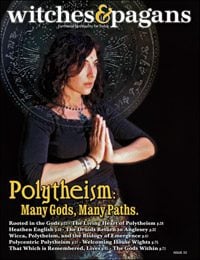 My Pagan reading and listening material has gotten a lot broader over the past few months. Part of this is because the polytheist wing of the Pagan internet has been rather quiet lately (but do check out the current issue of Witches & Pagans magazine: “Polytheism: Many Gods, Many Paths” – it’s a virtual who’s who of contemporary polytheist thinkers and writers). Mainly, though, there’s been a lot of really good material from traditional witches, occultists, and chaos magicians (I could link to a lot more stuff, but that’s not the point of this post).
All this talk of magic really appeals to the engineer in me – it’s practical skills that help you do what needs to be done. It appeals to the little boy who desperately wanted to be a witch, but who thought such things could not exist.
As I finished listening to another magic-oriented podcast last week, I wondered why anyone would choose to be a polytheist. Now, it’s absolutely possible to be a polytheist and a witch, or a polytheist and a magician – some of the most powerful witches I know are also polytheists. But why would someone choose polytheism as their primary identity – magic and witchcraft sure look more appealing.
I do a bit of chaos magic and some occasional witchcraft. But if you ask me what I am, my answer is a Druid and a priest – and a polytheist. I’m happy with my choice, so I started asking myself why I’m satisfied with this religious identity.
Polytheism answers the question “priest of what or whom?” One of the first books I read on the ancient Druids was The Druids: Celtic Priests of Nature by Jean Markale. I have some issues with the book, most notably Markale’s insistence that modern Druidry is inauthentic because it’s not practiced in an indigenous Celtic culture (I rebutted that argument in another context here). But the image of Druids as priests has stayed with me throughout my Druid education, training, and practice.
I love Nature and I do occasionally speak for the trees, but I’m not the Lorax. I’m a priest of Cernunnos and a priest of Danu. I occasionally serve as priest of other deities. If a Druid is a priest, then polytheism provides ample opportunities to serve in that capacity.
Polytheism is a counterbalance to materialism. There are two forms of materialism prevalent in our mainstream society. The first says that the only reality is material reality – if it can’t be measured and catalogued, if it can’t be falsified, if it’s not repeatable on demand, then it’s not real. How much do we miss because we’re convinced something can’t exist, so either we rationalize it away, or we simply refuse to see it? Our experiences of the Gods remind us that while science has done wonders, it has its limits.
The second form of materialism is our society’s preference for things (especially for expensive, extravagant things) over relationships and experiences. You don’t have to be a polytheist to see the damage this has done, with the growing income and wealth inequality, and the growing personal debt used to buy things we don’t need to impress people we don’t like.
Polytheism reminds us that relationships with the Gods and embodying their virtues are more important than collecting more things. For many of us, this approach isn’t just more virtuous, it’s also far more satisfying.
Polytheism provides a context for our experiences. Last month I had a unique experience. I saw something that could not exist, but there it was. My polytheism gave me a context for it: the Otherworld, the existence of many kinds of spiritual beings, the experiences others have had of Gods and spirits, a cyclical worldview, and the importance of strong, respectful, reciprocal relationships across generations and across realms of existence.
Witchcraft provides some context, but it’s more about doing what needs to be done. Classical occultism provides an alternative context, but its roots in Christianity can be troublesome for those of us who left that religion under difficult circumstances. Polytheism provides a plausible and palatable context for interpreting our spiritual experiences.
Polytheism promotes community. One of the reasons witchcraft has grown so much in the past 25 years or so is that it can be practiced solitary, whether you’re talking about Wicca or traditional witchcraft. That’s very attractive for some people.
Ancient polytheism was anything but solitary. It was one of the ways communities came together, whether to build temples or participate in sacrifices. While you can be a solitary polytheist, there is no substitute for the fellowship, encouragement, reinforcement and accountability that comes from being in community with like-minded folks.
There are lots of reasons why Pagans and polytheists don’t seek out community. How many of them are valid reasons and how many are excuses vary from situation to situation. I’ll simply say that without my local Denton CUUPS community and without my wider polytheist community, my practice and my life would be far weaker and poorer.
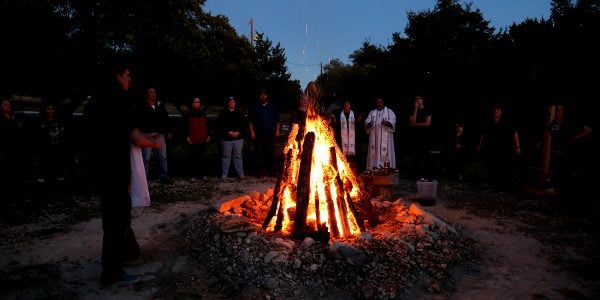
Polytheism is a connection to something bigger than yourself. One of my biggest problems in my early Pagan days was figuring out what magic was for. “Because I can” is never a good answer and often a dangerous answer – it certainly was for me. Let’s just say I did some things l shouldn’t have done and it stalled my spiritual growth for a lot of years.
Polytheism begins with the proposition that there are many Gods who are bigger than you. They embody and promote virtues, which are more important than your whims. They have goals and plans, which often have a timeframe longer than a human lifespan. Following the Gods, working with the Gods, and working for the Gods help us connect to timeless values and to things that will be around long after we’ve left this world.
So I’m enjoying reading about and listening to witches, magicians, and occultists. I’m learning some things, including some I can incorporate into my own practice. But at the end of the day I’m a polytheist, and I’m happy to be one.
Previous Post

July 5, 2016
Why the Gods Come Before Politics
Next Post

July 10, 2016 Speaking Passionately
Browse Our Archives
Select a Category Books Community CUUPS Druidry Foundations and Context Gods and Goddesses Magic Myth Nature Ritual Spiritual Practice Theology Travel Uncategorized Videos
Select a Month October 2026 September 2026 August 2026 July 2026 June 2026 May 2026 April 2026 March 2026 February 2026 January 2026 December 2025 November 2025 October 2025 September 2025 August 2025 July 2025 June 2025 May 2025 April 2025 March 2025 February 2025 January 2025 December 2024 November 2024 October 2024 September 2024 August 2024 July 2024 June 2024 May 2024 April 2024 March 2024 February 2024 January 2024 December 2023 November 2023 October 2023 September 2023 August 2023 July 2023 June 2023 May 2023 April 2023 March 2023 February 2023 January 2023 December 2022 November 2022 October 2022 September 2022 August 2022 July 2022 June 2022 May 2022 April 2022 March 2022 February 2022 January 2022 December 2021 November 2021 October 2021 September 2021 August 2021 July 2021 June 2021 May 2021 April 2021 March 2021 February 2021 January 2021 December 2020 November 2020 October 2020 September 2020 August 2020 July 2020 June 2020 May 2020 April 2020 March 2020 February 2020 January 2020 December 2019 November 2019 October 2019 September 2019 August 2019 July 2019 June 2019 May 2019 April 2019 March 2019 February 2019 January 2019 December 2018 November 2018 October 2018 September 2018 August 2018 July 2018 June 2018 May 2018 April 2018 March 2018 February 2018 January 2018 December 2017 November 2017 October 2017 September 2017 August 2017 July 2017 June 2017 May 2017 April 2017 March 2017 February 2017 January 2017 December 2016 November 2016 October 2016 September 2016 August 2016 July 2016 June 2016 May 2016 April 2016 March 2016 February 2016 January 2016 December 2015 November 2015 October 2015 September 2015 August 2015 July 2015 June 2015 May 2015 April 2015 March 2015 February 2015 January 2015 December 2014 November 2014 October 2014 September 2014 August 2014 July 2014 June 2014 May 2014 April 2014 March 2014 February 2014 January 2014 December 2013 November 2013 October 2013 September 2013 August 2013 July 2013 June 2013 May 2013 April 2013 March 2013 February 2013 January 2013 December 2012 November 2012 October 2012 September 2012 August 2012 July 2012 June 2012 May 2012 April 2012 March 2012 February 2012 January 2012 December 2011 November 2011 October 2011 September 2011 August 2011 July 2011 June 2011 May 2011 April 2011 March 2011 February 2011 January 2011 December 2010 November 2010 October 2010 September 2010 August 2010 July 2010 June 2010 May 2010 April 2010 March 2010 February 2010 January 2010 December 2009 November 2009 October 2009 September 2009 August 2009 July 2009 June 2009 May 2009 April 2009 March 2009 February 2009 January 2009 December 2008 November 2008 October 2008 September 2008 August 2008 July 2008 June 2008
Follow Us!
TAKE THE
Religious Wisdom Quiz
What does Revelation say about anyone who adds to the words of the prophecy?
Select your answer to see how you score.
They will be judged They will be cursed God will add to them the plagues described in this scroll They will lose their salvation
Related posts from John Beckett




What We Lose When “Ask AI” Becomes A...
TRENDING AT PATHEOS Pagan

The First Eucharistic Controversy: Christ’s Real Presence
For Catholics, the Eucharist is the source and summit of the Christian...

What a Stop Sign Can Teach Us About...
How to Make a Decision When You Can't Hear God Main point:...

Archdiocese Hosts Military Marriage Retreat in Germany
RASTATT, Germany — The transient military lifestyle, with its frequent deployments and...

Nearly every morning, I make the drive to Detroit with my high-school-age...

The Real AI Story Is Adoption Without Trust
Artificial intelligence has crossed a political threshold. It is no longer a...

A new article, written by Jeff Lindsay and Gale L. Pooley,...
view all Pagan blogs
Ad-Free & Subscriber Log-In Subscription Support
- About Us
- 2026 Calendar
- Videos
- Podcasts
- Library of World Religions
- Faith In Media Tracker
- Advertise With Us
- Write for Us
- Privacy Policy
- Terms of Service
- Do Not Sell My Data
- Contact Us
- Radiant Digital
- Manage Newsletter Subscriptions
- Unsubscribe From Notifications
- Sitemap
Copyright 2008-2026, Patheos. All rights reserved.
Subscription Support Ad-Free & Subscriber Log-In
Follow Patheos