
BuddhistCatholicContemplativeEvangelicalGeneral ChristianHinduJewishLatter-day SaintMuslimNew VisionsProgressive Christian
Beliefs
- Buddhist
- Catholic
- Contemplative
- Evangelical
- General Christian
- Hindu
- Jewish
- Latter-day Saint
- More Voices
- Muslim
- New Visions
- Pagan
- Progressive Christian
Topics
- Religion News
- Food and Religion
- Sports and Religion
- Religious Art
- Religious Music and Entertainment
- Religious Events
- History and Religion
- Style and Religion
- Politics and Religion
- Women in Religion
- Recreation Outdoors and Religion
- Business Finance and Religion
- Careers Workplace and Religion
- Education and Religion
- Family Parenting and Religion
- Health Fitness and Religion
- Home and Religion
- Relationships and Religion
- Technology and Religion
- Travel and Religion
Columnists
- Buddhist Columnists
- Business Finance and Religion Columnists
- Careers Workplace and Religion Columnists
- Catholic Columnists
- Contemplative Columnists
- Education and Religion Columnists
- Evangelists Columnists
- Family Parenting and Religion Columnists
- General Christian Columnists
- Health Fitness and Religion Columnists
- Hindu Columnists
- History and Religion Columnists
- Home and Religion Columnists
- Jewish Columnists
- More Voices Columnists
- Latter Day Columnists
- Muslim Columnists
- New Visions Columnists
- Nonreligious Columnists
- Pagan Columnists
- Politics and Religion Columnists
- Progressive Columnists
- Recreation Outdoors and Religion Columnists
- Relationships and Religion Columnists
- Religion News Columnists
- Religious Art Columnists
- Religious Events Columnists
- Religious Music and Entertainment Columnists
- Sports and Religion Columnists
- Style and Religion Columnists
- Technology and Religion Columnists
- Travel and Religion Columnists
- Women in Religion Columnists
Resource Library
- 2026 Calendar
- Library of World Religions
- The 100 Most Holy Places on Earth
- Patheos Answers
- Podcasts
- Videos
- Faith Leaders Database
- Anglican Episcopalian
- Bahai
- Baptist
- Buddhism
- Christianity
- Confucianism
- Eastern Orthodoxy
- Hinduism
- Holiness and Pentecostal
- ISKCON
- Islam
- Judaism
- Lutheran
- Methodist
- The Church of Jesus Christ of Latter-day Saints
- New Age
- Paganism
- Presbytarian and Reformed
- Protestantism
- Religion Behind the Scenes
- Roman Catholic
- Scientology
- Shia Islam
- Sikhism
- Sufism
- Sunni Islam
- Taoism
- Zen
- See all religions
Research Tools
 Ad-Free & Subscriber Log-In Subscription Support
Ad-Free & Subscriber Log-In Subscription Support
Follow Patheos 

- Trending:
- Forgiveness
- |
- Marriage
- |
- Consciousness
- |
- Death Penalty
- |
- Election
- |
- Halloween

- Home
- Pagan
- An Introduction to Religious Experience
An Introduction to Religious Experience
Last updated on: June 7, 2016 at 5:00 pm by John Beckett
An Introduction to Religious Experience 2016-06-05T18:25:26-06:00 John Beckett
Patheos Explore the world's faith through different perspectives on religion and spirituality! Patheos has the views of the prevalent religions and spiritualities of the world.

Joan of Arc – St. Louis Cathedral – New Orleans
I woke up Sunday morning to a Facebook post requesting help in explaining the First Source of Unitarian Universalism to kids:
Direct experience of that transcending mystery and wonder, affirmed in all cultures, which moves us to a renewal of the spirit and an openness to the forces which create and uphold life
Despite the rather vague way it describes religious experience, it is relevant that the leaders of the early combined denomination, who were thoroughly grounded in Humanism, placed first-hand religious experience ahead of the words and deeds of prophets, the wisdom of the world’s religions, and the teachings of Judaism, Christianity, and Humanism (the Sixth Source “Spiritual teachings of earth-centered traditions” was added in 1995). Those who are planning the future of Unitarian Universalism would do well to remember this.
From Facebook I looked at some of the comments on last week’s blog post Dispassionately Dissecting Religion. The seemingly-inevitable arguments from anti-theists praised the myth of Progress and lumped all religion together with the worst of superstition and oppression, but they almost completely ignored the main theme of the post: the importance of first-hand experience in understanding the origins and impact of religion.
There is a great lack of understanding of religious experience in our contemporary Western society. This is not particularly surprising. Religious experiences are messy, they’re subjective, and they don’t play by the rules of orthodoxy – they’re hard for religious leaders to control.
For at least the past 500 years, Christianity has been dominated by a very intellectual approach to religion. For Protestants, this has been sola scriptura – the primacy of the Bible. Catholics have done a better job of holding on to first-hand experience, but they’re still dominated by doctrines, canon laws, and Papal encyclicals. Even Evangelicals, who emphasize “conversion experiences” and a “personal relationship with Jesus” are clear that such experiences must occur within approved boundaries and must be interpreted in approved ways. Those that vary even a bit from orthodoxy are suspected of being a “counterfeit of the devil.”
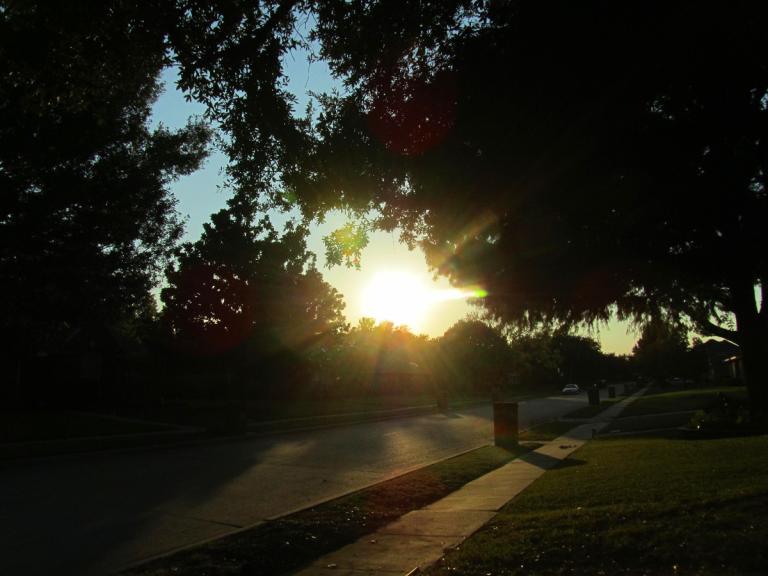 Meanwhile, we have a never-ending supply of materialist killjoys who are happy to tell us that the sun is nothing more than a ball of burning hydrogen gas and that magical feeling you get when you stand under the full moon is just a product of your brain chemistry. (Of course it’s that – but it’s also a lot more than that.)
The Stanford Encyclopedia of Philosophy has a nice article on religious experience. It’s long and not particularly easy to read, but it does a decent job of explaining what learned men (if they included any women I missed them, and their omission is not unimportant) have said about the matter. I can personally recommend one of their references: Varieties of Religious Experience by William James (1902). It has a lot of Christian assumptions and examples, but I prefer that to the overwhelmingly non-theistic assumptions of most later works.
I have a hard time defining religious experience (or spiritual experience, if you prefer). But I can describe it. At its most basic level, it’s that feeling you get when you come across something so big, so powerful, and so strange that all you can do is stare at it and say “wow”… but deep down you know it’s not all that strange – you’re connected to it in some way. It’s seeing the ocean for the first time. It’s seeing a deer or a bear or an eagle in the wild. It’s leaving the city and looking up at truly dark skies and seeing more stars than you thought existed. It’s realizing the light from some of those stars has been traveling through space for millions of years and is just now reaching the Earth.
It’s realizing the universe is so big and you’re so small, but you’re still a part of it all, a part of a Whole that is greater than any of us. It’s the feeling that these connections mean something more than the fact that they happen, and wondering what that something is.
We have – or can have – these experiences all the time. We don’t appreciate them as religious experiences – and sometimes we don’t even recognize them as anything at all – because we’re too busy to stop long enough to allow ourselves to go from seeing the sunset to experiencing the sunset, much less to wondering about the sunset. And if we allow ourselves to wonder too much, we might start wondering about the direction of our lives, our goals, and our priorities. We might start thinking that meaning and happiness don’t come from bigger houses, more expensive cars, and the envy of our neighbors. And we can’t have that, now can we? Our whole economy would collapse if everybody started valuing religious experiences over buying stuff.

Acrocanthosaurus track, Dinosaur Valley State Park, Glen Rose, Texas
But it is in the recognition and acceptance of these ordinary religious and spiritual experiences that we train our perceptive abilities for deeper, more powerful, and more meaningful experiences. Which, of course, is one of the reasons people tune it out. If you think comparing your less than a century on this Earth with dinosaur tracks that are 110 million years old is scary, try having a primal Forest God tap you on the shoulder and tell you there are things He wants you to do for Him.
These deeper and more intense religious experience are even harder to describe than the more ordinary ones, in large part because our society has no common understanding of them. We’re taught that people who hear voices are crazy, and that people who do what the voices tell them to do are dangerous… even though we celebrate the heroism of Joan of Arc and wonder about the prophecies of Nostradamus. That was a long time ago when things were different… or something… anything to distance ourselves from the unpredictability of an encounter with a God or other mighty spirit.
It is rare to hear audible voices or to see extraordinary things with your physical eyes. More frequently it’s a voice in your head that isn’t your usual self-talk voice, especially if it tells you something you didn’t know or didn’t really want to hear. It’s seeing something ordinary and being left with the unshakable understanding that it means something more. It’s a dream that’s more than the routine sorting and filing of the day’s events.
It’s divination that tells you something you know is important even though you wish it wasn’t. It’s a reading where the diviner repeats exactly what you heard and saw in a waking vision even though they had no way of knowing you had it.
Major or minor, ordinary or extraordinary, religious experiences are real. This is why I get so annoyed when social scientists ignore religious experiences in their theories of the origins and meaning of religion. It’s like trying to explain the popularity of basketball using only socio-economic theories, having never set foot on a court and experienced the feeling of hitting a 15 foot jump shot and hearing the swish of nothing but net.
Religious experiences are undeniably real. The question is how we interpret them – how we decide what they mean.
Some people consciously choose to not interpret their experiences. “I saw the sunset, it was beautiful, and I was happy.” That approach doesn’t set any expectations for future experiences that may not happen, or that may not be as beautiful or make you as happy. Nobody can tell you you’re wrong, and it doesn’t carry any obligations to change the way you live. You had the experience, you noticed it, you’ll remember it, and life goes on. It’s a perfectly legitimate approach.
Some people choose to demystify their experiences. “The sun appeared to set because of the rotation of the Earth, and the interaction of the light with the atmospheric conditions at the time created colors that evoked tranquility and caused my brain to produce pleasurable chemicals.” There’s a place for science and I like knowing the facts. But our world is too dreary as it is, and if a beautiful sunset will help re-enchant it, I prefer to embrace the magic.
 Other people choose to interpret their experiences religiously. They see how their experiences align with their ideas about the nature of the world and the way the universe works, and they decide (often intuitively) what their experiences mean and what they should do because of them. “The setting sun reminds me that my life is finite, but as a restful night leads to a new morning, so will my death lead to a new life, even though I can’t know if that life will be physical, or spiritual, or something I can’t even imagine right now.”
Of course, not all religious experiences are so pleasant. Many of us have received messages along the theme of “there’s a storm coming – gather your tribe.” We’ve been told to make offerings and go on pilgrimages. Some have been told to build temples, orders, and priesthoods. And a lot of us have been told to get ready, even though we aren’t quite sure what we’re getting ready for.
Religious experiences can change your life, sometimes dramatically. Joan of Arc was burned at the stake at age 19.
There’s a lot of ground to cover between opening yourself to the wonder and awe of a sunset or the full moon and doing something that can get you literally or figuratively burned at the stake. I could tell you that you can turn back at any time, but it would be a lie. Religious experiences are meaningful – they bring a sense of purpose and they cause you to adjust your priorities toward values and virtues our mainstream world thinks are unimportant. Adjusting your priorities opens you to further experiences, which bring more meaning to your life and reinforce your ideas that these values and virtues are more valuable than chasing what the talking heads on TV tell you to buy.
Eventually you realize you can’t go back to the way you were before, because you see the world differently… and because you don’t want to go back to the way you were before.

So go outside this evening and watch the sun set. Find the waxing crescent moon in the western sky and watch it grow brighter as the sun’s light fades. See the stars as they start to twinkle and shine. If it’s overcast, just watch as the sky slowly moves from light to dark. You’re an educated person – you know the science of what you’re seeing. Tonight, though, just let the sky speak to you.
It may say nothing. It may say nothing for a month or two or ten, and then suddenly overwhelm you when you don’t expect anything at all. That’s the thing about religious experiences – they come in their own time and not according to our preferences and schedules.
Or it may say something that will change your life forever.
Previous Post

June 5, 2016
The Lack of Respect for Wild Animals
Next Post

June 9, 2016 The Otherworld is Bleeding Through
Browse Our Archives
Select a Category Books Community CUUPS Druidry Foundations and Context Gods and Goddesses Magic Myth Nature Ritual Spiritual Practice Theology Travel Uncategorized Videos
Select a Month October 2026 September 2026 August 2026 July 2026 June 2026 May 2026 April 2026 March 2026 February 2026 January 2026 December 2025 November 2025 October 2025 September 2025 August 2025 July 2025 June 2025 May 2025 April 2025 March 2025 February 2025 January 2025 December 2024 November 2024 October 2024 September 2024 August 2024 July 2024 June 2024 May 2024 April 2024 March 2024 February 2024 January 2024 December 2023 November 2023 October 2023 September 2023 August 2023 July 2023 June 2023 May 2023 April 2023 March 2023 February 2023 January 2023 December 2022 November 2022 October 2022 September 2022 August 2022 July 2022 June 2022 May 2022 April 2022 March 2022 February 2022 January 2022 December 2021 November 2021 October 2021 September 2021 August 2021 July 2021 June 2021 May 2021 April 2021 March 2021 February 2021 January 2021 December 2020 November 2020 October 2020 September 2020 August 2020 July 2020 June 2020 May 2020 April 2020 March 2020 February 2020 January 2020 December 2019 November 2019 October 2019 September 2019 August 2019 July 2019 June 2019 May 2019 April 2019 March 2019 February 2019 January 2019 December 2018 November 2018 October 2018 September 2018 August 2018 July 2018 June 2018 May 2018 April 2018 March 2018 February 2018 January 2018 December 2017 November 2017 October 2017 September 2017 August 2017 July 2017 June 2017 May 2017 April 2017 March 2017 February 2017 January 2017 December 2016 November 2016 October 2016 September 2016 August 2016 July 2016 June 2016 May 2016 April 2016 March 2016 February 2016 January 2016 December 2015 November 2015 October 2015 September 2015 August 2015 July 2015 June 2015 May 2015 April 2015 March 2015 February 2015 January 2015 December 2014 November 2014 October 2014 September 2014 August 2014 July 2014 June 2014 May 2014 April 2014 March 2014 February 2014 January 2014 December 2013 November 2013 October 2013 September 2013 August 2013 July 2013 June 2013 May 2013 April 2013 March 2013 February 2013 January 2013 December 2012 November 2012 October 2012 September 2012 August 2012 July 2012 June 2012 May 2012 April 2012 March 2012 February 2012 January 2012 December 2011 November 2011 October 2011 September 2011 August 2011 July 2011 June 2011 May 2011 April 2011 March 2011 February 2011 January 2011 December 2010 November 2010 October 2010 September 2010 August 2010 July 2010 June 2010 May 2010 April 2010 March 2010 February 2010 January 2010 December 2009 November 2009 October 2009 September 2009 August 2009 July 2009 June 2009 May 2009 April 2009 March 2009 February 2009 January 2009 December 2008 November 2008 October 2008 September 2008 August 2008 July 2008 June 2008
Follow Us!
TAKE THE
Religious Wisdom Quiz
What does "Jehovah Rapha" mean?
Select your answer to see how you score.
The Lord Heals The Lord Saves The Lord is Holy The Lord Provides
Related posts from John Beckett




What We Lose When “Ask AI” Becomes A...
TRENDING AT PATHEOS Pagan

The First Eucharistic Controversy: Christ’s Real Presence
For Catholics, the Eucharist is the source and summit of the Christian...

What a Stop Sign Can Teach Us About...
How to Make a Decision When You Can't Hear God Main point:...

Archdiocese Hosts Military Marriage Retreat in Germany
RASTATT, Germany — The transient military lifestyle, with its frequent deployments and...

Nearly every morning, I make the drive to Detroit with my high-school-age...

The Real AI Story Is Adoption Without Trust
Artificial intelligence has crossed a political threshold. It is no longer a...

A new article, written by Jeff Lindsay and Gale L. Pooley,...
view all Pagan blogs
Ad-Free & Subscriber Log-In Subscription Support
- About Us
- 2026 Calendar
- Videos
- Podcasts
- Library of World Religions
- Faith In Media Tracker
- Advertise With Us
- Write for Us
- Privacy Policy
- Terms of Service
- Do Not Sell My Data
- Contact Us
- Radiant Digital
- Manage Newsletter Subscriptions
- Unsubscribe From Notifications
- Sitemap
Copyright 2008-2026, Patheos. All rights reserved.
Subscription Support Ad-Free & Subscriber Log-In
Follow Patheos