
BuddhistCatholicContemplativeEvangelicalGeneral ChristianHinduJewishLatter-day SaintMuslimNew VisionsProgressive Christian
Beliefs
- Buddhist
- Catholic
- Contemplative
- Evangelical
- General Christian
- Hindu
- Jewish
- Latter-day Saint
- More Voices
- Muslim
- New Visions
- Pagan
- Progressive Christian
Topics
- Religion News
- Food and Religion
- Sports and Religion
- Religious Art
- Religious Music and Entertainment
- Religious Events
- History and Religion
- Style and Religion
- Politics and Religion
- Women in Religion
- Recreation Outdoors and Religion
- Business Finance and Religion
- Careers Workplace and Religion
- Education and Religion
- Family Parenting and Religion
- Health Fitness and Religion
- Home and Religion
- Relationships and Religion
- Technology and Religion
- Travel and Religion
Columnists
- Buddhist Columnists
- Business Finance and Religion Columnists
- Careers Workplace and Religion Columnists
- Catholic Columnists
- Contemplative Columnists
- Education and Religion Columnists
- Evangelists Columnists
- Family Parenting and Religion Columnists
- General Christian Columnists
- Health Fitness and Religion Columnists
- Hindu Columnists
- History and Religion Columnists
- Home and Religion Columnists
- Jewish Columnists
- More Voices Columnists
- Latter Day Columnists
- Muslim Columnists
- New Visions Columnists
- Nonreligious Columnists
- Pagan Columnists
- Politics and Religion Columnists
- Progressive Columnists
- Recreation Outdoors and Religion Columnists
- Relationships and Religion Columnists
- Religion News Columnists
- Religious Art Columnists
- Religious Events Columnists
- Religious Music and Entertainment Columnists
- Sports and Religion Columnists
- Style and Religion Columnists
- Technology and Religion Columnists
- Travel and Religion Columnists
- Women in Religion Columnists
Resource Library
- 2026 Calendar
- Library of World Religions
- The 100 Most Holy Places on Earth
- Patheos Answers
- Podcasts
- Videos
- Faith Leaders Database
- Anglican Episcopalian
- Bahai
- Baptist
- Buddhism
- Christianity
- Confucianism
- Eastern Orthodoxy
- Hinduism
- Holiness and Pentecostal
- ISKCON
- Islam
- Judaism
- Lutheran
- Methodist
- The Church of Jesus Christ of Latter-day Saints
- New Age
- Paganism
- Presbytarian and Reformed
- Protestantism
- Religion Behind the Scenes
- Roman Catholic
- Scientology
- Shia Islam
- Sikhism
- Sufism
- Sunni Islam
- Taoism
- Zen
- See all religions
Research Tools
 Ad-Free & Subscriber Log-In Subscription Support
Ad-Free & Subscriber Log-In Subscription Support
Follow Patheos 

- Trending:
- Forgiveness
- |
- Marriage
- |
- Consciousness
- |
- Death Penalty
- |
- Election
- |
- Halloween

- Home
- Pagan
- Not Everything Belongs in a Museum
Not Everything Belongs in a Museum
Last updated on: May 3, 2016 at 5:00 pm by John Beckett
Not Everything Belongs in a Museum 2016-05-01T09:46:27-06:00 John Beckett
Patheos Explore the world's faith through different perspectives on religion and spirituality! Patheos has the views of the prevalent religions and spiritualities of the world.
For better or worse, most of us got our introduction to archaeology from Indiana Jones and Lara Croft. Our ethics around ancient artifacts come from Harrison Ford’s line early in Raiders of the Lost Ark: “That belongs in a museum!” Museums good, private collections bad. Study by experts good, weaponizing sacred objects bad… also very dangerous.
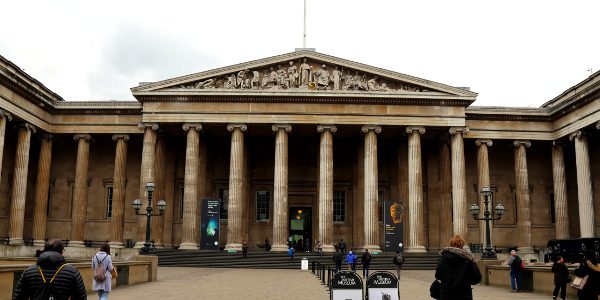
The British Museum
This idea of museums as the right and proper place for ancient items is reinforced when you visit some of the major museums. The National Museum of Ireland, the National Museum of Scotland, and the British Museum are all free to enter. They all allow photography. We shared the museums with hundreds of school children who were getting to see ancient history with their own eyes. I had a tremendous spiritual experience with the Gundestrup Cauldron, something I could not have done if it wasn’t in a museum. Surely this is the most useful and egalitarian approach for handling ancient artifacts, right?
Like so much in our society, though, the fact that museums have been around for hundreds of years and they benefit many causes us to ignore some unpleasant facts about how these objects came to be where they are. Just because “we’ve always done it this way” doesn’t mean there isn’t a better way.
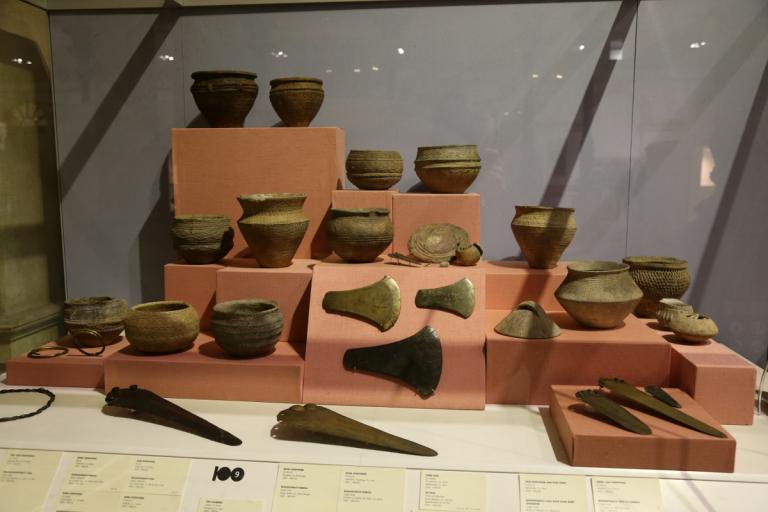
The National Museum of Ireland
Tomb Raiders. We’ve been burying our dead with grave goods for at least as long as we’ve been human. And since shortly after that, there have been grave robbers and tomb raiders coming along to dig them up and steal anything of value. There have been many rationalizations for this: “the dead can’t use it – why let it go to waste?” “we’ve always done this” and “we’re learning so much by digging up these graves.”
In the West, the vast majority of people believe that at death the soul leaves the body, and a significant minority believes that when brain activity stops, the person is gone forever – so grave goods don’t matter. But the fact remains that we know virtually nothing about what happens after death. We cannot be certain the dead do not need or want the items that were buried with them – can we not respect their beliefs and wishes, even if we don’t share them?
Respect for the dead. All three major museums we visited had Egyptian mummies on display. At least they weren’t unwrapped, but these are still human bodies. The National Museum of Ireland has four bog bodies that were preserved for 2,000 years or so and are now on display. They’re displayed behind cubicle-like screens, but I imagine that’s more to protect the delicate sensitivities of some living visitors than to provide a modicum of dignity for the dead.
These aren’t tools or artwork. These are the bodies of people who once lived in this world, and who may (or may not) be living still. In the case of the Egyptians, we know it was considered necessary for parts of the soul to return to the body on a daily basis – is that still possible with their mummies removed to a faraway land?
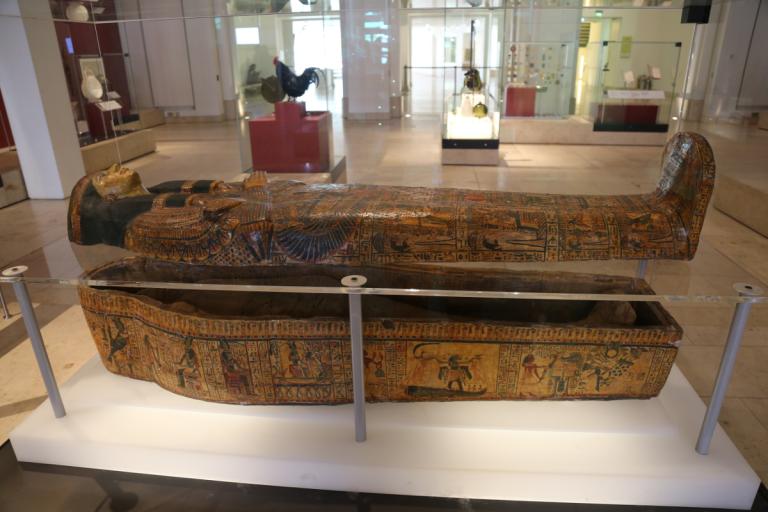
The National Museum of Scotland
I offered prayers for the dead where I could. There are so many mummies in the British Museum I would have been there all day doing nothing else. A few I felt moved to pray for specifically, others I prayed for collectively. May their souls find the peace that was denied their bodies.
Knowledge vs. entertainment. I love history and learning about the past. I’m grateful for what we’ve learned from mummies, bog bodies, and grave goods. And I sometimes wonder how I’d feel if 5,000 years from now someone opened my grave and pored over my body and whatever I was buried with.
If it was necessary to add to the body of knowledge at the time, I think I’d be OK with it. If it helped tell my story and the story of my people to some future generation, I think I’d see that as a way of being of service. So if by some miracle both this blog and my body are preserved long enough that they’re of historical value, you have my permission to study whatever remains.
But when you’re done, put me back where you found me. Contributing to the state of human knowledge is one thing. Being on display as a grotesque curiosity is something completely different.
Those are my thoughts. Yours may be different… and so may the thoughts and wishes of the Egyptians whose mummies now reside 2,000 miles from the Nile.
Imperialism. Let’s not ignore the elephant in the room. While some of the artifacts are local to the museums, many – particularly in the British Museum – come from around the world, and many of them were forcibly removed from their original locations by imperial governments and wealthy individuals supported by empires.
Perhaps the most famous (or infamous) example of such looting was the removal of the Parthenon Sculptures from Athens to London by Lord Elgin in 1801-1805. This was done legally – Elgin had permission from the Ottoman Empire, who ruled Greece at the time. One empire gave another empire permission to plunder an occupied country, with no input from the Greeks.
The British Museum argues that the sculptures cannot be replaced on the Parthenon, the Acropolis Museum in Athens has roughly half of them, and leaving the other half in London “allows different and complementary stories to be told about the surviving sculptures, highlighting their significance within world culture and affirming the place of Ancient Greece among the great cultures of the world.”
Perhaps. But when we take artifacts out of their original context, we lose a significant part of their story. And if we are not very mindful, their display in foreign lands affirms the power of imperialism and of “might makes right.”

The British Museum
It has long been argued that it is necessary to remove important artifacts for “safekeeping” – if 4,000 year old Minoan art wasn’t in the British Museum, it would be hidden away in some billionaire’s mansion and perhaps lost or even destroyed. Museums good, private collections bad. Given the damage and destruction we’ve seen in the Middle East recently – some intentional, some the side effects of war – that argument has some merit. Yet many times imperial “safekeeping” is necessary only because of violence caused by the very presence of empires.
So what do we do? I have no grand call to action. The museum system is largely (though not entirely) a good thing. Both ethical and academic standards have greatly increased since the early days of antiquarians and treasure hunters. Some artifacts have been returned to their home countries.
But I would like to see greater respect for the dead, including reburying bodies that aren’t being actively studied. I’d like to see greater respect for objects that are or were considered sacred by their cultures. Mostly, I’d like to see an end to the plunder of imperialism, whether the plunder is historical artifacts, natural resources, or the exploitation of people.
Not everything belongs in a museum.
Previous Post
May 1, 2016
Celts and the Gundestrup Cauldron
Next Post

May 5, 2016 Knowth and Dowth
Browse Our Archives
Select a Category Books Community CUUPS Druidry Foundations and Context Gods and Goddesses Magic Myth Nature Ritual Spiritual Practice Theology Travel Uncategorized Videos
Select a Month October 2026 September 2026 August 2026 July 2026 June 2026 May 2026 April 2026 March 2026 February 2026 January 2026 December 2025 November 2025 October 2025 September 2025 August 2025 July 2025 June 2025 May 2025 April 2025 March 2025 February 2025 January 2025 December 2024 November 2024 October 2024 September 2024 August 2024 July 2024 June 2024 May 2024 April 2024 March 2024 February 2024 January 2024 December 2023 November 2023 October 2023 September 2023 August 2023 July 2023 June 2023 May 2023 April 2023 March 2023 February 2023 January 2023 December 2022 November 2022 October 2022 September 2022 August 2022 July 2022 June 2022 May 2022 April 2022 March 2022 February 2022 January 2022 December 2021 November 2021 October 2021 September 2021 August 2021 July 2021 June 2021 May 2021 April 2021 March 2021 February 2021 January 2021 December 2020 November 2020 October 2020 September 2020 August 2020 July 2020 June 2020 May 2020 April 2020 March 2020 February 2020 January 2020 December 2019 November 2019 October 2019 September 2019 August 2019 July 2019 June 2019 May 2019 April 2019 March 2019 February 2019 January 2019 December 2018 November 2018 October 2018 September 2018 August 2018 July 2018 June 2018 May 2018 April 2018 March 2018 February 2018 January 2018 December 2017 November 2017 October 2017 September 2017 August 2017 July 2017 June 2017 May 2017 April 2017 March 2017 February 2017 January 2017 December 2016 November 2016 October 2016 September 2016 August 2016 July 2016 June 2016 May 2016 April 2016 March 2016 February 2016 January 2016 December 2015 November 2015 October 2015 September 2015 August 2015 July 2015 June 2015 May 2015 April 2015 March 2015 February 2015 January 2015 December 2014 November 2014 October 2014 September 2014 August 2014 July 2014 June 2014 May 2014 April 2014 March 2014 February 2014 January 2014 December 2013 November 2013 October 2013 September 2013 August 2013 July 2013 June 2013 May 2013 April 2013 March 2013 February 2013 January 2013 December 2012 November 2012 October 2012 September 2012 August 2012 July 2012 June 2012 May 2012 April 2012 March 2012 February 2012 January 2012 December 2011 November 2011 October 2011 September 2011 August 2011 July 2011 June 2011 May 2011 April 2011 March 2011 February 2011 January 2011 December 2010 November 2010 October 2010 September 2010 August 2010 July 2010 June 2010 May 2010 April 2010 March 2010 February 2010 January 2010 December 2009 November 2009 October 2009 September 2009 August 2009 July 2009 June 2009 May 2009 April 2009 March 2009 February 2009 January 2009 December 2008 November 2008 October 2008 September 2008 August 2008 July 2008 June 2008
Follow Us!
TAKE THE
Religious Wisdom Quiz
What year was the Temple in Jerusalem destroyed by the Romans?
Select your answer to see how you score.
70 AD 120 AD 33 AD 586 BC
Related posts from John Beckett




What We Lose When “Ask AI” Becomes A...
TRENDING AT PATHEOS Pagan

Methodist Central Hall and Westminster Abbey
Situated on the same square is Methodist Central Hall and Westminster Abbey. ...

57th Dove Awards Honor Dolly Parton, Crown New...
On gospel music’s biggest night, the 57th annual GMA Dove Awards honored...

The First Eucharistic Controversy: Christ’s Real Presence
For Catholics, the Eucharist is the source and summit of the Christian...

What a Stop Sign Can Teach Us About...
How to Make a Decision When You Can't Hear God Main point:...

Archdiocese Hosts Military Marriage Retreat in Germany
RASTATT, Germany — The transient military lifestyle, with its frequent deployments and...

Nearly every morning, I make the drive to Detroit with my high-school-age...
view all Pagan blogs
Ad-Free & Subscriber Log-In Subscription Support
- About Us
- 2026 Calendar
- Videos
- Podcasts
- Library of World Religions
- Faith In Media Tracker
- Advertise With Us
- Write for Us
- Privacy Policy
- Terms of Service
- Do Not Sell My Data
- Contact Us
- Radiant Digital
- Manage Newsletter Subscriptions
- Unsubscribe From Notifications
- Sitemap
Copyright 2008-2026, Patheos. All rights reserved.
Subscription Support Ad-Free & Subscriber Log-In
Follow Patheos