
BuddhistCatholicContemplativeEvangelicalGeneral ChristianHinduJewishLatter-day SaintMuslimNew VisionsProgressive Christian
Beliefs
- Buddhist
- Catholic
- Contemplative
- Evangelical
- General Christian
- Hindu
- Jewish
- Latter-day Saint
- More Voices
- Muslim
- New Visions
- Pagan
- Progressive Christian
Topics
- Religion News
- Food and Religion
- Sports and Religion
- Religious Art
- Religious Music and Entertainment
- Religious Events
- History and Religion
- Style and Religion
- Politics and Religion
- Women in Religion
- Recreation Outdoors and Religion
- Business Finance and Religion
- Careers Workplace and Religion
- Education and Religion
- Family Parenting and Religion
- Health Fitness and Religion
- Home and Religion
- Relationships and Religion
- Technology and Religion
- Travel and Religion
Columnists
- Buddhist Columnists
- Business Finance and Religion Columnists
- Careers Workplace and Religion Columnists
- Catholic Columnists
- Contemplative Columnists
- Education and Religion Columnists
- Evangelists Columnists
- Family Parenting and Religion Columnists
- General Christian Columnists
- Health Fitness and Religion Columnists
- Hindu Columnists
- History and Religion Columnists
- Home and Religion Columnists
- Jewish Columnists
- More Voices Columnists
- Latter Day Columnists
- Muslim Columnists
- New Visions Columnists
- Nonreligious Columnists
- Pagan Columnists
- Politics and Religion Columnists
- Progressive Columnists
- Recreation Outdoors and Religion Columnists
- Relationships and Religion Columnists
- Religion News Columnists
- Religious Art Columnists
- Religious Events Columnists
- Religious Music and Entertainment Columnists
- Sports and Religion Columnists
- Style and Religion Columnists
- Technology and Religion Columnists
- Travel and Religion Columnists
- Women in Religion Columnists
Resource Library
- 2026 Calendar
- Library of World Religions
- The 100 Most Holy Places on Earth
- Patheos Answers
- Podcasts
- Videos
- Faith Leaders Database
- Anglican Episcopalian
- Bahai
- Baptist
- Buddhism
- Christianity
- Confucianism
- Eastern Orthodoxy
- Hinduism
- Holiness and Pentecostal
- ISKCON
- Islam
- Judaism
- Lutheran
- Methodist
- The Church of Jesus Christ of Latter-day Saints
- New Age
- Paganism
- Presbytarian and Reformed
- Protestantism
- Religion Behind the Scenes
- Roman Catholic
- Scientology
- Shia Islam
- Sikhism
- Sufism
- Sunni Islam
- Taoism
- Zen
- See all religions
Research Tools
 Ad-Free & Subscriber Log-In Subscription Support
Ad-Free & Subscriber Log-In Subscription Support
Follow Patheos 

- Trending:
- Forgiveness
- |
- Marriage
- |
- Consciousness
- |
- Death Penalty
- |
- Election
- |
- Halloween

- Home
- Pagan
- Celts and the Gundestrup Cauldron
Celts and the Gundestrup Cauldron
Last updated on: May 1, 2016 at 3:00 pm by John Beckett
Celts and the Gundestrup Cauldron 2016-04-30T13:10:33-06:00 John Beckett
Patheos Explore the world's faith through different perspectives on religion and spirituality! Patheos has the views of the prevalent religions and spiritualities of the world.
Photography was not permitted in the Celts exhibit. The picture of the torque is from the National Museum of Ireland in Dublin. The picture of the Gundestrup Cauldron is from Wikimedia Commons.

a gold torque – National Museum of Ireland, Dublin
The Gundestrup Cauldron is a silver bowl about 27 inches in diameter. It is heavily decorated on both the interior and exterior with scenes from Celtic mythology. It’s about 2100 years old and it was found in a bog in Denmark 1891. It’s normally on display in the National Museum of Denmark in Copenhagen.
The Cernunnos pendant I often wear in ritual is modeled after one of the scenes on the Cauldron. Whether this deity is actually Cernunnos is impossible to say with certainty, though I think He is, both from the (very limited) historical evidence and from my own UPG. I have wanted to see the Cauldron in person ever since I began wearing the pendant, and when I heard it would be in Edinburgh during our trip I made plans to see it.
The Gundestrup Cauldron is part of the Celts exhibit, a collection of artwork by people who are generally considered Celts. It covers about 2500 years of time, from the earliest mention of Celts to the present. My experience of the Cauldron was amazing, magical, and holy. But first I want to talk a little about the Celts exhibit as a whole.
The Celts Exhibit
“Celtic” refers to language and culture, not a bloodline. If you’re not familiar with that concept, the introduction on the “Celts” Wikipedia page provides a nice summary. The introduction on the National Museum of Scotland website says:
The idea of a shared Celtic heritage across ancient Europe retains a powerful hold over the popular imagination. But many common ideas about the people known as ‘Celts’ are in fact more recent re-imaginings, revived and reinvented over the centuries.
The collection is beautiful and powerful. In addition to the Gundestrup Cauldron, it includes the Battersea Shield, numerous gold torques, an ancient musical instrument called a carnyx, various stone carvings, statues, jewelry, and other objects. Whoever put the collection together did an outstanding job of telling the story of the Celtic peoples through the artwork they created.
The interpretations, though, leave much to be desired – particularly the short films running on continuous loops at key points in the exhibit. The worst showed examples of Celtic knot work and then claimed it was derived from Greek and Roman art. Now, I was at Bru na Bóinne two days earlier – I saw the carvings on the stones at Newgrange, Knowth, and Dowth. Those stones were not carved by Celts, but they were there when the Celts and Celtic culture arrived in Ireland and Britain. To my eye, the Celtic knot work owes more to the stone carvings than to any “borrowing” from Greece and Rome.
The impact of the Romans on Britain (and through Britain, on America) is huge, but it is not the only influence. Both historically and religiously, I could have done with a lot less talk about Rome in an exhibit on Celts.
But that’s a minor complaint – I still greatly enjoyed the exhibit. The Celts exhibit is at the National Museum of Scotland in Edinburgh through September 25. Museum entry is free – the Celts exhibit is £10 and tickets are available online. We visited on a Wednesday morning and crowds were very small – I imagine that will change on weekends and in the summer.
The Gundestrup Cauldron
The Cauldron is what I came to Edinburgh to see. It’s located about halfway through the exhibit in its own area. When I saw the entrance, I turned my back – I wanted to finish looking at the nearby artifacts, then give the Cauldron my full attention. When I was ready, I turned around and saw the Cauldron for the first time with my own eyes.
I got nothing.
Don’t misunderstand – it’s beautiful. It’s bigger than I had imagined, and the relief artwork is deeper and more pronounced. I found the Cernunnos panel and was surprised that it was on the inside of the cauldron – I knew the artwork was on both the interior and exterior, but for some reason I had assumed that panel was on the outside. Some of the other panels I recognized, some I had never seen even in pictures. It was beautiful, but it carried no more magic for me than any of the other pieces in the museum.
I didn’t know there was also a panel in the bottom of the cauldron. It wasn’t part of the original design – it was added after a hole developed in the bottom of the bowl. Whatever the Gundestrup Cauldron was used for, it was a working tool, not a display of wealth (well, not only a display of wealth). I looked down into the Cauldron, examining the “patch panel,” then my eyes moved to the smooth silver of the bowl itself.
And then the magic hit me.
I had it wrong all along. The artwork doesn’t make the Cauldron sacred. The Cauldron – the bowl, the working part of the vessel – makes the artwork sacred. This is a vessel of the Earth, made from metals of the Earth, made by people of the Earth. The magic of the Gundestrup Cauldron flows up, not down. While it invokes the Gods and heroes depicted on its sides, it does so to honor them, not to draw on their power.
It was overwhelming. I wanted to drink from the Cauldron, but I didn’t have to physically consume anything to be filled with its magic, its power, and its holiness. I don’t know how long I stood there taking it all in.
Eventually it was time to move on. The exhibit wasn’t crowded, but there were others who wanted close access to the Cauldron and while I was honored to share this experience with my traveling companions, I didn’t particularly want to share it with strangers.
I’m reluctant to draw sweeping conclusions based on this one experience, particularly in light of the experiences I had and the work I did in Orkney. But if nothing else, this serves as a reminder that magic and holiness can often be found in ordinary places, even (especially) when surrounded by extraordinary beauty.
If you can get to Edinburgh before the end of September, go see Celts, and experience the Gundestrup Cauldron for yourself.
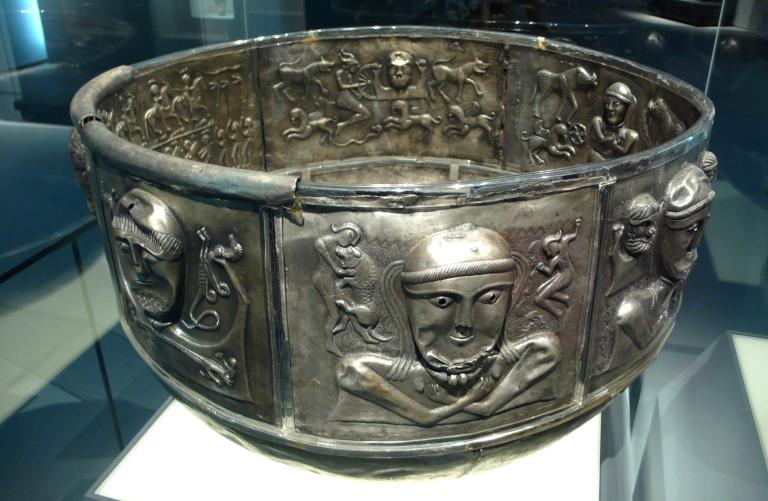
The Gundestrup Cauldron. Image via Wikimedia Commons

Previous Post

April 28, 2016
A Pilgrimage to Orkney
Next Post
May 3, 2016 Not Everything Belongs in a Museum
Browse Our Archives
Select a Category Books Community CUUPS Druidry Foundations and Context Gods and Goddesses Magic Myth Nature Ritual Spiritual Practice Theology Travel Uncategorized Videos
Select a Month October 2026 September 2026 August 2026 July 2026 June 2026 May 2026 April 2026 March 2026 February 2026 January 2026 December 2025 November 2025 October 2025 September 2025 August 2025 July 2025 June 2025 May 2025 April 2025 March 2025 February 2025 January 2025 December 2024 November 2024 October 2024 September 2024 August 2024 July 2024 June 2024 May 2024 April 2024 March 2024 February 2024 January 2024 December 2023 November 2023 October 2023 September 2023 August 2023 July 2023 June 2023 May 2023 April 2023 March 2023 February 2023 January 2023 December 2022 November 2022 October 2022 September 2022 August 2022 July 2022 June 2022 May 2022 April 2022 March 2022 February 2022 January 2022 December 2021 November 2021 October 2021 September 2021 August 2021 July 2021 June 2021 May 2021 April 2021 March 2021 February 2021 January 2021 December 2020 November 2020 October 2020 September 2020 August 2020 July 2020 June 2020 May 2020 April 2020 March 2020 February 2020 January 2020 December 2019 November 2019 October 2019 September 2019 August 2019 July 2019 June 2019 May 2019 April 2019 March 2019 February 2019 January 2019 December 2018 November 2018 October 2018 September 2018 August 2018 July 2018 June 2018 May 2018 April 2018 March 2018 February 2018 January 2018 December 2017 November 2017 October 2017 September 2017 August 2017 July 2017 June 2017 May 2017 April 2017 March 2017 February 2017 January 2017 December 2016 November 2016 October 2016 September 2016 August 2016 July 2016 June 2016 May 2016 April 2016 March 2016 February 2016 January 2016 December 2015 November 2015 October 2015 September 2015 August 2015 July 2015 June 2015 May 2015 April 2015 March 2015 February 2015 January 2015 December 2014 November 2014 October 2014 September 2014 August 2014 July 2014 June 2014 May 2014 April 2014 March 2014 February 2014 January 2014 December 2013 November 2013 October 2013 September 2013 August 2013 July 2013 June 2013 May 2013 April 2013 March 2013 February 2013 January 2013 December 2012 November 2012 October 2012 September 2012 August 2012 July 2012 June 2012 May 2012 April 2012 March 2012 February 2012 January 2012 December 2011 November 2011 October 2011 September 2011 August 2011 July 2011 June 2011 May 2011 April 2011 March 2011 February 2011 January 2011 December 2010 November 2010 October 2010 September 2010 August 2010 July 2010 June 2010 May 2010 April 2010 March 2010 February 2010 January 2010 December 2009 November 2009 October 2009 September 2009 August 2009 July 2009 June 2009 May 2009 April 2009 March 2009 February 2009 January 2009 December 2008 November 2008 October 2008 September 2008 August 2008 July 2008 June 2008
Follow Us!
TAKE THE
Religious Wisdom Quiz
What are the names of the two witnesses in Revelation who prophesy for 1,260 days?
Select your answer to see how you score.
Peter and Paul Enoch and Elijah Moses and Elijah They are not named
Related posts from John Beckett




What We Lose When “Ask AI” Becomes A...
TRENDING AT PATHEOS Pagan

Pope Leo Celebrates Mass for Nurses & Docs...
I don't have any idea how he did it, but Pope Leo...

The Sermon on the Mount, Part I: Matthew...
The Sermon on the Mount, Part I (Matthew 4:12-5:12) St. Matthew moves...

What's up from Crossway: Reviewing some of their latest A few weeks...

Janie Learns the Way of the Cross: A...
Teaching children about Jesus' Passion can be challenging. Many parents and educators...

Looking For Good Catholic Writing - October 2026
He alone extends the heavens, and he walks upon the waves of...

In "Irreplaceable," our book on vocation and technology, Trevor Sutton and I...
view all Pagan blogs
Ad-Free & Subscriber Log-In Subscription Support
- About Us
- 2026 Calendar
- Videos
- Podcasts
- Library of World Religions
- Faith In Media Tracker
- Advertise With Us
- Write for Us
- Privacy Policy
- Terms of Service
- Do Not Sell My Data
- Contact Us
- Radiant Digital
- Manage Newsletter Subscriptions
- Unsubscribe From Notifications
- Sitemap
Copyright 2008-2026, Patheos. All rights reserved.
Subscription Support Ad-Free & Subscriber Log-In
Follow Patheos