
BuddhistCatholicContemplativeEvangelicalGeneral ChristianHinduJewishLatter-day SaintMuslimNew VisionsProgressive Christian
Beliefs
- Buddhist
- Catholic
- Contemplative
- Evangelical
- General Christian
- Hindu
- Jewish
- Latter-day Saint
- More Voices
- Muslim
- New Visions
- Pagan
- Progressive Christian
Topics
- Religion News
- Food and Religion
- Sports and Religion
- Religious Art
- Religious Music and Entertainment
- Religious Events
- History and Religion
- Style and Religion
- Politics and Religion
- Women in Religion
- Recreation Outdoors and Religion
- Business Finance and Religion
- Careers Workplace and Religion
- Education and Religion
- Family Parenting and Religion
- Health Fitness and Religion
- Home and Religion
- Relationships and Religion
- Technology and Religion
- Travel and Religion
Columnists
- Buddhist Columnists
- Business Finance and Religion Columnists
- Careers Workplace and Religion Columnists
- Catholic Columnists
- Contemplative Columnists
- Education and Religion Columnists
- Evangelists Columnists
- Family Parenting and Religion Columnists
- General Christian Columnists
- Health Fitness and Religion Columnists
- Hindu Columnists
- History and Religion Columnists
- Home and Religion Columnists
- Jewish Columnists
- More Voices Columnists
- Latter Day Columnists
- Muslim Columnists
- New Visions Columnists
- Nonreligious Columnists
- Pagan Columnists
- Politics and Religion Columnists
- Progressive Columnists
- Recreation Outdoors and Religion Columnists
- Relationships and Religion Columnists
- Religion News Columnists
- Religious Art Columnists
- Religious Events Columnists
- Religious Music and Entertainment Columnists
- Sports and Religion Columnists
- Style and Religion Columnists
- Technology and Religion Columnists
- Travel and Religion Columnists
- Women in Religion Columnists
Resource Library
- 2026 Calendar
- Library of World Religions
- The 100 Most Holy Places on Earth
- Patheos Answers
- Podcasts
- Videos
- Faith Leaders Database
- Anglican Episcopalian
- Bahai
- Baptist
- Buddhism
- Christianity
- Confucianism
- Eastern Orthodoxy
- Hinduism
- Holiness and Pentecostal
- ISKCON
- Islam
- Judaism
- Lutheran
- Methodist
- The Church of Jesus Christ of Latter-day Saints
- New Age
- Paganism
- Presbytarian and Reformed
- Protestantism
- Religion Behind the Scenes
- Roman Catholic
- Scientology
- Shia Islam
- Sikhism
- Sufism
- Sunni Islam
- Taoism
- Zen
- See all religions
Research Tools
 Ad-Free & Subscriber Log-In Subscription Support
Ad-Free & Subscriber Log-In Subscription Support
Follow Patheos 

- Trending:
- Forgiveness
- |
- Marriage
- |
- Consciousness
- |
- Death Penalty
- |
- Election
- |
- Halloween

- Home
- Pagan
- Monotheist, New Age, and Materialist Derailments of Polytheism
Monotheist, New Age, and Materialist Derailments of Polytheism
Last updated on: April 3, 2016 at 3:00 pm by John Beckett
Monotheist, New Age, and Materialist Derailments of Polytheism 2016-03-31T08:36:02-06:00 John Beckett
Patheos Explore the world's faith through different perspectives on religion and spirituality! Patheos has the views of the prevalent religions and spiritualities of the world.
This post was originally scheduled for last weekend. I pushed it out when I needed to write about a current conflict instead. I thought about putting it on the shelf until the next blatant example of monotheist, New Age, or materialist derailing – that would generate the most blog traffic. But after some consideration, I think it’s important to talk about this now. We need to understand the environment in which we work, so we can do a better job of articulating polytheism, building polytheist community, and being good polytheists.
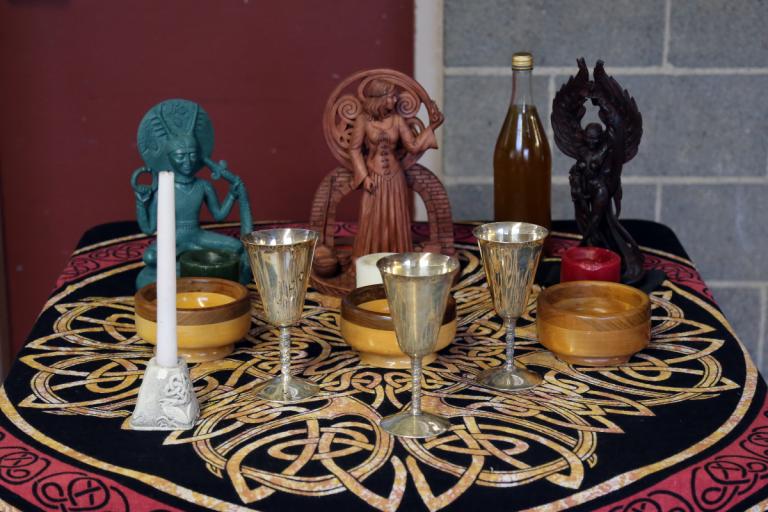 The Polytheist Movement is currently dealing with some major questions of identity and boundaries. This is not surprising. While polytheism is among the oldest of religious outlooks, it is only within the current generation that it has again become a viable religious approach for most of us in the West. We’re in the earliest stages of figuring out who we are and what we want to be.
One of our most important issues is the question of what we mean when, in the words of Edward Butler, we say that polytheism affirms “the genuine existence of many Gods.”
I see the Gods as real, distinct, individual beings who are worthy of our honor and respect. When those of us with similar views start to explore the implications of the genuine existence of the Gods and the depth of our experiences of Them, we are inevitably derailed (or at best, distracted) by those who insist their metaphorical, archetypical, and other vaguely defined definitions of Gods are the same as ours.
They aren’t. They are perfectly valid religious approaches, and who knows – they might be more right than I am. But they’re not the same thing.
I’ve already talked about the commonly held but fallacious idea that every religion should be for everyone. In this post, I’d like to explore some of the reasons why very different conceptions of the Gods are often assumed to be “really all the same.”
Monotheism and The Nicene Creed
For almost 1700 years, the Nicene Creed has defined “God” in the Western world. It includes several points of Christian doctrine – the most relevant to our purposes is the first line: “I believe in one God, the Father Almighty, Maker of heaven and earth, and of all things visible and invisible.”
The problem with the Nicene Creed is that it doesn’t match the lived experience of most people. The world as we actually encounter it is better explained by many Gods of limited power and scope than by one almighty God. Whether for reasons of theology or practicality, the Catholic church accommodated this lived experience with their hierarchies of saints, angels, and other semi-divine beings. They maintained their fidelity to the Nicene Creed by saying “but those aren’t Gods.”
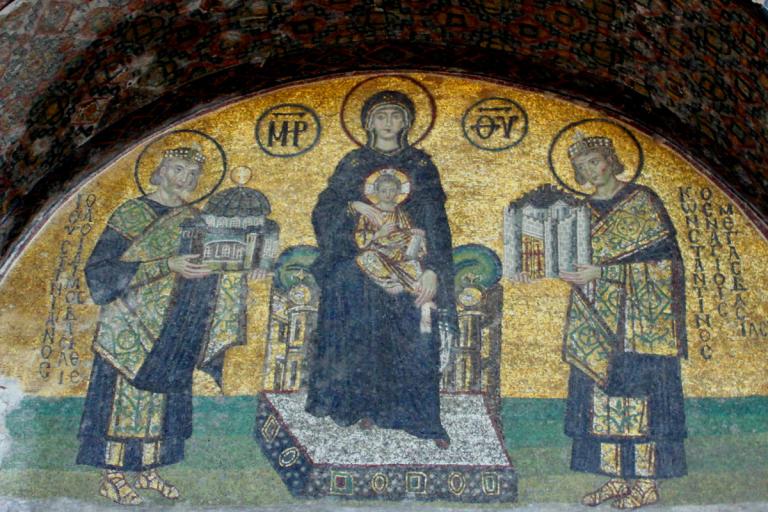
Then the Protestants tried to do away with even that. They succeeded (in parts of the world, anyway) because of their missionary zeal and because the Catholic church had become corrupt, not because of the strength of their arguments.
Even if you are among the rarest of birds who grew up in a Pagan or polytheist family, the assumption that less-than-almighty beings are not Gods is part of the culture in which we live. Affirming that Zeus, Brighid, and Auset really are Gods is one step on the journey to polytheism, but it is not the entire journey. The tentacles of monotheism are many and strong – it will take several generations of polytheist restoration before the idea that there is only one God and that less-than-almighty beings cannot be Gods become propositions that ordinary people consciously examine and not assumptions they subconsciously accept as self-evidently true.
The New Age
The New Age is a reaction against Christian fundamentalism for a consumer society. It’s feel-good faux spirituality for those who are unwilling or unable to do the deep, difficult, and often painful work of developing real spiritual depth.
And it’s very popular, particularly among the privileged. New Age ideas are almost always expressed in monotheistic language (for the reasons outlined above) but they are vague to the point of meaninglessness. The cynic in me says New Age teachers want to make sure they don’t scare off any paying customers, but I think that’s probably too cynical. I think most really want to be accepting of everyone but they can’t figure out how to do it and still honor our religious differences (it’s possible but it’s hard… and it’s also beyond the scope of this post).
Here’s a link to a piece on a TV special by the High Priestess of Feel-Good Spirituality, Oprah Winfrey. She asked numerous New Age gurus “what is your definition of God?” Here are some of the responses:
Wayne Dyer: God is the highest place within each and every one of us. It’s our divine self.
Marianne Williamson: An all-encompassing love that is the source of all, the reality of all, and the being through which I am.
Eckhart Tolle: God is beyond all the forms of life, but also indwells every form of life as their essence. God is both beyond and within.
Gabrielle Bernstein: My definition of God is the ever-present essence of love.
Marie Forleo: Everything in the creative force.
Iyanla Vanzant: All that is. Everything. Everything. Breath, life. Just get Webster’s Dictionary and throw it on the floor. It’s everything… God is everything.
Deepak Chopra: God is the evolutionary impulse of the universe. God is infinite creativity, infinite love, infinite compassion, infinite caring.
What do these ideas have in common? They’re vague. They’re inclusive. And they’re nice. So they’re popular – so popular that there are regular screeds against them by orthodox monotheists, to no avail.
Now, there’s a current of pantheism here. Pantheism is a very old and very valid religious outlook – I often wonder if it’s not the best explanation for the universe as a whole that includes trees, squirrels, planets, stars, humans, spirits, and Gods. That too is beyond the scope of this post.
What’s important here is that these vague, inclusive, and nice ideas permeate mainstream society. They’re a strong influence on Paganism and they make their way into polytheist discussions. But while they’re nice ideas and they might (might, I say) be true ideas, they aren’t polytheist ideas, because they do not affirm the genuine existence of many Gods.
Scientism and Materialism
 Science has done great things for humanity (medicine, information technology). It has also done terrible things (climate change, weapons of mass destruction). Science is a wonderful servant and an awful master.
I’ve ranted about this enough in the past – I’m not going to go into great detail here. I’ll just point out that even among many monotheists, there’s a strong assumption that everything has a rational explanation that is grounded in science. If it can’t be measured and tested, if it isn’t falsifiable, then it can’t exist.
And so when polytheists talk about their experiences of many Gods, a materialist assumes they cannot be talking about encounters with actual spiritual beings. It must be some psychological phenomenon. They use the language of monotheism and the thinking of the New Age to reinterpret polytheists’ experiences for them.
How nice of them.
If Any of This is You
Please notice that I did not say that if you’d only examine your assumptions and challenge the mainstream you’d accept the genuine existence of many Gods and become a polytheist. Some of you would. Many more would not – and that’s OK.
The Gods are who and what They are, but our many religions and religious outlooks are all human inventions. Those that are meaningful and helpful to a particular group of people in a particular place and time expand and grow. Those that aren’t, shrink… at least in a religiously free society. Forced and coerced conversions – the fate of many of our polytheist ancestors – are another matter.
Honest religion isn’t about finding the One True Way, it’s about finding the way that works for you, contributes to the common good, and respects the sovereignty of others.

The Boundaries of Contemporary Polytheism
Polytheism is not a religion. Polytheism is a religious outlook that affirms the genuine existence of many Gods, or in slightly different words, is the religious regard for many real Gods. There are many polytheist religions and they have different thoughts about the Gods and how best to relate to Them. There are many ways to be a polytheist.
But those many ways don’t include monotheism. They don’t include New Age feel-good thinking. They don’t include materialist and scientistic rationalism. Those ways may be good and helpful, and in the right context they can be Pagan. But they aren’t polytheist.
If any of these approaches are meaningful to you, I’m happy for you. Please, practice them as deeply as you can. Feel free to advocate for them in the public square – that’s your right and I will support that right to the best of my ability.
But please do not insist that they’re polytheism, or that somehow “it’s all the same.” It isn’t.
More Than a Name
Would the problem be solved if I and others like me called ourselves hard polytheists or devotional polytheists, as I often (but not always) do? I wish it would – I’m really not interested in fighting over ownership of labels.
But how long would it be until someone said “my archetypes genuinely exist, so I’m a hard polytheist too”? Or “I’m devoted to my metaphorical gods, so I’m a devotional polytheist too”?
The problem is not that we don’t have or don’t use language to describe our differences. The problem is that too many people are unable or unwilling to recognize our differences and to understand why they matter.
Why This Is Important
The majority of polytheists want to hold our theological and philosophical debates in public. There are a few curated publications and editor-controlled websites which serve as “safe spaces,” but in general we want our conversations to be open and accessible. The history of religious decisions being made by credentialed clerics behind closed doors is not good. We know we can do better by being transparent.
There will be disagreements (at times, passionate disagreements) and while I hope they remain civil, we know we must have them. We’re negotiating the boundaries of polytheism and of our individual polytheist traditions. We will have beginners and seekers and we welcome them, even though we know some of them will require more education than others. These are issues any growing religion must deal with and we’re glad to have the opportunity to deal with them.
But we do not want to have the same foundational-level arguments with the same people over and over and over again. We do not want to spend our limited resources defending ourselves against those who would pull us down into nice vague mediocrity in the name of inclusion.
We do not want to be needlessly distracted from our striving to be good polytheists who honor, worship, and form relationships with many real Gods.
There are many conversations polytheists need to have as we restore the Way of the Gods, and we need to not have them derailed by monotheist, New Age, or materialist influences.

Previous Post

March 31, 2016
Punishing Women For Abortions
Next Post

April 5, 2016 The Environment In Which We Work
Browse Our Archives
Select a Category Books Community CUUPS Druidry Foundations and Context Gods and Goddesses Magic Myth Nature Ritual Spiritual Practice Theology Travel Uncategorized Videos
Select a Month October 2026 September 2026 August 2026 July 2026 June 2026 May 2026 April 2026 March 2026 February 2026 January 2026 December 2025 November 2025 October 2025 September 2025 August 2025 July 2025 June 2025 May 2025 April 2025 March 2025 February 2025 January 2025 December 2024 November 2024 October 2024 September 2024 August 2024 July 2024 June 2024 May 2024 April 2024 March 2024 February 2024 January 2024 December 2023 November 2023 October 2023 September 2023 August 2023 July 2023 June 2023 May 2023 April 2023 March 2023 February 2023 January 2023 December 2022 November 2022 October 2022 September 2022 August 2022 July 2022 June 2022 May 2022 April 2022 March 2022 February 2022 January 2022 December 2021 November 2021 October 2021 September 2021 August 2021 July 2021 June 2021 May 2021 April 2021 March 2021 February 2021 January 2021 December 2020 November 2020 October 2020 September 2020 August 2020 July 2020 June 2020 May 2020 April 2020 March 2020 February 2020 January 2020 December 2019 November 2019 October 2019 September 2019 August 2019 July 2019 June 2019 May 2019 April 2019 March 2019 February 2019 January 2019 December 2018 November 2018 October 2018 September 2018 August 2018 July 2018 June 2018 May 2018 April 2018 March 2018 February 2018 January 2018 December 2017 November 2017 October 2017 September 2017 August 2017 July 2017 June 2017 May 2017 April 2017 March 2017 February 2017 January 2017 December 2016 November 2016 October 2016 September 2016 August 2016 July 2016 June 2016 May 2016 April 2016 March 2016 February 2016 January 2016 December 2015 November 2015 October 2015 September 2015 August 2015 July 2015 June 2015 May 2015 April 2015 March 2015 February 2015 January 2015 December 2014 November 2014 October 2014 September 2014 August 2014 July 2014 June 2014 May 2014 April 2014 March 2014 February 2014 January 2014 December 2013 November 2013 October 2013 September 2013 August 2013 July 2013 June 2013 May 2013 April 2013 March 2013 February 2013 January 2013 December 2012 November 2012 October 2012 September 2012 August 2012 July 2012 June 2012 May 2012 April 2012 March 2012 February 2012 January 2012 December 2011 November 2011 October 2011 September 2011 August 2011 July 2011 June 2011 May 2011 April 2011 March 2011 February 2011 January 2011 December 2010 November 2010 October 2010 September 2010 August 2010 July 2010 June 2010 May 2010 April 2010 March 2010 February 2010 January 2010 December 2009 November 2009 October 2009 September 2009 August 2009 July 2009 June 2009 May 2009 April 2009 March 2009 February 2009 January 2009 December 2008 November 2008 October 2008 September 2008 August 2008 July 2008 June 2008
Follow Us!
TAKE THE
Religious Wisdom Quiz
Who tried to lure Nehemiah into a trap to discredit him?
Select your answer to see how you score.
Ezra and Eliashib Darius and Cyrus Sanballat and Tobiah Haggai and Zerubbabel
Related posts from John Beckett




What We Lose When “Ask AI” Becomes A...
TRENDING AT PATHEOS Pagan

'Super Scam Me' Exposes AI Jon Bon Jovi...
Leslie Pickett believed she was in a relationship with Jon Bon Jovi....

The Brazilian Remake of Kendricks' 'Flywheel' Opens in...
“Flywheel,” the story that launched the Kendrick Brothers’ filmmaking career is getting...

The Dangers of Gradual Accommodation (Winking at Sin)
Recently, the “law of gradualness” resurfaced during the opening of a weeklong,...

The Iron Gates and the Lion of the...
Yesterday, I didn't finish my report about, well, yesterday. So I'll...

The Image: On the Horror of Capitalism and...
The Image Then went the Pharisees, and took counsel how they might...

We are approaching the date of our new American national holiday: October...
view all Pagan blogs
Ad-Free & Subscriber Log-In Subscription Support
- About Us
- 2026 Calendar
- Videos
- Podcasts
- Library of World Religions
- Faith In Media Tracker
- Advertise With Us
- Write for Us
- Privacy Policy
- Terms of Service
- Do Not Sell My Data
- Contact Us
- Radiant Digital
- Manage Newsletter Subscriptions
- Unsubscribe From Notifications
- Sitemap
Copyright 2008-2026, Patheos. All rights reserved.
Subscription Support Ad-Free & Subscriber Log-In
Follow Patheos