
BuddhistCatholicContemplativeEvangelicalGeneral ChristianHinduJewishLatter-day SaintMuslimNew VisionsProgressive Christian
Beliefs
- Buddhist
- Catholic
- Contemplative
- Evangelical
- General Christian
- Hindu
- Jewish
- Latter-day Saint
- More Voices
- Muslim
- New Visions
- Pagan
- Progressive Christian
Topics
- Religion News
- Food and Religion
- Sports and Religion
- Religious Art
- Religious Music and Entertainment
- Religious Events
- History and Religion
- Style and Religion
- Politics and Religion
- Women in Religion
- Recreation Outdoors and Religion
- Business Finance and Religion
- Careers Workplace and Religion
- Education and Religion
- Family Parenting and Religion
- Health Fitness and Religion
- Home and Religion
- Relationships and Religion
- Technology and Religion
- Travel and Religion
Columnists
- Buddhist Columnists
- Business Finance and Religion Columnists
- Careers Workplace and Religion Columnists
- Catholic Columnists
- Contemplative Columnists
- Education and Religion Columnists
- Evangelists Columnists
- Family Parenting and Religion Columnists
- General Christian Columnists
- Health Fitness and Religion Columnists
- Hindu Columnists
- History and Religion Columnists
- Home and Religion Columnists
- Jewish Columnists
- More Voices Columnists
- Latter Day Columnists
- Muslim Columnists
- New Visions Columnists
- Nonreligious Columnists
- Pagan Columnists
- Politics and Religion Columnists
- Progressive Columnists
- Recreation Outdoors and Religion Columnists
- Relationships and Religion Columnists
- Religion News Columnists
- Religious Art Columnists
- Religious Events Columnists
- Religious Music and Entertainment Columnists
- Sports and Religion Columnists
- Style and Religion Columnists
- Technology and Religion Columnists
- Travel and Religion Columnists
- Women in Religion Columnists
Resource Library
- 2026 Calendar
- Library of World Religions
- The 100 Most Holy Places on Earth
- Patheos Answers
- Podcasts
- Videos
- Faith Leaders Database
- Anglican Episcopalian
- Bahai
- Baptist
- Buddhism
- Christianity
- Confucianism
- Eastern Orthodoxy
- Hinduism
- Holiness and Pentecostal
- ISKCON
- Islam
- Judaism
- Lutheran
- Methodist
- The Church of Jesus Christ of Latter-day Saints
- New Age
- Paganism
- Presbytarian and Reformed
- Protestantism
- Religion Behind the Scenes
- Roman Catholic
- Scientology
- Shia Islam
- Sikhism
- Sufism
- Sunni Islam
- Taoism
- Zen
- See all religions
Research Tools
 Ad-Free & Subscriber Log-In Subscription Support
Follow Patheos 

- Trending:
- Advent
- |
- Forgiveness
- |
- Thanksgiving
- |
- Election
- |
- Seasonal Holidays
- |
- Marriage

- Home
- Pagan
- The Gods Are Like Apples
The Gods Are Like Apples
Last updated on: March 17, 2016 at 6:30 am by John Beckett
The Gods Are Like Apples 2016-03-13T19:04:56-06:00 John Beckett
Patheos Explore the world's faith through different perspectives on religion and spirituality! Patheos has the views of the prevalent religions and spiritualities of the world.
 In high school English we’re taught that metaphors (“this is like that”) are helpful tools in understanding complicated subjects. Metaphors can be tricky in religious matters, though, because some people take metaphors literally and read scripture in ways it was never intended. Others can’t see past the metaphors – they see only the figurative examples and never the reality illuminated by them.
In our current discussions about the nature of the Gods, our various conceptions of Them, and our often heated disagreements surrounding Them, I think a metaphor will be helpful.
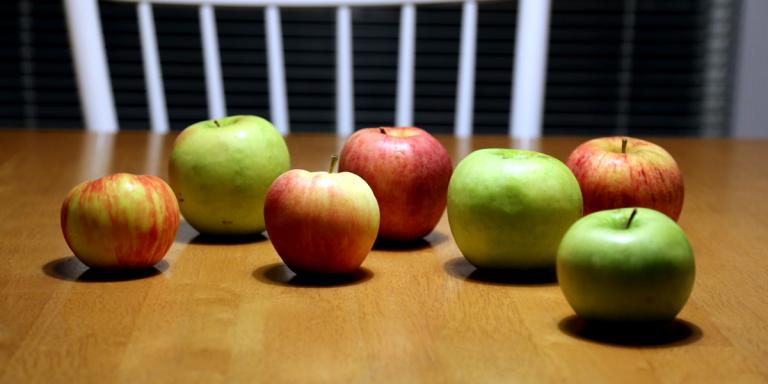
The Gods are like apples.
Apples are beautiful and nourishing. Apples are many and varied. Apples are different sizes, different colors, and different flavors. They grow on different trees in different lands. There is a certain “appleness” about all of them – we intuitively recognize that a Granny Smith and a Gala and a Red Delicious are all apples and that oranges and pears are not. Each apple is an individual – all apples are not the same kind of apple, much less one Apple.
There are certain facts about apples: they grow best in cooler climates. They are susceptible to some diseases but not others. They contain certain chemicals (here I’m referring to naturally occurring chemicals like fructose and sucrose, not pesticides, which would take the metaphor in a different direction). Their DNA has a specific structure.
Some of these facts are simple to discover and some are quite complicated. It is not necessary to know all the facts about an apple in order to enjoy it, but these facts do not change based on whether or not we like them. All opinions about the chemistry of an apple are not equally valid.
Our worship and devotion – how we relate to and interact with the Gods – are like apple pie, baked apples, cinnamon apples, raw apples, applesauce, apple juice, and hard apple cider. There are many good and enjoyable ways to experience apples. And there are a few bad ways, as anyone who’s ever bitten into a not-proverbial bad apple (or worse, gotten food poisoning) understands all too well.
These apple experiences are all different: apple pie is not apple cider, even though both are made from apples. And while you don’t need anyone to tell you how to eat an apple, if you want to make apple pie or apple cider, it helps to have a recipe to draw on the experience of those who’ve gone before you. Just pick the right teacher for what you want to learn: a good pastry chef is not likely to be an expert cider maker, and neither has the skills and experience of an orchard keeper.
None of the many apple experiences are inherently better than the others. Are raw apples a more pure or essential experience of apples than apple pie? Perhaps, but that doesn’t make them “better.” If you don’t like raw apples, there’s no reason why you can’t enjoy baked apples or apple juice. And there’s no reason to limit yourself to just one form. I’m not particularly fond of applesauce, but I love apple pie and apple cider and a good crisp Granny Smith that’s in season and has never been in cold storage.
At some point, though, you start to lose the appleness of an experience. Fresh organic apple juice is one thing, but what about reconstituted apple juice? By the time you get to “apple flavored drink product” it’s safe to say you’re not having an authentic experience of apples.
 That doesn’t make it “bad” or “wrong.” The candy pictured here came out of my desk at work. I eat one or two of them after lunch most days (though I prefer the other flavors). It satisfies my sugar craving and keeps me from hitting the junk machine for a Snickers bar with far more calories. There’s nothing wrong with it, but it’s not an apple.
The painting shown below is beautiful and even inspiring. I’d love to have it on my wall. But if you put it on my plate and tell me it’s dinner, there’s going to be a fight. Is it real? Of course it is. Does it capture the essence of appleness? To a certain extent, yes. Does it fulfill the same purpose as a plate of apples that came from a tree? Absolutely not.
If your religion is all about pictures of apples and apple-flavored candy, count me out.
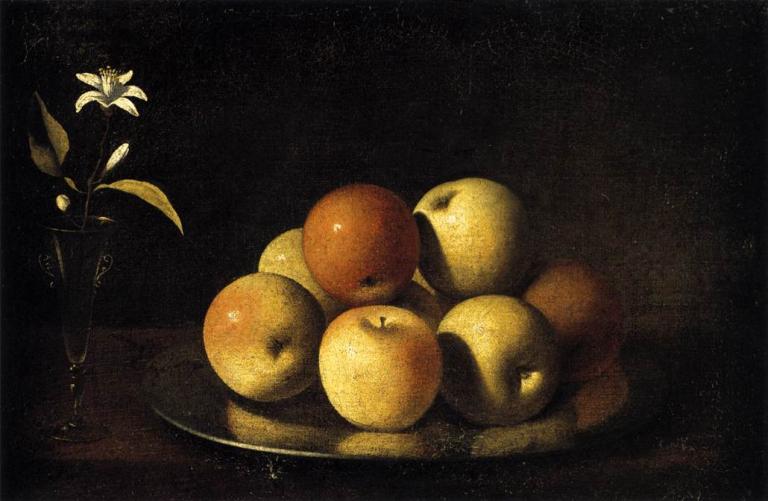
Still-Life with Plate of Apples and Orange Blossom – Juan de Zurbarán (1620-1649) – image via WikiMedia Commons

At this point the metaphor starts to reach its limits of usefulness. Our experiences of the Gods are not the Gods Themselves. No matter how authentic, no matter how powerful, no matter how real, any experience of the Gods is filtered through our own lives, past experiences, values, and beliefs about what is and isn’t possible.
Perhaps simply having those experiences is enough for you. You don’t need a deep understanding of apples to enjoy apple pie, or to be able to make apple pie. You don’t have to be an expert on ancient Celtic societies to pray to the Morrigan or to do Her work of restoring sovereignty.
But some of us do.
Some of us want to know – and are compelled to learn – all we can about the nature of the Gods. We want to know all we can about the history of the Gods who call to us and how They were worshipped in ancient times. We want to know how others are honoring Them and experiencing Them so we can refine our own beliefs and practices. We aren’t content to just drink the cider. We want to know about the apples and the trees and the cider press and the history of orchard-keeping, so we can make the best cider possible.
The Polytheist Movement and our many polytheist religions need both kinds of people. We need those people who are passionate about the Gods and devotion and who are determined to get it as close to perfect as they can, even as we recognize perfection is impossible. And we need the people who just want to honor the Gods and lead ordinary lives… or perhaps, to lead extraordinary lives that focus on something other than polytheism.
Find your place in the orchard, or in the kitchen, or at the table, or where ever you can best honor the Gods and contribute to building a healthy and thriving polytheist community.
Previous Post
March 15, 2016
There’s No Room For Me In Your Religion
Next Post

March 20, 2016 Something Bad Isn’t Coming, It’s Here
Browse Our Archives
Select a Category Books Community CUUPS Druidry Foundations and Context Gods and Goddesses Magic Myth Nature Ritual Spiritual Practice Theology Travel Uncategorized Videos
Select a Month November 2026 October 2026 September 2026 August 2026 July 2026 June 2026 May 2026 April 2026 March 2026 February 2026 January 2026 December 2025 November 2025 October 2025 September 2025 August 2025 July 2025 June 2025 May 2025 April 2025 March 2025 February 2025 January 2025 December 2024 November 2024 October 2024 September 2024 August 2024 July 2024 June 2024 May 2024 April 2024 March 2024 February 2024 January 2024 December 2023 November 2023 October 2023 September 2023 August 2023 July 2023 June 2023 May 2023 April 2023 March 2023 February 2023 January 2023 December 2022 November 2022 October 2022 September 2022 August 2022 July 2022 June 2022 May 2022 April 2022 March 2022 February 2022 January 2022 December 2021 November 2021 October 2021 September 2021 August 2021 July 2021 June 2021 May 2021 April 2021 March 2021 February 2021 January 2021 December 2020 November 2020 October 2020 September 2020 August 2020 July 2020 June 2020 May 2020 April 2020 March 2020 February 2020 January 2020 December 2019 November 2019 October 2019 September 2019 August 2019 July 2019 June 2019 May 2019 April 2019 March 2019 February 2019 January 2019 December 2018 November 2018 October 2018 September 2018 August 2018 July 2018 June 2018 May 2018 April 2018 March 2018 February 2018 January 2018 December 2017 November 2017 October 2017 September 2017 August 2017 July 2017 June 2017 May 2017 April 2017 March 2017 February 2017 January 2017 December 2016 November 2016 October 2016 September 2016 August 2016 July 2016 June 2016 May 2016 April 2016 March 2016 February 2016 January 2016 December 2015 November 2015 October 2015 September 2015 August 2015 July 2015 June 2015 May 2015 April 2015 March 2015 February 2015 January 2015 December 2014 November 2014 October 2014 September 2014 August 2014 July 2014 June 2014 May 2014 April 2014 March 2014 February 2014 January 2014 December 2013 November 2013 October 2013 September 2013 August 2013 July 2013 June 2013 May 2013 April 2013 March 2013 February 2013 January 2013 December 2012 November 2012 October 2012 September 2012 August 2012 July 2012 June 2012 May 2012 April 2012 March 2012 February 2012 January 2012 December 2011 November 2011 October 2011 September 2011 August 2011 July 2011 June 2011 May 2011 April 2011 March 2011 February 2011 January 2011 December 2010 November 2010 October 2010 September 2010 August 2010 July 2010 June 2010 May 2010 April 2010 March 2010 February 2010 January 2010 December 2009 November 2009 October 2009 September 2009 August 2009 July 2009 June 2009 May 2009 April 2009 March 2009 February 2009 January 2009 December 2008 November 2008 October 2008 September 2008 August 2008 July 2008 June 2008
Follow Us!
TAKE THE
Religious Wisdom Quiz
What does "Marah" mean in Hebrew?
Select your answer to see how you score.
Strength Blessed Healing Bitter
Related posts from John Beckett
Pope Francis and The Devil – A Pagan...

Pagans And The Rise Of The Religious Left

Why Halloween Is So Popular – And So...

The Pillar of the Boatmen: the Ancient Monument...
TRENDING AT PATHEOS Pagan
Prioritizing Jesus This Advent
Miller’s Station UMC| 29 November 2026| Mathew 19:16-27 When we prioritize Jesus,...

A Subtle Indicator of Legalism
Legalism was invented by pastors who don’t want to be woken up...
The Two Advents of the Babe and the...
We just celebrated the great family holiday of Thanksgiving and after going...

What are your dreams trying to tell you?...
Dreams can seem crazy. You’re suddenly with a person you haven’t seen...

Advent Begins in the Waiting: Preparing for Jesus
The Christmas season seems to arrive earlier every year. Before Halloween decorations...

As was predicted many years ago, the Interpreter Foundation's website is...
view all Pagan blogs
Ad-Free & Subscriber Log-In Subscription Support
- About Us
- 2026 Calendar
- Videos
- Podcasts
- Library of World Religions
- Faith In Media Tracker
- Advertise With Us
- Write for Us
- Privacy Policy
- Terms of Service
- Do Not Sell My Data
- Contact Us
- Radiant Digital
- Manage Newsletter Subscriptions
- Unsubscribe From Notifications
- Sitemap
Copyright 2008-2026, Patheos, part of the Radiant Digital network of media brands. All rights reserved.
Subscription Support Ad-Free & Subscriber Log-In
Follow Patheos