
BuddhistCatholicContemplativeEvangelicalGeneral ChristianHinduJewishLatter-day SaintMuslimNew VisionsProgressive Christian
Beliefs
- Buddhist
- Catholic
- Contemplative
- Evangelical
- General Christian
- Hindu
- Jewish
- Latter-day Saint
- More Voices
- Muslim
- New Visions
- Pagan
- Progressive Christian
Topics
- Religion News
- Food and Religion
- Sports and Religion
- Religious Art
- Religious Music and Entertainment
- Religious Events
- History and Religion
- Style and Religion
- Politics and Religion
- Women in Religion
- Recreation Outdoors and Religion
- Business Finance and Religion
- Careers Workplace and Religion
- Education and Religion
- Family Parenting and Religion
- Health Fitness and Religion
- Home and Religion
- Relationships and Religion
- Technology and Religion
- Travel and Religion
Columnists
- Buddhist Columnists
- Business Finance and Religion Columnists
- Careers Workplace and Religion Columnists
- Catholic Columnists
- Contemplative Columnists
- Education and Religion Columnists
- Evangelists Columnists
- Family Parenting and Religion Columnists
- General Christian Columnists
- Health Fitness and Religion Columnists
- Hindu Columnists
- History and Religion Columnists
- Home and Religion Columnists
- Jewish Columnists
- More Voices Columnists
- Latter Day Columnists
- Muslim Columnists
- New Visions Columnists
- Nonreligious Columnists
- Pagan Columnists
- Politics and Religion Columnists
- Progressive Columnists
- Recreation Outdoors and Religion Columnists
- Relationships and Religion Columnists
- Religion News Columnists
- Religious Art Columnists
- Religious Events Columnists
- Religious Music and Entertainment Columnists
- Sports and Religion Columnists
- Style and Religion Columnists
- Technology and Religion Columnists
- Travel and Religion Columnists
- Women in Religion Columnists
Resource Library
- 2026 Calendar
- Library of World Religions
- The 100 Most Holy Places on Earth
- Patheos Answers
- Podcasts
- Videos
- Faith Leaders Database
- Anglican Episcopalian
- Bahai
- Baptist
- Buddhism
- Christianity
- Confucianism
- Eastern Orthodoxy
- Hinduism
- Holiness and Pentecostal
- ISKCON
- Islam
- Judaism
- Lutheran
- Methodist
- The Church of Jesus Christ of Latter-day Saints
- New Age
- Paganism
- Presbytarian and Reformed
- Protestantism
- Religion Behind the Scenes
- Roman Catholic
- Scientology
- Shia Islam
- Sikhism
- Sufism
- Sunni Islam
- Taoism
- Zen
- See all religions
Research Tools
 Ad-Free & Subscriber Log-In Subscription Support
Ad-Free & Subscriber Log-In Subscription Support
Follow Patheos 

- Trending:
- Forgiveness
- |
- Marriage
- |
- Consciousness
- |
- Death Penalty
- |
- Election
- |
- Halloween

- Home
- Pagan
- Why We Make Offerings
Why We Make Offerings
Last updated on: February 23, 2016 at 6:00 pm by John Beckett
Why We Make Offerings 2016-02-20T19:43:18-06:00 John Beckett
Patheos Explore the world's faith through different perspectives on religion and spirituality! Patheos has the views of the prevalent religions and spiritualities of the world.
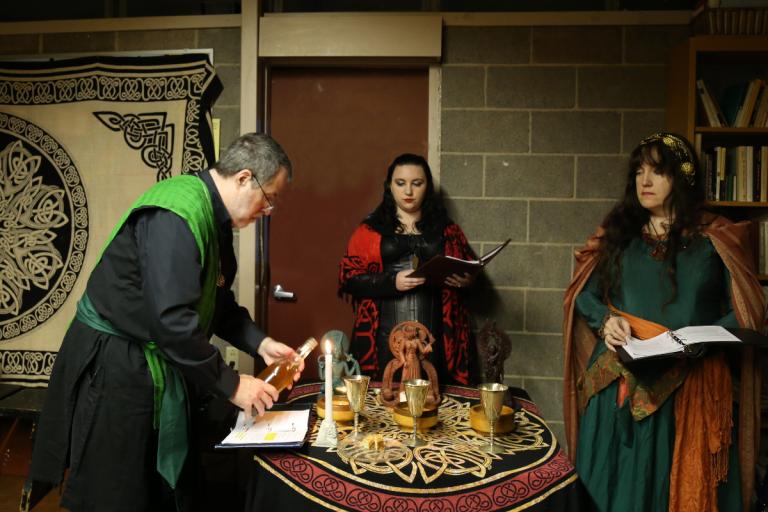 The practice of offerings and sacrifices is not universal among all Pagans. The Charge of the Goddess says “Nor do I demand aught of sacrifice, for behold: I am the Mother of all things and My love is poured upon the earth.” I suspect early Wiccans wanted to insulate themselves against mindless and fearful accusations of animal or even human sacrifice.
But offerings were quite common in ancient times, and the practice has been revived by a growing number of Pagans and especially polytheists. Giving things to the Gods, to the ancestors, and to other spirits is a regular part of our spiritual practice.
What’s the difference between an offering and a sacrifice? While the two terms have different word origins and definitions (offering means “to give” while sacrifice means “to make sacred”), in contemporary practice they’re virtually the same. I joke that pouring wine is an offering, but pouring Lakewood Temptress Stout is a sacrifice.
Offerings generally (but not exclusively) take the form of food and drink: wine, beer, mead, or whiskey; grain, bread, meat, or sweets. It can take the form of money, of objects, or of service. It can take other forms as required by tradition or by the Gods Themselves.
If you’re new to polytheism, especially if you come from a Protestant or an atheist background where religion is all about beliefs, dogma, and the written word, the idea of offerings may strike you as odd, anachronistic, or unnecessary. But for many of us, offerings are the cornerstone of our religious practice. This is why we make offerings.
To express hospitality. If you invited a friend over to your house, as soon as they got there you’d offer them something to drink. If they were there a while, or if they showed up at dinner time, you’d offer them something to eat. You’d try to be a good, generous, thoughtful host who cares for their guests.
The same is true with our interactions with the Gods. We don’t want to invite Them to our rituals and start demanding They give us stuff. We want to be polite and generous. We make offerings to the Gods to show our respect for Them, and to demonstrate we practice the virtue of hospitality.
To promote reciprocity. The world runs on reciprocity – “I give so that you may give.” Sometimes this is quid pro quo – a gift for a gift, or payment for a service. Sometimes you don’t expect to be paid back right away – you do a favor for a friend and you know that some day, they’ll do something for you. Occasionally it’s even less structured – you do a good deed and you figure things will even out in the long run.
We give to the Gods so the Gods will give to us. This isn’t appeasement and it certainly isn’t bribery (as though a divine being could be bribed with a glass of wine). It’s demonstrating that we understand the world runs on honest exchange – I give so that you may give so that I may give again.
Because our ancestors made offerings. Contemporary polytheists aren’t building a religion from scratch. We’re reviving, restoring, and reimagining the religions of our ancestors. We need not – and should not – slavishly duplicate everything they believed and did, but where a practice was meaningful and helpful to the ancients, we are foolish if we do not at least explore it. Reviving their practices not only lets us learn from them, it helps restore the bonds across generations as we do now what they did then.
 Our ancestors made offerings. The photo at the right is a display of some of the coins that were deposited in the waters at Bath over the 400 year Roman period. Historian Walter Burkert described the ritual process for animal sacrifices in ancient Greece. The practice was beneficial to them or they would not have done it. It’s worth following their example.
Because the Gods ask for offerings. If a good friend asks me for something, my first impulse is to say yes. When Sharon Knight asked for help with her “Portals” project, I said yes (the album is out and it’s great – I’ll have a review in the near future). When the Coru priesthood asked me to give up three hours working as a temple priest, I said yes.
Sometimes it’s just this simple: a God says “I want that.” Sometimes there’s a practical reason why They want it. Sometimes there’s a whimsical (to us) reason. Sometimes there’s no reason at all, just that familiar voice or feeling or intuition that They want something from us. I’ve learned to trust that if They ask for something, the best thing to do is to give it to Them.
Of course there are limits. I grew up hearing the story of Abraham almost sacrificing his son Isaac to Yahweh. If that was a test, Abraham failed. I’ve never been asked to give something I felt I shouldn’t give or that I had no right to give, and I don’t expect I ever will.
To remind ourselves we have enough. As the meme going around Facebook says, you can’t pour from an empty cup – you can’t give what you don’t have. By historical standards, though, all but the poorest among us have far more than we truly need. Offerings and sacrifices remind us that we are not lessened when we give.
We can and should debate how much we should give, who we should give to, and how our gifts should be made. But as we give to the Gods, we are reminded that we can also give to our fellow humans, because we have enough.
To remind ourselves to do what must be done. Let’s be honest. While I love being hospitable to the Gods and giving Them what They ask for, and the end of the day I really don’t like pouring out perfectly good wine that I could drink. I also don’t like going to work every day, wearing glasses, and putting up with Texas summers. But I do all these things because they must be done. They are necessary if I’m going to make enough money to live the way I want to live, if I want to read anything smaller than 16 point type, and if I want to enjoy the mild Texas winters and low cost of living.
When I make offerings I’m reminded that nothing comes for free. Even the most priceless choices involve a tradeoff of one thing or another – if I give a rare bottle of wine to the Gods, I cannot give it to a friend. Such is life – we do what must be done.
To express devotion. Why do we send flowers to a spouse, or bring souvenirs back for family, or take a close friend out for an expensive dinner? Because we love them and we want to do something nice and thoughtful for them – we want to express our devotion to them.
Likewise, as we come to know the Gods and to understand Their power and virtue, we not only want to ally ourselves with us by working for Their causes, we also want to express our devotion to Them. We make offerings because we want Them to enjoy what we have to give, however ultimately insignificant that may be.
I encourage you to make offerings a regular part of your spiritual practice, and especially part of your usual ritual liturgy. If you call (invite, invoke) a being into your ritual, be a good host and offer them food and drink. Practice good hospitality, reciprocity, and devotion with all your guests.

Previous Post

February 21, 2016
Rebuilding a Religion
Next Post

February 25, 2016 6 Thoughts on Scalia, Trump, and American Politics
Browse Our Archives
Select a Category Books Community CUUPS Druidry Foundations and Context Gods and Goddesses Magic Myth Nature Ritual Spiritual Practice Theology Travel Uncategorized Videos
Select a Month October 2026 September 2026 August 2026 July 2026 June 2026 May 2026 April 2026 March 2026 February 2026 January 2026 December 2025 November 2025 October 2025 September 2025 August 2025 July 2025 June 2025 May 2025 April 2025 March 2025 February 2025 January 2025 December 2024 November 2024 October 2024 September 2024 August 2024 July 2024 June 2024 May 2024 April 2024 March 2024 February 2024 January 2024 December 2023 November 2023 October 2023 September 2023 August 2023 July 2023 June 2023 May 2023 April 2023 March 2023 February 2023 January 2023 December 2022 November 2022 October 2022 September 2022 August 2022 July 2022 June 2022 May 2022 April 2022 March 2022 February 2022 January 2022 December 2021 November 2021 October 2021 September 2021 August 2021 July 2021 June 2021 May 2021 April 2021 March 2021 February 2021 January 2021 December 2020 November 2020 October 2020 September 2020 August 2020 July 2020 June 2020 May 2020 April 2020 March 2020 February 2020 January 2020 December 2019 November 2019 October 2019 September 2019 August 2019 July 2019 June 2019 May 2019 April 2019 March 2019 February 2019 January 2019 December 2018 November 2018 October 2018 September 2018 August 2018 July 2018 June 2018 May 2018 April 2018 March 2018 February 2018 January 2018 December 2017 November 2017 October 2017 September 2017 August 2017 July 2017 June 2017 May 2017 April 2017 March 2017 February 2017 January 2017 December 2016 November 2016 October 2016 September 2016 August 2016 July 2016 June 2016 May 2016 April 2016 March 2016 February 2016 January 2016 December 2015 November 2015 October 2015 September 2015 August 2015 July 2015 June 2015 May 2015 April 2015 March 2015 February 2015 January 2015 December 2014 November 2014 October 2014 September 2014 August 2014 July 2014 June 2014 May 2014 April 2014 March 2014 February 2014 January 2014 December 2013 November 2013 October 2013 September 2013 August 2013 July 2013 June 2013 May 2013 April 2013 March 2013 February 2013 January 2013 December 2012 November 2012 October 2012 September 2012 August 2012 July 2012 June 2012 May 2012 April 2012 March 2012 February 2012 January 2012 December 2011 November 2011 October 2011 September 2011 August 2011 July 2011 June 2011 May 2011 April 2011 March 2011 February 2011 January 2011 December 2010 November 2010 October 2010 September 2010 August 2010 July 2010 June 2010 May 2010 April 2010 March 2010 February 2010 January 2010 December 2009 November 2009 October 2009 September 2009 August 2009 July 2009 June 2009 May 2009 April 2009 March 2009 February 2009 January 2009 December 2008 November 2008 October 2008 September 2008 August 2008 July 2008 June 2008
Follow Us!
TAKE THE
Religious Wisdom Quiz
What is the collective name of the stories Jesus told?
Select your answer to see how you score.
Prayers Proverbs Parables Psalms
Related posts from John Beckett




What We Lose When “Ask AI” Becomes A...
TRENDING AT PATHEOS Pagan

Pope Leo Celebrates Mass for Nurses & Docs...
I don't have any idea how he did it, but Pope Leo...

The Sermon on the Mount, Part I: Matthew...
The Sermon on the Mount, Part I (Matthew 4:12-5:12) St. Matthew moves...

What's up from Crossway: Reviewing some of their latest A few weeks...

Janie Learns the Way of the Cross: A...
Teaching children about Jesus' Passion can be challenging. Many parents and educators...

Looking For Good Catholic Writing - October 2026
He alone extends the heavens, and he walks upon the waves of...

In "Irreplaceable," our book on vocation and technology, Trevor Sutton and I...
view all Pagan blogs
Ad-Free & Subscriber Log-In Subscription Support
- About Us
- 2026 Calendar
- Videos
- Podcasts
- Library of World Religions
- Faith In Media Tracker
- Advertise With Us
- Write for Us
- Privacy Policy
- Terms of Service
- Do Not Sell My Data
- Contact Us
- Radiant Digital
- Manage Newsletter Subscriptions
- Unsubscribe From Notifications
- Sitemap
Copyright 2008-2026, Patheos. All rights reserved.
Subscription Support Ad-Free & Subscriber Log-In
Follow Patheos