
BuddhistCatholicContemplativeEvangelicalGeneral ChristianHinduJewishLatter-day SaintMuslimNew VisionsProgressive Christian
Beliefs
- Buddhist
- Catholic
- Contemplative
- Evangelical
- General Christian
- Hindu
- Jewish
- Latter-day Saint
- More Voices
- Muslim
- New Visions
- Pagan
- Progressive Christian
Topics
- Religion News
- Food and Religion
- Sports and Religion
- Religious Art
- Religious Music and Entertainment
- Religious Events
- History and Religion
- Style and Religion
- Politics and Religion
- Women in Religion
- Recreation Outdoors and Religion
- Business Finance and Religion
- Careers Workplace and Religion
- Education and Religion
- Family Parenting and Religion
- Health Fitness and Religion
- Home and Religion
- Relationships and Religion
- Technology and Religion
- Travel and Religion
Columnists
- Buddhist Columnists
- Business Finance and Religion Columnists
- Careers Workplace and Religion Columnists
- Catholic Columnists
- Contemplative Columnists
- Education and Religion Columnists
- Evangelists Columnists
- Family Parenting and Religion Columnists
- General Christian Columnists
- Health Fitness and Religion Columnists
- Hindu Columnists
- History and Religion Columnists
- Home and Religion Columnists
- Jewish Columnists
- More Voices Columnists
- Latter Day Columnists
- Muslim Columnists
- New Visions Columnists
- Nonreligious Columnists
- Pagan Columnists
- Politics and Religion Columnists
- Progressive Columnists
- Recreation Outdoors and Religion Columnists
- Relationships and Religion Columnists
- Religion News Columnists
- Religious Art Columnists
- Religious Events Columnists
- Religious Music and Entertainment Columnists
- Sports and Religion Columnists
- Style and Religion Columnists
- Technology and Religion Columnists
- Travel and Religion Columnists
- Women in Religion Columnists
Resource Library
- 2026 Calendar
- Library of World Religions
- The 100 Most Holy Places on Earth
- Patheos Answers
- Podcasts
- Videos
- Faith Leaders Database
- Anglican Episcopalian
- Bahai
- Baptist
- Buddhism
- Christianity
- Confucianism
- Eastern Orthodoxy
- Hinduism
- Holiness and Pentecostal
- ISKCON
- Islam
- Judaism
- Lutheran
- Methodist
- The Church of Jesus Christ of Latter-day Saints
- New Age
- Paganism
- Presbytarian and Reformed
- Protestantism
- Religion Behind the Scenes
- Roman Catholic
- Scientology
- Shia Islam
- Sikhism
- Sufism
- Sunni Islam
- Taoism
- Zen
- See all religions
Research Tools
 Ad-Free & Subscriber Log-In Subscription Support
Ad-Free & Subscriber Log-In Subscription Support
Follow Patheos 

- Trending:
- Forgiveness
- |
- Marriage
- |
- Consciousness
- |
- Death Penalty
- |
- Election
- |
- Halloween

- Home
- Pagan
- The Future of Pagan Leadership
The Future of Pagan Leadership
Last updated on: February 2, 2016 at 6:06 pm by John Beckett
The Future of Pagan Leadership 2016-02-02T18:06:58-06:00 John Beckett
Patheos Explore the world's faith through different perspectives on religion and spirituality! Patheos has the views of the prevalent religions and spiritualities of the world.
 Last week The Wild Hunt ran a feature titled What Will Paganism Look Like In 100 Years? I was one of eight contributors who discussed our hopes, fears, and predictions for the future of our movement.
While all religions are rooted in the experiences of their founders (which may be one individual or may be an entire tribe of people), religious movements rise as they respond to human needs in an particular environment, and they fall as they cease to be relevant to their followers. Modern Paganism is a response to the abuses and excesses of the Christian church, to the separation of people from Nature, and to the separation of people from their Gods and ancestors. These conditions, which gave rise to the emergence of Paganism in the 19th century and to its explosion in the 20th century, will continue in the 21st and 22nd. Paganism will continue to grow in both breadth and depth over the next 100 years.
The question, then, is “how do Pagan leaders foster both breadth and depth?” That is, how do we appeal to ordinary people who are dissatisfied with their current religion (or lack thereof) but who aren’t interested in becoming mystics and magicians. And at the same time, how do we develop and support practices that appeal to those who are called to be mystics and magicians?
How do we foster elite levels of skill and devotion without becoming elitist?
I see far too many Pagans who want one of these but not the other. Some want to include everyone no matter what and get upset if anybody starts talking about the differences between, say, polytheism and non-theism: “what difference does it make – just dance!” And others are suspicious of growth and don’t care if their tradition has more than four members so long as they’re doing really deep work.
Growth for the sake of growth is cancer, but if a religious tradition is healthy and vibrant it’s going to attract newcomers. Let’s make room for them and let’s help them participate to the extent of their talents and desires, however small or large those may be.
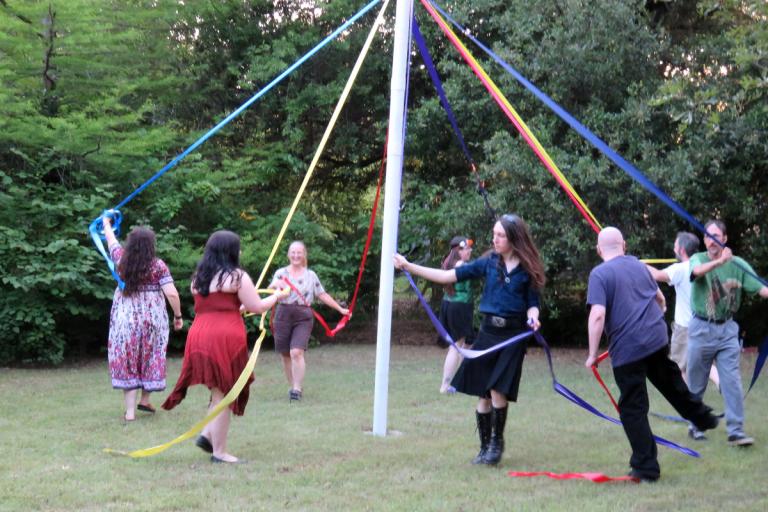
Before we go any further, let’s be clear about one thing: yes, you’re a leader. If you plan and facilitate rituals for more than yourself, you’re a leader. If you talk about Pagans and Paganism in person or on social media, you’re a leader. If you wear Pagan jewelry or t-shirts, you’re a leader. You may not be an elder, or a high priestess, or a senior Druid. You may have no organizational status or responsibilities. You may be leading at a level far below that of Pagans who are generally recognized as leaders. But if your life influences others – whether you want to influence them or not – you’re a leader.
So, how do we foster both breadth and depth in our Pagan traditions?
We foster breadth by respecting religious freedom. This doesn’t mean “being nice to your Christian relatives” – though that’s usually a good idea. It means understanding and accepting that different people are called by different Gods to worship Them in different ways. It means understanding and accepting that some people aren’t called by any Gods, or they’re unable or unwilling to accept the existence of Gods and spirits.
It’s not our job to steer them toward “proper” practice. It’s our job to accept them for who they are and to judge their religion (or lack thereof) by how it inspires them to live their lives, not by how closely it matches ours. It’s our job to work with them when we have common interests, and to work separately when we’re called to do something that doesn’t match up with their practices. “Least common denominator” religion doesn’t serve anyone’s best interests.
This is leadership by example.
We foster depth by practicing deeply ourselves, and by connecting with others doing the same. If I seem to be constantly emphasizing deep spiritual practice, that’s because there’s nothing else that will build connections to the Gods, spirits, and Nature as strongly and as reliably. There are many practices and you don’t have to do them all. You probably can’t do them all – I certainly don’t. Rather than doing many things weakly, do a few things consistently. Make a conscious effort to do them as well as you can and you’ll get good at them – you’ll grow in spiritual depth.
Then find other people who are trying to do the same thing. Perhaps you find you’re the most skilled with prayer. Someone else is the most experienced with meditation. Another is the most knowledgeable about history and lore. You work together, practice together, and learn from each other… and all of a sudden, you’re all deeper together than you were separately.
Maybe this ends up becoming a grove of Druids or a college of mystics. Maybe it becomes a priesthood. Maybe you’re just a group of friends who drink tea and talk about what you do. The main thing is that you’re a collection of Pagans who want a deep practice, and you’re there for the next person who’s looking for the same thing.
This is leadership by participation.

We draw boundaries tentatively. Many Pagans have a strong bias against authority and for inclusion. But while radical inclusion has a place in our wider society, we do ourselves no favors if we naïvely insist our many diverse religious and spiritual traditions are really all the same.
Institutions have clear boundaries: if you want to be an OBOD Druid, you have to sign up for the Bardic course and start working your way through the material. You’re either in or you’re out. Roles and traditions are considerably less well defined. What’s a priest? What’s a witch? What is Irish Paganism? There are no clear definitions. My seemingly obvious statement that Polytheism is Theism drew 185 comments, many of them insisting I had no right to draw even the most basic of boundaries.
Where there are clear, natural boundaries, let’s acknowledge them. Where there aren’t, let’s draw them tentatively. Our understanding of the nature of the Gods and the definition of magic will always be incomplete. Let’s draw the boundaries that are necessary for effective practice, but let’s remain open to new thinking, new experiences, and new interpretations.
This is leadership by integrity.
We maintain boundaries compassionately. We live in the most religiously diverse and religiously fluid society in the history of humanity. We get a lot of people who pass through Paganism on their way to something else, and people who wander into the Big Tent without knowing whether they’re really called to Wicca, traditional witchcraft, OBOD Druidry, Hellenic polytheism, or some other tradition.
Neither breadth nor depth will be achieved by pushing people into practices and groups that don’t interest them or that they’re not ready to tackle. Nor will it be achieved by setting barriers so high ordinary people can’t get over them. Most people do a pretty good job of self-selecting themselves into and out of groups and traditions. Early in my Pagan exploration, I selected myself out of a Western Mystery Tradition group. They were good people doing good work, but I had no desire to learn Hebrew and work with Gods as archetypes.
Occasionally, though, leaders are forced to say “this is what we do here – you don’t seem to be committed to the same things we are.” Or, if the group was intended to be more general and inclusive, leaders may need to say “some of us are going to form a subgroup to focus on this one specific tradition.” We cannot allow a few individuals to distract a group and its members from their core purpose.
This is leadership by discernment.
The future of Paganism is bright. The factors that gave rise to the restoration and recreation of Paganism will continue for the foreseeable future. If anything, environmental concerns and the general decline of the American empire should increase the number of people who are looking for what we already have, and what we’re building.
The Pagan movement will continue to grow in breadth and depth. It falls to all of us in the Pagan community to exercise the leadership necessary to be ready for this growth.

Previous Post

January 31, 2016
Racism Cannot Be Tolerated
Next Post

February 4, 2016 Religion That Works
Browse Our Archives
Select a Category Books Community CUUPS Druidry Foundations and Context Gods and Goddesses Magic Myth Nature Ritual Spiritual Practice Theology Travel Uncategorized Videos
Select a Month October 2026 September 2026 August 2026 July 2026 June 2026 May 2026 April 2026 March 2026 February 2026 January 2026 December 2025 November 2025 October 2025 September 2025 August 2025 July 2025 June 2025 May 2025 April 2025 March 2025 February 2025 January 2025 December 2024 November 2024 October 2024 September 2024 August 2024 July 2024 June 2024 May 2024 April 2024 March 2024 February 2024 January 2024 December 2023 November 2023 October 2023 September 2023 August 2023 July 2023 June 2023 May 2023 April 2023 March 2023 February 2023 January 2023 December 2022 November 2022 October 2022 September 2022 August 2022 July 2022 June 2022 May 2022 April 2022 March 2022 February 2022 January 2022 December 2021 November 2021 October 2021 September 2021 August 2021 July 2021 June 2021 May 2021 April 2021 March 2021 February 2021 January 2021 December 2020 November 2020 October 2020 September 2020 August 2020 July 2020 June 2020 May 2020 April 2020 March 2020 February 2020 January 2020 December 2019 November 2019 October 2019 September 2019 August 2019 July 2019 June 2019 May 2019 April 2019 March 2019 February 2019 January 2019 December 2018 November 2018 October 2018 September 2018 August 2018 July 2018 June 2018 May 2018 April 2018 March 2018 February 2018 January 2018 December 2017 November 2017 October 2017 September 2017 August 2017 July 2017 June 2017 May 2017 April 2017 March 2017 February 2017 January 2017 December 2016 November 2016 October 2016 September 2016 August 2016 July 2016 June 2016 May 2016 April 2016 March 2016 February 2016 January 2016 December 2015 November 2015 October 2015 September 2015 August 2015 July 2015 June 2015 May 2015 April 2015 March 2015 February 2015 January 2015 December 2014 November 2014 October 2014 September 2014 August 2014 July 2014 June 2014 May 2014 April 2014 March 2014 February 2014 January 2014 December 2013 November 2013 October 2013 September 2013 August 2013 July 2013 June 2013 May 2013 April 2013 March 2013 February 2013 January 2013 December 2012 November 2012 October 2012 September 2012 August 2012 July 2012 June 2012 May 2012 April 2012 March 2012 February 2012 January 2012 December 2011 November 2011 October 2011 September 2011 August 2011 July 2011 June 2011 May 2011 April 2011 March 2011 February 2011 January 2011 December 2010 November 2010 October 2010 September 2010 August 2010 July 2010 June 2010 May 2010 April 2010 March 2010 February 2010 January 2010 December 2009 November 2009 October 2009 September 2009 August 2009 July 2009 June 2009 May 2009 April 2009 March 2009 February 2009 January 2009 December 2008 November 2008 October 2008 September 2008 August 2008 July 2008 June 2008
Follow Us!
TAKE THE
Religious Wisdom Quiz
True or False: Mordecai refused to bow down to Haman.
Select your answer to see how you score.
FALSE TRUE
Related posts from John Beckett


The Vampire Films of Jean Rollin


Bo French Doesn’t Understand Texas
TRENDING AT PATHEOS Pagan

Letters on Living the Faith by C.S. Lewis
Most of us met C.S. Lewis as a public intellectual. Mere Christianity....

When Halloween Unmasks Married Hearts
Written by Dr. David K. Ewen from Eternal Truth Bible College Behind...

Aristotle. He’s been called the father of logic, the father of the...

Methodist Central Hall and Westminster Abbey
Situated on the same square is Methodist Central Hall and Westminster Abbey. ...

57th Dove Awards Honor Dolly Parton, Crown New...
On gospel music’s biggest night, the 57th annual GMA Dove Awards honored...

The First Eucharistic Controversy: Christ’s Real Presence
For Catholics, the Eucharist is the source and summit of the Christian...
view all Pagan blogs
Ad-Free & Subscriber Log-In Subscription Support
- About Us
- 2026 Calendar
- Videos
- Podcasts
- Library of World Religions
- Faith In Media Tracker
- Advertise With Us
- Write for Us
- Privacy Policy
- Terms of Service
- Do Not Sell My Data
- Contact Us
- Radiant Digital
- Manage Newsletter Subscriptions
- Unsubscribe From Notifications
- Sitemap
Copyright 2008-2026, Patheos. All rights reserved.
Subscription Support Ad-Free & Subscriber Log-In
Follow Patheos