
BuddhistCatholicContemplativeEvangelicalGeneral ChristianHinduJewishLatter-day SaintMuslimNew VisionsProgressive Christian
Beliefs
- Buddhist
- Catholic
- Contemplative
- Evangelical
- General Christian
- Hindu
- Jewish
- Latter-day Saint
- More Voices
- Muslim
- New Visions
- Pagan
- Progressive Christian
Topics
- Religion News
- Food and Religion
- Sports and Religion
- Religious Art
- Religious Music and Entertainment
- Religious Events
- History and Religion
- Style and Religion
- Politics and Religion
- Women in Religion
- Recreation Outdoors and Religion
- Business Finance and Religion
- Careers Workplace and Religion
- Education and Religion
- Family Parenting and Religion
- Health Fitness and Religion
- Home and Religion
- Relationships and Religion
- Technology and Religion
- Travel and Religion
Columnists
- Buddhist Columnists
- Business Finance and Religion Columnists
- Careers Workplace and Religion Columnists
- Catholic Columnists
- Contemplative Columnists
- Education and Religion Columnists
- Evangelists Columnists
- Family Parenting and Religion Columnists
- General Christian Columnists
- Health Fitness and Religion Columnists
- Hindu Columnists
- History and Religion Columnists
- Home and Religion Columnists
- Jewish Columnists
- More Voices Columnists
- Latter Day Columnists
- Muslim Columnists
- New Visions Columnists
- Nonreligious Columnists
- Pagan Columnists
- Politics and Religion Columnists
- Progressive Columnists
- Recreation Outdoors and Religion Columnists
- Relationships and Religion Columnists
- Religion News Columnists
- Religious Art Columnists
- Religious Events Columnists
- Religious Music and Entertainment Columnists
- Sports and Religion Columnists
- Style and Religion Columnists
- Technology and Religion Columnists
- Travel and Religion Columnists
- Women in Religion Columnists
Resource Library
- 2026 Calendar
- Library of World Religions
- The 100 Most Holy Places on Earth
- Patheos Answers
- Podcasts
- Videos
- Faith Leaders Database
- Anglican Episcopalian
- Bahai
- Baptist
- Buddhism
- Christianity
- Confucianism
- Eastern Orthodoxy
- Hinduism
- Holiness and Pentecostal
- ISKCON
- Islam
- Judaism
- Lutheran
- Methodist
- The Church of Jesus Christ of Latter-day Saints
- New Age
- Paganism
- Presbytarian and Reformed
- Protestantism
- Religion Behind the Scenes
- Roman Catholic
- Scientology
- Shia Islam
- Sikhism
- Sufism
- Sunni Islam
- Taoism
- Zen
- See all religions
Research Tools
 Ad-Free & Subscriber Log-In Subscription Support
Ad-Free & Subscriber Log-In Subscription Support
Follow Patheos 

- Trending:
- Forgiveness
- |
- Marriage
- |
- Consciousness
- |
- Death Penalty
- |
- Election
- |
- Halloween

- Home
- Pagan
- Beginning a Devotional Practice
Beginning a Devotional Practice
Last updated on: January 10, 2016 at 4:00 pm by John Beckett
Beginning a Devotional Practice 2016-01-09T10:49:56-06:00 John Beckett
Patheos Explore the world's faith through different perspectives on religion and spirituality! Patheos has the views of the prevalent religions and spiritualities of the world.
When someone asks for suggestions on getting started in Paganism or polytheism, one of the first things I recommend is to begin a devotional practice. It was Step 3 of last week’s 4 Steps to a Deeper Pagan Practice, but the 2+ paragraphs were just enough to give a beginner an idea of what’s involved. In this post I want to go into a little more detail.
If you’re coming from a Protestant or an atheist background, some of these practices may strike you as odd. The Pagan and polytheist movements need a book to help beginners recognize and challenge the unstated assumptions in our wider society and to form a strong Pagan foundation, but as of right now that book doesn’t exist. One is in the works, but there is no timeline for its publication. When I know more I’ll be the first to let you know.
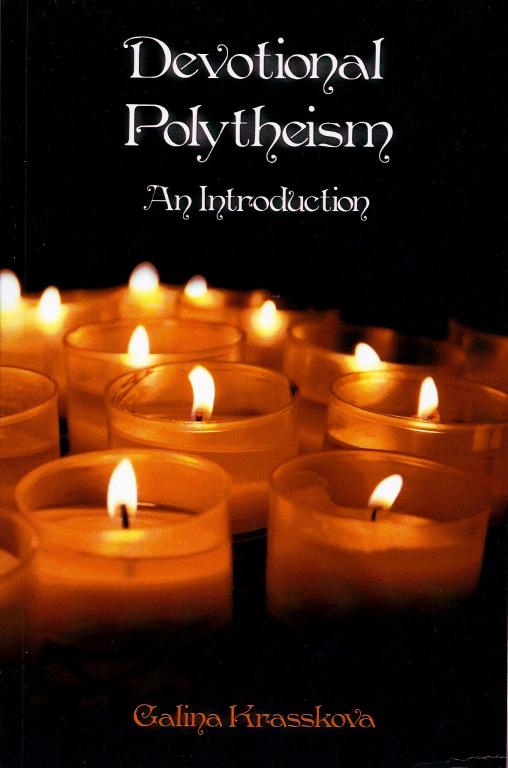 There is a good book on developing a devotional practice: Devotional Polytheism by Galina Krasskova. Though it is written from a Heathen perspective, the practices it teaches are suitable for most polytheist traditions – devotional “tech” transfers well.
There are two issues with this book, neither of which should stop you from using it as a reference. Galina Krasskova is one of the most knowledgeable and devout polytheists I know – she takes her religion, well, religiously. This is a good thing. But her tone can be strident and that can be off-putting for Pagans who are tired of preachers and priests telling them what they have to do (though to be fair, this book strikes me as far less strident than her blog). If her tone bothers you, focus on what she says and not how she says it, and take her at her word when she says “there’s no one right way to do devotion, save respectfully.”
The second issue is that there is so much in the book – virtually every polytheist devotional practice in existence is listed and described. Used as a reference, this is wonderful. Used as a guide, it can lead a beginner to think “do I have to do all that?” and feeling overwhelmed.
Trying to do too much too soon is a recipe for failure. Instead, pick one or two things, learn to do them well, make a habit of doing them regularly, then add additional practices as you’re ready for them. Trust me – the Gods will let you know when They want something more.
While Devotional Polytheism is an excellent reference, it’s not scripture and neither it nor any other book is necessary to start a devotional practice. What is necessary to start is to start. So get started.
Choose a deity. Usually this is easier than it sounds. Most times when someone asks me about starting a devotional practice, Someone is already in their life and encouraging them to begin. If there’s more than one, you may be able to honor Them together, or you may need to honor Them separately, particularly if They are associated with different ethnic and cultural traditions. Or you may choose to start with one and add others later. Again, start small and don’t overcommit.
If there’s no God in your life at all, then pick Someone. Pick Someone whose stories intrigue you, whose values match your own, or whose virtues would be helpful in your life. As with our human relationships, our relationships with the Gods can be initiated by either party.
Create an altar. An altar is many things: a place for prayer and meditation, a place for offerings, a mystical center. An altar isn’t the same thing as a shrine, the main difference being that a shrine is a mostly static place of honor while an altar is an active sacred space where work is done.
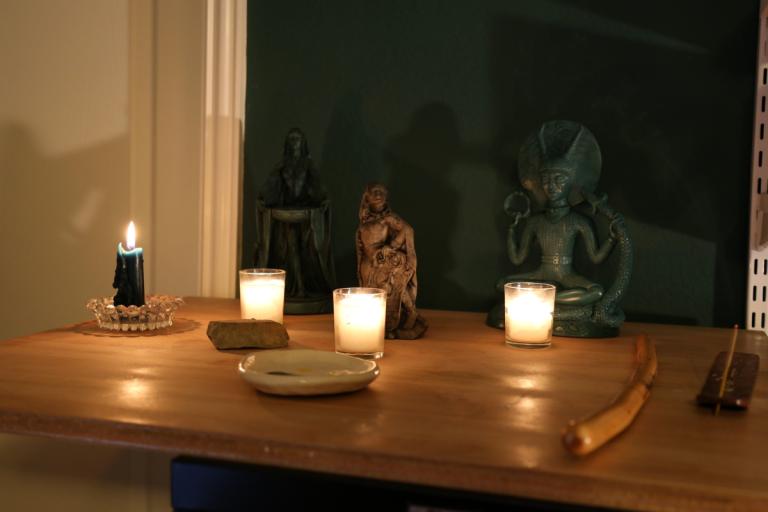 Find a space you can dedicate to this purpose. I use a piece of finished plywood on top of a filing cabinet. Others use dresser tops, bookshelves, or cabinets (which can be closed to prevent questions from religiously troublesome visitors). A few have purpose-built furniture or outdoor altars. While humans have a long and noble tradition of creating beautiful religious structures, don’t let the desire for something perfect stop you from creating something useful right now.
What goes on the altar? A representation of the Gods and the items necessary to honor Them. For me, that’s statues, candles, and incense. Don’t forget to leave working space for offerings. If you don’t have a statue, if you can’t afford one, or if can’t find one that strikes you as right, find another representation of the Gods: a picture, a candle, a stone – pretty much anything that helps you connect to Them.
Pray. Speak to the Gods. Ancient prayers are good. So are contemporary prayers written by priests and devotees. So are your own words that express the yearnings of your heart. Calling Them by names, titles, and epithets is good, but remember – They know They’re Gods. You’re the one who needs to be reminded.
Express your admiration and devotion. Give thanks where appropriate. Ask for what you want… but consider Who you’re speaking to. Is your request something important or something trivial? And remember the principle of reciprocity: if you expect to receive, you should expect to give.
Be careful what you offer. If you say “I’ll do whatever you want me to do” They may take you up on it in ways you never considered. My experience has been that the Gods are mostly (but not always) lenient with beginners, but much more strict with those of us who should know better.
Pray respectfully and pray mindfully, but pray.
Meditate. If prayer is speaking to the Gods, meditation is listening for the Gods. Many Pagans learn meditation from Buddhists and the practices they teach are helpful. But emptying your mind is not the aim of polytheist prayer… except to the extent that shutting down the “monkey mind” is helpful in hearing the often-faint voices of the Gods.
Listen… but do not expect to hear with your physical ears. Listen for things popping into your head you had no way of knowing. Look for “coincidences” stacking up. Pay attention to your dreams.
How do you separate the voices of the Gods from your own inner self? At first, that’s hard to do – we aren’t taught how to listen for the Gods as children. Does something tell you what you want to hear? Does it tell you everything is OK just as it is? Does it play on your fears? Does it tell you things would be great if other people would just stop screwing things up? That’s probably you doing the talking.
But if it challenges you to embody the virtues of the Gods, if it pushes you to take on work you know needs to be done, if it calls you to rethink your whole way of looking at the world? That’s probably one or more deities.
For a practice that is part prayer and part meditation, see this post on Pagan Contemplative Prayer by Yvonne Aburrow.
Make offerings. The world runs on reciprocity: “I give so that you may give.” This is true in our relationships with humans and it’s just as true in our relationships with the Gods. Do the Gods really need our offerings? I don’t know. I do know that offerings have been a part of devotion at least since the beginnings of organized religion, a tradition that continues to this day even in Christian churches, both liberal and conservative. Perhaps more importantly, I know the Gods have asked for offerings.
Food and drink are the most common offerings, but sometimes other things are requested or required. Offerings can be formal or informal, so long as they’re offered reverently. And remember: a libation without a prayer is just a spilled drink.
Study. If a person is important to us we want to learn all we can about them. That there is a whole industry built up around the lives of celebrities confirms this point and makes a sad statement about the priorities of our culture. If a God is important to you, learn all you can about Them. Read Their stories, talk to Their priests about their experiences, read mainstream scholarship about the people who first worshipped Them and how they lived. If you’re able, visit sites sacred to Them.

Temple of Isis – Pompeii – 2012
This is easier for some than for others, but there is something out there for almost every deity known to humanity. Look for it, study it, and let it teach you more about Them.
Do devotional reading. Study brings facts. Devotional reading brings experience and wisdom. Read a poem dedicated to your chosen deity. Sing a song to Them. Read a story of someone’s intimate experience of Them. There are several devotional anthologies available, including this one to the Horned Gods. There are more devotional blogs and websites than I can count. The approach and the quality of the writing varies widely, but with a bit of digging you can find something appropriate for you.
Read about Them and let what you read help you to hear Them when They speak to you.
Review and refine. Start small – pick one or two of these practices. After you’ve done it diligently for a couple of weeks, add something else. At regular intervals (maybe every other week at first, then once a month, then once a quarter) review your practice. How’s it going? What’s working well? What’s hard and needs more effort? What’s just not working and needs to be dropped or changed? Make adjustments as necessary.
Mainly, listen. Devotion brings us into closer communion with the Gods. As your practice grows and matures, They will usually let you know what needs to happen next. Sometimes it’s something so simple you wonder why it’s important. Do it anyway. Sometimes it’s something so difficult you wonder how you can ever do it. Do it anyway. Sometimes you don’t hear anything. Keep practicing anyway – divine relationships grow at their own pace.
For another take on devotional practice, see this post by Druid, Witch, and Celtic Reconstructionist Morgan Daimler. It’s dedicated to one Goddess, but the techniques are applicable to most any deity.
There is no substitute for a consistent, reverent, devotional practice. May all your offerings be accepted, and may you grow deeper in your devotion to the Gods.

Previous Post

January 7, 2016
The Power of Silence
Next Post

January 12, 2016 How The Gods Give Me Meaning
Browse Our Archives
Select a Category Books Community CUUPS Druidry Foundations and Context Gods and Goddesses Magic Myth Nature Ritual Spiritual Practice Theology Travel Uncategorized Videos
Select a Month October 2026 September 2026 August 2026 July 2026 June 2026 May 2026 April 2026 March 2026 February 2026 January 2026 December 2025 November 2025 October 2025 September 2025 August 2025 July 2025 June 2025 May 2025 April 2025 March 2025 February 2025 January 2025 December 2024 November 2024 October 2024 September 2024 August 2024 July 2024 June 2024 May 2024 April 2024 March 2024 February 2024 January 2024 December 2023 November 2023 October 2023 September 2023 August 2023 July 2023 June 2023 May 2023 April 2023 March 2023 February 2023 January 2023 December 2022 November 2022 October 2022 September 2022 August 2022 July 2022 June 2022 May 2022 April 2022 March 2022 February 2022 January 2022 December 2021 November 2021 October 2021 September 2021 August 2021 July 2021 June 2021 May 2021 April 2021 March 2021 February 2021 January 2021 December 2020 November 2020 October 2020 September 2020 August 2020 July 2020 June 2020 May 2020 April 2020 March 2020 February 2020 January 2020 December 2019 November 2019 October 2019 September 2019 August 2019 July 2019 June 2019 May 2019 April 2019 March 2019 February 2019 January 2019 December 2018 November 2018 October 2018 September 2018 August 2018 July 2018 June 2018 May 2018 April 2018 March 2018 February 2018 January 2018 December 2017 November 2017 October 2017 September 2017 August 2017 July 2017 June 2017 May 2017 April 2017 March 2017 February 2017 January 2017 December 2016 November 2016 October 2016 September 2016 August 2016 July 2016 June 2016 May 2016 April 2016 March 2016 February 2016 January 2016 December 2015 November 2015 October 2015 September 2015 August 2015 July 2015 June 2015 May 2015 April 2015 March 2015 February 2015 January 2015 December 2014 November 2014 October 2014 September 2014 August 2014 July 2014 June 2014 May 2014 April 2014 March 2014 February 2014 January 2014 December 2013 November 2013 October 2013 September 2013 August 2013 July 2013 June 2013 May 2013 April 2013 March 2013 February 2013 January 2013 December 2012 November 2012 October 2012 September 2012 August 2012 July 2012 June 2012 May 2012 April 2012 March 2012 February 2012 January 2012 December 2011 November 2011 October 2011 September 2011 August 2011 July 2011 June 2011 May 2011 April 2011 March 2011 February 2011 January 2011 December 2010 November 2010 October 2010 September 2010 August 2010 July 2010 June 2010 May 2010 April 2010 March 2010 February 2010 January 2010 December 2009 November 2009 October 2009 September 2009 August 2009 July 2009 June 2009 May 2009 April 2009 March 2009 February 2009 January 2009 December 2008 November 2008 October 2008 September 2008 August 2008 July 2008 June 2008
Follow Us!
TAKE THE
Religious Wisdom Quiz
What does "Pentateuch" mean in Greek?
Select your answer to see how you score.
First law Five scrolls Stories of heroes Book of peace
Related posts from John Beckett




What We Lose When “Ask AI” Becomes A...
TRENDING AT PATHEOS Pagan

In "Irreplaceable," our book on vocation and technology, Trevor Sutton and I...

I was strolling through the top floor of the brand new Parthenon...

What Does Gêvâh Mean For Kimberley Guifoyle &...
This week, a lot of the news is focused on Kimberly Guilfoyle....

INNER CIRCLE: Profound Mystery (Of Christ In All...
Ephesians 5:31-32 “For this reason, a man will leave his father and...

Do Not Rejoice When Your Enemy Falls: The...
Turning an execution into a public spectacle is a disturbing expression of...

'The Chosen' S6 Trailer: The Passion Gets Very...
Not many watching 'The Chosen' worry about spoilers, but just because they...
view all Pagan blogs
Ad-Free & Subscriber Log-In Subscription Support
- About Us
- 2026 Calendar
- Videos
- Podcasts
- Library of World Religions
- Faith In Media Tracker
- Advertise With Us
- Write for Us
- Privacy Policy
- Terms of Service
- Do Not Sell My Data
- Contact Us
- Radiant Digital
- Manage Newsletter Subscriptions
- Unsubscribe From Notifications
- Sitemap
Copyright 2008-2026, Patheos. All rights reserved.
Subscription Support Ad-Free & Subscriber Log-In
Follow Patheos