
BuddhistCatholicContemplativeEvangelicalGeneral ChristianHinduJewishLatter-day SaintMuslimNew VisionsProgressive Christian
Beliefs
- Buddhist
- Catholic
- Contemplative
- Evangelical
- General Christian
- Hindu
- Jewish
- Latter-day Saint
- More Voices
- Muslim
- New Visions
- Pagan
- Progressive Christian
Topics
- Religion News
- Food and Religion
- Sports and Religion
- Religious Art
- Religious Music and Entertainment
- Religious Events
- History and Religion
- Style and Religion
- Politics and Religion
- Women in Religion
- Recreation Outdoors and Religion
- Business Finance and Religion
- Careers Workplace and Religion
- Education and Religion
- Family Parenting and Religion
- Health Fitness and Religion
- Home and Religion
- Relationships and Religion
- Technology and Religion
- Travel and Religion
Columnists
- Buddhist Columnists
- Business Finance and Religion Columnists
- Careers Workplace and Religion Columnists
- Catholic Columnists
- Contemplative Columnists
- Education and Religion Columnists
- Evangelists Columnists
- Family Parenting and Religion Columnists
- General Christian Columnists
- Health Fitness and Religion Columnists
- Hindu Columnists
- History and Religion Columnists
- Home and Religion Columnists
- Jewish Columnists
- More Voices Columnists
- Latter Day Columnists
- Muslim Columnists
- New Visions Columnists
- Nonreligious Columnists
- Pagan Columnists
- Politics and Religion Columnists
- Progressive Columnists
- Recreation Outdoors and Religion Columnists
- Relationships and Religion Columnists
- Religion News Columnists
- Religious Art Columnists
- Religious Events Columnists
- Religious Music and Entertainment Columnists
- Sports and Religion Columnists
- Style and Religion Columnists
- Technology and Religion Columnists
- Travel and Religion Columnists
- Women in Religion Columnists
Resource Library
- 2026 Calendar
- Library of World Religions
- The 100 Most Holy Places on Earth
- Patheos Answers
- Podcasts
- Videos
- Faith Leaders Database
- Anglican Episcopalian
- Bahai
- Baptist
- Buddhism
- Christianity
- Confucianism
- Eastern Orthodoxy
- Hinduism
- Holiness and Pentecostal
- ISKCON
- Islam
- Judaism
- Lutheran
- Methodist
- The Church of Jesus Christ of Latter-day Saints
- New Age
- Paganism
- Presbytarian and Reformed
- Protestantism
- Religion Behind the Scenes
- Roman Catholic
- Scientology
- Shia Islam
- Sikhism
- Sufism
- Sunni Islam
- Taoism
- Zen
- See all religions
Research Tools
 Ad-Free & Subscriber Log-In Subscription Support
Ad-Free & Subscriber Log-In Subscription Support
Follow Patheos 

- Trending:
- Forgiveness
- |
- Marriage
- |
- Consciousness
- |
- Death Penalty
- |
- Election
- |
- Halloween

- Home
- Pagan
- Our Ancestors. These Gods. This Place.
Our Ancestors. These Gods. This Place.
Last updated on: October 6, 2015 at 7:13 pm by John Beckett
Our Ancestors. These Gods. This Place. 2015-10-06T19:13:20-06:00 John Beckett
Patheos Explore the world's faith through different perspectives on religion and spirituality! Patheos has the views of the prevalent religions and spiritualities of the world.
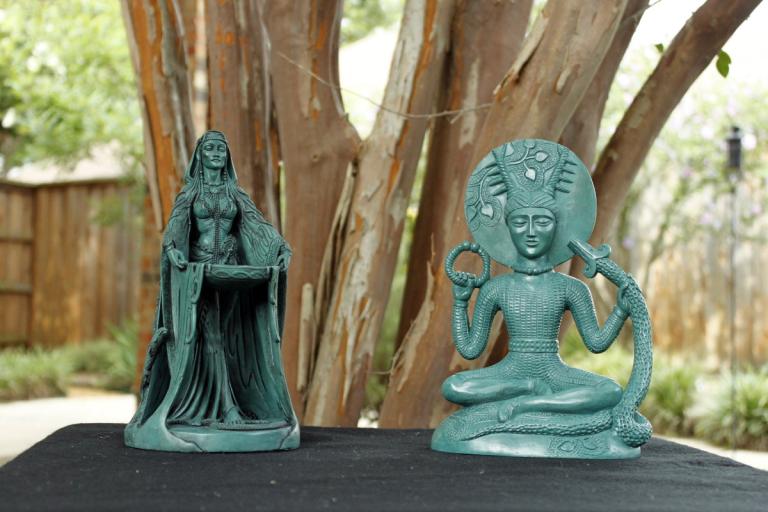 Our expectations for Paganism and polytheism are colored by our experiences in and with Christianity, which has been the dominate religion in the West for the past 1500 years or so. In particular, many of us carry the idea of the “church universal” into our Paganism. While we understand that Druidry and Wicca and Kemetic polytheism (to pick three examples) are different, we reflexively expect that each will be the same no matter where they’re practiced. We expect our own beliefs, practices, and experiences to be the same in Texas as they are in California as they are in Ireland.
We already have hints that this isn’t a realistic expectation. The Wheel of the Year is about as close to a truly universal practice as there is in modern Paganism. But even there some of us wonder about the usefulness of celebrating Western European Iron Age agricultural festivals in contemporary urban and suburban North America.
Ancient polytheism was not universal. Even within Hellenic culture, Zeus Olympios was understood and worshipped differently from Zeus Chthonios and from Zeus Aetnaeus. Indigenous tribal religions were different from place to place and they still are, in those areas where they haven’t been overrun by Christian or Muslim missionaries.
So as we begin our own Pagan and polytheist practices, we build on the foundations of our ancient ancestors and our contemporary co-religionists, but what we end up with is our own unique creation. It is a product of our ancestors, the Gods we honor, and the place where we live and worship.
I got a taste of this last year in Wales. Part of it was feeling how the land was both similar to and different from the land in Tennessee (and much different from the land in Texas), but a bigger part was listening to Kristoffer Hughes talk about how his Gods are always present there. Kris’ Druidry is influenced by Anglesey in a way that mine can never be, even though I’ve read his books and experienced his land. My Druidry was born in Tennessee and came of age in Texas – it is necessarily different.
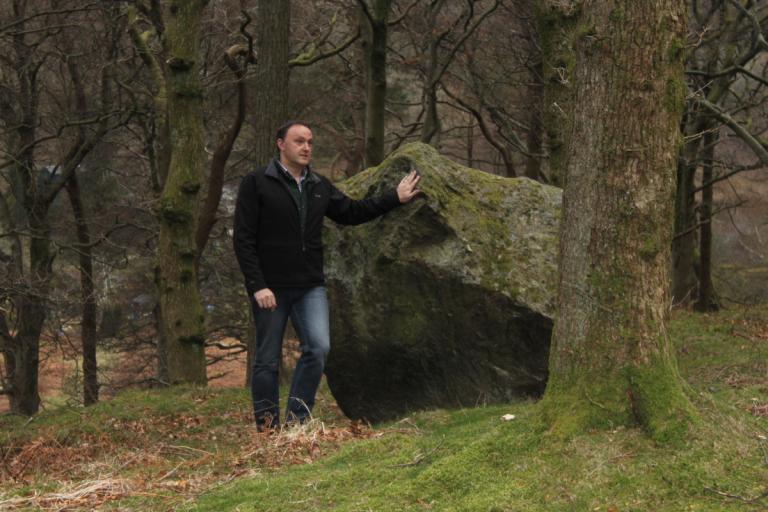
Kristoffer Hughes – Wales – 2014
Our Ancestors. These Gods. This Place.
Our Ancestors. We begin with our ancestors. We are here because of them, and their blood flows in our veins. Few of us have recent ancestors who were Pagan, but they left us more than their religion. What journeys did they take? What tragedies did they endure? What obstacles did they overcome? What stories did they tell? What did they build that we inherited?
Most importantly, who are we because of them? Through one line of ancestors, I’m six generations removed from County Antrim in what’s now Northern Ireland. I’ve continued the westward movement from Ireland to North Carolina to Tennessee and now to Texas. That tradition of migration brings a different approach to my religion than does Kristoffer Hughes’ millennia-long tradition of rootedness in Wales. My recent ancestors were Protestant Christians, they were farmers, and they were far from wealthy. All of that affects me and influences my religious beliefs, practices, and experiences, even though I practice a very different religion from my ancestors.
These Gods. One of the foundational principles of polytheism is that the many Gods each have their own goals, desires, areas of responsibility, and personalities. They were worshiped in different ways in ancient times. The Gods you choose – or who choose you – will have a strong effect on the form and function of your worship and on your entire practice.
I am pledged to Cernunnos and to Danu, two very old Celtic Gods who are closely associated with Nature. I have close relationships with Morrigan and Brighid, working acquaintances with numerous other deities, and I’m part of Denton CUUPS’ 12-year association with the Gods of Egypt. My prayers, meditations, public worship, and other acts of devotion are centered around Them, Their attributes, how They were worshiped in ancient times, and how contemporary polytheists relate to Them.
If I was working with the Gods of, say, Lithuania or of ancient Canaan, my practice would look and feel different, subtly in some areas and dramatically in others. When we treat the Gods as differentiated individuals, our practices become differentiated.
This Place. For many of us, Paganism is a Nature religion, a practice intimately tied to the land, the sky, and the sea. Even those of us who are more Deity-centered, Self-centered, or Community-centered have experienced the differences of place. The terrain, vegetation, and climate vary widely across this country and across the world. Even the sky is different – the relative position of the sun, moon, and stars vary based on latitude.
The Nature spirits also differ from place to place. As you might imagine, you will encounter very different spirits in the desert than you will in the forest. And so the way you relate to the Nature spirits will be different – you’ll make different offerings, listen for different messages, and perhaps most importantly, be aware of and concerned with different issues. Water is a constant source of concern in arid regions, not so much in wetter climates – except when there’s too much of it. Fire must be respected at all times, but especially in dry forests where wildfires can start in a moment.
Our lives, our experiences, and our practices will change based on where we are.
Commonalities and Overlap. Modern Paganism consists of many religions, but it is not merely a consortium of individual Pagans. There are whole traditions within Paganism and polytheism, and across traditions there are common elements. We are reviving, reinventing, and discovering “religious tech” that works in many situations. Galina Krasskova’s book Devotional Polytheism – An Introduction is written from a Heathen perspective, but most of the practices she describes can be used in any polytheist tradition.
Beyond that, it’s important to remember that not anything goes – the openness and anti-dogmatism of Paganism and polytheism is not a license to do whatever you like. Be respectful. Listen. Read scholarly works – the Gods do change over time, but if your experience of a deity is at great odds with how that deity was understood in ancient times, you’re probably misinterpreting your experience.
Cycles of Intersections. Examine a religion – including the monotheistic religions – and you can see how each expression is an intersection of ancestors, Gods, and place. The Southern evangelical Protestantism of my youth was very different from, say, the Roman Catholicism of New York or the Unitarianism of Boston. Each had different ancestors and different places, even if they shared the same God. Classical Hellenism is a product of earlier residents of the Mediterranean region, the Gods of Olympus, and the warm arid coastal environment that is much of Greece.
In time, each expression becomes the religious ancestor of what comes after it. Efforts to freeze a religion with sacred texts and creeds ultimately fail to one degree or another, either because they’re ignored or because they kill the very thing they were intended to preserve.
Our Ancestors. These Gods. This Place. Few of us are able to walk into a fully functioning temple or grove and start practicing the religion that calls to us. We must create them – and we are doing just that.
As we do, let us remember that while we can and should draw from the experience and wisdom of others, ultimately our particular set of beliefs, practices, and the experiences they facilitate will be the distinct product of our ancestors, the Gods we worship, and the place where we live and work.
Previous Post

October 3, 2015
America and Guns – Reaping the Harvest We Sowed
Next Post
October 8, 2015 6 Signs It’s Getting Close To Samhain
Browse Our Archives
Select a Category Books Community CUUPS Druidry Foundations and Context Gods and Goddesses Magic Myth Nature Ritual Spiritual Practice Theology Travel Uncategorized Videos
Select a Month October 2026 September 2026 August 2026 July 2026 June 2026 May 2026 April 2026 March 2026 February 2026 January 2026 December 2025 November 2025 October 2025 September 2025 August 2025 July 2025 June 2025 May 2025 April 2025 March 2025 February 2025 January 2025 December 2024 November 2024 October 2024 September 2024 August 2024 July 2024 June 2024 May 2024 April 2024 March 2024 February 2024 January 2024 December 2023 November 2023 October 2023 September 2023 August 2023 July 2023 June 2023 May 2023 April 2023 March 2023 February 2023 January 2023 December 2022 November 2022 October 2022 September 2022 August 2022 July 2022 June 2022 May 2022 April 2022 March 2022 February 2022 January 2022 December 2021 November 2021 October 2021 September 2021 August 2021 July 2021 June 2021 May 2021 April 2021 March 2021 February 2021 January 2021 December 2020 November 2020 October 2020 September 2020 August 2020 July 2020 June 2020 May 2020 April 2020 March 2020 February 2020 January 2020 December 2019 November 2019 October 2019 September 2019 August 2019 July 2019 June 2019 May 2019 April 2019 March 2019 February 2019 January 2019 December 2018 November 2018 October 2018 September 2018 August 2018 July 2018 June 2018 May 2018 April 2018 March 2018 February 2018 January 2018 December 2017 November 2017 October 2017 September 2017 August 2017 July 2017 June 2017 May 2017 April 2017 March 2017 February 2017 January 2017 December 2016 November 2016 October 2016 September 2016 August 2016 July 2016 June 2016 May 2016 April 2016 March 2016 February 2016 January 2016 December 2015 November 2015 October 2015 September 2015 August 2015 July 2015 June 2015 May 2015 April 2015 March 2015 February 2015 January 2015 December 2014 November 2014 October 2014 September 2014 August 2014 July 2014 June 2014 May 2014 April 2014 March 2014 February 2014 January 2014 December 2013 November 2013 October 2013 September 2013 August 2013 July 2013 June 2013 May 2013 April 2013 March 2013 February 2013 January 2013 December 2012 November 2012 October 2012 September 2012 August 2012 July 2012 June 2012 May 2012 April 2012 March 2012 February 2012 January 2012 December 2011 November 2011 October 2011 September 2011 August 2011 July 2011 June 2011 May 2011 April 2011 March 2011 February 2011 January 2011 December 2010 November 2010 October 2010 September 2010 August 2010 July 2010 June 2010 May 2010 April 2010 March 2010 February 2010 January 2010 December 2009 November 2009 October 2009 September 2009 August 2009 July 2009 June 2009 May 2009 April 2009 March 2009 February 2009 January 2009 December 2008 November 2008 October 2008 September 2008 August 2008 July 2008 June 2008
Follow Us!
TAKE THE
Religious Wisdom Quiz
What Christian group worships on Saturday instead of Sunday?
Select your answer to see how you score.
Pentecostals Seventh-day Adventists Baptists Presbyterians
Related posts from John Beckett




What We Lose When “Ask AI” Becomes A...
TRENDING AT PATHEOS Pagan

When Halloween Unmasks Married Hearts
Written by Dr. David K. Ewen from Eternal Truth Bible College Behind...

Aristotle. He’s been called the father of logic, the father of the...

Methodist Central Hall and Westminster Abbey
Situated on the same square is Methodist Central Hall and Westminster Abbey. ...

57th Dove Awards Honor Dolly Parton, Crown New...
On gospel music’s biggest night, the 57th annual GMA Dove Awards honored...

The First Eucharistic Controversy: Christ’s Real Presence
For Catholics, the Eucharist is the source and summit of the Christian...

What a Stop Sign Can Teach Us About...
How to Make a Decision When You Can't Hear God Main point:...
view all Pagan blogs
Ad-Free & Subscriber Log-In Subscription Support
- About Us
- 2026 Calendar
- Videos
- Podcasts
- Library of World Religions
- Faith In Media Tracker
- Advertise With Us
- Write for Us
- Privacy Policy
- Terms of Service
- Do Not Sell My Data
- Contact Us
- Radiant Digital
- Manage Newsletter Subscriptions
- Unsubscribe From Notifications
- Sitemap
Copyright 2008-2026, Patheos. All rights reserved.
Subscription Support Ad-Free & Subscriber Log-In
Follow Patheos