
BuddhistCatholicContemplativeEvangelicalGeneral ChristianHinduJewishLatter-day SaintMuslimNew VisionsProgressive Christian
Beliefs
- Buddhist
- Catholic
- Contemplative
- Evangelical
- General Christian
- Hindu
- Jewish
- Latter-day Saint
- More Voices
- Muslim
- New Visions
- Pagan
- Progressive Christian
Topics
- Religion News
- Food and Religion
- Sports and Religion
- Religious Art
- Religious Music and Entertainment
- Religious Events
- History and Religion
- Style and Religion
- Politics and Religion
- Women in Religion
- Recreation Outdoors and Religion
- Business Finance and Religion
- Careers Workplace and Religion
- Education and Religion
- Family Parenting and Religion
- Health Fitness and Religion
- Home and Religion
- Relationships and Religion
- Technology and Religion
- Travel and Religion
Columnists
- Buddhist Columnists
- Business Finance and Religion Columnists
- Careers Workplace and Religion Columnists
- Catholic Columnists
- Contemplative Columnists
- Education and Religion Columnists
- Evangelists Columnists
- Family Parenting and Religion Columnists
- General Christian Columnists
- Health Fitness and Religion Columnists
- Hindu Columnists
- History and Religion Columnists
- Home and Religion Columnists
- Jewish Columnists
- More Voices Columnists
- Latter Day Columnists
- Muslim Columnists
- New Visions Columnists
- Nonreligious Columnists
- Pagan Columnists
- Politics and Religion Columnists
- Progressive Columnists
- Recreation Outdoors and Religion Columnists
- Relationships and Religion Columnists
- Religion News Columnists
- Religious Art Columnists
- Religious Events Columnists
- Religious Music and Entertainment Columnists
- Sports and Religion Columnists
- Style and Religion Columnists
- Technology and Religion Columnists
- Travel and Religion Columnists
- Women in Religion Columnists
Resource Library
- 2026 Calendar
- Library of World Religions
- The 100 Most Holy Places on Earth
- Patheos Answers
- Podcasts
- Videos
- Faith Leaders Database
- Anglican Episcopalian
- Bahai
- Baptist
- Buddhism
- Christianity
- Confucianism
- Eastern Orthodoxy
- Hinduism
- Holiness and Pentecostal
- ISKCON
- Islam
- Judaism
- Lutheran
- Methodist
- The Church of Jesus Christ of Latter-day Saints
- New Age
- Paganism
- Presbytarian and Reformed
- Protestantism
- Religion Behind the Scenes
- Roman Catholic
- Scientology
- Shia Islam
- Sikhism
- Sufism
- Sunni Islam
- Taoism
- Zen
- See all religions
Research Tools
 Ad-Free & Subscriber Log-In Subscription Support
Ad-Free & Subscriber Log-In Subscription Support
Follow Patheos 

- Trending:
- Forgiveness
- |
- Marriage
- |
- Consciousness
- |
- Death Penalty
- |
- Election
- |
- Halloween

- Home
- Pagan
- The Goals of Pagan Groups
The Goals of Pagan Groups
Last updated on: September 17, 2015 at 3:34 pm by John Beckett
The Goals of Pagan Groups 2015-09-17T15:34:52-06:00 John Beckett
Patheos Explore the world's faith through different perspectives on religion and spirituality! Patheos has the views of the prevalent religions and spiritualities of the world.
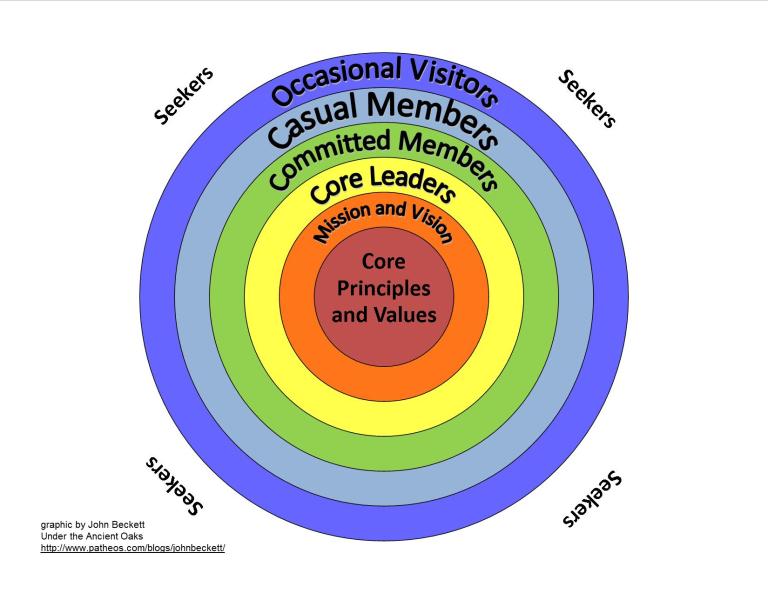 The tremendous growth in Paganism over the past 20 years or so has largely come through solitary practitioners. But as our numbers have grown, and as the internet and social media have made finding each other easier, the time is ripe for growth in new Pagan groups. Some of these groups will be extensions of existing traditions, but others will be formed on a blank slate with only the wisdom and experience of their founding members to guide them.
Last year I wrote about the generic structure of religious groups. In this post, I want to talk about the two inner circles: the core principles and values, and especially the mission and vision.
Pagan groups are entities on their own. A group – especially a religious group – is more than a collection of individuals. It has its own history, its own traditions, its own reasons for being. While the identity of any group will be influenced – perhaps modestly, perhaps strongly – by its leaders, if a group doesn’t have an identity that is ultimately separate from its leaders, it probably isn’t a religious order but rather an extension of the leaders’ egos.
It’s important for a group to formally say what it is and why it exists, whether that’s done through by-laws, a mission statement, or both. But what the group actually does is more important. If I want to know what a group really is all about I’m not going to read their by-laws, I’m going to see what’s on their Facebook page.
Like all living things, groups will change over time. Some of this change will be intentional, but some will come through evolution. Good by-laws set boundaries and processes for change, while a mission statement keeps the purpose of the group front and center.
Pagan groups exist to serve the Gods. Let’s not get into yet another hard polytheist / soft polytheist / humanist wrestling match. However you see the Gods, one of the purposes of a Pagan group is to serve Them (and if you think serving means being subservient, please consult a dictionary and then grow the hell up). Service – to the Gods, to Nature, and to our fellow humans – is honorable and necessary work.
We serve the Gods by performing Their rites, with worship and sacrifice and offerings. Some say the Gods are fed by our worship, while others say the Gods need nothing. Regardless, worship benefits the worshipers by bringing us into close communion with the Gods and reminding us of Their virtues and Their values.
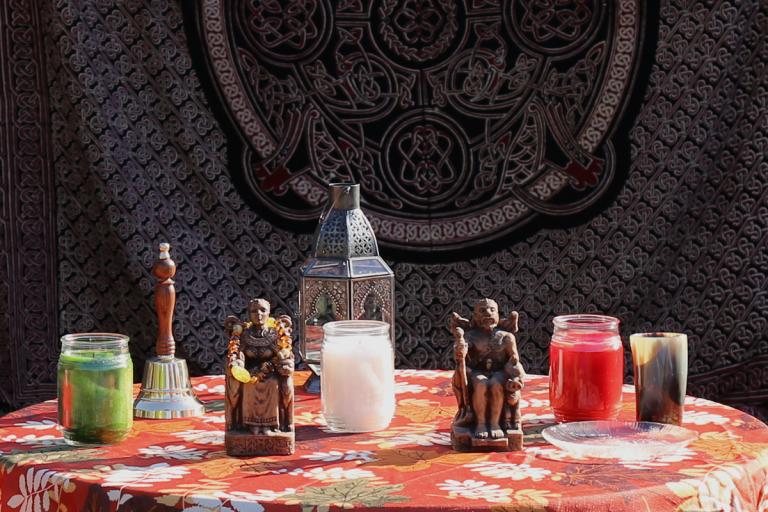 And that’s important, because the other way we serve the Gods is by doing Their work. We serve Smith Gods when we make beautiful and useful things. We serve Gods of Justice when we work to protect the poor and vulnerable from the rich and powerful. We serve Gods of Nature when we honor and care for the Earth and all her creatures and ecosystems. Whether that work originates with our own ideas or whether it is requested or dictated by the Gods is another matter for another time, but it is all the work of the Gods.
Pagan groups exist to serve their members. Religious groups – in any tradition – are not restaurants or auto repair shops and we should not approach them as consumers. Yet good Pagan groups are good in part because they serve their members. Groups also provide opportunities for its members to serve, and through service for us to be a part of something bigger than ourselves.
Pagan groups provide teaching and training. Sometimes this means an elder sharing their knowledge and wisdom. Sometimes it means bringing in an outside teacher. And other times it means a group of folks working through a book or a project on their own and figuring it out as they go.
Groups provide opportunities for members to learn and grow. New members may start out simply participating in ritual. Later they take a small part, then a large part, then they help plan a ritual, and finally they’re ready to lead a ritual on their own. The same process works with service projects, interfaith and intergroup relations, and organizational leadership.
Groups can provide rites of passage, including initiations. Our mainstream society has forgotten the value of these milestone and transformative events, but most Pagans understand their benefit.
Good Pagan groups build vibrant, mutually supportive communities. Work together for long enough on things that are important and eventually you’re no longer just co-religionists, you’re also friends – friends who help each other and look out for each other in the mundane world. As our wider society moves deeper and deeper into Tower Time, it becomes more and more important for us to gather our tribes and form alliances with others.
Pagan groups exist to serve their wider communities. As with serving the Gods, this element has an otherworld component and a this-world component. Some groups (like Denton CUUPS) make providing opportunities for public ritual one of our primary goals. But even traditionally closed groups like Wiccan covens can hold occasional open events.
Groups also provide an opportunity for this-world service. Denton CUUPS does regular roadside cleanups, and through the Denton UU Fellowship we provide opportunities for wider service in more areas than our small group has resources to support. Different groups can find what work matches their unique skills and opportunities.
Each group will mix and match these elements to achieve their goals: the structure of a polytheist priesthood is going to look very different from the structure of a coven of traditional witches, and both will be different from a CUUPS chapter. The key for newly forming groups is to agree on its core principles and values, and then create a mission and vision that support them.
Previous Post

September 15, 2015
Worshiping Change, Fighting Change
Next Post

September 20, 2015 Everybody Wants To Go To Heaven But Nobody Wants To Die
Browse Our Archives
Select a Category Books Community CUUPS Druidry Foundations and Context Gods and Goddesses Magic Myth Nature Ritual Spiritual Practice Theology Travel Uncategorized Videos
Select a Month October 2026 September 2026 August 2026 July 2026 June 2026 May 2026 April 2026 March 2026 February 2026 January 2026 December 2025 November 2025 October 2025 September 2025 August 2025 July 2025 June 2025 May 2025 April 2025 March 2025 February 2025 January 2025 December 2024 November 2024 October 2024 September 2024 August 2024 July 2024 June 2024 May 2024 April 2024 March 2024 February 2024 January 2024 December 2023 November 2023 October 2023 September 2023 August 2023 July 2023 June 2023 May 2023 April 2023 March 2023 February 2023 January 2023 December 2022 November 2022 October 2022 September 2022 August 2022 July 2022 June 2022 May 2022 April 2022 March 2022 February 2022 January 2022 December 2021 November 2021 October 2021 September 2021 August 2021 July 2021 June 2021 May 2021 April 2021 March 2021 February 2021 January 2021 December 2020 November 2020 October 2020 September 2020 August 2020 July 2020 June 2020 May 2020 April 2020 March 2020 February 2020 January 2020 December 2019 November 2019 October 2019 September 2019 August 2019 July 2019 June 2019 May 2019 April 2019 March 2019 February 2019 January 2019 December 2018 November 2018 October 2018 September 2018 August 2018 July 2018 June 2018 May 2018 April 2018 March 2018 February 2018 January 2018 December 2017 November 2017 October 2017 September 2017 August 2017 July 2017 June 2017 May 2017 April 2017 March 2017 February 2017 January 2017 December 2016 November 2016 October 2016 September 2016 August 2016 July 2016 June 2016 May 2016 April 2016 March 2016 February 2016 January 2016 December 2015 November 2015 October 2015 September 2015 August 2015 July 2015 June 2015 May 2015 April 2015 March 2015 February 2015 January 2015 December 2014 November 2014 October 2014 September 2014 August 2014 July 2014 June 2014 May 2014 April 2014 March 2014 February 2014 January 2014 December 2013 November 2013 October 2013 September 2013 August 2013 July 2013 June 2013 May 2013 April 2013 March 2013 February 2013 January 2013 December 2012 November 2012 October 2012 September 2012 August 2012 July 2012 June 2012 May 2012 April 2012 March 2012 February 2012 January 2012 December 2011 November 2011 October 2011 September 2011 August 2011 July 2011 June 2011 May 2011 April 2011 March 2011 February 2011 January 2011 December 2010 November 2010 October 2010 September 2010 August 2010 July 2010 June 2010 May 2010 April 2010 March 2010 February 2010 January 2010 December 2009 November 2009 October 2009 September 2009 August 2009 July 2009 June 2009 May 2009 April 2009 March 2009 February 2009 January 2009 December 2008 November 2008 October 2008 September 2008 August 2008 July 2008 June 2008
Follow Us!
TAKE THE
Religious Wisdom Quiz
How many books of the Bible are named after women?
Select your answer to see how you score.
3 2 1 4
Related posts from John Beckett


The Vampire Films of Jean Rollin


Bo French Doesn’t Understand Texas
TRENDING AT PATHEOS Pagan

The First Eucharistic Controversy: Christ’s Real Presence
For Catholics, the Eucharist is the source and summit of the Christian...

How to Make a Decision When You Can't...
Main point: It’s much more valuable to stay close to God so...

Archdiocese Hosts Military Marriage Retreat in Germany
RASTATT, Germany — The transient military lifestyle, with its frequent deployments and...

Nearly every morning, I make the drive to Detroit with my high-school-age...

The Real AI Story Is Adoption Without Trust
Artificial intelligence has crossed a political threshold. It is no longer a...

A new article, written by Jeff Lindsay and Gale L. Pooley,...
view all Pagan blogs
Ad-Free & Subscriber Log-In Subscription Support
- About Us
- 2026 Calendar
- Videos
- Podcasts
- Library of World Religions
- Faith In Media Tracker
- Advertise With Us
- Write for Us
- Privacy Policy
- Terms of Service
- Do Not Sell My Data
- Contact Us
- Radiant Digital
- Manage Newsletter Subscriptions
- Unsubscribe From Notifications
- Sitemap
Copyright 2008-2026, Patheos. All rights reserved.
Subscription Support Ad-Free & Subscriber Log-In
Follow Patheos