
BuddhistCatholicContemplativeEvangelicalGeneral ChristianHinduJewishLatter-day SaintMuslimNew VisionsProgressive Christian
Beliefs
- Buddhist
- Catholic
- Contemplative
- Evangelical
- General Christian
- Hindu
- Jewish
- Latter-day Saint
- More Voices
- Muslim
- New Visions
- Pagan
- Progressive Christian
Topics
- Religion News
- Food and Religion
- Sports and Religion
- Religious Art
- Religious Music and Entertainment
- Religious Events
- History and Religion
- Style and Religion
- Politics and Religion
- Women in Religion
- Recreation Outdoors and Religion
- Business Finance and Religion
- Careers Workplace and Religion
- Education and Religion
- Family Parenting and Religion
- Health Fitness and Religion
- Home and Religion
- Relationships and Religion
- Technology and Religion
- Travel and Religion
Columnists
- Buddhist Columnists
- Business Finance and Religion Columnists
- Careers Workplace and Religion Columnists
- Catholic Columnists
- Contemplative Columnists
- Education and Religion Columnists
- Evangelists Columnists
- Family Parenting and Religion Columnists
- General Christian Columnists
- Health Fitness and Religion Columnists
- Hindu Columnists
- History and Religion Columnists
- Home and Religion Columnists
- Jewish Columnists
- More Voices Columnists
- Latter Day Columnists
- Muslim Columnists
- New Visions Columnists
- Nonreligious Columnists
- Pagan Columnists
- Politics and Religion Columnists
- Progressive Columnists
- Recreation Outdoors and Religion Columnists
- Relationships and Religion Columnists
- Religion News Columnists
- Religious Art Columnists
- Religious Events Columnists
- Religious Music and Entertainment Columnists
- Sports and Religion Columnists
- Style and Religion Columnists
- Technology and Religion Columnists
- Travel and Religion Columnists
- Women in Religion Columnists
Resource Library
- 2026 Calendar
- Library of World Religions
- The 100 Most Holy Places on Earth
- Patheos Answers
- Podcasts
- Videos
- Faith Leaders Database
- Anglican Episcopalian
- Bahai
- Baptist
- Buddhism
- Christianity
- Confucianism
- Eastern Orthodoxy
- Hinduism
- Holiness and Pentecostal
- ISKCON
- Islam
- Judaism
- Lutheran
- Methodist
- The Church of Jesus Christ of Latter-day Saints
- New Age
- Paganism
- Presbytarian and Reformed
- Protestantism
- Religion Behind the Scenes
- Roman Catholic
- Scientology
- Shia Islam
- Sikhism
- Sufism
- Sunni Islam
- Taoism
- Zen
- See all religions
Research Tools
 Ad-Free & Subscriber Log-In Subscription Support
Ad-Free & Subscriber Log-In Subscription Support
Follow Patheos 

- Trending:
- Forgiveness
- |
- Marriage
- |
- Consciousness
- |
- Death Penalty
- |
- Election
- |
- Halloween

- Home
- Pagan
- What I Learned From Isaac Bonewits
What I Learned From Isaac Bonewits
Last updated on: August 25, 2015 at 5:00 pm by John Beckett
What I Learned From Isaac Bonewits 2015-08-23T16:24:12-06:00 John Beckett
Patheos Explore the world's faith through different perspectives on religion and spirituality! Patheos has the views of the prevalent religions and spiritualities of the world.
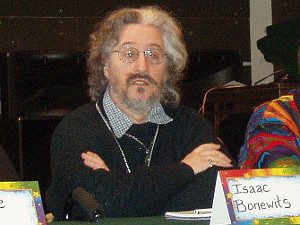
Isaac Bonewits at CUUPS Convocation – 2004
The list of people who have influenced my Paganism is long and I am thankful for all of them. But there is one person at the top of that list: Isaac Bonewits.
Isaac died from cancer in 2010 at the too-young age of 60. I wrote about my two experiences of meeting him in person as a eulogy. ADF has a biographical eulogy by Ian Corrigan. And Isaac’s website is still up and still has much of his work available – it’s been maintained by his widow Phaedra, who is a skilled magician in her own right and a former Vice President of CUUPS Continental. If you aren’t familiar with Isaac and his work (where have you been?!) these are good places to start.
In this post, I want to talk about how Isaac influenced my early Pagan journey, and why he remains a big influence today.
Scholarship matters. I think I first encountered Isaac in Drawing Down the Moon (published in 1979). Margot Adler quoted him liberally in her review of Wicca and its links (or lack thereof) to ancient paganism and witchcraft.
As someone who was coming out of a religion where I was told I had to believe myths were literal truth, it was important for me to build my new religion on a firm foundation that separated the two. The works of Robert Graves and Margaret Murray have been inspirational to many, but inspiration is no substitute for the work of historians, archaeologists, anthropologists, and literary scholars.
Paleopagan, Mesopagan, Neopagan. The lineage from the ancients to today is neither as continuous nor as broken as many on both sides have claimed. But when I was getting started, it was very helpful to have Isaac separate indigenous practices (Paleopagans), revivals of those practices influenced by the Christian culture of their times (Mesopagans), and the re-creations of ancient practices for contemporary times (Neopagans).
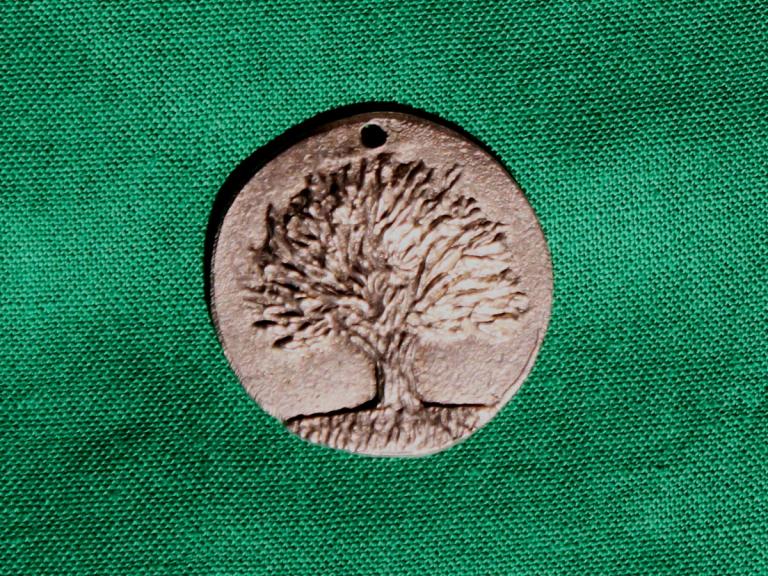
“When in doubt, consult your nearest tree” – a medallion that belonged to Isaac Bonewits – it now sits on my bookshelf with other sacred objects
When I first read Wiccan books that talked about archangels, watchtowers, and the Tree of Life, I knew they weren’t talking things my ancient Celtic ancestors ever did. That’s one of the reasons Wicca never worked for me – I wanted a clean break from the Abrahamic religions. Druidry provides a connection to my ancient ancestors, though even here the Druid Revival is full of Mesopagans. I honor them as my spiritual ancestors and I am inspired by their work, but my Druidry is based on Isaac’s vision of Neopaganism.
Today the term Neopagan has lost much of its meaning. Some would say the polytheist movement is the next step beyond Neopaganism. Others would say it’s a purer form of Neopaganism. I’m not interested in arguing over the name. I just want to do the best I can to re-create and re-imagine ancient practices that are meaningful and helpful here and now.
“Why not excellence?” The Pagan movement (especially in the United States) has long emphasized the equality of all. But while Isaac made it clear that racism, sexism, homophobia, and other prejudice has no place in Paganism, he also understood that different people have different skills, interests, and abilities. In his vision for ADF, he said “we didn’t expect everyone in ADF to be qualified for (or even interested in) attaining the rank of clergy.” Hierarchy isn’t inherently bad – it’s only bad when it’s abused.
“Why not excellence?” remains ADF’s motto.
The Laws of Magic. Isaac’s book Real Magic was published in 1971, a time when many assumed the workings of witches and psychics would be explained by science in just a few years. It hasn’t worked out that way, for reasons that have as much to do with the assumptions of science as the nature of magic.
Isaac’s Laws of Magic were written as a guide for early fantasy role playing games. But the best games are good because they’re based in reality, and Isaac’s laws remain the best description of how and why real magic works.
“Fuzzy targets yield fuzzy results.” Practice magic more than once or twice and it quickly becomes apparent that while seemingly-ordinary people can do extraordinary things, our abilities and capacities are limited. So the more narrowly we focus our efforts the greater chance we have of making an impact. This is why magical workings to “save the planet” accomplish nothing, while workings to preserve the habitat of a specific species in a specific location can often be effective.
Beyond that, if you can’t describe what you want, what you get may be something very different from what you have in mind. “World peace” is a nice thought, but it means something very different to a fascist than it does to a communitarian.
Keep your spells focused on narrowly defined targets at the lowest level possible.
“It don’t mean a thing if it ain’t got that swing.” Isaac’s book Neopagan Rites is simply the best how-to book for planning and presenting public rituals in existence today. Its subtitle is A Guide to Creating Public Rituals that Work. My own preferred liturgy draws heavily from Isaac’s work, as (of course) does the core order of ritual of ADF.
But while a good liturgy is essential to good ritual, if it’s presented without passion it’s still going to fall flat. Good ritual speaks to all your senses: you don’t just hear people talk, you smell the incense, you taste the wine, you feel the Earth, and perhaps most importantly, you see the ritual performed. This is why we wear robes and jewelry, cover unused furniture, decorate altars, and light a million candles. And why we use music and drumming as well as spoken words.
Good ritual doesn’t just speak to your head – it speaks to your whole body… and it speaks to your soul.
“Enthusiasm is no substitute for competence.” You want your rituals to have swing, but if they aren’t planned and presented competently they won’t accomplish much. “Spontaneity” isn’t quite the buzzword it was in Pagan circles a few years ago, and that’s a good thing. When you’re by yourself, going outside and standing under the full moon waiting for the Gods and spirits to speak to you can be a powerful experience. When you’ve got 15 or 20 or 50 people standing in a circle wondering why they came here on a perfectly good Saturday night, it can be a recipe for disaster.
I will never forget watching Isaac and Phaedra leading the main ritual at the 2004 CUUPS Convocation. I was still fairly new to public Paganism. I had seen a few good rituals and a few bad ones… and I had led a couple of each. When I watched them work, I saw how good ritual could be if the leaders were both enthusiastic and competent.
I can’t do what Isaac did – I don’t have his charisma. Few do. But I’ve learned how to combine good composition and the liturgical skills I do have with a ton of practice to do a good job of facilitating religious experiences in ritual.
Isaac Bonewits was a unique individual in a religious movement full of individuality. I’m glad I got to meet him and participate in ritual with him. I’m glad he founded a religious order to build his vision of Paganism – and I’m glad to be a member of it. And I’m so thankful we have his books to preserve his ideas for future generations.
I learned a lot from Isaac Bonewits. Future generations of Pagans will too.
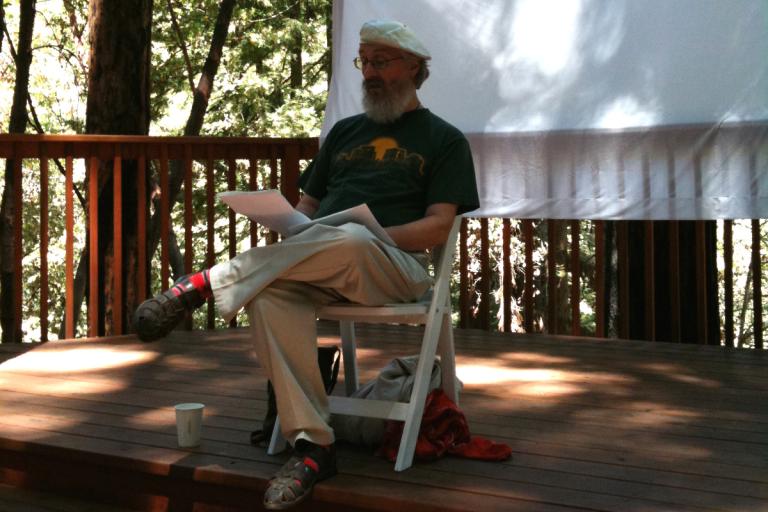
Isaac at the Houe of Danu Gorsedd – 2009
Previous Post

August 23, 2015
The Future of Polytheism: Keeping the Gods at the Front
Next Post

August 27, 2015 Fish Is Not Just Fish
Browse Our Archives
Select a Category Books Community CUUPS Druidry Foundations and Context Gods and Goddesses Magic Myth Nature Ritual Spiritual Practice Theology Travel Uncategorized Videos
Select a Month October 2026 September 2026 August 2026 July 2026 June 2026 May 2026 April 2026 March 2026 February 2026 January 2026 December 2025 November 2025 October 2025 September 2025 August 2025 July 2025 June 2025 May 2025 April 2025 March 2025 February 2025 January 2025 December 2024 November 2024 October 2024 September 2024 August 2024 July 2024 June 2024 May 2024 April 2024 March 2024 February 2024 January 2024 December 2023 November 2023 October 2023 September 2023 August 2023 July 2023 June 2023 May 2023 April 2023 March 2023 February 2023 January 2023 December 2022 November 2022 October 2022 September 2022 August 2022 July 2022 June 2022 May 2022 April 2022 March 2022 February 2022 January 2022 December 2021 November 2021 October 2021 September 2021 August 2021 July 2021 June 2021 May 2021 April 2021 March 2021 February 2021 January 2021 December 2020 November 2020 October 2020 September 2020 August 2020 July 2020 June 2020 May 2020 April 2020 March 2020 February 2020 January 2020 December 2019 November 2019 October 2019 September 2019 August 2019 July 2019 June 2019 May 2019 April 2019 March 2019 February 2019 January 2019 December 2018 November 2018 October 2018 September 2018 August 2018 July 2018 June 2018 May 2018 April 2018 March 2018 February 2018 January 2018 December 2017 November 2017 October 2017 September 2017 August 2017 July 2017 June 2017 May 2017 April 2017 March 2017 February 2017 January 2017 December 2016 November 2016 October 2016 September 2016 August 2016 July 2016 June 2016 May 2016 April 2016 March 2016 February 2016 January 2016 December 2015 November 2015 October 2015 September 2015 August 2015 July 2015 June 2015 May 2015 April 2015 March 2015 February 2015 January 2015 December 2014 November 2014 October 2014 September 2014 August 2014 July 2014 June 2014 May 2014 April 2014 March 2014 February 2014 January 2014 December 2013 November 2013 October 2013 September 2013 August 2013 July 2013 June 2013 May 2013 April 2013 March 2013 February 2013 January 2013 December 2012 November 2012 October 2012 September 2012 August 2012 July 2012 June 2012 May 2012 April 2012 March 2012 February 2012 January 2012 December 2011 November 2011 October 2011 September 2011 August 2011 July 2011 June 2011 May 2011 April 2011 March 2011 February 2011 January 2011 December 2010 November 2010 October 2010 September 2010 August 2010 July 2010 June 2010 May 2010 April 2010 March 2010 February 2010 January 2010 December 2009 November 2009 October 2009 September 2009 August 2009 July 2009 June 2009 May 2009 April 2009 March 2009 February 2009 January 2009 December 2008 November 2008 October 2008 September 2008 August 2008 July 2008 June 2008
Follow Us!
TAKE THE
Religious Wisdom Quiz
What currency did Judas receive for betraying Jesus?
Select your answer to see how you score.
Silver Gold Bronze Copper
Related posts from John Beckett




What We Lose When “Ask AI” Becomes A...
TRENDING AT PATHEOS Pagan

Letters on Living the Faith by C.S. Lewis
Most of us met C.S. Lewis as a public intellectual. Mere Christianity....

When Halloween Unmasks Married Hearts
Written by Dr. David K. Ewen from Eternal Truth Bible College Behind...

Aristotle. He’s been called the father of logic, the father of the...

Methodist Central Hall and Westminster Abbey
Situated on the same square is Methodist Central Hall and Westminster Abbey. ...

57th Dove Awards Honor Dolly Parton, Crown New...
On gospel music’s biggest night, the 57th annual GMA Dove Awards honored...

The First Eucharistic Controversy: Christ’s Real Presence
For Catholics, the Eucharist is the source and summit of the Christian...
view all Pagan blogs
Ad-Free & Subscriber Log-In Subscription Support
- About Us
- 2026 Calendar
- Videos
- Podcasts
- Library of World Religions
- Faith In Media Tracker
- Advertise With Us
- Write for Us
- Privacy Policy
- Terms of Service
- Do Not Sell My Data
- Contact Us
- Radiant Digital
- Manage Newsletter Subscriptions
- Unsubscribe From Notifications
- Sitemap
Copyright 2008-2026, Patheos. All rights reserved.
Subscription Support Ad-Free & Subscriber Log-In
Follow Patheos