
BuddhistCatholicContemplativeEvangelicalGeneral ChristianHinduJewishLatter-day SaintMuslimNew VisionsProgressive Christian
Beliefs
- Buddhist
- Catholic
- Contemplative
- Evangelical
- General Christian
- Hindu
- Jewish
- Latter-day Saint
- More Voices
- Muslim
- New Visions
- Pagan
- Progressive Christian
Topics
- Religion News
- Food and Religion
- Sports and Religion
- Religious Art
- Religious Music and Entertainment
- Religious Events
- History and Religion
- Style and Religion
- Politics and Religion
- Women in Religion
- Recreation Outdoors and Religion
- Business Finance and Religion
- Careers Workplace and Religion
- Education and Religion
- Family Parenting and Religion
- Health Fitness and Religion
- Home and Religion
- Relationships and Religion
- Technology and Religion
- Travel and Religion
Columnists
- Buddhist Columnists
- Business Finance and Religion Columnists
- Careers Workplace and Religion Columnists
- Catholic Columnists
- Contemplative Columnists
- Education and Religion Columnists
- Evangelists Columnists
- Family Parenting and Religion Columnists
- General Christian Columnists
- Health Fitness and Religion Columnists
- Hindu Columnists
- History and Religion Columnists
- Home and Religion Columnists
- Jewish Columnists
- More Voices Columnists
- Latter Day Columnists
- Muslim Columnists
- New Visions Columnists
- Nonreligious Columnists
- Pagan Columnists
- Politics and Religion Columnists
- Progressive Columnists
- Recreation Outdoors and Religion Columnists
- Relationships and Religion Columnists
- Religion News Columnists
- Religious Art Columnists
- Religious Events Columnists
- Religious Music and Entertainment Columnists
- Sports and Religion Columnists
- Style and Religion Columnists
- Technology and Religion Columnists
- Travel and Religion Columnists
- Women in Religion Columnists
Resource Library
- 2026 Calendar
- Library of World Religions
- The 100 Most Holy Places on Earth
- Patheos Answers
- Podcasts
- Videos
- Faith Leaders Database
- Anglican Episcopalian
- Bahai
- Baptist
- Buddhism
- Christianity
- Confucianism
- Eastern Orthodoxy
- Hinduism
- Holiness and Pentecostal
- ISKCON
- Islam
- Judaism
- Lutheran
- Methodist
- The Church of Jesus Christ of Latter-day Saints
- New Age
- Paganism
- Presbytarian and Reformed
- Protestantism
- Religion Behind the Scenes
- Roman Catholic
- Scientology
- Shia Islam
- Sikhism
- Sufism
- Sunni Islam
- Taoism
- Zen
- See all religions
Research Tools
 Ad-Free & Subscriber Log-In Subscription Support
Follow Patheos 

- Trending:
- Advent
- |
- Forgiveness
- |
- Thanksgiving
- |
- Election
- |
- Seasonal Holidays
- |
- Marriage

- Home
- Pagan
- Thinking About the Gods
Thinking About the Gods
Last updated on: October 19, 2014 at 3:00 pm by John Beckett
Thinking About the Gods 2014-10-18T10:24:46-06:00 John Beckett
Patheos Explore the world's faith through different perspectives on religion and spirituality! Patheos has the views of the prevalent religions and spiritualities of the world.
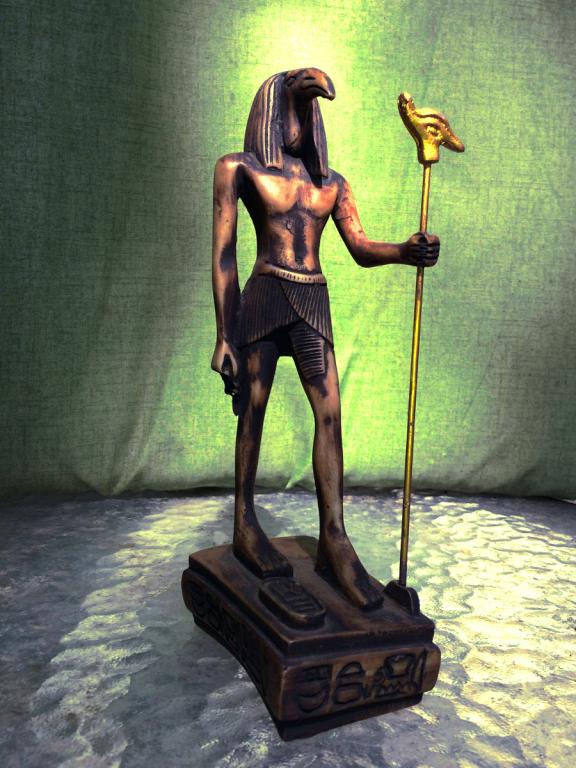
Thoth (Djehuty)
Morpheus Ravenna’s last blog post Theurgic binding: or, S#!t just got real has generated a lot of discussion. I had a very personal response to it. Morpheus edited her post to include links to several others and added a follow-up of her own. They make for interesting reading even if you don’t agree with all of them.
These essays discuss the risks and benefits of working with and for the Gods. And behind all this divine risk assessment are some ideas and assumptions about the Gods: who are They? What are They? What do They want from us?
There’s a term for these questions about the Gods and our attempts to answer them, a term that rarely gets used in Pagan circles: theology.
The English word theology comes from the Greek theos (God) and logy or ology (study of). Theology is the study of the Gods. For over 1400 years, theology in the West has been only the study of the Abrahamic God. So while pagans invented theology (several times, in different places) and some of it has survived to modern times, modern Paganism does not have a full body of robust ideas about the Gods.
From the Romantics singing of Pan to Gardner’s witchcraft to Starhawk’s ecofeminism, modern Paganism has been light on thinking and heavy on doing. This has mostly been a good thing. One of the attractions of Paganism is that it’s an experiential religion – it’s a religion of doing, not a religion of hearing. “Sing, feast, dance, make music and love.” Pour libations to the Gods. Whether you think They’re beings or aspects or archetypes or personifications is less important than the fact you’re pouring libations to Them. Right action is more important than right belief.
For many people this is enough. They want to live good lives and do the right things, but they have their hands full with other aspects of life. Save them a place around the bonfire and let them know when the next roadside trash pickup is and they’re happy.
But for those of us who are called to the Gods, or who the Gods have claimed, it’s not enough.
How do we know anything about the Gods? We have the stories our ancestors told about them. We have the work of mainstream historians, archeologists, and anthropologists. We have the experience of contemporary Pagans and polytheists. And we have our own experiences of Them.
There are two problems with theology. The first is thinking we can know everything about the Gods, or at least everything worth knowing. And if we know everything then anyone who disagrees with us is obviously wrong. The last 1400 years has shown us what that brings. Even if we aren’t inclined to oppress those who think differently, if we think we already know everything we aren’t likely to listen to someone who has different ideas that may be informative and helpful. My way is not the only way.
The other problem is thinking we can know nothing. Yes, the Gods are vast and complex and mysterious. No, we can never have the certainty about Them we have about things that can be objectively measured and analyzed. But we can know some things. More importantly, when we think we can know nothing about the Gods we aren’t likely to listen to someone who has different ideas that may be informative and helpful. All ways are not equally true.
Two very different problems, two very similar results.
Good theology looks at all the information about the Gods – all the lore, all the history, all the experience – and draws reasonable inferences about who and what They are and how we can best interact with Them.
Good theology is an incremental process. Once a theologian is confident about one concept, she can use it as a foundation for further concepts.
Good theology is consistent. Humans tend to overrate consistency (we prefer mediocre certainty over uncertainty that may be excellent or may be horrible), but intellectual consistency is critical for building good theology. Once you accept certain foundational assumptions, other beliefs are closed to you because they are inconsistent.
This brings us back to the reactions to Morpheus’ essay. Two of the basic premises of contemporary devotional polytheism are that the Gods are many and that They have agency. They are individual beings with Their own areas of responsibility and interest, Their own goals and desires, and Their own personalities.
These premises are so basic and so foundational that many polytheists have chosen to segregate themselves from others in the Big Tent of Paganism rather than constantly argue with those who insist the Gods can only be understood in psychological or metaphorical terms.
If you believe the Gods are many and have agency then you cannot also believe They can’t affect you unless you permit it. The two propositions are logically inconsistent.
Humans are many and have agency and they most definitely can affect you without your permission – just ask any mugging victim. Are the Gods less than humans? Isn’t “more than human” another of the foundational assumptions about the Gods?
In the absence of robust polytheology and proven polytheological methods, it is easy for unhelpful ideas to slip into our thinking about the Gods. We’re pretty vigilant about watching out for Abrahamic ideas, but ideas from popular religion and popular culture are often hard to catch – particularly if they’re comforting.
The Gods all love us and are here to help us grow? The Gods would never use us for Their own ends? We have so much control over our lives even the Gods can’t impact us unless we let Them? Not all of these ideas were expressed in the discussion around the Theurgic Binding post, but I’ve heard them all recently in one place or another. They may make some people feel good, but they don’t represent good thinking about the Gods.
Developing good theology is not about establishing orthodoxy. Paganism and polytheism are and will remain religions that value right action over right belief. Experiencing the Gods is more important than the intellectual concepts used to interpret those experiences.
Good theology helps us to better understand who and what the Gods are so we can better work with and for Them. It helps us place our experiences in a wider context and in a greater narrative. It enables like-minded people to build on each other’s work and grow our overall body of understanding. And perhaps most importantly, it helps us build deeper devotional practices and more effective service to the Gods and to our communities.
This is part of our work here on the Pagan internet: thinking about the Gods, critiquing ideas, and trying them out to see to what works and what doesn’t – what’s helpful and what’s not. Here and elsewhere we’re slowly building a new Pagan theology.
Previous Post

October 16, 2014
Board Service
Next Post

October 21, 2014 Why I Worship the Gods
Browse Our Archives
Select a Category Books Community CUUPS Druidry Foundations and Context Gods and Goddesses Magic Myth Nature Ritual Spiritual Practice Theology Travel Uncategorized Videos
Select a Month November 2026 October 2026 September 2026 August 2026 July 2026 June 2026 May 2026 April 2026 March 2026 February 2026 January 2026 December 2025 November 2025 October 2025 September 2025 August 2025 July 2025 June 2025 May 2025 April 2025 March 2025 February 2025 January 2025 December 2024 November 2024 October 2024 September 2024 August 2024 July 2024 June 2024 May 2024 April 2024 March 2024 February 2024 January 2024 December 2023 November 2023 October 2023 September 2023 August 2023 July 2023 June 2023 May 2023 April 2023 March 2023 February 2023 January 2023 December 2022 November 2022 October 2022 September 2022 August 2022 July 2022 June 2022 May 2022 April 2022 March 2022 February 2022 January 2022 December 2021 November 2021 October 2021 September 2021 August 2021 July 2021 June 2021 May 2021 April 2021 March 2021 February 2021 January 2021 December 2020 November 2020 October 2020 September 2020 August 2020 July 2020 June 2020 May 2020 April 2020 March 2020 February 2020 January 2020 December 2019 November 2019 October 2019 September 2019 August 2019 July 2019 June 2019 May 2019 April 2019 March 2019 February 2019 January 2019 December 2018 November 2018 October 2018 September 2018 August 2018 July 2018 June 2018 May 2018 April 2018 March 2018 February 2018 January 2018 December 2017 November 2017 October 2017 September 2017 August 2017 July 2017 June 2017 May 2017 April 2017 March 2017 February 2017 January 2017 December 2016 November 2016 October 2016 September 2016 August 2016 July 2016 June 2016 May 2016 April 2016 March 2016 February 2016 January 2016 December 2015 November 2015 October 2015 September 2015 August 2015 July 2015 June 2015 May 2015 April 2015 March 2015 February 2015 January 2015 December 2014 November 2014 October 2014 September 2014 August 2014 July 2014 June 2014 May 2014 April 2014 March 2014 February 2014 January 2014 December 2013 November 2013 October 2013 September 2013 August 2013 July 2013 June 2013 May 2013 April 2013 March 2013 February 2013 January 2013 December 2012 November 2012 October 2012 September 2012 August 2012 July 2012 June 2012 May 2012 April 2012 March 2012 February 2012 January 2012 December 2011 November 2011 October 2011 September 2011 August 2011 July 2011 June 2011 May 2011 April 2011 March 2011 February 2011 January 2011 December 2010 November 2010 October 2010 September 2010 August 2010 July 2010 June 2010 May 2010 April 2010 March 2010 February 2010 January 2010 December 2009 November 2009 October 2009 September 2009 August 2009 July 2009 June 2009 May 2009 April 2009 March 2009 February 2009 January 2009 December 2008 November 2008 October 2008 September 2008 August 2008 July 2008 June 2008
Follow Us!
TAKE THE
Religious Wisdom Quiz
Which book of the Bible records Paul’s shipwreck?
Select your answer to see how you score.
1 Corinthians 2 Timothy Romans Acts
Related posts from John Beckett

Pagans And The Rise Of The Religious Left

Why Halloween Is So Popular – And So...
The Pillar of the Boatmen: the Ancient Monument...

TRENDING AT PATHEOS Pagan

Ansley Gordon Brings Faith and Fresh Stories to...
For screenwriter and actress Ansley Gordon, Christmas has always been about more...

Chris Pratt on Veterans, Faith, “The Way of...
For Chris Pratt, service is not something that ends when a person...

Chapter 5, Sarah: The Quest for Safety in...
Open and Relational Theology & Social Psychology About this series: This series...

When Worry Gets You Nowhere, How Can Faith...
Sometimes, we think that by worrying, we can somehow predict the future....

The Wasp And I: Meditations on Repentance
How can we enter the power and joy of the repentant self...

Reflections on the Evangelical Theological Society
As I mentioned before, this year, for the first time since 2005,...
view all Pagan blogs
Ad-Free & Subscriber Log-In Subscription Support
- About Us
- 2026 Calendar
- Videos
- Podcasts
- Library of World Religions
- Faith In Media Tracker
- Advertise With Us
- Write for Us
- Privacy Policy
- Terms of Service
- Do Not Sell My Data
- Contact Us
- Radiant Digital
- Manage Newsletter Subscriptions
- Unsubscribe From Notifications
- Sitemap
Copyright 2008-2026, Patheos, part of the Radiant Digital network of media brands. All rights reserved.
Subscription Support Ad-Free & Subscriber Log-In
Follow Patheos